
The Hidden 'Master Proteins' Masking Our Deadliest Mutations
Scientists are unlocking the mechanics of genetic buffering—a biological shock-absorber that hides harmful DNA mutations and is now inspiring a radical new class of therapeutics.
By Factlen Editorial Team
- Fundamental Biologists
- Focuses on the evolutionary and cellular mechanics of buffering, arguing that understanding how chaperones fold proteins is essential for grasping how complex life adapts to stress.
- Translational Drug Developers
- Focuses on exploiting the buffering system for therapeutics, emphasizing that inhibiting or boosting chaperones represents a highly effective approach to treating complex diseases.
- Clinical Systems Analysts
- Focuses on the broader implications for precision medicine, arguing that future diagnostics must measure a patient's buffering capacity to accurately predict disease risk.
What's not represented
- · Bioethicists discussing the implications of artificially altering human evolutionary buffering capacities.
- · Health Economists evaluating the cost and accessibility of next-generation chaperone-modulating therapies.
Why this matters
Understanding how our bodies naturally hide genetic errors is flipping the script on drug discovery. By learning to control these biological buffers, medicine could selectively destroy cancer cells or protect the aging brain from neurodegeneration.
The human genome is widely misunderstood as a pristine, perfect blueprint for life. In reality, it is a remarkably messy document, riddled with typographical errors, missing sequences, and structural anomalies. Every single person walking the earth today carries a unique payload of genetic mutations. According to standard biological models, many of these errors are severe enough that they should theoretically cause debilitating or even fatal diseases. Yet, the vast majority of us remain perfectly healthy, entirely unaware of the catastrophic code lurking within our cells. For decades, this paradox baffled geneticists and molecular biologists alike. If DNA is truly destiny, as the central dogma of biology suggests, why do so many seemingly devastating mutations fail to materialize into actual illness? The search for an answer has led researchers away from the static code of DNA and into the dynamic, bustling environment of the cell itself.[6]
The answer to this enduring genetic mystery lies in a hidden layer of biological infrastructure known as "genetic buffering." Genetic buffering acts as a cellular shock-absorber, a systemic failsafe designed to mask the effects of harmful mutations. It ensures that a broken line of genetic code does not automatically result in a broken organism. When a mutation occurs, the buffering system steps in to compensate, effectively sweeping the error under the rug. This means that the relationship between our genotype—our underlying DNA—and our phenotype—our physical traits and health—is not a simple one-to-one translation. Instead, it is heavily mediated by this invisible network of biological correctors. Understanding how this buffering system operates is currently triggering a massive paradigm shift in molecular biology, moving the field away from a purely deterministic view of genetics and toward a more holistic, systemic understanding of cellular resilience.[4][6]
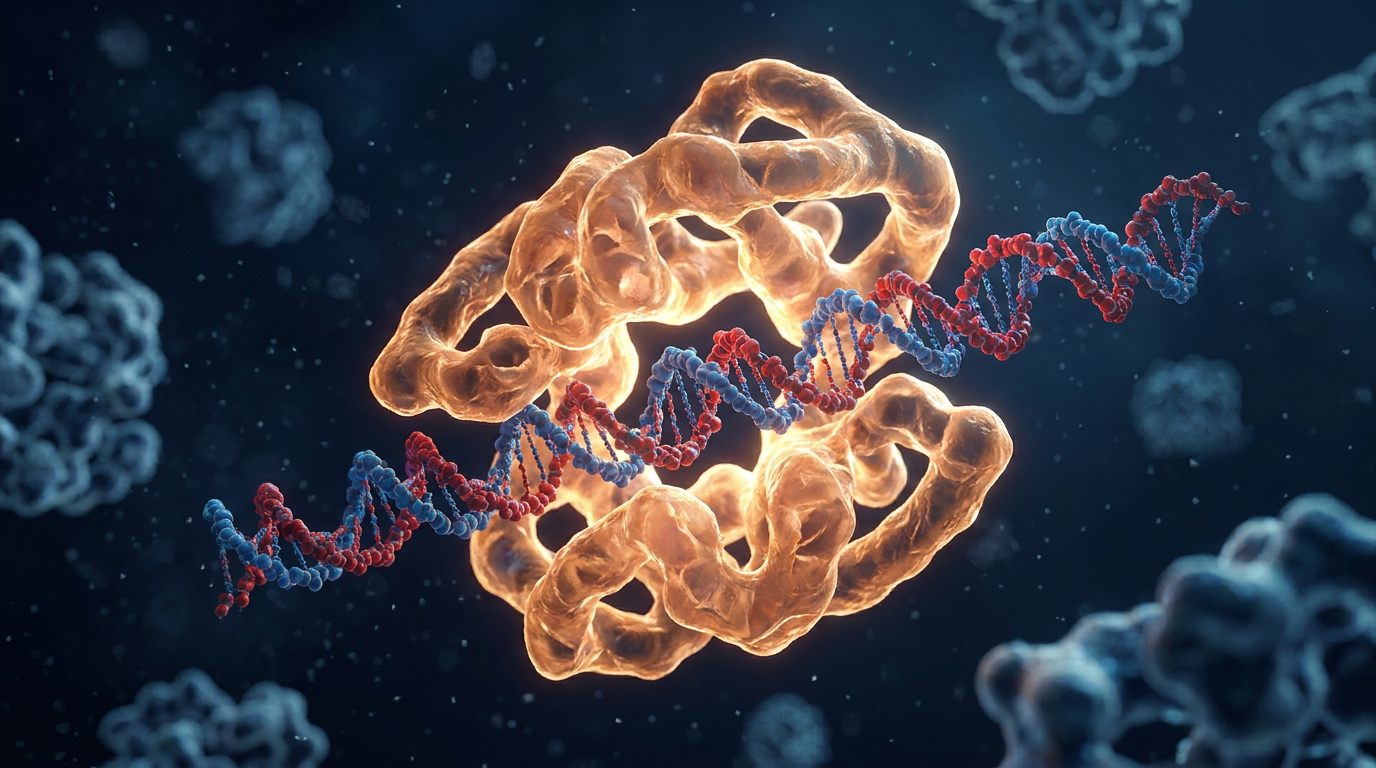
At the absolute heart of this cellular buffering system are specialized molecules known as "master proteins," or molecular chaperones. To understand how these chaperones function, one must first understand the basic mechanics of gene expression. A gene is essentially a recipe that instructs the cell on how to build a specific protein. Proteins are the workhorses of the body, responsible for everything from digesting food to fighting off infections. When a gene is mutated, the recipe is corrupted. Consequently, the cell manufactures a misshapen, deformed protein that cannot perform its intended job. In a system without buffering, this deformed protein would either be useless or actively toxic, leading directly to cellular dysfunction and disease. However, the cell is not defenseless against these manufacturing errors.[2][4]
This is precisely where the master proteins step into the fray. Molecular chaperones are highly specialized molecules that physically interact with these newly minted, deformed proteins. Like microscopic mechanics, they bind to the misfolded protein and physically force it to fold into its correct, functional three-dimensional shape. By manually correcting the physical structure of the protein after it has been manufactured, the chaperone entirely masks the underlying genetic mutation. The DNA recipe is still fundamentally broken, but the resulting cellular machinery works perfectly because the chaperone has intervened. This post-translational correction is a profound feat of biological engineering, allowing the cell to survive and thrive despite carrying a heavy load of genetic damage.[2][5]

Maintaining this elaborate buffering capacity requires an immense expenditure of cellular resources. Biologists estimate that cells dedicate roughly ten percent of their total energy output simply to maintaining these chaperone networks. These master proteins are constantly patrolling the cellular environment, scanning for misfolded proteins, and expending energy to refold them or tag them for destruction if they are beyond repair. This massive energy investment underscores just how critical genetic buffering is to the survival of complex life. Without this constant, energy-intensive surveillance and repair system, the natural accumulation of genetic mutations would quickly render cellular life impossible. The sheer scale of the chaperone network highlights the evolutionary priority placed on stability and resilience.[5]
However, genetic buffering is not merely a mechanism for individual survival; it is also a profound and hidden driver of evolution. Because master proteins effectively hide the physical effects of genetic mutations, they allow what scientists call "cryptic genetic variation" to accumulate silently within a population over many generations. As organisms reproduce and mutate, these new genetic variants are passed down, but they remain invisible to natural selection because the chaperones are masking their effects. The population appears physically uniform, even as its underlying genetic code becomes increasingly diverse and chaotic. This hidden reservoir of genetic diversity sits quietly in the background, waiting for the right conditions to reveal itself.[3][4]
Under normal, stable environmental conditions, these hidden mutations do absolutely nothing. The chaperones easily handle the load, and the organisms go about their lives. But when a population faces a sudden and extreme environmental stress—such as a drastic spike in temperature, the introduction of a novel predator, or a severe drought—the cellular environment changes dramatically. The master proteins, which are highly sensitive to stress, are suddenly forced to abandon their normal duties of hiding mutations in order to deal with the immediate environmental crisis. They are recruited to protect the cell's most vital proteins from the new stressor, leaving the previously hidden mutations completely unmasked.[3]
When the buffering capacity is overwhelmed and the chaperones are diverted, the hidden mutations are suddenly expressed physically. Almost overnight in evolutionary terms, a wave of new physical traits appears across the population. Many of these newly unmasked traits will be detrimental or fatal, as they are essentially random genetic errors that have never been tested by natural selection. However, by pure chance, some of these unmasked traits might provide the exact biological adaptation needed to survive the new, stressful environment. In this way, genetic buffering acts as a hidden reservoir of evolutionary potential, allowing species to rapidly adapt to catastrophic changes that might otherwise drive them to extinction.[3][4]

Today, the intense scientific focus on genetic buffering has moved far beyond the realm of evolutionary biology and has positioned itself at the absolute forefront of translational medicine. Researchers are realizing that if they can learn to manipulate this buffering system, they can unlock entirely new ways to treat some of humanity's most intractable diseases. The most immediate and promising application of this knowledge is in the war against cancer. Cancer cells are fundamentally defined by their genetic chaos; they accumulate mutations at a staggering, uncontrolled rate. According to the normal rules of biology, this level of genetic damage should cause the cancer cells to collapse under the weight of their own dysfunction and die.[1][5]
Yet, aggressive tumors not only survive this genetic chaos; they actively thrive on it. They achieve this impossible feat by completely hijacking the body's natural buffering system. Cancer cells massively upregulate the production of master proteins, often expressing chaperones at two to three times the rate of healthy, normal tissue. They use this supercharged chaperone network to stabilize their mutated oncogenes—the very genes that are driving their uncontrolled growth. The tumor becomes entirely dependent on this artificial buffering capacity to keep its deformed proteins functioning and to prevent the cell from triggering its own natural suicide mechanisms. The cancer's greatest strength—its ability to mutate rapidly—is entirely reliant on this stolen biological shock-absorber.[1][5]
Yet, aggressive tumors not only survive this genetic chaos; they actively thrive on it.
This crucial discovery has illuminated a radical new vulnerability in oncology, fundamentally shifting how researchers approach cancer treatment. For decades, the primary strategy in precision oncology has been to identify the specific genetic mutation driving a tumor and then design a drug to target that exact mutation. But tumors mutate so quickly that they often develop resistance to these targeted therapies. Now, instead of trying to play whack-a-mole with every individual mutation in a tumor, researchers are developing a new class of drugs designed to inhibit the master proteins themselves. By targeting the buffer rather than the mutation, scientists hope to cut off the tumor's primary survival mechanism.[1][5]
When these new therapeutics disable the tumor's buffering capacity, they effectively strip away the cancer's protective shield. The massive load of hidden mutations is suddenly exposed all at once. Unable to fold its mutated oncogenes and overwhelmed by toxic, misfolded proteins, the cancer cell rapidly and catastrophically self-destructs. Crucially, because healthy cells carry far fewer mutations and rely far less on extreme buffering to survive, they remain relatively unharmed by these chaperone inhibitors. This approach offers a tantalizing vision for the future of oncology: a therapy that leverages the cancer's own high mutation rate as a weapon against it, turning its genetic chaos into a fatal liability.[1][5]

While oncologists are looking for ways to dismantle the buffering system, researchers studying neurodegenerative diseases are exploring the exact opposite strategy. Conditions like Alzheimer's, Parkinson's, and Huntington's disease are fundamentally disorders of protein misfolding. In these devastating illnesses, specific proteins in the brain fail to fold correctly, causing them to clump together into toxic aggregates or plaques. These plaques slowly poison and destroy surrounding brain tissue, leading to the progressive cognitive and motor decline that characterizes these diseases. For years, scientists have struggled to find ways to clear these plaques or prevent them from forming in the first place.[6]
The lens of genetic buffering provides a new explanation for why these diseases primarily strike in old age. As the human body ages, its natural buffering capacity steadily weakens. The master proteins become less efficient, less abundant, and less capable of keeping up with the daily wear and tear of cellular life. Without a robust chaperone network to catch and correct misfolded proteins, the errors begin to accumulate. The toxic plaques that define Alzheimer's and Parkinson's are, in essence, the physical manifestation of a failing biological buffer. The brain's shock-absorbers have simply worn out, leaving the neurons vulnerable to the slow accumulation of protein garbage.[6]
Armed with this understanding, pharmaceutical researchers are now aggressively investigating compounds that can artificially boost, rejuvenate, or supplement the chaperone networks in the aging brain. The goal is to develop drugs that can upregulate the expression of master proteins, effectively restoring the body's youthful ability to buffer against protein decay. If scientists can successfully enhance the brain's natural buffering capacity, they may be able to halt or even reverse the progression of neurodegenerative diseases before the toxic plaques have a chance to form and cause irreversible damage. It is a strategy focused on enhancing the body's innate resilience rather than simply attacking the symptoms of the disease.[1][6]
The implications of this research extend far beyond cancer and Alzheimer's disease. The realization that genetic buffering plays such a central role in health is prompting a reevaluation of how we approach diagnostics and preventative medicine. Currently, genetic testing focuses almost exclusively on identifying the presence of known, disease-causing mutations. If a patient carries a specific mutation, they are often told they have a high risk of developing the associated disease. However, this deterministic approach ignores the crucial role of the individual's buffering capacity. Two patients with the exact same genetic mutation may have vastly different health outcomes depending on the strength and efficiency of their respective chaperone networks.[3][6]
In the near future, precision medicine will likely evolve to incorporate measurements of buffering capacity alongside traditional genetic sequencing. A comprehensive diagnostic profile will not only list the mutations a patient carries but also evaluate how well their master proteins are functioning. This dual approach will provide a much more accurate and nuanced prediction of disease risk. A patient with a concerning mutation but a highly robust buffering system might require less aggressive intervention than a patient with the same mutation and a weakened chaperone network. This shift toward systemic diagnostics promises to make preventative medicine significantly more personalized and effective.[3][6]

Furthermore, understanding genetic buffering opens up new avenues for addressing rare genetic disorders. Many of these conditions are caused by single-gene mutations that result in the production of a crucial but misfolded protein. While gene therapy—attempting to rewrite the broken DNA—is one potential solution, it remains technically challenging and expensive. An alternative approach could involve using targeted chaperone therapies to help the misfolded protein achieve its correct shape. By artificially boosting the specific buffering mechanism needed for that protein, doctors might be able to restore its function and alleviate the symptoms of the disorder without ever having to alter the patient's underlying genetic code.[2][6]
The study of master proteins is also shedding light on the complex relationship between environmental factors and human health. We know that environmental stressors—such as poor diet, lack of sleep, exposure to toxins, and chronic psychological stress—can significantly increase the risk of developing various diseases. The buffering model provides a clear biological mechanism for this connection. Chronic environmental stress forces the cellular chaperone networks to constantly work overtime, diverting resources away from their normal duties of masking genetic mutations and maintaining protein homeostasis. Over time, this chronic strain can exhaust the buffering system, leading to its premature failure.[4][6]
This insight underscores the profound biological importance of lifestyle interventions. Activities that reduce systemic stress and promote cellular health—such as regular exercise, a balanced diet, and adequate sleep—are not just vague wellness concepts; they are actively preserving the integrity of the body's genetic buffering system. By minimizing the external load on our master proteins, we ensure that they have the resources necessary to continue hiding our genetic flaws and preventing the accumulation of toxic, misfolded proteins. In a very real sense, a healthy lifestyle is a strategy for protecting our biological shock-absorbers.[6]
As we look to the future, the therapeutic potential of master proteins seems almost limitless. Researchers are currently exploring the use of advanced artificial intelligence and machine learning algorithms to map the incredibly complex interaction networks between thousands of different proteins and their respective chaperones. These computational models are helping scientists identify novel drug targets and design highly specific molecules that can either inhibit or enhance buffering capacity with unprecedented precision. The integration of AI into this field is rapidly accelerating the pace of discovery, turning what was once a theoretical concept into a tangible pipeline of next-generation therapeutics.[1][6]

We are currently witnessing a profound paradigm shift in how science views human biology and the nature of disease. For the better part of the last fifty years, the medical establishment has operated on a largely deterministic model: find the bad gene, and you find the root cause of the disease. This reductionist approach has yielded incredible breakthroughs, but it has also hit significant limitations, particularly when dealing with complex, multi-genic conditions or diseases of aging. The discovery and exploration of master proteins prove that biology is far more resilient, dynamic, and systemic than we previously imagined.[6]
Disease is no longer viewed simply as the inevitable consequence of a genetic mutation. Instead, it is increasingly understood as a systemic failure—a breakdown in the delicate balance between the errors in our code and the cellular machinery designed to correct them. Disease occurs when the buffer fails. By learning to understand, measure, and ultimately control that buffer, modern medicine is unlocking an entirely new dimension of healing. We are moving from an era of simply reading the genetic code to an era of actively managing the cellular environment that interprets it, offering unprecedented hope for extending both the length and the quality of human life.[6]
How we got here
1990s
Scientists first identify heat-shock proteins (HSPs) as molecular chaperones that respond to cellular stress.
Early 2000s
The concept of 'cryptic genetic variation' is formalized, showing how buffering hides evolutionary traits.
2010s
First-generation chaperone inhibitors are tested in oncology, proving that stripping a tumor's buffer can trigger cell death.
June 2026
New research highlights how specific 'master' proteins can be targeted to inspire a novel class of precision drugs.
Viewpoints in depth
Fundamental Biologists
Focuses on the evolutionary and cellular mechanics of buffering.
This camp argues that understanding how chaperones fold proteins and allow cryptic genetic variation to accumulate is essential for grasping how complex life survives and adapts to stress. They view genetic buffering not just as a medical target, but as a fundamental engine of evolution that explains how species can rapidly adapt to catastrophic environmental changes.
Translational Drug Developers
Focuses on exploiting the buffering system for novel therapeutics.
These researchers emphasize that inhibiting chaperones in cancer cells or boosting them in aging brains represents a more systemic, highly effective approach to treating complex diseases than targeting single genes. They argue that because tumors rely so heavily on buffering to survive their own mutation rates, targeting this dependency is the key to overcoming drug resistance in oncology.
Clinical Systems Analysts
Focuses on the broader implications for precision medicine and diagnostics.
This perspective argues that current genetic testing is incomplete because it only looks at the presence of mutations. They advocate for a future where diagnostics also measure a patient's buffering capacity, providing a much more accurate prediction of disease risk and allowing for truly personalized preventative medicine.
What we don't know
- Whether artificially boosting chaperone proteins for long periods could inadvertently protect early-stage cancer cells.
- Exactly how many different types of master proteins exist in the human body and which specific mutations they target.
- How to precisely deliver chaperone-enhancing drugs across the blood-brain barrier to treat neurodegeneration without side effects.
Key terms
- Genetic Buffering
- The biological process by which a cell masks the harmful effects of DNA mutations, maintaining normal function.
- Molecular Chaperones
- 'Master proteins' that assist in the proper folding and stabilization of other proteins, especially those deformed by mutation.
- Protein Misfolding
- A process where a protein fails to achieve its correct 3D structure, often leading to loss of function or toxic clumping.
- Cryptic Genetic Variation
- Hidden genetic mutations that accumulate silently in a population due to buffering, only revealing themselves under extreme stress.
- Oncogene
- A mutated gene that has the potential to cause cancer, often stabilized by hijacked chaperone proteins in tumor cells.
Frequently asked
What is genetic buffering?
It is the biological process where cells mask the harmful effects of DNA mutations, often using 'chaperone' proteins to fold misshapen molecules into working order.
Why don't all genetic mutations cause disease?
Because of buffering, many mutations are compensated for by other genes or corrected post-translationally by master proteins, rendering them silent.
How could this lead to new cancer treatments?
Cancer cells rely heavily on buffering to survive their own extreme mutation rates. Drugs that inhibit these buffer proteins can cause cancer cells to collapse while sparing healthy cells.
Can we boost buffering to prevent aging?
Researchers are actively exploring ways to upregulate chaperone proteins to prevent the protein misfolding that drives neurodegenerative diseases like Alzheimer's.
Sources
Source coverage
6 outlets
3 viewpoints surfaced






[1]NatureTranslational Drug Developers
These 'master' proteins protect us from deadly mutations — and could inspire new drugs
Read on Nature →[2]National Institutes of HealthFundamental Biologists
Cotranslational assembly and genetic buffering mechanisms
Read on National Institutes of Health →[3]PLOS BiologyFundamental Biologists
A population genetic interpretation of GWAS findings for human quantitative traits and buffering
Read on PLOS Biology →[4]CellFundamental Biologists
Genetic and Molecular Buffering of Phenotypes
Read on Cell →[5]ScienceTranslational Drug Developers
Chaperone networks and the buffering of mutant proteins
Read on Science →[6]Factlen Editorial TeamClinical Systems Analysts
Synthesis by Factlen editorial team
Read on Factlen Editorial Team →
Every angle. Every day.
Get science stories with full source coverage and perspective breakdowns delivered to your inbox.