
Scientists Identify 64,000 Square Miles of Climate-Resilient Coral Reefs
A new global analysis reveals that vast stretches of coral reefs possess the natural conditions to survive rising ocean temperatures, offering a targeted roadmap for marine conservation.
By Factlen Editorial Team
- Marine Conservationists
- Focus on using the new data to rapidly expand marine protected areas around these havens.
- Climate Baseline Forecasters
- Warn that localized resilience does not alter the dire global trajectory if emissions are not cut.
- Coastal Policymakers
- View the findings as a roadmap for meeting national '30 by 30' conservation targets.
What's not represented
- · Local fishing communities whose livelihoods depend on these specific reef systems
- · Tourism boards in nations hosting these newly identified climate havens
Why this matters
By pinpointing exactly which reefs can survive a warming ocean, governments can direct limited conservation funding to protect these 'climate havens' before they are destroyed by overfishing or pollution.
Key points
- A new global analysis has identified 166,000 square kilometers of coral reefs capable of surviving climate change.
- This resilient area is three times larger than previously estimated and spans 71 countries.
- Roughly 60% of these climate havens are concentrated in Australia, the Bahamas, Cuba, Indonesia, and the Philippines.
- The reefs survive due to cooler ocean currents, natural shading, and biological adaptation to heat.
- Only 28% of these resilient reefs are currently protected, prompting urgent calls for conservation.
Ocean temperatures have shattered records for over two years, triggering mass bleaching events that have left marine biologists bracing for the worst. As the Pacific-warming phenomenon known as El Niño takes hold, the immediate outlook for the world's delicate marine ecosystems has appeared increasingly bleak. The relentless thermal stress has forced corals to expel their symbiotic algae, turning vibrant underwater cities into skeletal white graveyards.[1][5]
But a sweeping new analysis presented at the Our Ocean Conference in Mombasa, Kenya, offers a rare injection of empirical hope into the field of marine conservation. Rather than focusing solely on the devastation, researchers have mapped the ocean's natural defense mechanisms, revealing that the ecosystem is far more robust than previously understood.[1][3]
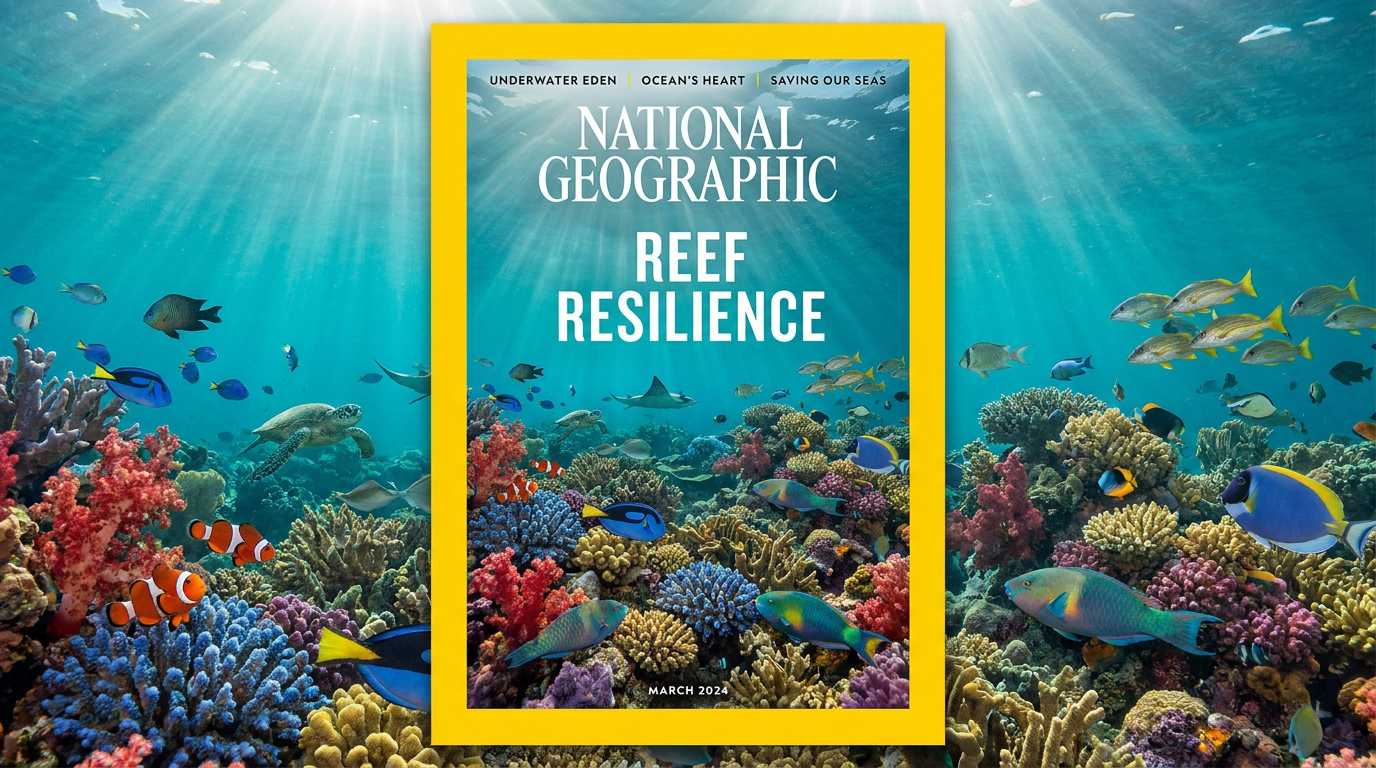
The central claim of the new research is substantial: scientists have identified approximately 166,000 square kilometers (64,000 square miles) of coral reefs worldwide that demonstrate a strong capacity to survive and recover from the impacts of climate change. This resilient area is roughly three times larger than previous estimates suggested, offering a massive new footprint for targeted conservation efforts.[2][3][4]

The evidence base for this discovery is grounded in an enormous, decades-long dataset. Led by the Wildlife Conservation Society (WCS) and Macquarie University, the research team synthesized more than 45,000 individual coral surveys conducted between 1960 and 2025. By layering these field observations with decades of oceanographic and climate data, they were able to pinpoint exact coordinates where reefs are defying the global warming trend.[2][4][6]
These resilient reefs are not confined to a single isolated pocket; they span 71 countries and 100 territories across the Caribbean, Pacific, and Atlantic oceans. The mapping effort utilized artificial intelligence to process the vast environmental variables, identifying specific "havens" or "refuges" where local conditions buffer the corals from the worst of the heat.[2][4][5]
The mechanism behind this survival comes down to localized environmental advantages. In many of these havens, deep-water upwelling delivers a steady stream of cooler currents to the surface, effectively air-conditioning the reef during severe marine heatwaves. This natural cooling system prevents the water temperatures from crossing the fatal threshold that triggers mass bleaching.[1][5][6]
Other resilient pockets benefit from different geographic shields. Some reefs are situated in areas with natural shading that reduces the intensity of solar radiation, while others are tucked away in locations that sit outside the destructive, physical paths of major tropical cyclones. By avoiding the mechanical destruction of storms, these corals maintain the structural integrity needed to withstand thermal stress.[1][5]
Other resilient pockets benefit from different geographic shields.
In some cases, the resilience is biological rather than purely geographic. The study found that certain species of stony corals have simply adapted to withstand higher temperatures, demonstrating an accelerated evolutionary response to warming waters. Furthermore, some ecosystems are showing a remarkable, intrinsic ability to recover much faster from damage than previously recorded.[4][5]
Despite spanning 71 countries, the distribution of these climate havens is highly concentrated. The data reveals that roughly 60 percent of the identified resilient reefs are located within the coastal waters of just five nations: Australia, the Bahamas, Cuba, Indonesia, and the Philippines. This concentration places a disproportionate responsibility—and opportunity—on these specific governments.[4][5]

This empirical mapping challenges some of the most dire baseline forecasts issued by climate authorities. The Intergovernmental Panel on Climate Change (IPCC) previously warned that 70 to 90 percent of coral reefs could be wiped out if global temperatures rise by 1.5 degrees Celsius above pre-industrial levels, and up to 99 percent could perish at 2.0 degrees Celsius.[3][7]
While the new data does not negate the catastrophic threat of unchecked greenhouse gas emissions, it proves that the ecosystem is not uniformly doomed. "Coral reefs are often framed as ecosystems beyond saving," noted Emily Darling, director of coral conservation at the Wildlife Conservation Society. "This research shows otherwise: we know where the hope is and what we need now is political will."[2][4][5]
Identifying these resilient reefs is only the first step; formally protecting them is the immediate challenge. The study reveals a glaring vulnerability in global marine management: only 28 percent of these climate-resilient reefs currently fall within protected or conserved areas. The vast majority remain entirely exposed to human exploitation.[2][4]

This data arrives at a critical moment for international environmental policy. Global governments are currently drafting action plans to meet the "30 by 30" target—a United Nations-backed initiative to place 30 percent of the planet's land and marine environments under formal protection by the end of the decade.[2]
By providing exact coordinates for these resilient reefs, the research gives policymakers a literal map for where to deploy limited conservation funds. Stacy Jupiter, executive director of the WCS's Global Marine Program, emphasized that the data allows governments to make calculated decisions, ensuring that financial resources are directed toward reefs that actually have a fighting chance of surviving the century.[2][5]
Protection is urgently needed because climate change is far from the only stressor these ecosystems face. Overfishing, destructive fishing practices, agricultural runoff, and industrial pollution can easily destroy a temperature-resilient reef. A coral haven that can survive a marine heatwave will still die if it is smothered by coastal sediment or stripped of its vital fish populations.[2][4]

With a powerful El Niño pattern threatening to spike Pacific ocean temperatures even further in the coming months, the window to shield these identified havens is narrowing. Experts warn that the relief from the recent end of the global mass bleaching event will likely be short-lived, making immediate conservation action paramount.[2][5]
Ultimately, the evidence pack delivers a clear mandate for the future of marine biology. The ocean has provided a natural defense mechanism against its own warming, carving out 166,000 square kilometers of sanctuary. It is now up to human political will to ensure those natural defenses are protected from local destruction, preserving the foundation of a quarter of all marine life.[2][6]
How we got here
2018
Early research identifies a small subset of 50 coral reefs worldwide that show strong potential to survive climate change if properly protected.
October 2025
Scientists warn that mass bleaching events driven by record ocean temperatures are pushing many reef systems past the point of no return.
Early 2026
A prolonged global mass bleaching event is declared over, though the relief is threatened by the onset of a new El Niño pattern.
June 16, 2026
The Wildlife Conservation Society and Macquarie University present new findings in Mombasa, Kenya, identifying 166,000 square kilometers of climate-resilient reefs.
Viewpoints in depth
Marine Conservationists
Emphasize the urgent need to formally protect these identified havens from local human impacts.
Conservation groups like the Wildlife Conservation Society argue that while we cannot immediately stop ocean warming, we can control local stressors. By eliminating overfishing, agricultural runoff, and coastal pollution in these specific 166,000 square kilometers, we give these naturally resilient corals the breathing room they need to survive thermal shocks. They view this data as a literal map for deploying limited global conservation funds.
Climate Baseline Forecasters
Caution that localized resilience does not negate the catastrophic global threat of unchecked warming.
Researchers aligned with the IPCC's broader models point out that even with 166,000 square kilometers of resilient reefs, the vast majority of the world's corals remain on track for functional extinction if global temperatures breach 1.5°C or 2.0°C above pre-industrial levels. They stress that these "havens" should be viewed as lifeboats rather than a solution to the underlying crisis of greenhouse gas emissions.
Coastal Policymakers
Focus on integrating this new data into national economic and environmental planning.
For the 71 nations hosting these resilient reefs, the findings present both an opportunity and an obligation. Policymakers are looking to integrate these specific coordinates into their "30 by 30" commitments. Protecting these reefs is not just an environmental imperative but an economic one, as they provide critical coastal defense against storm surges and sustain local fisheries that feed millions.
What we don't know
- Whether these resilient reefs can withstand warming scenarios that exceed 2.0°C above pre-industrial levels.
- If the heat-adapted corals in these havens can be successfully transplanted to reseed dying reefs in other regions.
- How quickly governments will act to formally protect the 72% of these havens that remain vulnerable to local pollution and overfishing.
Key terms
- Coral Bleaching
- A stress response where corals expel the symbiotic algae living in their tissues, causing them to turn completely white and leaving them vulnerable to starvation and disease.
- Climate Haven (Refugia)
- A localized geographic area that remains relatively buffered from the extreme effects of climate change, allowing species to survive.
- Upwelling
- An oceanographic process where deep, cold, and nutrient-rich water rises to the surface, which can help cool reefs during marine heatwaves.
- 30 by 30 Target
- A global conservation initiative aiming to designate 30 percent of Earth's land and ocean area as protected by the year 2030.
Frequently asked
What makes a coral reef climate-resilient?
Resilient reefs are typically located in areas with cooler deep-water upwelling, natural shading that reduces solar radiation, or geographic protection from cyclones. In some cases, the corals themselves have genetically adapted to withstand higher temperatures.
How much of the world's coral is considered resilient?
The new study identified approximately 166,000 square kilometers (64,000 square miles) of resilient reefs, which is roughly one-third of the global total and three times larger than previous estimates.
Where are these resilient reefs located?
While they span 71 countries, about 60% of these havens are concentrated in just five nations: Australia, the Bahamas, Cuba, Indonesia, and the Philippines.
Are these reefs currently protected?
Mostly no. The study found that only 28% of these climate-resilient reefs currently fall within formal marine protected areas, leaving the rest vulnerable to overfishing and pollution.
Sources
Source coverage
7 outlets
3 viewpoints surfaced







[1]The New York Times
New Coral Study Identifies Areas Where Reefs Are Hanging On
Read on The New York Times →[2]ReutersCoastal Policymakers
Scientists identify 64,000 sq miles of coral reef capable of surviving climate crisis
Read on Reuters →[3]Agence France-PresseClimate Baseline Forecasters
Vast areas of coral reef could resist climate change
Read on Agence France-Presse →[4]The Straits TimesCoastal Policymakers
Scientists found some coral reefs can survive climate change
Read on The Straits Times →[5]CBC NewsMarine Conservationists
New research shows more than 150,000 square kilometres of coral reefs are resilient to the effects of climate change
Read on CBC News →[6]Wildlife Conservation SocietyMarine Conservationists
New Global Research Identifies Climate-Resilient Coral Reefs
Read on Wildlife Conservation Society →[7]Intergovernmental Panel on Climate ChangeClimate Baseline Forecasters
Special Report on Global Warming of 1.5°C
Read on Intergovernmental Panel on Climate Change →
Every angle. Every day.
Get science stories with full source coverage and perspective breakdowns delivered to your inbox.