
How Cold-Climate Heat Pumps Are Rewriting the Rules for Older Home Retrofits
Advancements in inverter compressors and low-GWP refrigerants now allow heat pumps to efficiently warm older homes in sub-zero temperatures. Federal IRA incentives are making these comprehensive, whole-home electrification retrofits financially viable.
By Factlen Editorial Team
- Full Electrification Advocates
- Argue that modern technology makes gas backups entirely obsolete, pushing for complete fossil fuel removal.
- Pragmatic HVAC Contractors
- Emphasize hybrid dual-fuel systems as a necessary, cost-effective bridge for older, poorly insulated homes.
- Budget-Conscious Homeowners
- Focus on the total capital expenditure, prioritizing immediate ROI and navigating the complex web of rebates.
What's not represented
- · Renters unable to modify their buildings
- · Historic preservation boards restricting exterior units
Why this matters
Upgrading an HVAC system is one of the largest capital expenses a homeowner faces. Understanding the capabilities of next-generation heat pumps and how to stack federal incentives can save thousands of dollars while future-proofing a property against volatile fossil fuel prices.
Key points
- Modern cold-climate heat pumps can maintain 100% heating capacity down to 5°F without backup resistance heat.
- New low-GWP refrigerants like R-290 allow heat pumps to produce water hot enough for traditional radiators.
- Older homes often require electrical panel upgrades to support the 30-50 amps required by central heat pumps.
- The IRA provides a $2,000 annual tax credit for heat pumps, plus up to $8,000 in point-of-sale rebates for qualifying incomes.
- Building scientists recommend upgrading a home's insulation before sizing and installing a new heat pump.
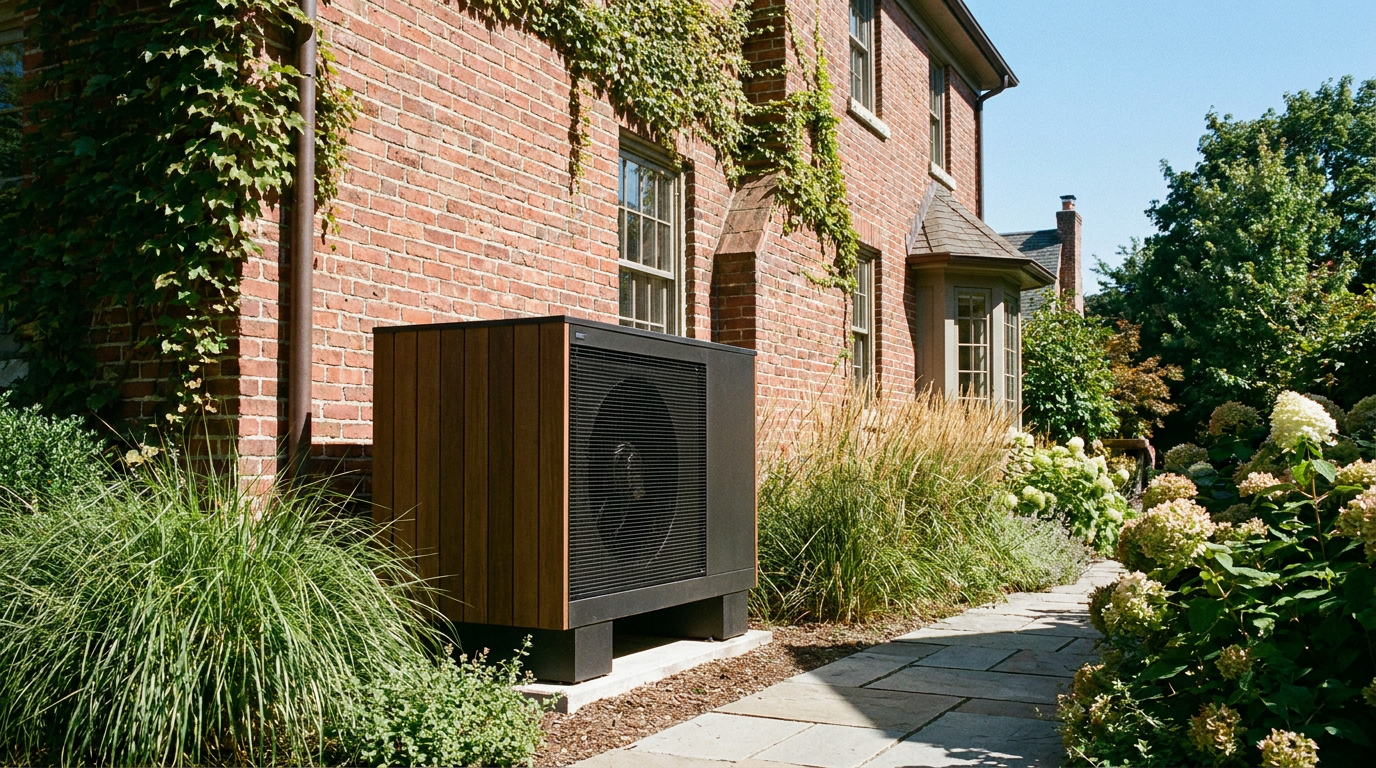
For decades, the conventional wisdom in home remodeling was simple: heat pumps were for the Sun Belt, and northern homes needed a furnace. But as 2026 unfolds, the residential HVAC landscape has fundamentally shifted. Heat pumps have transitioned from a mild-climate alternative to the gold standard for home retrofits across North America.[3][6]
The historical hesitation was grounded in physics. Traditional air-source heat pumps struggled to extract thermal energy when temperatures plummeted, often losing significant heating capacity once the thermometer dropped below 40 degrees Fahrenheit. This required homeowners in colder regions to rely on expensive, energy-intensive electric resistance backup strips, leading to exorbitant winter utility bills and a reputation for poor cold-weather performance.[2][6]
That paradigm was shattered by the U.S. Department of Energy’s Cold Climate Heat Pump (ccASHP) Technology Challenge. By partnering with major manufacturers, the initiative pushed the industry to develop prototypes capable of maintaining 100 percent of their rated heating capacity at 5 degrees Fahrenheit. Field validations published recently confirm that these next-generation units not only meet but exceed expectations, delivering reliable warmth without relying on auxiliary heat.[2]
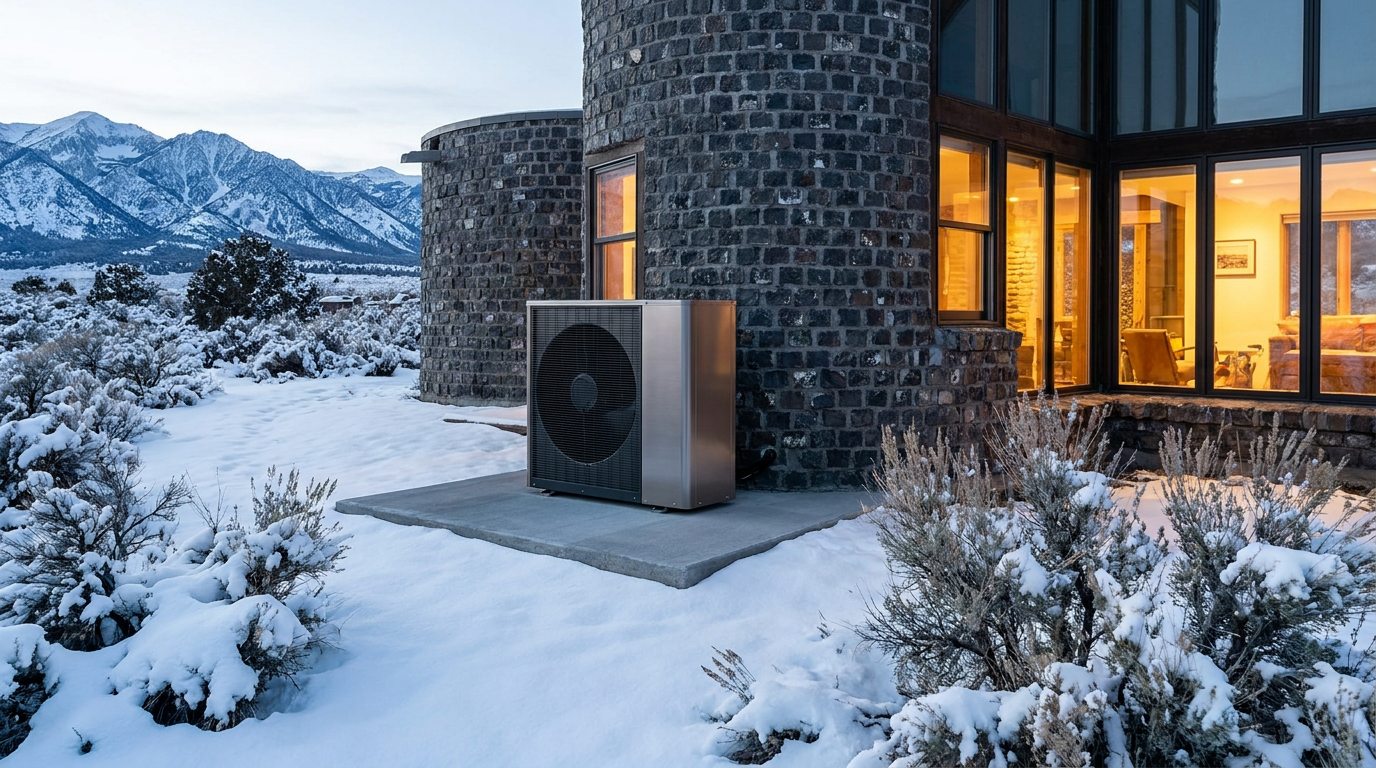
The secret to this winter resilience lies in variable-speed, inverter-driven compressors. Unlike older single-stage units that simply blast air on or off, modern inverters modulate their speed precisely to match the home's real-time thermal load. This allows the system to continuously extract ambient heat from the outdoor air—even at a staggering minus 22 degrees Fahrenheit—and compress it to a usable temperature for the indoors.[3][6]

Compounding this mechanical leap is a major regulatory shift that took effect at the start of 2026, mandating the use of low-Global Warming Potential (GWP) refrigerants. The industry has rapidly transitioned away from legacy chemicals toward modern alternatives like R-454B and R-290. R-290, which is highly refined propane, boasts a near-zero GWP and possesses exceptional thermodynamic properties.[3]
For owners of older homes, the rise of R-290 is particularly transformative. Because this refrigerant can produce water temperatures up to 167 degrees Fahrenheit, it allows modern air-to-water heat pumps to interface directly with existing cast-iron radiators and baseboards. Previously, retrofitting a boiler-heated historic home meant tearing open walls to install ductwork; today, the existing hydronic infrastructure can simply be connected to a high-temperature outdoor unit.[3][6]
However, bringing 2026 technology into a 1950s home presents distinct infrastructural hurdles, beginning at the electrical panel. Many older properties still operate on 100-amp or even 60-amp electrical services, which were designed long before the era of induction stoves, electric vehicles, and whole-home heat pumps. Because a central ccASHP requires a dedicated 240-volt circuit drawing 30 to 50 amps, a costly panel upgrade is often the mandatory first step of a retrofit.[4][6]
However, bringing 2026 technology into a 1950s home presents distinct infrastructural hurdles, beginning at the electrical panel.
Ductwork presents another common bottleneck. Homes built before the advent of central air conditioning often lack ductwork entirely, or possess undersized trunk lines designed only for the high-heat output of a gas furnace. Because heat pumps deliver a higher volume of lower-temperature air, pushing that airflow through narrow, leaky vintage ducts can result in poor efficiency and uncomfortable drafts.[4][6]

Contractors navigate these architectural constraints through several tailored approaches. For homes without usable ducts, ductless mini-splits offer a surgical solution, requiring only a three-inch hole in the wall to connect the outdoor compressor to sleek indoor air handlers. This allows for precise, room-by-room zoning, ensuring that a drafty upstairs bedroom can be heated independently from a well-insulated living room.[4][6]
When retrofitting, homeowners inevitably face the envelope debate: whether to upgrade the home's insulation first, or simply install a larger heat pump to overcome the heat loss. Building scientists strongly advocate for weatherization first, as sealing air leaks and adding attic insulation permanently reduces the home's thermal load. This allows for the installation of a smaller, less expensive heat pump that will cost significantly less to operate over its lifespan.[4][6]

For properties where full weatherization is cost-prohibitive, the hybrid or dual-fuel approach has become a highly popular compromise. In this setup, an electric heat pump handles the heating load for 90 percent of the winter, but the system automatically switches to an existing gas furnace during extreme polar vortex events. This provides peace of mind while still delivering massive reductions in annual fossil fuel consumption.[1][3][6]
To ease the capital burden of these comprehensive retrofits, the federal government has deployed unprecedented financial incentives through the Inflation Reduction Act (IRA). The most accessible of these is the 25C Energy Efficient Home Improvement Credit, which allows any homeowner with sufficient tax liability to claim 30 percent of the cost of a qualifying heat pump, capped at $2,000 annually.[5]
For low- and moderate-income households, the financial support is even more robust via the Home Electrification and Appliances Rebates (HEAR) program. Administered at the state level, HEAR provides point-of-sale discounts rather than tax credits, offering up to $8,000 for a heat pump installation and an additional $4,000 to cover the necessary electrical panel upgrades.[5][6]

Simultaneously, the Home Efficiency Rebates (HOMES) program rewards holistic retrofits that demonstrably reduce a property's overall energy consumption. If a combination of air sealing, insulation, and a new heat pump is modeled to cut a home's energy use by 35 percent or more, homeowners can unlock thousands of dollars in additional performance-based rebates.[5]
Crucially, the Treasury Department has clarified that homeowners can strategically stack these incentives. A family might use a HEAR rebate to drastically reduce the upfront cost of the equipment at the point of sale, and then apply the 25C tax credit to the remaining out-of-pocket balance when they file their taxes the following spring.[5][6]
Ultimately, the successful electrification of an older home requires abandoning the old swap-and-replace mentality. It demands a holistic view of the property as an interconnected system of airflow, insulation, and electrical capacity. When designed correctly, a modern cold-climate heat pump retrofit does more than just decarbonize a residence; it transforms a drafty, unevenly heated vintage house into a precisely controlled environment of modern comfort.[3][4][6]
How we got here
2021
The DOE launches the Cold Climate Heat Pump Technology Challenge to spur industry innovation.
August 2022
The Inflation Reduction Act (IRA) is signed, allocating $8.8 billion for home energy rebates.
January 2025
PNNL publishes field validation results proving prototype ccASHPs maintain high efficiency below 5°F.
January 2026
New low-GWP refrigerant regulations take effect, shifting the market toward R-290 and R-454B systems.
Viewpoints in depth
Full Electrification Advocates
Argue that modern technology makes gas backups entirely obsolete, pushing for complete fossil fuel removal.
This camp, heavily represented by environmental groups and building scientists, points to the proven performance of ccASHPs at -22°F as evidence that dual-fuel systems are an unnecessary crutch. They argue that keeping a gas connection merely prolongs fossil fuel dependence and forces homeowners to pay fixed monthly utility connection fees for a pipe they rarely use. Their focus is on maximizing IRA rebates to fund deep energy retrofits—upgrading insulation, sealing envelopes, and installing high-capacity heat pumps—so that older homes can achieve net-zero emissions without sacrificing comfort.
Pragmatic HVAC Contractors
Emphasize hybrid dual-fuel systems as a necessary, cost-effective bridge for older, poorly insulated homes.
Installers working on the ground in cold climates often take a more cautious approach. While they acknowledge the impressive lab results of modern inverters, they warn that dropping a ccASHP into a drafty 1920s home without extensive weatherization can lead to systems running continuously at maximum capacity, driving up electricity bills. For these professionals, leaving the existing gas furnace in place to handle the coldest 5% of winter days is a pragmatic safety net. It avoids the massive upfront costs of tearing open walls for insulation while still delivering 95% of the environmental benefits.
Budget-Conscious Homeowners
Focus on the total capital expenditure, prioritizing immediate ROI and navigating the complex web of rebates.
For many families, the decision isn't ideological—it's strictly financial. Even with a $2,000 tax credit, the combined cost of a new heat pump, a 200-amp electrical panel upgrade, and ductwork modifications can easily exceed $20,000. This perspective prioritizes staging the upgrades over time: perhaps starting with a ductless mini-split in the main living area or taking advantage of the HOMES rebate for basic attic insulation before committing to a whole-home HVAC replacement. They view the transition as a multi-year project rather than a single remodeling event.
What we don't know
- How quickly the electrical grid in older neighborhoods can adapt if every home upgrades to 200-amp service simultaneously.
- The long-term maintenance lifespan of the new R-290 and R-454B systems compared to legacy R-410A units.
- Whether state-level HEAR rebate funds will be depleted before all eligible low-income homeowners can apply.
Key terms
- Cold Climate Air-Source Heat Pump (ccASHP)
- A heat pump specifically engineered with variable-speed compressors to extract heat from outdoor air even at sub-zero temperatures.
- Inverter-Driven Compressor
- A compressor that can modulate its speed to precisely match the heating or cooling load, rather than just turning on and off.
- R-290 Refrigerant
- A highly efficient, propane-based refrigerant with a near-zero Global Warming Potential (GWP), capable of producing high-temperature heat.
- Dual-Fuel System
- A hybrid HVAC setup that uses an electric heat pump for most heating and cooling, but switches to a gas furnace during extreme cold snaps.
- HEAR Rebate
- The Home Electrification and Appliances Rebates program, providing point-of-sale discounts for low- and moderate-income households upgrading to electric appliances.
Frequently asked
Do heat pumps really work in freezing temperatures?
Yes. Modern cold-climate air-source heat pumps (ccASHPs) can maintain 100% of their heating capacity down to 5°F and continue operating efficiently at -22°F.
Will I need to upgrade my electrical panel?
Likely yes, if your home has a 100-amp or 60-amp panel. Heat pumps require a dedicated 240V circuit drawing 30 to 50 amps.
Can I keep my existing radiators?
Yes, if you install an air-to-water heat pump using a modern refrigerant like R-290, which can produce water hot enough (up to 167°F) for traditional radiators.
How do the IRA tax credits work for heat pumps?
The 25C tax credit allows homeowners to claim 30% of the installation cost, up to a maximum of $2,000 per year, as a non-refundable credit on their federal taxes.
Sources
Source coverage
6 outlets
3 viewpoints surfaced





[1]Department of EnergyBudget-Conscious Homeowners
Heat Pump Systems and Cold Climate Efficiency
Read on Department of Energy →[2]Pacific Northwest National LaboratoryFull Electrification Advocates
Performance Results from DOE Cold Climate Heat Pump Challenge
Read on Pacific Northwest National Laboratory →[3]EcohomeFull Electrification Advocates
2026 Heat Pump Guide: Cold Climate and Low-GWP Refrigerants
Read on Ecohome →[4]UniColorado Heating & CoolingPragmatic HVAC Contractors
Heat Pumps for Older Homes: What Homeowners Need to Know
Read on UniColorado Heating & Cooling →[5]U.S. Department of the TreasuryBudget-Conscious Homeowners
Coordinating DOE Home Energy Rebates with Tax Credits: An Explainer
Read on U.S. Department of the Treasury →[6]Factlen Editorial TeamFull Electrification Advocates
Synthesis by Factlen editorial team
Read on Factlen Editorial Team →

Every angle. Every day.
Get home stories with full source coverage and perspective breakdowns delivered to your inbox.