
Evidence Pack: Did AI Deepfakes Actually Disrupt the 2024–2025 Global Elections?
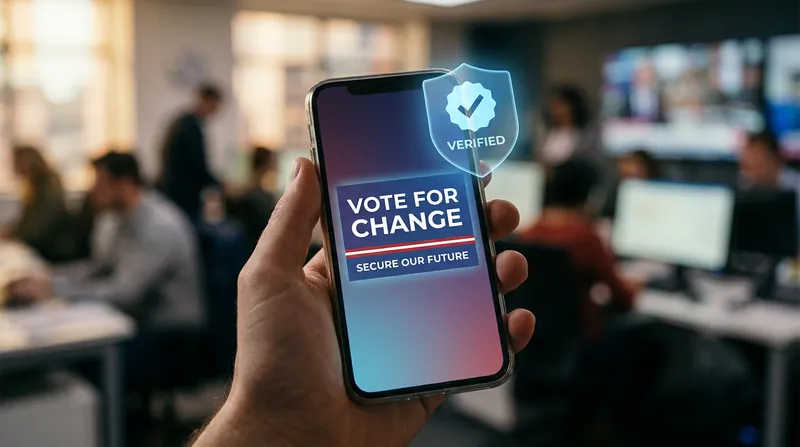
Despite widespread predictions of an AI-driven democratic collapse, comprehensive studies of the recent global election cycle show no evidence that deepfakes altered electoral outcomes. However, the technology has birthed a new threat: the 'liar's dividend,' where politicians successfully dismiss authentic evidence as AI-generated.

In short
- Comprehensive studies from the Alan Turing Institute and IPIE found no evidence that AI deepfakes measurably altered any major election outcome in 2024 or 2025.
- The vast majority of generative AI usage in political campaigns was for basic content creation, such as translation and satire, rather than sophisticated deception.
- Deepfakes largely circulated within existing partisan echo chambers, reinforcing the beliefs of highly engaged voters rather than persuading undecided demographics.
The 2024–2025 "super election cycle" saw more than two billion people vote across 50 countries, marking the largest democratic exercise in human history.[2]
In the run-up to this unprecedented wave of voting, technologists, media analysts, and political scientists warned of an impending "deepfake apocalypse."
The prevailing fear was that hyper-realistic, AI-generated audio and video would deceive voters at scale, effectively hacking the electorate and swinging tight races before fact-checkers could respond.[1]
Now, with the cycle concluded and the data analyzed, comprehensive studies from global research institutes offer a definitive, evidence-based verdict on the true impact of generative AI.[2]
The apocalyptic predictions did not materialize. According to the Alan Turing Institute's Centre for Emerging Technology and Security (CETaS), there is no conclusive evidence that AI-generated disinformation measurably altered any major election result.[1]
The Turing Institute's analysis found that while synthetic content was certainly present, its volume was entirely dwarfed by traditional misinformation spread by human influencers, partisan networks, and politicians themselves.[1]
Furthermore, researchers observed that political deepfakes largely circulated within highly polarized echo chambers. They served to reinforce the existing beliefs of highly engaged partisans rather than successfully persuading the undecided middle.[1]
A parallel global study conducted by the International Panel on the Information Environment (IPIE) tracked 215 major AI incidents across the 50 nations that held elections.
The IPIE data revealed that 90% of generative AI usage in these elections was deployed for basic content creation—such as translating campaign speeches into multiple dialects, generating digital avatars, or producing overt political satire—rather than sophisticated deception.
However, the absence of a catastrophic, election-swinging deepfake hack does not mean that generative AI left democratic institutions untouched.[2]
Researchers at the Brennan Center for Justice and the civil society alliance CIVICUS have identified a more insidious, long-term consequence of the technology: the "liar's dividend."
The liar's dividend occurs when the mere existence of hyper-realistic AI allows politicians and bad actors to falsely claim that authentic, damaging evidence is actually artificially generated.
Because the voting public is now hyper-aware that deepfakes exist, unscrupulous leaders can exploit that baseline skepticism to evade accountability for real scandals, recorded gaffes, or leaked audio.
This phenomenon fundamentally shifts the burden of proof in democratic discourse. Instead of fact-checkers scrambling to debunk fake videos, journalists and civic institutions are increasingly forced to prove that real videos are authentic.[2]
The CIVICUS Digital Democracy Initiative report highlights that this erosion of "epistemic trust"—the shared societal capacity to agree on basic, verifiable facts—is the true, lasting legacy of the AI election cycle.
The CIVICUS report also noted a stark divide in how digital threats manifested between the Global North and the Global South.
In developing democracies, the primary threat remained "cheapfakes"—low-tech manipulations like mislabeled historical photos or selectively edited clips—amplified by algorithmic social feeds, rather than high-end generative AI.
Despite these challenges, civil society organizations adapted rapidly. Fact-checking networks deployed deepfake trackers, while digital literacy campaigns successfully "pre-bunked" synthetic media, inoculating many voters against manipulation.
Ultimately, the evidence pack from the 2024 and 2025 elections suggests that democratic institutions, fact-checkers, and voters are significantly more resilient to synthetic media than initially feared.[1][2]
The challenge for future elections will not necessarily be stopping machines from generating fake realities, but preventing human leaders from using the specter of AI to erase the truth.[2]
Key terms
- Deepfake
- Highly realistic, AI-generated audio, video, or images designed to mimic real people and events.
- Cheapfake
- Media manipulated using low-tech, traditional methods, such as selective editing, speeding up video, or mislabeling existing photos.
- Liar's Dividend
- The advantage gained by bad actors who exploit the public's awareness of deepfakes to falsely dismiss authentic evidence as artificially generated.
- Epistemic Trust
- The shared societal capacity to agree on basic facts and trust the processes used to verify information.
- Pre-bunking
- A media literacy strategy that warns and educates people about misinformation tactics before they encounter the false content.
Frequently asked
Did AI deepfakes change the outcome of any major election in 2024 or 2025?
No. Comprehensive studies from institutions like the Alan Turing Institute found no conclusive evidence that AI-generated disinformation measurably altered any major election result.
What is the "liar's dividend"?
It is a phenomenon where politicians falsely claim that authentic, damaging evidence (like a real audio recording) is an AI deepfake, exploiting public awareness of AI to avoid accountability.
How was AI actually used in these elections?
According to the IPIE, 90% of generative AI usage was for basic content creation, such as translating speeches into multiple languages, generating campaign avatars, or producing political satire.
Are deepfakes the biggest misinformation threat?
Researchers found that traditional "cheapfakes"—low-tech manipulations like mislabeled photos or selectively edited clips—and human-driven misinformation remain far more prevalent and impactful than high-end deepfakes.
Viewpoints in depth
Electoral Resilience Researchers
Focuses on the empirical data showing voters and institutions withstood the AI threat.
Researchers from the Alan Turing Institute and IPIE emphasize that the apocalyptic predictions of AI-driven election hacking were fundamentally flawed. Their data shows that deepfakes largely circulated within existing partisan echo chambers, preaching to the converted rather than persuading undecided voters. They argue that human psychology and traditional misinformation remain far more potent forces in shaping electoral outcomes than synthetic media.
Democratic Watchdogs
Focuses on the long-term erosion of trust and the weaponization of the 'liar's dividend'.
Organizations like the Brennan Center and CIVICUS warn that while direct election hacking failed, the secondary effects of AI are deeply corrosive. They point to the 'liar's dividend,' where the mere existence of deepfakes allows bad actors to dismiss legitimate evidence as fabricated. This camp argues that the real casualty of the AI era is 'epistemic trust'—the shared societal baseline of facts—which will require massive investments in media literacy and content provenance to rebuild.
- Electoral Resilience Researchers
- Argues that empirical data shows voters and institutions successfully withstood the generative AI threat.
- Democratic Watchdogs
- Warns that the 'liar's dividend' and the erosion of epistemic trust pose long-term threats to democratic accountability.
- Factlen Synthesis
- Synthesizes the empirical data with the emerging long-term risks.
Perspectives this story doesn't cover
- Voters who were successfully deceived by localized, low-level AI campaigns.
- Social media platform executives responsible for moderating synthetic content.
Sources
Source coverage
2 outlets
3 viewpoints surfaced


- [1]The Alan Turing InstituteElectoral Resilience Researchers
AI-Enabled Influence Operations: Safeguarding Future Elections
Read on The Alan Turing Institute → - [2]Factlen Editorial TeamFactlen Synthesis
Synthesis by Factlen editorial team
Read on Factlen Editorial Team →

More in News & Politics
See all →Digital Provenance
Evidence Pack: Evaluating Claims That Open-Source Watermarking is Successfully Flagging AI Political Ads
2 sources
Universal Meals
Evidence Pack: Evaluating Claims That Universal Free School Meals Boost Academic Performance
6 sources

Federal Budget
Evidence Pack: Evaluating Claims That FEMA Diverted Disaster Relief Funds to Migrant Housing
2 sources

Civil Service
FACT CHECK: The Evidence Behind OPM's New Federal Workforce 'Accountability' Rule
3 sources
Comments
Every angle. Every day.
Get News & Politics stories with full source coverage and perspective breakdowns, free every day.