
Solid-State Batteries Move from Lab to Highway in Major EV Milestone
Automakers have officially begun road-testing solid-state batteries in North America, unlocking 18-minute charge times and near-doubled energy density.
By Factlen Editorial Team
- Solid-State Innovators
- Companies and labs pushing the fundamental chemistry and performance limits of battery technology.
- Automotive Manufacturers
- Automakers focused on safely integrating new battery tech into mass-market vehicles.
- Energy & Policy Officials
- Government entities prioritizing domestic manufacturing, safety, and energy independence.
- Industry Observers
- Journalists and analysts tracking the commercial viability and timeline of the EV transition.
What's not represented
- · Lithium-ion manufacturers defending the continued viability and cost-effectiveness of LFP batteries.
- · Consumers waiting for affordable, entry-level EVs rather than premium performance models.
Why this matters
Solid-state batteries eliminate the fire risks and range anxiety associated with current EVs. By doubling energy density and slashing charge times to under 20 minutes, this technology removes the final major hurdles to mass electric vehicle adoption.
Key points
- Stellantis has begun road-testing solid-state batteries in a Dodge Charger Daytona.
- Solid-state technology replaces flammable liquid electrolytes with stable solid materials.
- The new cells achieve 375 Wh/kg energy density, nearly double some standard lithium-ion batteries.
- Factorial's solid-state cells can charge from 15% to 90% in just 18 minutes.
- The batteries maintain robust performance in extreme temperatures down to -30°C.
The "holy grail" of electric vehicle technology is no longer confined to laboratory whitepapers and distant corporate roadmaps. In mid-2026, solid-state batteries have officially transitioned from theoretical promises to real-world asphalt, marking a definitive inflection point for the global automotive industry.[1][2]
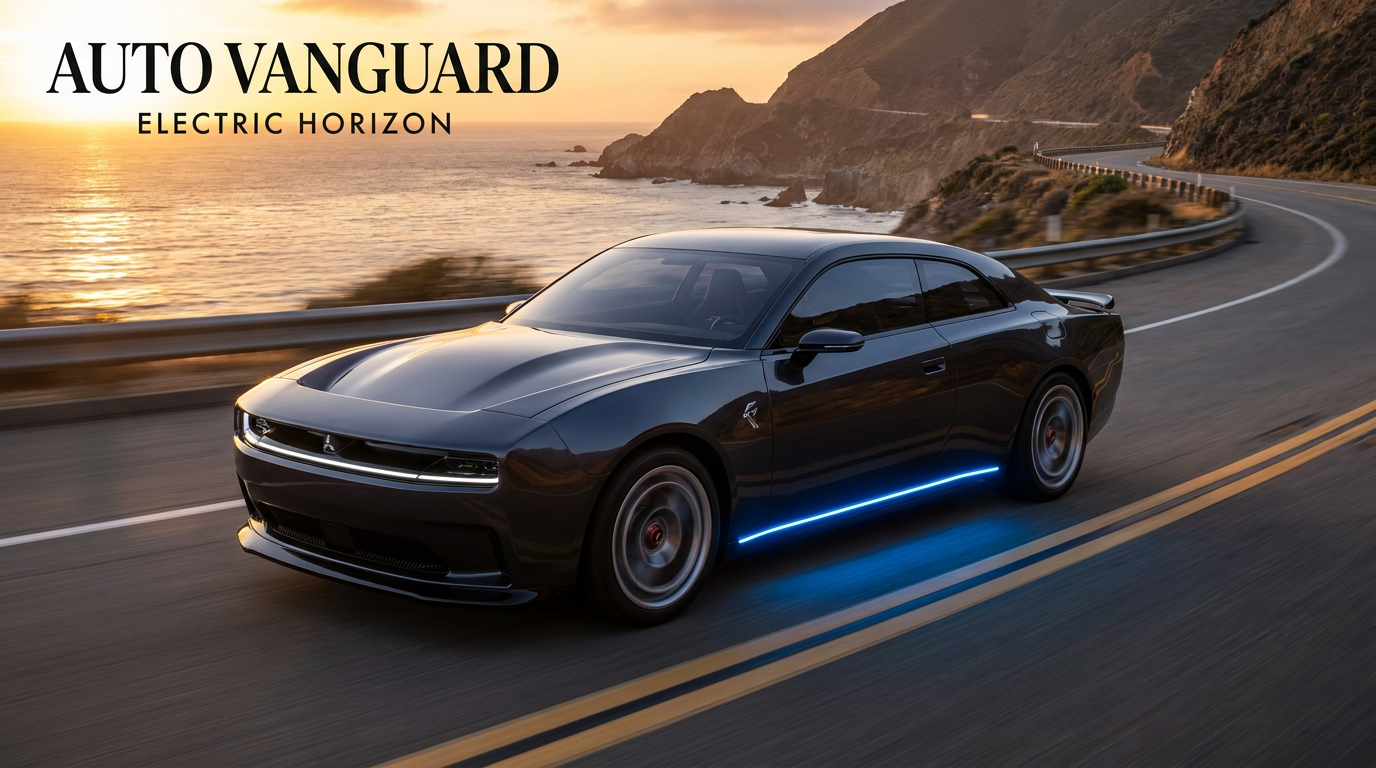
Stellantis, the automotive conglomerate behind Jeep, Dodge, and Chrysler, has quietly begun road-testing a Dodge Charger Daytona equipped with advanced solid-state cells. Developed in partnership with Massachusetts-based Factorial Energy, this marks the first time solid-state batteries have been integrated into a development vehicle in North America.[1][3]
The breakthrough is not limited to four-wheeled vehicles. Verge Motorcycles has commenced deliveries of its TS Pro electric motorcycle, which is powered by a solid-state battery engineered by Donut Lab. This makes it the world's first production vehicle to feature the next-generation technology on public roads.[2][5]
To understand why the automotive and energy sectors are treating 2026 as a watershed moment, one must look inside the architecture of the battery cell itself. The shift represents the most significant leap in energy storage since the commercialization of the lithium-ion battery in the 1990s.[8]

Traditional lithium-ion batteries rely on a liquid electrolyte—a chemical solvent that shuttles lithium ions back and forth between the cathode and the anode during charging and discharging cycles.[6]
While this liquid has powered the first wave of the electric vehicle revolution, it comes with inherent physical limitations. The solvent is highly flammable, and under stress or rapid charging, it can form microscopic metallic whiskers called dendrites that pierce the battery's internal separators, causing short circuits and thermal runaway.[6]
Solid-state batteries solve this fundamental bottleneck by replacing the liquid electrolyte with a solid material. Depending on the manufacturer, this solid separator is typically made from advanced polymers, oxides, or sulfide glasses.[6]
By eliminating the flammable liquid, engineers can safely utilize pure lithium-metal anodes. This architectural change drastically increases the amount of energy the battery can store in the exact same physical footprint, unlocking unprecedented performance metrics.[4][6]
The real-world numbers validate the long-standing hype. Factorial’s FEST (Factorial Electrolyte System Technology) cells have successfully achieved an energy density of 375 watt-hours per kilogram (Wh/kg) during automotive-scale validation.[3][4]

For context, the very best conventional lithium-ion batteries currently powering premium electric vehicles hover between 200 and 300 Wh/kg. The solid-state leap represents a near-doubling of capacity for some platforms.[2]
For context, the very best conventional lithium-ion batteries currently powering premium electric vehicles hover between 200 and 300 Wh/kg.
This dramatic increase in energy density presents automakers with a lucrative choice: they can either build vehicles with vastly longer ranges, or they can shrink the battery pack entirely, shedding hundreds of pounds of weight to improve handling and efficiency.[2][8]
Charging speeds are equally transformative, addressing the primary anxiety of prospective EV buyers. Factorial’s solid-state cells can charge from 15% to 90% capacity in just 18 minutes, rivaling the time it takes to refuel a traditional combustion engine at a gas station.[3][4]
In the two-wheeled sector, the metrics are even more aggressive. Donut Lab claims its 400 Wh/kg motorcycle batteries can achieve a full charge in a staggering five minutes, completely redefining the cadence of electric road trips.[5]
Beyond speed and range, solid-state chemistry solves one of the most persistent and frustrating headaches for electric vehicle owners: extreme weather degradation. Traditional batteries notoriously lose significant range when the temperature drops below freezing.[1][3]

Factorial’s road-tested cells maintain robust, reliable performance in temperatures plunging to -30°C (-22°F) and soaring to 45°C (113°F), ensuring that drivers in harsh climates no longer face severe winter range penalties.[3][4]
The U.S. Department of Energy and its network of national laboratories are actively accelerating this technological shift. Federal officials view solid-state batteries not just as an automotive upgrade, but as a critical matter of national energy security and domestic manufacturing independence.[6]
Recently, scientists at Argonne National Laboratory discovered a novel method to boost the longevity of solid-state cells through a process called "halide segregation." By forcing nanoscale lithium halides to the electrolyte interface, the team significantly improved ion movement, adding hundreds of charge cycles to the battery's lifespan.[7]
Despite these monumental breakthroughs, the road to mass-market ubiquity remains steep. The industry must now prove it can manufacture these advanced cells at a global scale without prohibitive costs.[8]

The primary hurdle is manufacturing infrastructure. Building solid-state cells requires entirely new production techniques, moving away from the high-pressure, high-temperature batch processing of the past toward streamlined, roll-to-roll manufacturing that can compete with the sheer volume of legacy lithium-ion factories.[4][6]
Yet, the momentum is undeniable. With Factorial listing on the Nasdaq to fund its aggressive scale-up, and Stellantis targeting a broader demonstration fleet by the end of the year, the timeline has permanently accelerated. The era of the solid-state electric vehicle has quietly, but definitively, begun.[3][4]
How we got here
1990s
Lithium-ion batteries enter commercial use, eventually becoming the standard for consumer electronics and early EVs.
2023
Factorial launches its first 100Ah+ lithium-metal solid-state battery prototype.
April 2025
Stellantis and Factorial successfully validate automotive-sized solid-state cells achieving 375 Wh/kg.
January 2026
Donut Lab unveils the first production-ready solid-state battery for Verge Motorcycles at CES.
June 2026
Stellantis begins real-world road testing of solid-state batteries in a Dodge Charger Daytona.
Viewpoints in depth
Solid-State Innovators
Argue that the fundamental chemistry bottlenecks have been solved, paving the way for commercialization.
Startups and national laboratories point to the 375+ Wh/kg energy densities and 18-minute charging times as definitive proof that solid-state technology is ready for prime time. By successfully implementing pure lithium-metal anodes and discovering techniques like halide segregation to extend cycle life, these innovators argue that the scientific risks have been retired, leaving only engineering and scaling challenges ahead.
Automotive Manufacturers
Focus on the engineering realities of integrating new cells into existing vehicle architectures.
While automakers are eager to harness the range and weight benefits of solid-state cells, their primary focus remains on safety validation and thermal management. Integrating a fundamentally new battery chemistry into platforms like the STLA Large requires patented mechanical architectures to handle the unique physical properties of solid cells, ensuring they perform reliably over a decade of real-world driving.
Energy & Policy Officials
View solid-state technology through the lens of national security and grid resilience.
Federal agencies and the Department of Energy emphasize that solid-state batteries offer an opportunity to build a robust domestic supply chain independent of legacy lithium-ion bottlenecks. Furthermore, the non-flammable nature of solid electrolytes makes these batteries vastly safer for both transportation and large-scale grid storage applications, reducing the risk of catastrophic fires.
Industry Observers
Maintain a cautiously optimistic stance regarding the timeline for mass-market affordability.
Journalists and industry analysts celebrate the shift from lab prototypes to road-going vehicles, acknowledging 2026 as a historic milestone. However, they question how quickly these premium batteries will reach cost parity with highly optimized, affordable lithium iron phosphate (LFP) cells, suggesting that solid-state tech may remain exclusive to luxury and performance vehicles for the next several years.
What we don't know
- When solid-state batteries will reach price parity with traditional lithium-ion cells.
- How quickly manufacturers can scale up roll-to-roll production to meet global automotive demand.
- The exact real-world degradation rate of these batteries after a decade of daily driving.
Key terms
- Solid-State Battery
- A battery that uses a solid electrolyte instead of a liquid or gel to transport ions between electrodes.
- Electrolyte
- The medium inside a battery that allows ions to flow between the cathode and anode during charging and discharging.
- Energy Density (Wh/kg)
- A measure of how much energy a battery can store relative to its weight; higher density means more range without adding mass.
- Dendrites
- Microscopic, needle-like metallic structures that can form inside liquid batteries, potentially causing short circuits and fires.
- Halide Segregation
- A nanoscale process where specific compounds migrate to the electrolyte interface, improving ion movement and battery lifespan.
Frequently asked
Are solid-state batteries safer than lithium-ion?
Yes. By replacing the flammable liquid electrolyte with a solid material, solid-state batteries virtually eliminate the risk of thermal runaway and battery fires.
How fast can a solid-state battery charge?
Current road-tested models from Factorial can charge from 15% to 90% in just 18 minutes, while smaller motorcycle batteries claim full charges in five minutes.
Do solid-state batteries work in cold weather?
Yes. They are highly resilient to temperature extremes, maintaining performance in conditions as cold as -30°C (-22°F).
When can I buy a car with a solid-state battery?
While electric motorcycles are shipping now, mass-market passenger vehicles are currently in the road-testing phase, with broader demonstration fleets expected by the end of 2026 and commercial availability following shortly after.
Sources
Source coverage
8 outlets
4 viewpoints surfaced








[1]ElectrekIndustry Observers
Solid-state batteries are now powering EVs in the real world
Read on Electrek →[2]New AtlasIndustry Observers
Revolutionary solid-state batteries finally hit US roads
Read on New Atlas →[3]StellantisAutomotive Manufacturers
Stellantis and Factorial Integrate Advanced Solid-State Battery into Stellantis Development Vehicle and Launch Road Testing
Read on Stellantis →[4]Factorial Inc.Solid-State Innovators
Factorial Lists on Nasdaq, Bringing Solid-State Batteries From Validation to Scale
Read on Factorial Inc. →[5]Donut LabSolid-State Innovators
DONUT LAB INTRODUCES THE FUTURE OF ELECTRIFICATION AT CES PRESENTING WORLD'S FIRST ALL-SOLID-STATE BATTERY
Read on Donut Lab →[6]U.S. Department of EnergyEnergy & Policy Officials
Breaking It Down: Next-Generation Batteries
Read on U.S. Department of Energy →[7]Argonne National LaboratorySolid-State Innovators
Argonne scientists discover how to boost solid-state battery energy density and longevity
Read on Argonne National Laboratory →[8]Factlen Editorial TeamIndustry Observers
Synthesis by Factlen editorial team
Read on Factlen Editorial Team →

Every angle. Every day.
Get automotive stories with full source coverage and perspective breakdowns delivered to your inbox.