
Sensory-Friendly Dining Hours Reach Critical Mass Across the Restaurant Industry
Restaurants globally are redesigning their environments and service models to accommodate neurodivergent guests, making cognitive accessibility a new standard in hospitality.
By Factlen Editorial Team
- Neurodivergent Advocates & Families
- Argue that dining out has historically been inaccessible due to sensory overload, and welcome the shift toward predictable, low-stimulation environments.
- Restaurant Operators & Chefs
- View sensory-friendly hours as both a moral imperative and a smart business move that builds deep customer loyalty and fills off-peak hours.
- Hospitality Industry Analysts
- See the trend as part of a broader 2026 shift toward hyper-personalized, experience-first dining where accessibility is a core metric of service quality.
What's not represented
- · Front-of-house staff executing the changes
- · Diners without sensory needs experiencing the quiet hours
Why this matters
For millions of families with neurodivergent members, dining out has historically been an inaccessible minefield of sensory triggers. The industry-wide adoption of quiet hours and predictable environments means these families can finally participate in a fundamental social ritual, while restaurants tap into a fiercely loyal, previously underserved customer base.
Key points
- Restaurants globally are adopting sensory-friendly dining hours to accommodate neurodivergent guests.
- Adjustments include dimmed lighting, no background music, spaced tables, and visual menus.
- Organizations like Autism Eats are providing formal training and certification for hospitality staff.
- The initiative allows restaurants to build deep customer loyalty while filling off-peak dining hours.
- Fine dining establishments and luxury hotels are also integrating cognitive accessibility into their service models.
In 2026, the restaurant industry is undergoing a quiet revolution—literally. Across the globe, from suburban bistros to Michelin-starred fine dining establishments, a critical mass of restaurants is adopting sensory-friendly dining hours to accommodate neurodivergent guests.
For decades, dining out has been a minefield for individuals with autism, ADHD, and sensory processing disorders. The clatter of silverware, unpredictable wait times, harsh fluorescent lighting, and overlapping background music can trigger severe sensory overload, turning a celebratory meal into a deeply stressful event.
As a result, millions of families have simply opted out of the restaurant experience altogether. Lenard Zohn, founder of the advocacy group Autism Eats, notes that many parents assume they will never be able to share the simple tradition of a relaxed restaurant meal with their children.[2]
But the hospitality industry is finally waking up to this exclusion. What began as a scattered series of pilot programs has formalized into a global movement, with establishments rethinking their physical environments to prioritize cognitive and emotional accessibility alongside culinary excellence.[5][8]
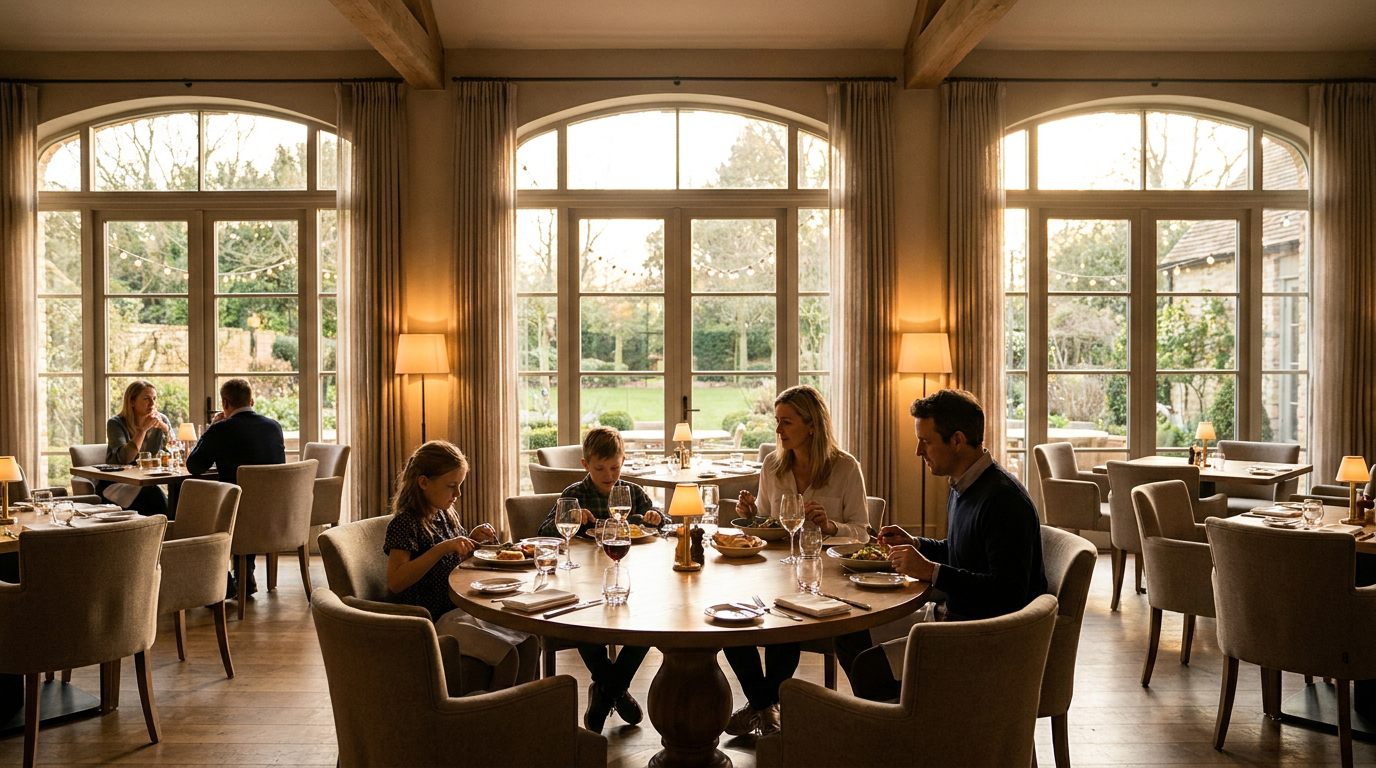
The mechanics of a sensory-friendly dining hour are deliberate and precise. During these designated times, restaurants dim their overhead lights, turn off all background music, and space out reservations to ensure the dining room remains uncrowded and calm.[3][8]

Staff training is a crucial component of the experience. Waitstaff are instructed to minimize interruptions, avoid hovering at the table, and communicate clearly without rushing the guests. At Prairie Grass Cafe in suburban Chicago, team members even set tables with glassware and cutlery before guests arrive to eliminate the clattering sounds of setup.[3]
Menus are also undergoing a thoughtful redesign. Establishments are increasingly offering visual menus with pictures, clear allergy information, and predictable options that do not rotate frequently, reducing the anxiety of unexpected changes.[8]
At the Oak & Iron Tavern in South Australia, the sensory-friendly experience includes a highly customizable 'build-your-own' plate option. Children can choose plain proteins and vegetables, with seasonings and sauces provided on the side, allowing them to control exactly what goes onto their plate.[4]
At the Oak & Iron Tavern in South Australia, the sensory-friendly experience includes a highly customizable 'build-your-own' plate option.
The tavern also provides table-side sensory toys and maintains a dedicated quiet room where guests can take a break if they feel overwhelmed, ensuring that a momentary spike in stimulation doesn't have to mean the end of the family's meal.[4]

This movement is being rapidly accelerated by formal certification programs. Organizations like Autism Eats and Club Autism Friendly now offer comprehensive training for restaurant management and staff, covering everything from legal rights to detailed environmental analysis.[1][5]
Achieving these certifications requires more than just symbolic gestures. La Hospedería de El Provencio, which recently became the first hotel in its region to earn the Autism Friendly certificate, spent two years adapting its spaces with clear visual signage and logically organized environments to ensure predictability.[5]
The trend is also penetrating the highest echelons of fine dining, a sector traditionally known for rigid, chef-dictated experiences. High-end venues are realizing that true hospitality means adapting to the guest, rather than forcing the guest to adapt to the room.
At Oriole, a premium dining destination, management is actively exploring quieter seating options and adjustable lighting to better accommodate neurodiverse guests, proving that luxury service and cognitive accessibility are not mutually exclusive.[6]
From a business perspective, the shift makes undeniable sense. The 2026 restaurant landscape is defined by fierce competition and a consumer base that increasingly values hyper-personalization and experience-first dining over traditional metrics.[7]
Restaurants that offer sensory-friendly hours often find them to be highly profitable endeavors. These events frequently sell out, drawing in a fiercely loyal demographic that has been historically underserved and ignored by the hospitality industry.[2]

When Autism Eats hosted its first buffet-style event, the organizers guaranteed the restaurant 20 attendees. By the night of the dinner, 150 people had booked, completely selling out the venue and proving the massive latent demand for inclusive dining spaces.[2]
Industry analysts note that this approach also helps restaurants optimize their off-peak hours. Many sensory-friendly services are scheduled for late afternoon or early evening—such as Prairie Grass Cafe's 3:45 p.m. Saturday seating—filling dining rooms during traditionally slow periods.[3][7]
Ultimately, the rise of sensory-friendly dining represents a broader evolution in how society understands public spaces. Excellence in hospitality is no longer measured solely by the complexity of the menu, the architecture of the room, or the prestige of the chef.[5]
Instead, the new gold standard includes the ability to integrate diversity as a visible, operational value. As the movement continues to gain momentum in 2026, the simple joy of sharing a meal outside the home is finally becoming accessible to everyone.
How we got here
Pre-2020s
Dining out remains largely inaccessible for many neurodivergent individuals due to a lack of awareness and accommodation in the hospitality industry.
2023
Independent restaurants like Prairie Grass Cafe begin experimenting with dedicated sensory-friendly hours during off-peak times.
2024-2025
Advocacy groups formalize training programs, offering official 'Autism Friendly' certifications to hospitality businesses.
Mid-2026
Sensory-friendly dining reaches a tipping point, becoming a standard operational practice across major restaurant groups and fine dining establishments globally.
Viewpoints in depth
Neurodivergent Advocates & Families
Advocating for environments that prevent sensory overload.
For families with neurodivergent members, the traditional restaurant model—characterized by loud music, clattering dishes, and unpredictable wait times—often guarantees sensory overload rather than a relaxing evening. Advocates emphasize that true inclusion goes beyond wheelchair ramps; it requires cognitive and emotional accessibility. By offering predictable menus, quiet spaces, and trained staff, restaurants allow these families to participate in a fundamental social ritual that they have historically been forced to avoid.
Restaurant Operators & Chefs
Balancing hospitality with operational viability.
Chefs and operators are discovering that sensory-friendly initiatives align perfectly with the core ethos of hospitality: making people feel welcome. While implementing these changes requires upfront investment in staff training and environmental redesign, operators report significant returns. Sensory-friendly hours often utilize traditionally slow periods, such as late afternoons, and attract a fiercely loyal customer base that drives repeat business and positive community word-of-mouth.
Hospitality Industry Analysts
Tracking the shift toward hyper-personalized dining.
Industry analysts view the rise of sensory-friendly dining through the lens of a broader 2026 market trend: the demand for hyper-personalized, experience-first service. As consumers increasingly prioritize how a restaurant makes them feel over the food itself, establishments that offer flexible, accommodating environments gain a distinct competitive edge. Analysts predict that cognitive accessibility will soon become a standard metric for restaurant quality, much like sustainability and dietary accommodations.
What we don't know
- Whether sensory-friendly accommodations will eventually be mandated by broader accessibility laws.
- How smaller, independent restaurants with limited space and resources will adapt to these new consumer expectations.
Key terms
- Neurodivergent
- An umbrella term for individuals whose brain functions, learns, and processes information differently than what is considered typical, including those with autism, ADHD, and sensory processing disorders.
- Sensory Overload
- A condition where one or more of the body's senses experiences over-stimulation from the environment, often triggered by loud noises, bright lights, or crowded spaces.
- Cognitive Accessibility
- The design of environments, products, or services so that they are easy to understand and navigate for people with cognitive or learning disabilities.
- Visual Menu
- A menu format that uses pictures, icons, and clear layouts to help diners understand their options without relying solely on text descriptions.
Frequently asked
What is a sensory-friendly dining hour?
It is a designated time when a restaurant modifies its environment to reduce sensory stimulation. This typically includes dimming lights, turning off background music, spacing out tables, and minimizing staff interruptions.
How do restaurants get certified as autism-friendly?
Organizations like Autism Eats and Club Autism Friendly offer certification programs. Restaurants must complete comprehensive staff training, undergo environmental audits, and implement specific accessibility standards to earn the seal.
Does this affect the regular dining experience for other guests?
Most restaurants host sensory-friendly dining during specific, dedicated hours—often in the late afternoon or early evening—so it does not impact the atmosphere during standard peak dinner services.
Are fine dining restaurants participating in this trend?
Yes. Premium venues and hotels are increasingly adopting these standards, recognizing that high-end hospitality must include cognitive and emotional accessibility for all guests.
Sources
Source coverage
8 outlets
3 viewpoints surfaced








[1]Autism EatsNeurodivergent Advocates & Families
Certify Your Restaurant With Autism Eats
Read on Autism Eats →[2]CBS NewsNeurodivergent Advocates & Families
Andover man creates sensory-friendly, welcoming restaurant experience for autism families
Read on CBS News →[3]FoodService DirectorRestaurant Operators & Chefs
Sensory-friendly dining hour promotes inclusivity at Prairie Grass Cafe
Read on FoodService Director →[4]KIDDO MagRestaurant Operators & Chefs
Autism-friendly dining at the Oak & Iron Tavern
Read on KIDDO Mag →[5]La HospederíaRestaurant Operators & Chefs
What Does It Mean to Be an Autism Friendly Hotel?
Read on La Hospedería →[6]The Sustainable Restaurant AssociationRestaurant Operators & Chefs
Accessibility in hospitality: how to make your restaurant more inclusive
Read on The Sustainable Restaurant Association →[7]FlipdishHospitality Industry Analysts
Restaurant trends 2026: How to future-proof your business
Read on Flipdish →[8]CT BitesNeurodivergent Advocates & Families
A Sensory-Aware and Accessible Space
Read on CT Bites →
Every angle. Every day.
Get food drink stories with full source coverage and perspective breakdowns delivered to your inbox.