
UK Announces Sweeping Social Media Ban for Children Under 16
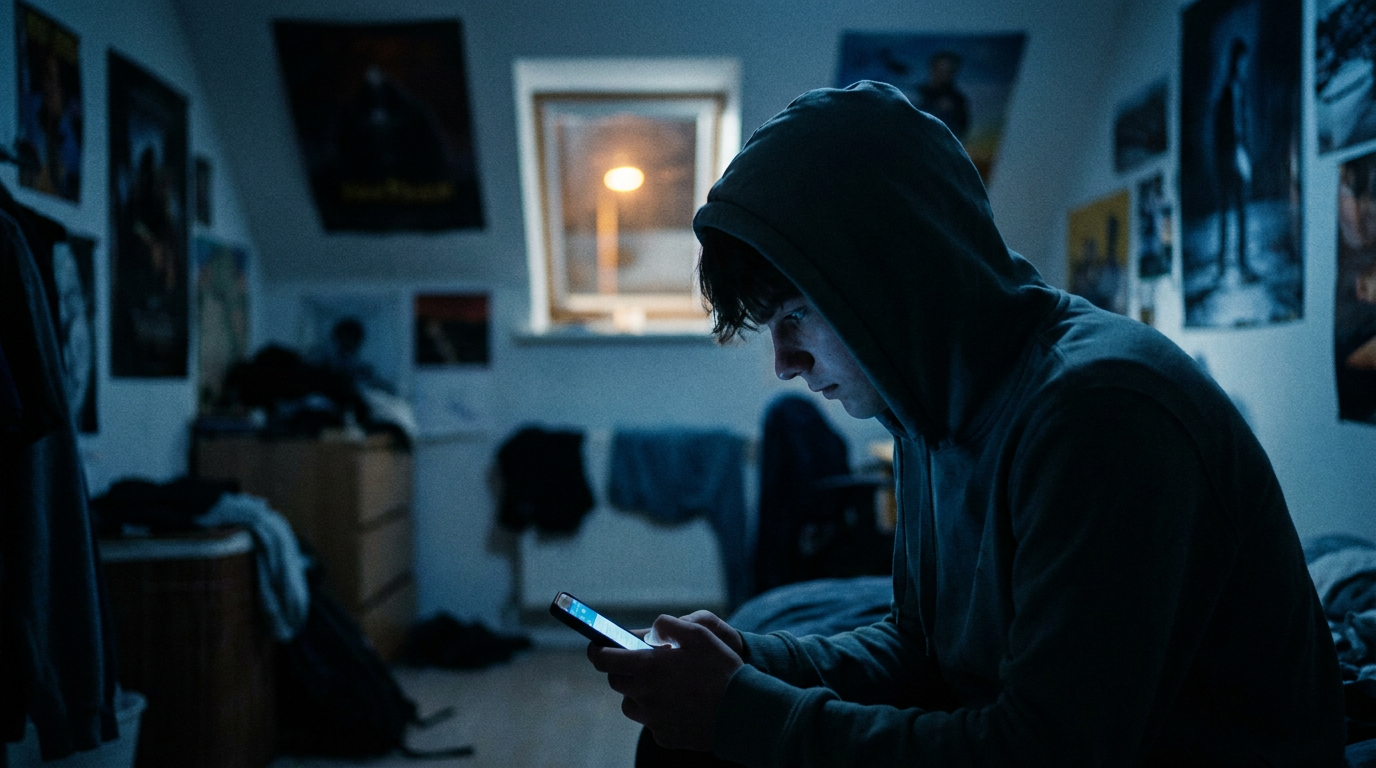
The UK government has unveiled plans to ban children under 16 from major social media platforms by 2027, alongside new restrictions on livestreaming, gaming chat, and AI companion bots.
By Factlen Editorial Team
- Government & Public Health
- Argues that social media is inherently addictive and harmful to youth mental health, requiring a hard legislative boundary to protect children.
- Platform Operators
- Contends that blanket bans will isolate teenagers, severing them from beneficial online communities and driving them toward unregulated platforms.
- Digital Rights Advocates
- Believes the focus should be on regulating the platforms' manipulative designs and algorithms rather than restricting children's access.
What's not represented
- · Teenagers and youth whose primary modes of socializing are being legislated
- · Mental health professionals debating whether social media is the root cause or a symptom of youth anxiety
Why this matters
This marks one of the most aggressive interventions by a Western democracy into how children interact with the internet. If successfully implemented, it will fundamentally alter the digital landscape for millions of families and set a precedent that other nations are closely watching.
Key points
- The UK will ban children under 16 from major social media platforms starting in Spring 2027.
- The ban covers TikTok, Instagram, Snapchat, Facebook, YouTube, and X, but exempts WhatsApp and Signal.
- Livestreaming and stranger communication will be blocked for under-16s on gaming sites.
- AI 'romantic companion' chatbots will be restricted to users 18 and older.
- Tech companies argue the ban will push teenagers toward unregulated and less safe platforms.
- Digital rights groups say the government should regulate addictive algorithms instead of banning children.
The UK government has announced a sweeping ban on social media for children under 16, marking one of the most aggressive interventions by a Western democracy into youth internet access. Prime Minister Keir Starmer unveiled the policy on Monday, declaring a "line in the sand" against technology companies. The legislation, expected to take effect in Spring 2027, will block minors from accessing major platforms including TikTok, Instagram, Snapchat, YouTube, Facebook, and X.[1][2][3]
Citing a growing crisis in youth mental health, Starmer argued that social media is inherently designed to be addictive and exposes children to bullying, harassment, and dangerous content. "We're giving children their childhoods back," the Prime Minister stated, framing the policy as a necessary intervention to empower parents who feel overwhelmed by the digital landscape. The move follows a national consultation that found 90% of parents supported a ban for under-16s.[1][3][6]
The UK's approach mirrors a similar ban recently enacted in Australia but goes significantly further. Dubbed an "Australia Plus" model, the UK government will not only block access to user-to-user social networks but also impose "world-leading" restrictions on gaming sites and livestreaming platforms. These rules will mandate the blocking of features that allow strangers to communicate with children under 16, addressing fears of online grooming and exploitation.[1][4][6]

The policy also targets the rapidly evolving landscape of artificial intelligence. Under the new rules, AI "romantic companion" chatbots—programs designed to simulate intimate relationships or roleplay with users—will be strictly restricted to users over 18. Furthermore, to prevent a sudden "cliff-edge" exposure to online risks when teenagers turn 16, platforms will be required to keep livestreaming and stranger-communication features switched off by default for 16- and 17-year-olds.[1][6]
The policy also targets the rapidly evolving landscape of artificial intelligence.
Not all digital communication will be severed under the new regime. Messaging applications like WhatsApp and Signal are exempt from the ban, as the government views them as essential tools for children to stay in touch with family and known friends. Educational platforms such as Google Classroom and curated services like YouTube Kids will also remain accessible, with the government promising a "narrowly defined" list of exemptions to protect beneficial online activities.[1][2]
The practical challenge of enforcing the ban will fall to Ofcom, the UK's communications regulator. Ofcom has been tasked with developing robust, reliable, and fair age-assurance mechanisms by October 2026. The government has pledged to fully fund the regulator to ensure it has the capabilities to mandate compliance from tech giants, though exactly how platforms will verify ages without requiring adults to hand over sensitive identification remains a major technical and privacy hurdle.[1][2]

Social media companies have strongly criticized the move. Meta, YouTube, and Snapchat argue that a blanket ban will isolate teenagers from supportive online communities and push them toward unregulated, darker corners of the internet that lack built-in safety features and parental controls. "Blanket bans push kids out of such curated, supervised, beneficial experiences and towards anonymous, less safe services," a YouTube spokesperson warned.[2][4]
Digital rights and privacy groups have also voiced deep opposition to the ban. Amnesty International called the policy "the right diagnosis but the wrong prescription," arguing that it treats children as the problem rather than forcing companies to fix platforms that are "unsafe by design." Critics warn that the ban infringes on young people's rights to participate in modern digital life and shifts the burden away from regulating the addictive algorithms and invasive profiling that drive tech business models.[5]

Despite the pushback, the government is moving rapidly to implement the restrictions. Ministers plan to use secondary legislation under the recently passed Children's Wellbeing and Schools Act to fast-track the regulations. The first set of rules is expected to be laid before Parliament before the end of the year, setting the stage for a profound cultural shift in how the next generation of British children experiences the internet.[1][7]
How we got here
March - May 2026
UK government conducts a national consultation on children's online safety, receiving over 116,000 responses.
April 2026
The Children's Wellbeing and Schools Act is passed, granting the government powers to restrict children's access to online services.
June 15, 2026
Prime Minister Keir Starmer officially announces the total ban on social media for under-16s.
Late 2026
The first set of regulations is expected to be laid before Parliament.
Spring 2027
The ban and associated restrictions are scheduled to come into force.
Viewpoints in depth
Government & Public Health
Argues that social media is inherently addictive and harmful to youth mental health, requiring a hard legislative boundary to protect children and empower parents.
Proponents of the ban, including Prime Minister Keir Starmer and various health professionals, argue that the current digital landscape is fundamentally unsafe for children. They point to rising rates of anxiety, depression, and cyberbullying, asserting that platforms are designed to be addictive and prioritize engagement over wellbeing. By drawing a 'line in the sand,' the government believes it can force a cultural shift, giving children more time for offline play and relieving parents of the impossible burden of policing their children's digital lives against multi-billion-dollar tech algorithms.
Platform Operators
Contends that blanket bans will isolate teenagers, severing them from beneficial online communities and driving them toward unregulated platforms.
Technology companies like Meta, YouTube, and Snapchat argue that an outright ban is a blunt instrument that creates more risks than it solves. They warn that cutting off access to mainstream platforms will isolate teenagers from supportive online communities and educational content. Furthermore, they caution that tech-savvy youth will simply migrate to unregulated, anonymous corners of the internet that lack built-in safety features, moderation tools, and parental controls, ultimately making them less safe.
Digital Rights Advocates
Believes the focus should be on regulating the platforms' manipulative designs and algorithms rather than restricting children's access.
Organizations like Amnesty International argue that banning children treats the victims as the problem. They advocate for strict regulation of the platforms themselves—forcing companies to abandon invasive profiling, infinite scrolling, and algorithmic recommendations that drive addiction. Additionally, privacy advocates raise alarms about the enforcement mechanisms, warning that mandating age-verification across the internet could force all users, including adults, to hand over sensitive identification documents, fundamentally compromising digital privacy.
What we don't know
- How Ofcom will implement age-verification without requiring adults to hand over sensitive ID documents to tech companies.
- Whether teenagers will easily bypass the restrictions using VPNs or fake birth dates, as seen in other jurisdictions.
- The exact final list of exempted platforms and how the government will classify hybrid apps that blend messaging and social networking.
Key terms
- Age Assurance
- Technologies and methods used to verify or estimate a user's age to ensure they meet the minimum requirements for accessing a service.
- User-to-User Platform
- An online service whose primary purpose is to enable social interaction and allow users to post and share material with others.
- Ofcom
- The UK's government-approved regulatory and competition authority for the broadcasting, telecommunications, and postal industries.
- Secondary Legislation
- Laws created by ministers under powers given to them by an Act of Parliament, allowing for faster implementation of specific rules.
Frequently asked
Will messaging apps be banned?
No. The government has stated that messaging services like WhatsApp and Signal will be exempt so children can stay in touch with family and friends.
What happens to 16- and 17-year-olds?
They will be allowed on social media, but high-risk features like livestreaming and stranger communication will be switched off by default.
Are educational sites included?
No. Educational platforms like Google Classroom and curated services like YouTube Kids will remain accessible.
How will the ban be enforced?
The communications regulator, Ofcom, is tasked with developing and mandating effective age-verification methods that platforms must use to block underage users.
Sources
Source coverage
7 outlets
3 viewpoints surfaced







[1]GOV.UKGovernment & Public Health
Social media to be banned for under-16s in landmark government move to give kids their childhood back
Read on GOV.UK →[2]TIMEPlatform Operators
The U.K. Social Media Ban For Under-16s, Explained
Read on TIME →[3]Al JazeeraGovernment & Public Health
Britain announces sweeping social media ban for under-16s
Read on Al Jazeera →[4]The GuardianPlatform Operators
Social media firms hit back as Starmer announces ban for under-16s in UK
Read on The Guardian →[5]Amnesty InternationalDigital Rights Advocates
UK: Social media ban for under 16s 'right diagnosis, wrong prescription'
Read on Amnesty International →[6]The BMJGovernment & Public Health
Social media ban for UK's under 16s will go even further than Australia's policy
Read on The BMJ →[7]AxiosGovernment & Public Health
U.K. the latest country to move toward social media ban for kids
Read on Axios →


Every angle. Every day.
Get news politics stories with full source coverage and perspective breakdowns delivered to your inbox.