
Zero-Waste Dining Goes Mainstream: How 'Root-to-Stem' Cooking Became 2026's Defining Culinary Trend
Driven by environmental consciousness and rising food costs, the restaurant industry has fully embraced zero-waste cooking, transforming kitchen byproducts into high-value culinary innovations.
By Factlen Editorial Team
- Sustainable Gastronomy Advocates
- Organizations and guides pushing for environmental stewardship as a baseline for fine dining.
- Culinary Innovators
- Chefs and food writers who see zero-waste as a catalyst for creative cooking.
- Restaurant Operators & Analysts
- Business-minded professionals focused on the economic viability of waste reduction.
What's not represented
- · Local Farmers and Producers
- · Waste Management Facilities
Why this matters
As restaurants adopt circular, zero-waste models, diners are gaining access to more innovative, nutrient-dense foods while the hospitality industry significantly reduces its environmental footprint and stabilizes its economic margins.
Key points
- The Michelin Guide awarded seven new Green Stars in the UK and Ireland in 2026, bringing the total to 37.
- Zero-waste cooking has shifted from sustainable packaging to ingredient-level 'waste-to-value' systems.
- Chefs are using fermentation and pickling to turn vegetable offcuts and spent grain into high-value flavors.
- Rising food costs have made root-to-stem cooking a financial necessity for protecting restaurant margins.
- Over 90% of consumers now prefer dining at establishments that actively work to reduce food waste.
The culinary world has officially crowned its new standard. In 2026, "zero-waste" dining has transitioned from a niche environmental pledge into the driving force behind the world's most celebrated restaurants. Across the globe, top-tier chefs are proving that sustainability and superlative flavor are no longer mutually exclusive. Instead of viewing eco-friendly practices as a burdensome obligation, the hospitality industry has embraced them as a catalyst for innovation, fundamentally changing how ingredients are sourced, prepared, and served to an increasingly conscious public.[1][5]
This industry-wide shift was starkly highlighted by the recent release of the 2026 Michelin Guide for Great Britain and Ireland, which awarded seven new Green Stars to establishments pioneering sustainable gastronomy. The Green Star, introduced to recognize restaurants at the forefront of eco-friendly practices, has rapidly become one of the industry's most coveted accolades. It signals to diners that a kitchen is not only producing exceptional food but is doing so with a profound respect for the local ecosystem and a strict commitment to minimizing its carbon footprint.[1][2][3]
Among the 2026 Green Star recipients are 1887 in Torridon, Scotland, and Forest Side in Grasmere, Cumbria. These establishments were lauded by inspectors for their hyper-local sourcing, extensive kitchen gardens, and rigorous nose-to-tail approaches to animal products. In total, the United Kingdom and Ireland now boast 37 Green Star restaurants, signaling a robust institutional embrace of mindful dining. These venues often operate their own farms or work exclusively with regenerative agricultural partners, ensuring that their supply chains are as transparent as they are sustainable from seed to plate.[1][2][3]

But the zero-waste movement extends far beyond the rarefied air of Michelin-starred dining rooms. Industry forecasts for 2026 indicate that "root-to-stem" and "waste-to-value" systems are scaling rapidly across the broader hospitality sector. What began a few years ago as a surface-level focus on sustainable packaging has fundamentally shifted to the ingredient level. Restaurants of all sizes are now auditing their prep stations to identify organic matter that can be rescued from the compost bin and repurposed into the menu, treating every scrap as a potential asset.[4][6]
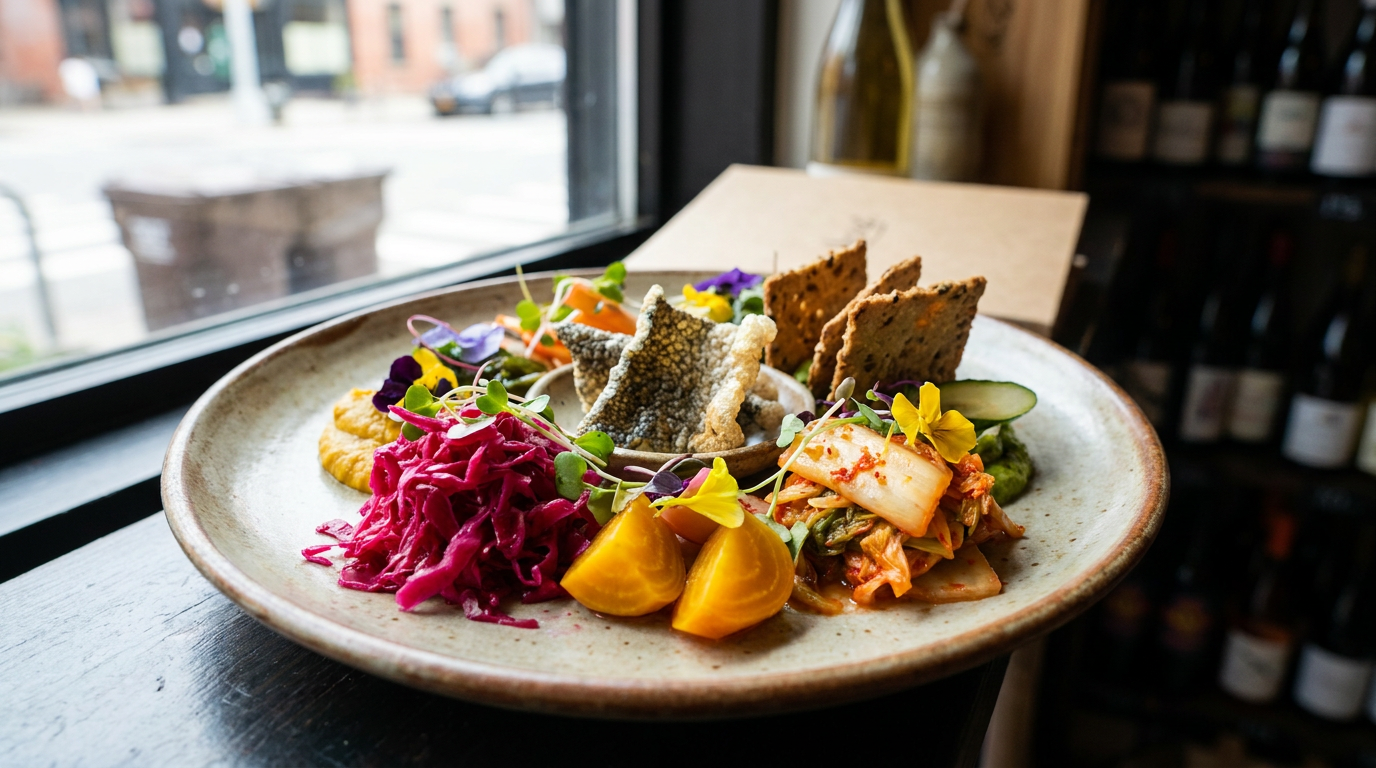
Culinary innovators are transforming what was once considered kitchen trash—vegetable stems, offcuts, peels, and spent grain—into high-value components. Chefs are increasingly utilizing these byproducts to create house-made preserves, pickles, and ferments. By applying ancient preservation techniques to modern kitchens, they are unlocking entirely new umami profiles while eliminating organic waste. A broccoli stem, once discarded, is now lacto-fermented and served as a complex, tangy garnish that elevates a signature dish, proving that culinary boundaries can be pushed without relying solely on premium cuts.[4][5]
Culinary innovators are transforming what was once considered kitchen trash—vegetable stems, offcuts, peels, and spent grain—into high-value components.
This evolution is driven as much by economics as it is by environmental consciousness. With rising operational expenses and fluctuating food costs, maximizing the yield of every ingredient has become a strict financial necessity. Utilizing one hundred percent of a purchased product helps operators protect their margins in an increasingly challenging economic landscape. When a kitchen can turn meat trimmings into a profitable charcuterie board or use citrus peels to craft premium cocktail cordials, sustainability directly translates to profitability, making it an easy choice for owners.[4][8]

Consumer demand is also accelerating the trend, forcing even hesitant restaurateurs to adapt. Recent industry data reveals that over ninety percent of customers prefer to patronize businesses that are actively working to reduce food waste. Diners are increasingly seeking out "hyper-personalized" wellness menus that feature gut-friendly fermented byproducts and clean-label recipes. They want their dining experiences to align with their personal values, and they are willing to spend their money at establishments that demonstrate genuine environmental stewardship rather than mere lip service to green initiatives.[6][8]
To support these ambitious zero-waste goals, restaurant infrastructure is undergoing a quiet revolution behind the scenes. AI-driven smart kitchens and specialized refrigeration units designed specifically for aging, curing, and fermenting are becoming standard equipment. These technological advancements allow chefs to safely and consistently upcycle delicate ingredients without the risk of spoilage. Predictive ordering software is also helping managers buy exactly what they need, drastically reducing the amount of food that goes bad before it can be cooked and ensuring a leaner, more efficient operation overall.[4][6]
Even major quick-service and fast-casual brands are taking note of the movement's success. Trend reports from global restaurant conglomerates indicate that upcycled functionalism—where industrial leftovers like cacao pulp or whey are repurposed into functional ingredients—will see expanded integration into mainstream menus by the end of 2026. This signals that the zero-waste philosophy has successfully crossed the chasm from fine-dining experiment to scalable commercial reality, promising a future where sustainable eating is accessible to the average consumer on a daily basis.[4][7]

Ultimately, the 2026 culinary landscape proves that constraint breeds creativity. By treating waste as a design flaw rather than an inevitability, the restaurant industry is not only reducing its massive carbon footprint but also discovering entirely new frontiers of flavor. As chefs continue to push the boundaries of what is edible and delicious, the zero-waste movement ensures that the future of food is both economically viable and deeply respectful of the planet, offering a hopeful blueprint for other industries to follow.[1][5]
How we got here
2020
The Michelin Guide introduces the Green Star to highlight restaurants at the forefront of sustainable practices.
2023-2024
Rising global food costs force the hospitality industry to reevaluate ingredient yields and waste management.
Late 2025
Industry reports indicate a massive shift from sustainable packaging to ingredient-level 'waste-to-value' systems.
February 2026
The Michelin Guide awards seven new Green Stars in Great Britain and Ireland, bringing the regional total to 37.
June 2026
Zero-waste and root-to-stem cooking are cemented as the defining culinary trends of the year across major industry forecasts.
Viewpoints in depth
Sustainable Gastronomy Advocates
Organizations and guides pushing for environmental stewardship as a baseline for fine dining.
For institutions like the Michelin Guide and the Sustainable Restaurant Association, the future of food relies entirely on respecting the ecosystem. They argue that top-tier restaurants have a responsibility to set the standard for the rest of the industry. By awarding Green Stars and promoting hyper-local sourcing, these advocates believe that fine dining can actively regenerate local environments rather than just extract from them.
Culinary Innovators
Chefs and food writers who see zero-waste as a catalyst for creative cooking.
Chefs on the ground view the zero-waste mandate not as a restriction, but as a creative unlock. By forcing themselves to use vegetable peelings, offcuts, and stems, they are discovering entirely new flavor profiles. Fermentation, pickling, and curing have become essential tools, allowing kitchens to develop complex umami notes that traditional prime cuts simply cannot offer.
Restaurant Operators & Analysts
Business-minded professionals focused on the economic viability of waste reduction.
From an operational standpoint, the zero-waste trend is a vital financial strategy. Industry analysts point out that with inflation and rising supply chain costs, throwing away a significant portion of a purchased ingredient is no longer economically viable. By converting waste into high-value menu items, restaurants can significantly improve their profit margins while simultaneously appealing to eco-conscious consumers.
What we don't know
- Whether smaller, independent restaurants can afford the specialized equipment needed for advanced fermentation and upcycling.
- How quickly global supply chains will adapt to provide upcycled ingredients at scale for fast-casual chains.
- If consumer willingness to pay a premium for zero-waste dining will hold steady during broader economic fluctuations.
Key terms
- Upcycled Functionalism
- The practice of repurposing industrial food leftovers, such as spent grain or cacao pulp, into high-value, nutrient-dense ingredients.
- Root-to-Stem
- A cooking method that utilizes every part of a vegetable, including leaves, stems, and peels, to eliminate organic waste.
- Green Star
- An annual award given by the Michelin Guide to restaurants that achieve the highest standards of sustainable gastronomy.
- Circular Economy
- An economic system aimed at eliminating waste and the continual use of resources, applied in restaurants through composting and byproduct reuse.
Frequently asked
What is a Michelin Green Star?
A recognition awarded by the Michelin Guide to restaurants that demonstrate industry-leading sustainable and eco-friendly practices.
What does 'root-to-stem' cooking mean?
A culinary philosophy where every edible part of a plant or vegetable is used in cooking, minimizing food waste.
How are restaurants upcycling food waste?
Chefs are fermenting, pickling, and preserving offcuts like vegetable stems and spent grain to create high-value, flavor-enhancing ingredients.
Why is zero-waste cooking becoming so popular?
Beyond environmental benefits, it helps restaurants protect their profit margins by maximizing the yield of every ingredient they purchase.
Sources
Source coverage
8 outlets
3 viewpoints surfaced








[1]Michelin GuideSustainable Gastronomy Advocates
7 New Green Stars Announced for Great Britain & Ireland 2026
Read on Michelin Guide →[2]Time OutCulinary Innovators
The British restaurants awarded a Michelin green star in 2026
Read on Time Out →[3]The CatererCulinary Innovators
New Michelin green stars: All the restaurants awarded in the 2026 guide
Read on The Caterer →[4]TastewiseRestaurant Operators & Analysts
Zero-waste food trends 2026: what is actually scaling
Read on Tastewise →[5]Entrepreneur LoopCulinary Innovators
2026 Food Trends: What Will We Be Eating Next Year?
Read on Entrepreneur Loop →[6]The Sustainable Restaurant AssociationSustainable Gastronomy Advocates
2026 Trends To Watch For: What's New In Sustainable Hospitality?
Read on The Sustainable Restaurant Association →[7]Restaurant BusinessRestaurant Operators & Analysts
Taco Bell parent Yum Brands gazes into its crystal ball with first-ever food trends report
Read on Restaurant Business →[8]GloriaFoodRestaurant Operators & Analysts
8 Restaurant Sustainability Trends in 2026
Read on GloriaFood →
Every angle. Every day.
Get food drink stories with full source coverage and perspective breakdowns delivered to your inbox.