
The Science and Art of Aquascaping: How Underwater Gardening Became a Wellness Trend
Combining biology, design, and mindfulness, the intricate hobby of aquascaping is transforming ordinary fish tanks into living works of art. Here is how the nitrogen cycle and Japanese design principles power these miniature ecosystems.
By Factlen Editorial Team
- Aquascape Designers
- Focus on aesthetic principles, spatial balance, and the execution of distinct styles like Iwagumi and Dutch.
- Aquatic Biologists
- Focus on the nitrogen cycle, water chemistry, and creating stable micro-ecosystems.
- Wellness Advocates
- Focus on the therapeutic benefits of biophilia, mindfulness, and stress reduction through engaging with nature.
- Botanical Purists
- Advocate for hyper-realistic, unstructured environments like blackwater tanks that prioritize natural fish behavior over rigid design rules.
What's not represented
- · Commercial fish breeders
- · Aquatic plant farmers
Why this matters
As urban density increases and screen time dominates daily life, aquascaping offers a scientifically backed method to lower stress and reconnect with nature indoors. Understanding the mechanics of these micro-ecosystems also provides a masterclass in biology and environmental balance.
Key points
- Aquascaping combines biology, chemistry, and spatial design to create living underwater landscapes.
- The hobby is increasingly recognized for its mental health benefits, including lowering cortisol and reducing anxiety.
- A successful aquascape relies on the nitrogen cycle, where beneficial bacteria convert toxic ammonia into safe nitrates.
- Major design styles include the wabi-sabi inspired Nature Aquarium, the minimalist Iwagumi, and the plant-dense Dutch style.
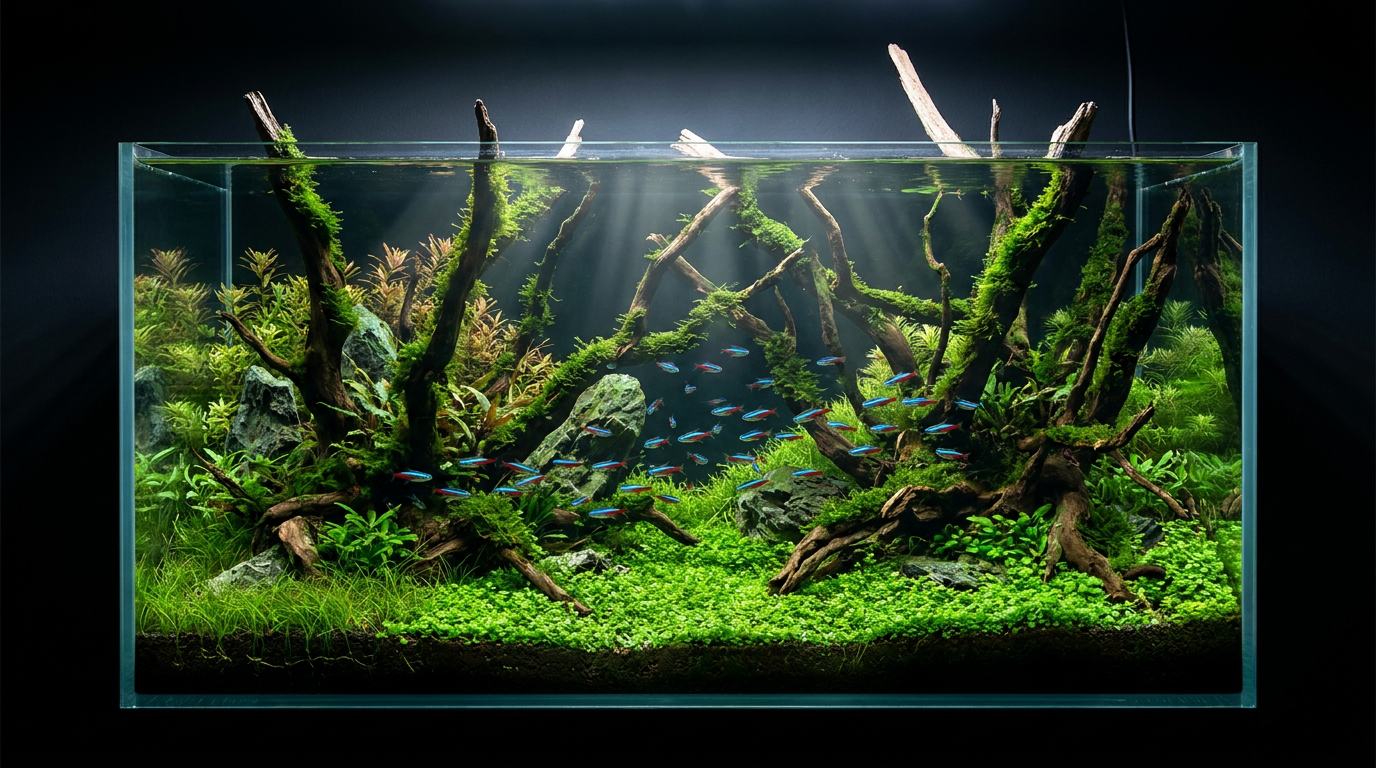
The traditional fish tank—a glass box filled with neon-colored gravel, bubbling plastic treasure chests, and artificial plants—is undergoing a radical, sophisticated evolution. Across the globe, hobbyists, interior designers, and nature enthusiasts are embracing 'aquascaping,' the meticulous and highly structured art of underwater landscaping. Blending the disciplines of botany, water chemistry, and spatial design, aquascaping transforms ordinary aquariums into lush, living ecosystems that mirror terrestrial forests, sweeping mountain ranges, and dense jungle rivers. It is a practice that elevates fish-keeping from a simple pet hobby into a dynamic form of living art, requiring both scientific precision and a keen aesthetic eye.
The recent surge in the popularity of aquascaping is driven by much more than just its striking visual aesthetics; it is deeply rooted in a growing recognition of the hobby's psychological and emotional benefits. In an era increasingly dominated by glowing screens, digital notifications, and dense urban living, bringing a vibrant slice of the natural world indoors taps directly into 'biophilia'—the innate human instinct to seek out and connect with nature and other forms of life. For many practitioners, the daily maintenance of their underwater gardens serves as a grounding ritual, offering a quiet reprieve from the relentless pace of modern life.
Research into the therapeutic effects of aquariums reveals tangible, measurable physiological changes in those who engage with them. Observing a thriving, well-maintained aquatic ecosystem has been scientifically shown to lower cortisol levels, reduce blood pressure, and significantly decrease resting heart rate. The gentle, rhythmic sway of aquatic plants in the current, the soft bubbling of the filtration system, and the silent, graceful gliding of fish combine to create a deeply meditative environment. This multisensory experience helps quiet a busy mind, alleviate symptoms of anxiety, and foster a state of mindfulness that rivals traditional meditation practices.[4]
But beneath the serene, picturesque surface of an aquascape lies a complex, invisible chemical engine that must be carefully managed. A successful underwater garden is not merely decorated; it is biologically engineered from the ground up. The foundational mechanism of any healthy aquarium is the nitrogen cycle, a continuous, life-sustaining biological process that prevents the enclosed aquatic environment from rapidly becoming toxic to its inhabitants. Without a robust understanding of this microscopic ecosystem, even the most beautifully arranged tank will inevitably fail, leading to algae blooms and the loss of aquatic life.[1][2]
The nitrogen cycle begins the moment organic matter is introduced into the water. When fish excrete waste, decaying plant leaves break down, and uneaten food dissolves, they produce ammonia—a highly toxic chemical compound that can quickly prove fatal to aquatic fauna even in minute concentrations. In a sterile, newly filled glass box, this ammonia would simply accumulate until the water became lethal. However, in a properly 'cycled' aquascape, vast colonies of beneficial bacteria establish themselves in the filter media and the porous substrate, acting as a highly efficient, microscopic waste management system.[1][2]
The first critical group of these beneficial microbes, known scientifically as Nitrosomonas, consumes the toxic ammonia and converts it into a byproduct called nitrite. While nitrite is slightly less dangerous than ammonia, it remains highly harmful to fish, binding to their blood and preventing oxygen absorption. Fortunately, a second bacterial strain, Nitrobacter, steps in to oxidize the nitrite into nitrate. Nitrate is a relatively benign compound that serves as a vital, nitrogen-rich fertilizer for the aquarium's lush plant life, completing the cycle and turning deadly waste into essential botanical fuel.[1]

The first critical group of these beneficial microbes, known scientifically as Nitrosomonas, consumes the toxic ammonia and converts it into a byproduct called nitrite.
Establishing this invisible bacterial workforce—a mandatory process aquarists refer to as 'cycling the tank'—typically takes anywhere from four to eight weeks. During this critical establishment phase, hobbyists must exercise extreme patience and meticulously monitor water parameters using chemical test kits. They watch as ammonia spikes, followed by a spike in nitrites, until both levels eventually drop to absolute zero. Only when nitrates are the sole compound being produced can the biological filter be considered fully operational, signaling that the ecosystem is finally stable enough to safely support delicate fish and sensitive invertebrates.[2]
Once the biological foundation is secure and the water chemistry is stable, the artistic phase of aquascaping truly begins. The discipline is governed by several distinct schools of design, each with its own underlying philosophy, aesthetic goals, and rigid set of compositional rules. The most globally recognized and influential of these is the 'Nature Aquarium' style, which was pioneered in the 1990s by the late Japanese nature photographer and visionary aquarist Takashi Amano. Amano's groundbreaking work fundamentally shifted the hobby away from artificial decorations and toward the replication of natural beauty.[3]
Amano's Nature style draws heavily on the traditional Japanese aesthetic concept of wabi-sabi—the profound appreciation of transience, natural imperfection, and the organic passage of time. Using asymmetrical compositions, carefully selected driftwood branches, and textured rocks, this style seeks to evoke the emotional essence of a wild landscape. Rather than creating a literal, miniature replica of a specific place, a Nature aquascape might capture the feeling of a dense, shadowy rainforest, a sweeping alpine meadow, or a sun-dappled riverbank, utilizing the rule of thirds to guide the viewer's eye naturally through the underwater scene.[3]
For those seeking extreme aesthetic discipline and minimalism, the 'Iwagumi' style offers a rigorous alternative. Translating roughly to 'rock formation,' Iwagumi is heavily inspired by the stark beauty of Japanese Zen rock gardens. It relies almost entirely on carefully positioned stones and a single species of low-growing, vibrant green carpeting plant, such as Dwarf Hairgrass or Monte Carlo. The layout typically features one massive primary stone—known as the Oyaishi—placed off-center, supported by smaller secondary stones to create a breathtaking sense of vast, tranquil scale and dynamic geological tension.[3]

In stark contrast to Japanese minimalism is the 'Dutch' style, which stands as the oldest formalized aquascaping tradition, having originated in the Netherlands during the 1930s. Dutch aquascapes eschew rocks and driftwood entirely, viewing them as unnecessary distractions. Instead, they rely on the incredibly dense, highly structured arrangement of diverse aquatic plants. Aquascapers group plants by contrasting colors, varying leaf textures, and ascending heights to create vibrant, terraced 'streets' that draw the eye backward, resulting in an underwater display that closely resembles a meticulously manicured, blooming botanical garden.[3]
Maintaining these submerged masterpieces requires a delicate, ongoing balance of advanced technology and biological intuition. High-tech aquascapes frequently utilize automated carbon dioxide (CO2) injection systems to fuel rapid, robust plant photosynthesis, alongside smart LED lighting arrays programmed to perfectly mimic the natural arc and spectrum of the sun. This technological arms race has spawned a booming luxury aquascaping supplies market, currently growing at an impressive rate and catering to dedicated enthusiasts who are willing to invest heavily in premium volcanic soils, rare botanical specimens, and specialized stainless-steel trimming tools.[5]

As the aquascaping hobby continues to mature and expand, exciting new frontiers and counter-movements are emerging. 'Paludariums,' which seamlessly combine underwater environments with terrestrial plant life emerging above the water line, are gaining massive traction for their ability to house amphibians and tropical orchids. Similarly, 'blackwater' aquariums—which utilize natural botanicals like dried almond leaves and seed pods to tint the water with dark humic acids—are celebrated for their hyper-realistic, slightly chaotic recreation of Amazonian river habitats, prioritizing natural fish behavior over pristine human aesthetics.[6][7]
Ultimately, modern aquascaping represents a truly unique and deeply rewarding intersection of art, science, and mental wellness. It demands the nurturing patience of a master gardener, the analytical precision of a water chemist, and the compositional eye of a landscape painter. For the dedicated hobbyist, the ultimate reward is not just a beautiful piece of living furniture to showcase in their home, but a daily, mindful engagement with a thriving, evolving world of their own creation—a quiet sanctuary enclosed entirely in glass.[4][7]
How we got here
1930s
The Dutch style of aquascaping emerges in the Netherlands, focusing on dense, structured plant arrangements.
1990s
Takashi Amano introduces the Nature Aquarium style, blending Japanese gardening principles with aquatic ecosystems.
2010s
High-tech equipment like LED lighting and automated CO2 systems become widely accessible, fueling a global hobbyist boom.
2024
The luxury aquascaping supplies market reaches an estimated $1.5 billion globally, driven by smart technology and premium materials.
Viewpoints in depth
Aquatic Biologists
Focus on the invisible chemical engine that keeps the ecosystem alive.
For biologists and chemists, the true beauty of an aquascape lies not in its visual arrangement, but in its microscopic balance. They emphasize that an aquarium is a closed ecosystem entirely dependent on the nitrogen cycle. Without robust colonies of Nitrosomonas and Nitrobacter bacteria, even the most visually stunning tank will quickly become a toxic environment. This camp advocates for rigorous water testing, patience during the initial cycling phase, and a deep understanding of how pH, water hardness, and temperature interact to support both plant and animal life.
Aquascape Designers
Treat the aquarium as a living canvas governed by strict aesthetic principles.
Designers view aquascaping through the lens of art history and spatial composition. Whether adhering to the golden ratio in a Nature Aquarium, the rule of thirds in an Iwagumi stone layout, or the color theory required for a Dutch plant street, this camp prioritizes visual impact. They are often the primary consumers of high-tech equipment, utilizing intense lighting and CO2 injection to force plants into tight, vibrant growth patterns that would rarely occur so densely in the wild.
Botanical Purists
Advocate for hyper-realistic environments that prioritize natural function over human aesthetics.
A growing counter-movement within the hobby pushes back against the highly manicured 'diorama' styles. Botanical purists favor 'blackwater' tanks and unstructured jungle layouts that use decaying leaves, seed pods, and tangled roots. They argue that allowing the water to tint with natural tannins and humic acids provides profound health benefits for the fish, mimicking their wild habitats. For this camp, a successful aquascape is one that looks and functions exactly like a slice of a real Amazonian riverbed, embracing the chaotic beauty of decay.
What we don't know
- The long-term ecological impact of harvesting rare hardscape materials from the wild.
- How the integration of AI-driven maintenance systems will alter the mindfulness aspect of the hobby.
Key terms
- Nitrogen Cycle
- The biological process by which beneficial bacteria break down toxic aquatic waste into safer compounds.
- Hardscape
- The non-living structural elements of an aquascape, such as rocks, stones, and driftwood.
- Iwagumi
- A minimalist Japanese aquascaping style that relies heavily on careful stone placement and a single carpeting plant.
- Biophilia
- The innate human instinct to connect with nature and other forms of life.
- Paludarium
- An enclosure that incorporates both terrestrial and aquatic elements, often featuring plants growing out of the water.
- Wabi-sabi
- A Japanese aesthetic principle centered on the acceptance of transience and natural imperfection.
Frequently asked
What is the difference between aquascaping and a regular fish tank?
While a traditional fish tank focuses primarily on keeping fish alive, aquascaping is the art of designing a complete, aesthetically pleasing underwater landscape using live plants, rocks, and driftwood.
Do I need CO2 injection for an aquascape?
Not always. While high-tech styles like Iwagumi or Dutch require injected CO2 for dense plant growth, many Nature-style or Jungle setups can thrive as 'low-tech' tanks with hardy, slow-growing plants.
What is the nitrogen cycle in an aquarium?
It is the biological process where beneficial bacteria convert toxic fish waste (ammonia) into nitrite, and then into less harmful nitrate, which plants use as fertilizer.
How does aquascaping improve mental health?
Engaging with a living aquatic ecosystem promotes mindfulness, while the visual and auditory elements of water and greenery have been shown to lower cortisol levels and reduce anxiety.
Sources
Source coverage
7 outlets
4 viewpoints surfaced






[1]Aquarium ScienceAquatic Biologists
The Nitrogen Cycle in Aquariums
Read on Aquarium Science →[2]PetcoAquatic Biologists
Aquarium Nitrogen Cycle: Save Your Fish & Tank Cycling Guide
Read on Petco →[3]Back Water AquaticsAquascape Designers
Aquascaping Styles Explained — Nature, Dutch, Iwagumi and Jungle Style Aquariums
Read on Back Water Aquatics →[4]SJ WaveWellness Advocates
Aquascaping for Mental Health: A Guide to Serenity and Creativity
Read on SJ Wave →[5]Future Data StatsAquascape Designers
Luxury Aquascaping Supplies Market Size & Industry Growth 2030
Read on Future Data Stats →[6]Tannin AquaticsBotanical Purists
Fueling the movement...
Read on Tannin Aquatics →[7]Factlen Editorial TeamWellness Advocates
Synthesis by Factlen editorial team
Read on Factlen Editorial Team →
Every angle. Every day.
Get lifestyle stories with full source coverage and perspective breakdowns delivered to your inbox.