
The Science of Heart Rate Variability: How Tracking Your Nervous System Optimizes Recovery
Heart rate variability (HRV) has moved from sports science labs to consumer smartwatches, offering a direct window into the body's nervous system. By measuring the microscopic time differences between heartbeats, everyday athletes can now objectively gauge their recovery and avoid overtraining.
By Factlen Editorial Team
- Sports Scientists & Physiologists
- Focus on the objective measurement of the autonomic nervous system to prevent overtraining and optimize athletic adaptation.
- Wearable Tech Developers
- Prioritize algorithmic accuracy and the miniaturization of sensors to make continuous, lab-grade biometric monitoring accessible to the public.
- Everyday Athletes
- Value actionable insights over raw data, using composite readiness scores to decide whether to push hard in the gym or take a rest day.
What's not represented
- · Clinical cardiologists treating arrhythmias
- · Traditional strength coaches skeptical of wearable data
Why this matters
Understanding your HRV allows you to train smarter, not just harder. By aligning your workouts with your nervous system's actual capacity on any given day, you can maximize fitness gains while significantly reducing the risk of burnout and injury.
Key points
- Heart Rate Variability (HRV) measures the time differences between heartbeats, offering a direct look at nervous system stress.
- A high HRV indicates the body is recovered and ready to train, while a low HRV signals fatigue and a need for rest.
- Independent studies confirm that modern consumer wearables can track nocturnal HRV with near-clinical accuracy.
- HRV is highly individualized; users should track their own rolling averages rather than comparing scores to population averages.
- Combining HRV with sleep and resting heart rate data provides the most reliable daily readiness score.
- Practices like slow nasal breathing and consistent aerobic exercise can actively improve your baseline HRV over time.
For decades, fitness tracking was defined by accumulation: miles run, pounds lifted, and calories burned. But a paradigm shift has quietly transformed how both elite athletes and everyday gym-goers approach their health. The focus has moved from how much stress the body can endure to how efficiently it can recover. At the center of this shift is a metric called Heart Rate Variability, or HRV.[1]
Unlike a standard heart rate, which measures the number of beats per minute, HRV measures the microscopic fluctuations in time between consecutive heartbeats. If your heart beats 60 times in a minute, it does not beat exactly once every second. The interval might be 0.9 seconds, then 1.1 seconds. This irregularity is not a sign of a cardiac issue; counterintuitively, it is the hallmark of a healthy, resilient nervous system.[1][6]
To understand why this variability matters, we have to look at the autonomic nervous system (ANS), which operates entirely behind the scenes. The ANS is divided into two competing branches. The sympathetic nervous system is the body's "fight or flight" accelerator, driving up heart rate and blood pressure in response to stress, whether from a heavy deadlift or a looming work deadline. The parasympathetic nervous system is the "rest and digest" brake, controlled largely by the vagus nerve, which slows the heart and promotes cellular repair.[1][4]
When the sympathetic system dominates—meaning the body is under stress or recovering from a hard workout—the heart beats like a metronome, with very little variation between beats. This results in a low HRV. Conversely, when the parasympathetic system is active and the body is relaxed, the heart rate constantly adjusts to subtle cues like breathing, resulting in a high HRV. In short, a high HRV indicates that your body is recovered and ready to adapt to new stress.[1][4]

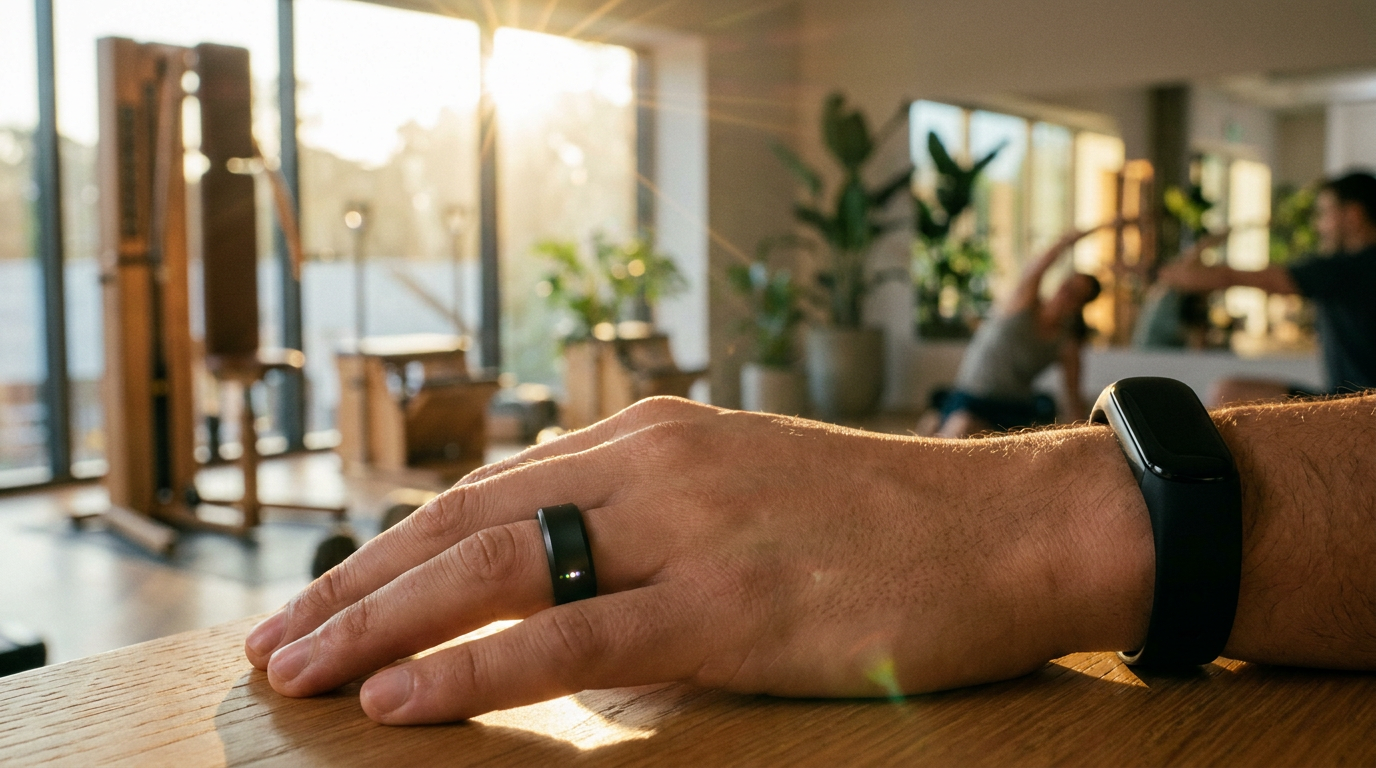
Until recently, capturing this data required a trip to a sports science laboratory and a clinical electrocardiogram (ECG). Today, the technology has been miniaturized into consumer wearables like the Oura Ring, WHOOP, and Apple Watch. The accuracy of these devices has been a subject of intense academic scrutiny. A 2025 independent study conducted by researchers at The Ohio State University and the Air Force Research Laboratory compared top consumer wearables against a gold-standard ECG chest strap.[2]
The researchers analyzed over 500 nights of sleep data and found that the latest generation of smart rings and dedicated fitness bands achieved near-perfect agreement with clinical equipment for nocturnal HRV tracking. Independent validation published in the journal Sensors similarly confirmed that top-tier wearables can measure HRV with up to 99 percent accuracy, effectively democratizing a metric once reserved for Olympians.[2][3]
However, having access to the data is only half the equation; interpreting it correctly is where many users stumble. A common mistake is comparing one's HRV to a friend's or to population averages. HRV is highly individualized and influenced by genetics, age, and gender. A score of 40 milliseconds might be exceptionally high for a 60-year-old but concerningly low for a 20-year-old collegiate athlete.[1][5]
However, having access to the data is only half the equation; interpreting it correctly is where many users stumble.
Because of this extreme individual variance, sports scientists emphasize that HRV is only useful when tracked against a personal baseline. A 2023 systematic review in the Journal of Sports Sciences found that isolated daily readings are notoriously noisy, fluctuating by 10 to 30 percent day-to-day. The most reliable insights come from rolling averages—tracking whether your HRV is trending upward or downward over a 14-day period.[1][5]

Furthermore, the review concluded that the most effective consumer recovery tools do not rely on HRV alone. Apps that synthesize HRV, resting heart rate, sleep duration, and recent training load into a single composite "readiness score" outperformed single-metric models by roughly 25 percent in predicting an athlete's capacity for the next day.[5]
So, how should an everyday athlete use this information? If your wearable indicates your HRV is significantly below your baseline, it is a physiological signal that your sympathetic nervous system is stuck in overdrive. Pushing through a high-intensity interval training (HIIT) session or a heavy lifting day in this state often yields diminishing returns and increases injury risk. Instead, a low-HRV day is an ideal time for active recovery: walking, light yoga, or a rest day.[1][4]
Conversely, when your HRV is at or above your baseline, your parasympathetic system is fully engaged. Your body has successfully absorbed the stress of previous workouts and repaired the tissue. This is the green light to tackle a challenging workout, attempt a personal record, or increase your training volume.[1][6]
Beyond simply reacting to the data, individuals can actively train their nervous systems to improve their baseline HRV over time. Long-term aerobic exercise, particularly steady-state "Zone 2" cardio, has been shown to enhance parasympathetic tone, allowing the body to recover more quickly between intense efforts. When you build a strong aerobic base, your heart becomes more efficient, and your HRV naturally climbs.[4][6]

Immediate interventions also exist. Because the vagus nerve controls the parasympathetic response, specific breathing techniques can manually shift the nervous system out of a stressed state. Practices like the Buteyko method or simply slowing the breath to 5.5 breaths per minute—inhaling gently through the nose and exhaling slowly—directly stimulate the vagus nerve. Studies show that just a few minutes of this deliberate breathing can acutely raise HRV and lower blood pressure.[1][6]
Ultimately, the rise of HRV tracking represents a maturation in fitness culture. It moves the conversation away from the outdated "no pain, no gain" mentality and toward a more sustainable, biologically respectful approach to human performance. By listening to the microscopic rhythms of the heart, we can finally give the nervous system the recovery it demands.[1]
Viewpoints in depth
Sports Scientists & Physiologists
Focus on the objective measurement of the autonomic nervous system to prevent overtraining.
For exercise physiologists, HRV represents a breakthrough in load management. Historically, coaches relied on subjective athlete feedback—asking 'how do you feel?'—to gauge recovery. HRV provides an objective, biological metric of central nervous system fatigue. By monitoring the suppression of the parasympathetic nervous system, scientists can identify the early warning signs of overtraining syndrome before performance declines or injuries occur. They advocate for using HRV not as a rigid rule, but as a daily guide to auto-regulate training intensity.
Wearable Tech Developers
Prioritize algorithmic accuracy and the miniaturization of sensors to make biometric monitoring accessible.
The engineering challenge for wearable companies has been filtering out 'noise'—movement artifacts and poor sensor contact—to capture the precise millisecond intervals between heartbeats. Developers emphasize that the true value of their platforms lies not just in the hardware's accuracy, but in the software's ability to synthesize millions of data points. By combining HRV with sleep staging and respiratory rates, these companies aim to provide consumers with an actionable 'readiness score' that translates complex physiological data into simple daily advice.
Everyday Athletes
Value actionable insights over raw data, using composite scores to balance fitness goals with daily life stress.
For the general fitness enthusiast, HRV tracking is less about eking out a one-percent performance gain and more about holistic health management. Everyday athletes use these metrics to understand how lifestyle factors—like a poor night of sleep, a stressful day at the office, or a few glasses of alcohol—impact their physical capacity. The appeal lies in having a personalized dashboard that gives them permission to take a rest day without guilt, or the confidence to push hard when their body is fully primed.
What we don't know
- Whether long-term reliance on wearable recovery scores diminishes an athlete's natural intuition and ability to self-regulate.
- The precise degree to which different types of psychological stress (e.g., work anxiety vs. relationship stress) uniquely impact HRV compared to physical training stress.
Key terms
- Heart Rate Variability (HRV)
- The measure of the microscopic fluctuations in time between consecutive heartbeats, used as an indicator of nervous system balance.
- Autonomic Nervous System (ANS)
- The part of the nervous system responsible for control of bodily functions not consciously directed, such as breathing, the heartbeat, and digestive processes.
- Sympathetic Nervous System
- The branch of the autonomic nervous system that drives the body's 'fight or flight' response, increasing heart rate and alertness during stress or exercise.
- Parasympathetic Nervous System
- The branch of the autonomic nervous system that controls the body's 'rest and digest' functions, slowing the heart rate and promoting cellular recovery.
- Vagus Nerve
- The main nerve of the parasympathetic nervous system, which acts as a brake on the heart rate and helps the body relax after periods of stress.
Frequently asked
Is a higher HRV always better?
Generally, yes. A higher HRV relative to your own baseline indicates that your body is well-recovered and your parasympathetic (rest) system is active. However, comparing your number to someone else's is not useful due to genetic and age differences.
Why does my HRV drop after a hard workout?
Intense exercise is a form of physical stress that activates your sympathetic (fight-or-flight) nervous system. This stress temporarily suppresses HRV while your body works to repair muscle tissue and restore energy reserves.
How accurate are smartwatches at measuring HRV?
Recent independent studies show that top-tier consumer wearables, such as modern smart rings and dedicated fitness bands, can measure nocturnal HRV with up to 99% agreement compared to clinical ECG equipment.
How can I improve my HRV?
You can improve your baseline HRV over time through consistent aerobic exercise, prioritizing high-quality sleep, and practicing stress-reduction techniques like slow, deep nasal breathing to stimulate the vagus nerve.
Sources
Source coverage
6 outlets
3 viewpoints surfaced






[1]Factlen Editorial TeamEveryday Athletes
Synthesis by Factlen editorial team
Read on Factlen Editorial Team →[2]The Physiological SocietyWearable Tech Developers
Validation of consumer wearables for resting heart rate and heart rate variability
Read on The Physiological Society →[3]SensorsWearable Tech Developers
Validation of Six Wearable Devices for Estimating Sleep, Heart Rate and Heart Rate Variability
Read on Sensors →[4]Frontiers in PhysiologySports Scientists & Physiologists
Effects of exhaustive exercise on autonomic nervous system function
Read on Frontiers in Physiology →[5]Journal of Sports SciencesSports Scientists & Physiologists
Reliability of consumer recovery tools and multi-metric readiness scores
Read on Journal of Sports Sciences →[6]National Institutes of HealthEveryday Athletes
Application of HRV Tracking through Wearable Devices
Read on National Institutes of Health →
Every angle. Every day.
Get fitness stories with full source coverage and perspective breakdowns delivered to your inbox.