
The Science of Zone 2 Cardio: Why Going Slow is the Key to Longevity and Performance
Once reserved for elite endurance athletes, low-intensity 'Zone 2' training has become the cornerstone of modern metabolic health and longevity protocols.
By Factlen Editorial Team
- Longevity & Metabolic Researchers
- View Zone 2 as a medical intervention to prevent chronic disease and extend healthspan.
- Endurance Performance Coaches
- Focus on Zone 2 as the foundation for athletic performance and recovery.
- Time-Crunched Fitness Realists
- Emphasize that lower-volume exercisers may need higher intensities to see results.
What's not represented
- · Strength Training Purists
Why this matters
Cardiovascular disease and metabolic dysfunction are leading drivers of mortality. Understanding how to properly train your aerobic system at low intensities can drastically improve your healthspan, energy levels, and metabolic flexibility without the injury risks of high-intensity workouts.
Key points
- Zone 2 is a specific physiological intensity where the body primarily burns fat for fuel.
- It sits just below the first lactate threshold (LT1), keeping blood lactate under 2.0 mmol/L.
- Consistent Zone 2 training increases the density and efficiency of cellular mitochondria.
- The most common mistake is drifting into Zone 3, which blunts the specific aerobic adaptations.
- The 'talk test' is a reliable way to ensure you are staying in the correct intensity zone.
For years, the fitness industry sold a simple, punishing equation: if you aren't drenched in sweat and gasping for air, you aren't working hard enough. High-intensity interval training (HIIT) and grueling bootcamps became the gold standard for anyone looking to get fit. But recently, the pendulum has swung in the exact opposite direction. The most discussed protocol in both elite athletics and longevity medicine requires moving at a pace so suspiciously comfortable that it barely feels like a workout at all.[1]
Welcome to "Zone 2" cardio. Once confined to the training logs of professional cyclists and marathoners, this low-intensity, steady-state exercise has become the cornerstone of modern metabolic health. It promises to build a more resilient heart, burn fat, and increase lifespan—all without the joint-pounding exhaustion of traditional high-intensity regimens.[4][6]
But what exactly is Zone 2? It is not simply a generic "easy" pace. Physiologically, Zone 2 is defined as the highest exercise intensity at which your body can still clear lactate as quickly as it produces it. This specific metabolic state sits just below the first lactate threshold, known in sports science as LT1.[2][3]
When you exercise below LT1, your blood lactate levels remain relatively flat, typically hovering around 1.7 to 2.0 millimoles per liter. At this precise intensity, your working muscles rely almost entirely on fat for fuel, rather than drawing on limited carbohydrate stores. This creates a highly sustainable energy loop that can be maintained for hours.[4][5][8]

The magic of Zone 2 happens at the cellular level, specifically within the mitochondria—the microscopic powerhouses responsible for generating cellular energy. Dr. Iñigo San Millán, a professor at the University of Colorado School of Medicine and the performance coach for Tour de France champion Tadej Pogačar, has spent decades demonstrating that Zone 2 is the optimal intensity for stimulating mitochondrial biogenesis.[6]
By spending consistent time in this zone, the body physically builds more mitochondria and trains existing ones to become more efficient at oxidizing fat. This adaptation, known as metabolic flexibility, allows the body to seamlessly switch between fuel sources, preserving precious glycogen for when you truly need to sprint or surge.[2][4]
This cellular efficiency is why longevity researchers have aggressively championed the protocol. Dr. Peter Attia, a prominent physician and author, argues that mitochondrial dysfunction is a common denominator in the four leading causes of death: cardiovascular disease, cancer, neurodegenerative diseases, and type 2 diabetes.[7]
This cellular efficiency is why longevity researchers have aggressively championed the protocol.
By building a massive aerobic base through Zone 2 training, individuals can drastically improve their metabolic health, lower insulin resistance, and lay the groundwork for a higher VO2 max—one of the strongest predictors of a long, healthy life. Attia frequently calls it the single most important type of exercise for long-term healthspan.[7][8]

Elite endurance athletes have understood this mechanism for decades, even if they used different terminology. Sports scientists like Professor Stephen Seiler have extensively documented the "polarized training" model, often summarized as the 80/20 rule.[5]
In this model, world-class runners, cyclists, and rowers spend roughly 80 percent of their training volume at low, Zone 2 intensities, reserving the remaining 20 percent for brutal, high-intensity intervals. They go slow for the vast majority of their week so that their aerobic engines are massive enough to support going incredibly fast on race day.[3][4][7]
However, as the protocol has gone mainstream, experts warn of a widespread failure mode: the "Zone 3 Trap." Because Zone 2 feels so easy, most recreational athletes naturally drift into a slightly harder effort. They push into Zone 3—a metabolic grey zone where the exercise is too hard to maximize fat oxidation and mitochondrial growth, but too easy to trigger the cardiovascular adaptations of true high-intensity training.[5][8]
In Zone 3, blood lactate begins to accumulate, and the body shifts toward burning carbohydrates. You sweat more, and it feels like a "better" workout, but you are actively blunting the specific physiological adaptations you set out to achieve by accumulating unnecessary fatigue.[5][8]

So how do you ensure you stay in Zone 2? The most accurate method involves laboratory blood lactate testing, but the most practical field metric is the "talk test." If you can hold a continuous, comfortable conversation in full sentences without needing to pause for breath, you are likely in Zone 2. If you have to break your sentences, you are going too hard.[2][6]
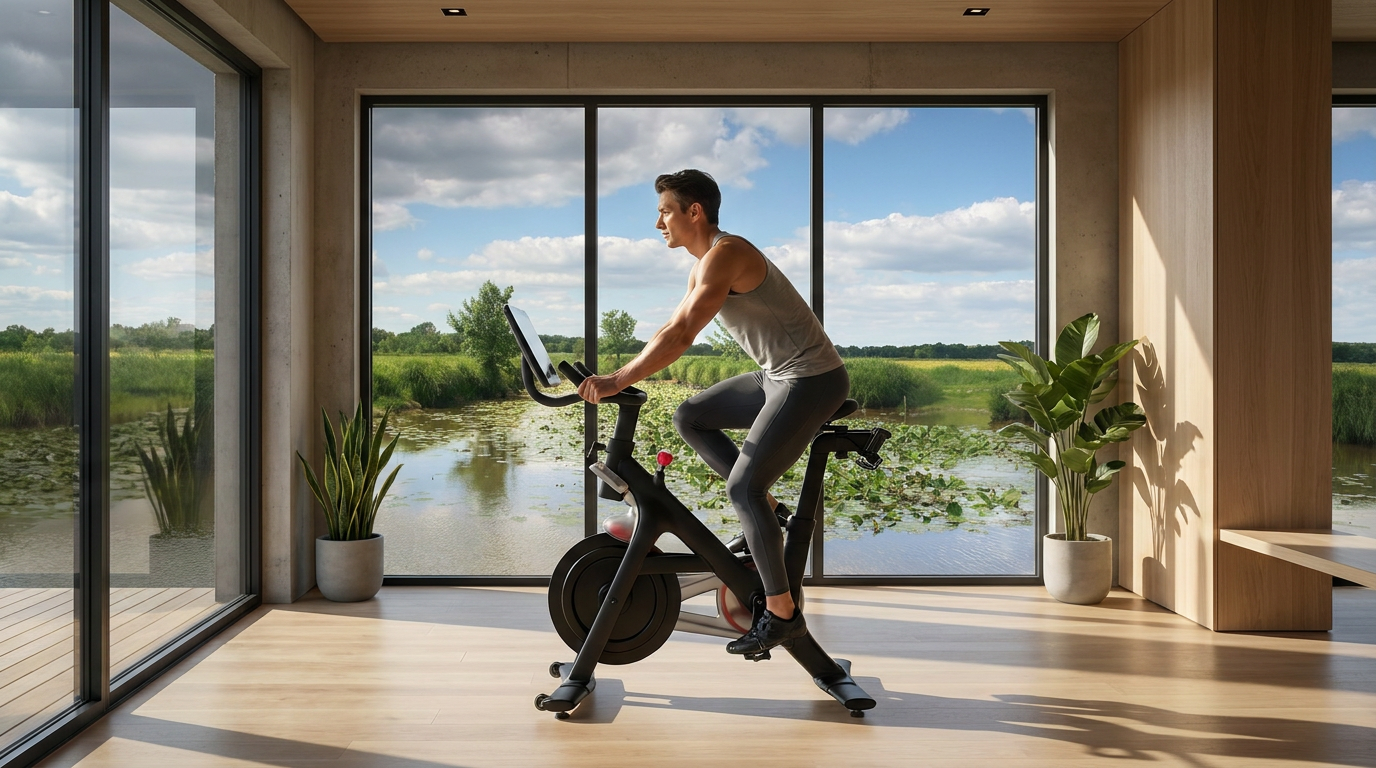
Heart rate monitors can also help, with Zone 2 typically falling between 60 and 70 percent of your maximum heart rate. Because running often spikes the heart rate of beginners straight past this threshold, experts frequently recommend cycling, rowing, or walking on a steep incline to maintain a steady, controlled output.[2][8]
The catch to Zone 2 is the time commitment. To see meaningful longevity and metabolic benefits, advocates like Attia recommend accumulating three to four hours per week, ideally broken into 45- to 60-minute sessions.[8]

For time-crunched individuals, this volume can be daunting. A recent review in the journal Sports Medicine noted that while Zone 2 is foundational, it is not an either-or proposition. For someone who only has two hours a week to exercise, incorporating higher-intensity intervals will yield faster improvements in cardiorespiratory fitness than low-intensity work alone.[6]
Ultimately, the rise of Zone 2 cardio represents a maturation in how we view exercise. It shifts the focus away from punishing, calorie-burning exhaustion and toward sustainable, cellular-level health. It is the rare fitness trend that asks you to do less, go slower, and focus on building an engine that will last a lifetime.[1]
How we got here
Early 2000s
Sports scientist Stephen Seiler formalizes the 'polarized training' model, showing elite athletes spend 80% of their time at low intensities.
2010s
Dr. Iñigo San Millán publishes research linking Zone 2 exercise directly to mitochondrial health and metabolic flexibility.
2023
Dr. Peter Attia publishes 'Outlive', bringing the concept of Zone 2 training out of elite sports and into mainstream longevity medicine.
2025
A major Sports Medicine review clarifies that while Zone 2 is foundational, low-volume exercisers still benefit heavily from high-intensity intervals.
Viewpoints in depth
Longevity and Metabolic Researchers
View Zone 2 as a medical intervention to prevent chronic disease and extend healthspan.
Physicians like Dr. Peter Attia and researchers like Dr. Iñigo San Millán argue that metabolic dysfunction is the root cause of most modern chronic diseases. By viewing exercise through a cellular lens, they prioritize Zone 2 because it directly stimulates mitochondrial biogenesis and improves insulin sensitivity. To this camp, the goal isn't necessarily to run a faster marathon, but to build a metabolic engine that wards off type 2 diabetes, cardiovascular disease, and neurodegeneration well into old age.
Endurance Performance Coaches
Focus on Zone 2 as the foundation for athletic performance and recovery.
Sports scientists like Professor Stephen Seiler view Zone 2 through the lens of 'polarized training.' For elite athletes, the goal is maximizing race-day output without accumulating debilitating fatigue. By spending 80% of their time at low intensities, athletes build massive capillary density and aerobic capacity, allowing them to recover faster and push harder during the 20% of their training dedicated to high-intensity intervals. To coaches, Zone 2 is the base of the performance pyramid.
Time-Crunched Fitness Realists
Emphasize that lower-volume exercisers may need higher intensities to see results.
While acknowledging the physiological benefits of Zone 2, exercise scientists focused on public health note a practical limitation: time. The 80/20 polarized model was derived from elite athletes training 15 to 20 hours a week. For an everyday adult who only has two or three hours a week to exercise, dedicating all of it to low-intensity Zone 2 may not provide enough stimulus to meaningfully raise VO2 max. This camp advocates for a hybrid approach, noting that high-intensity interval training (HIIT) remains the most time-efficient way to improve cardiovascular fitness for those with limited schedules.
What we don't know
- The exact minimum effective dose of Zone 2 required to see longevity benefits in completely sedentary individuals.
- How individual genetic differences affect the rate of mitochondrial biogenesis in response to Zone 2 training.
- Whether the 80/20 polarized training ratio is truly optimal for recreational athletes, or if a different distribution yields better results for lower-volume trainers.
Key terms
- LT1 (First Lactate Threshold)
- The exercise intensity where blood lactate first begins to rise above resting levels, typically marking the upper boundary of Zone 2.
- Mitochondria
- The microscopic structures inside cells responsible for generating energy, which multiply and become more efficient through Zone 2 training.
- Metabolic Flexibility
- The body's ability to efficiently switch between burning fat and burning carbohydrates for fuel depending on the intensity of the activity.
- VO2 Max
- The maximum amount of oxygen your body can utilize during intense exercise, widely considered one of the strongest predictors of longevity.
- Polarized Training
- An endurance training model where roughly 80% of workouts are done at low intensity (Zone 2) and 20% at high intensity, avoiding the moderate 'grey zone'.
Frequently asked
Can I just walk to get my Zone 2 cardio?
Yes, if you maintain a brisk enough pace. For many beginners, a brisk walk or walking on an incline treadmill is enough to elevate the heart rate to the 60-70% maximum threshold required for Zone 2.
Why shouldn't I just run if I want to get fit faster?
Running is highly effective, but it often pushes the heart rate too high for true Zone 2 adaptations. If you cross into Zone 3 or higher, your body shifts away from fat oxidation and you accumulate more fatigue, which can hinder recovery.
Do I need a heart rate monitor to do Zone 2?
No. While chest straps and smartwatches provide precise data, the 'talk test' is a highly reliable field metric. If you can speak in full, continuous sentences without gasping, you are likely in the correct zone.
Does Zone 2 cardio burn belly fat?
While Zone 2 maximizes the percentage of fat your body uses for fuel during the workout, overall fat loss still depends on your total daily caloric balance. However, it significantly improves your metabolic health and insulin sensitivity over time.
Sources
Source coverage
8 outlets
3 viewpoints surfaced








[1]Factlen Editorial TeamTime-Crunched Fitness Realists
Synthesis by Factlen editorial team
Read on Factlen Editorial Team →[2]Superpower.comLongevity & Metabolic Researchers
What is Zone 2 Running? The Science of LT1 and Metabolic Flexibility
Read on Superpower.com →[3]Fisiologia del EjercicioEndurance Performance Coaches
Expert Consensus on the Optimization of Zone 2 Training
Read on Fisiologia del Ejercicio →[4]TrainingPeaksEndurance Performance Coaches
The Science Behind Base-Building Workouts and Zone 2
Read on TrainingPeaks →[5]Roadman CyclingEndurance Performance Coaches
Zone 2 and Endurance Training Are Not Synonyms
Read on Roadman Cycling →[6]Charlotte ObserverLongevity & Metabolic Researchers
Inigo San Millan Made Zone 2 Cardio Famous. Here's What It Actually Does.
Read on Charlotte Observer →[7]GetHealthspanLongevity & Metabolic Researchers
Zone 2 Training for Optimal Cardiovascular and Cardiorespiratory Fitness
Read on GetHealthspan →[8]Zone2AILongevity & Metabolic Researchers
Peter Attia's Zone 2 Protocol: What Most People Get Wrong
Read on Zone2AI →

Every angle. Every day.
Get fitness stories with full source coverage and perspective breakdowns delivered to your inbox.