
The Era of the Local LLM: How Consumer Laptops Are Replacing Cloud AI
Advances in unified memory and model efficiency have made it possible to run frontier-level artificial intelligence entirely on personal computers. The shift is democratizing AI access while eliminating subscription costs and data privacy risks.
By Factlen Editorial Team
- Open-Source Developers
- Advocates for decentralized AI that runs on user-owned hardware.
- Enterprise Security Teams
- Professionals focused on data protection, compliance, and risk mitigation.
- Cloud AI Providers
- Companies building massive, centralized artificial intelligence infrastructure.
What's not represented
- · Hardware Manufacturers
- · Everyday Consumers
Why this matters
By running AI locally, professionals can process highly sensitive data—like patient records or proprietary code—without violating compliance laws or paying monthly cloud fees, fundamentally shifting the balance of power from tech giants back to the individual user.
Key points
- Advances in hardware and model efficiency now allow frontier-level AI to run locally on consumer laptops.
- Local execution ensures complete data privacy, making AI viable for highly regulated industries like healthcare and finance.
- Unified memory architectures, particularly in Apple Silicon, have eliminated the traditional VRAM bottlenecks that previously restricted AI to data centers.
- Software tools like Ollama and LM Studio provide user-friendly interfaces and APIs that seamlessly replace cloud-based subscriptions.
- Mixture of Experts (MoE) models and quantization techniques allow massive AI networks to operate efficiently on standard computer memory.
For the past three years, the artificial intelligence revolution has been tethered to the cloud. Accessing frontier-level intelligence meant sending prompts, code, and sensitive data to massive server farms operated by a handful of tech giants. But in 2026, the center of gravity is shifting. Advances in hardware architecture and model efficiency have made it possible to run highly capable large language models (LLMs) entirely on consumer laptops. This transition from cloud-dependency to local execution is democratizing AI access, eliminating recurring subscription costs, and solving the industry's most pressing data privacy concerns.[7]
The push toward local AI is largely driven by the inherent risks of cloud computing. When users query cloud-based models, their data leaves their device, creating potential vulnerabilities for data breaches, third-party surveillance, and unauthorized model training. For highly regulated industries like healthcare, finance, and legal services, this cloud requirement has been a hard barrier to AI adoption. Local AI models solve this by processing information directly on-site, ensuring that sensitive data never crosses a network boundary.[2][8]
When AI models operate locally, no sensitive data leaves the host network. This architecture provides a compliant-by-design framework that satisfies strict data protection laws, such as Europe's GDPR and the United States' HIPAA regulations. Because the model runs entirely offline after the initial download, it eliminates the risk of cloud misconfigurations and third-party leaks, allowing doctors to summarize patient notes and lawyers to analyze contracts without fear of exposure.[2]

Making this local revolution possible required a fundamental rethinking of consumer hardware. Historically, running a large AI model required specialized data-center graphics cards with massive amounts of Video RAM (VRAM). Traditional consumer PCs separate system memory (RAM) from graphics memory, creating a bottleneck that makes loading large models impossible. The breakthrough came with unified memory architectures, pioneered by Apple Silicon and now increasingly adopted across the broader computing industry.[1][7]
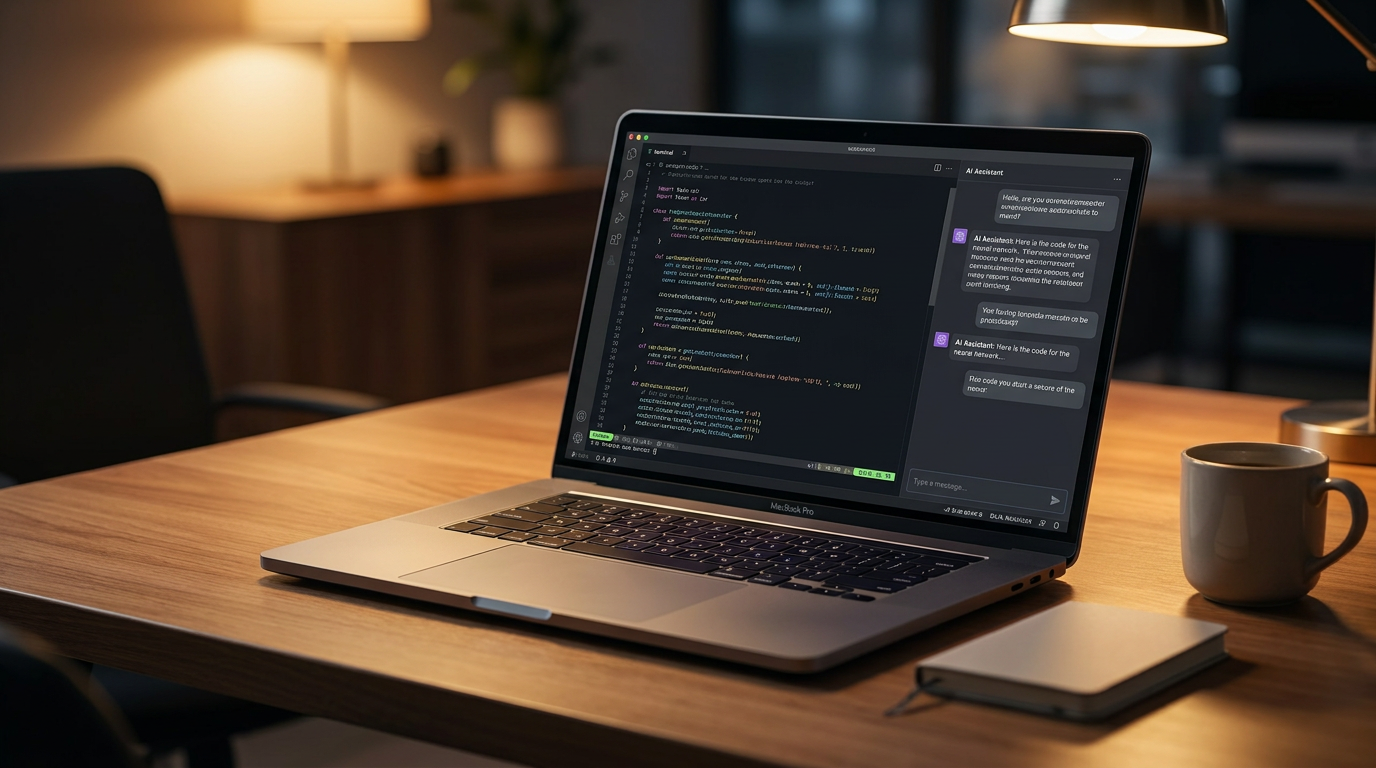
Unified memory allows the central processing unit (CPU) and the graphics processing unit (GPU) to share a single, massive pool of high-bandwidth memory. A 2026 MacBook Pro configured with 48GB or 64GB of unified memory can load models that would previously require thousands of dollars in dedicated server hardware. This architectural advantage allows the GPU to process AI tasks at blazing speeds without stalling on data transfers.[1]
The Windows ecosystem has also adapted to the local AI mandate. PC manufacturers are now shipping laptops with higher baseline memory configurations specifically designed for local inference. While budget gaming laptops with 8GB of VRAM can run smaller models, the new sweet spot for local AI on Windows machines is 24GB to 32GB of system memory, paired with modern RTX 40-series or 50-series graphics cards.[1]

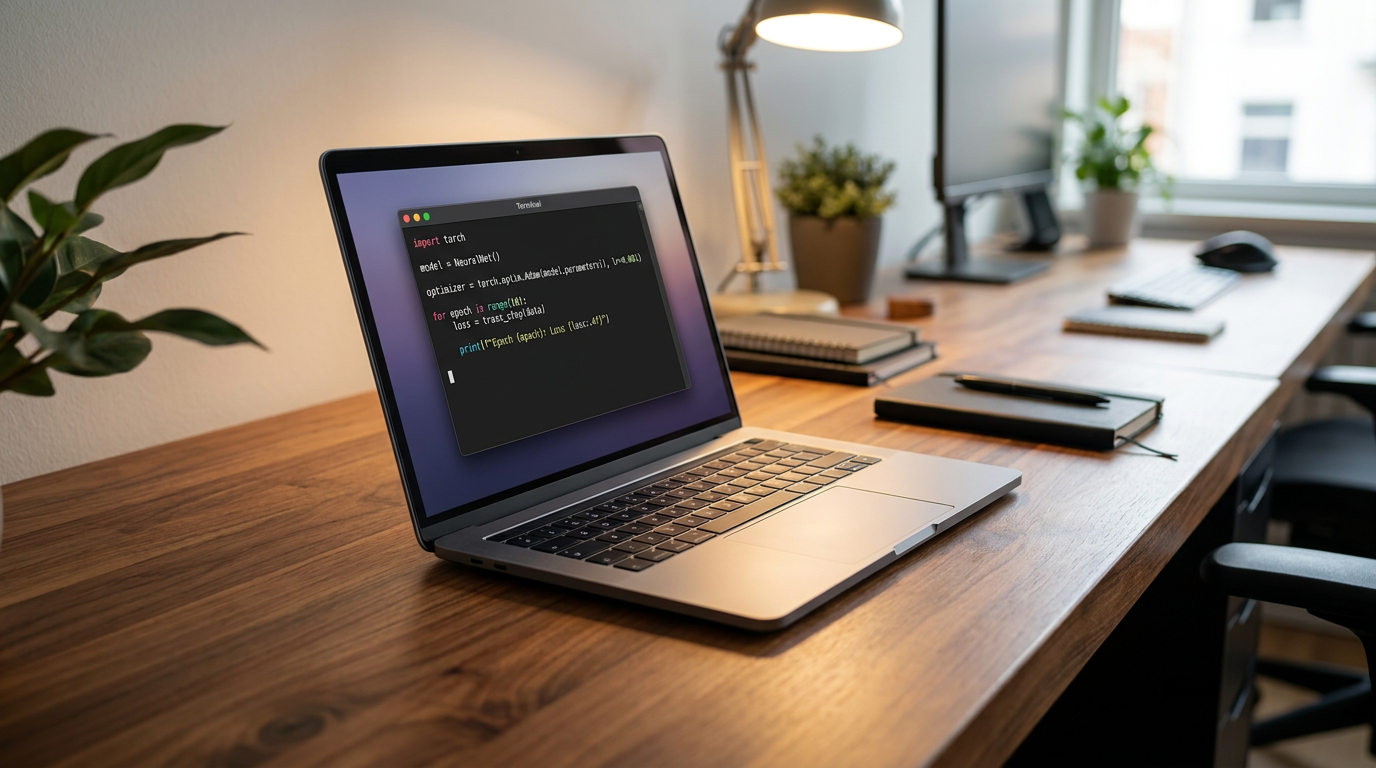
Hardware alone is not enough; the software layer has matured to make local AI accessible to non-engineers. Two dominant tools have emerged in 2026: Ollama and LM Studio. Ollama operates primarily as a command-line interface and background service, favored by developers who want to integrate local models directly into their codebases or agentic workflows. It allows users to download and run optimized models with a single terminal command.[4]
Hardware alone is not enough; the software layer has matured to make local AI accessible to non-engineers.
For users who prefer a graphical interface, LM Studio provides a polished desktop application. It features a built-in model browser, chat interface, and visual parameter tuning, making it as easy to use as a standard web browser. Crucially, both Ollama and LM Studio expose local APIs that perfectly mimic OpenAI's cloud API. This means developers can take existing applications built for ChatGPT and redirect them to a local model simply by changing a single line of configuration code.[4]
The models themselves have undergone a radical efficiency transformation. The most significant breakthrough is the widespread adoption of the Mixture of Experts (MoE) architecture. Instead of activating every neural pathway for every word generated, an MoE model routes the query to specialized sub-networks. For example, Alibaba's Qwen 3.6 model contains 35 billion total parameters but only activates 3.5 billion parameters per token.[3]
This selective activation allows MoE models to deliver frontier-level reasoning while drastically reducing the computational load and memory requirements. Alongside MoE, the technique of quantization—compressing the mathematical precision of a model's weights—has allowed massive models to shrink in file size. Through 4-bit quantization, a massive 70-billion parameter model can be compressed to fit comfortably within 40GB of memory, making it viable for high-end laptops.[1][3]

The practical applications of these local models are already reshaping professional workflows. In software development, local models like Qwen 3.6 and DeepSeek are being used as highly capable coding assistants. Because they run locally, developers can feed them entire proprietary codebases without violating corporate security policies. Reviewers note that while cloud models still hold an edge for the most complex, multi-file debugging tasks, local models are now more than sufficient for daily coding, refactoring, and documentation.[6]
Apple is aggressively leaning into this local-first paradigm with its Apple Intelligence rollout. The company has positioned on-device inference as a core competitive advantage, emphasizing privacy and cost savings over the massive data center buildouts pursued by its rivals. By leveraging the Neural Engine built into modern iPhones, iPads, and Macs, Apple processes the majority of user requests locally.[5]
However, Apple's approach remains hybrid. For complex reasoning tasks that exceed the capacity of on-device hardware, Apple utilizes Private Cloud Compute (PCC)—a secure cloud infrastructure that encrypts data during processing and immediately discards it. This acknowledges a persistent reality: while local models are incredibly capable, the absolute bleeding edge of artificial intelligence still requires the raw power of a data center.[5]
The economics of local AI are compelling. While a high-end laptop with 64GB of unified memory requires a significant upfront investment—often exceeding $3,000—it eliminates the recurring costs of enterprise API tokens and monthly subscriptions. For power users and small businesses generating millions of tokens a month, the hardware pays for itself within a year, while providing the added benefit of absolute data sovereignty.[7][8]

As the ecosystem matures, the focus is shifting toward agentic AI—systems that can independently plan and execute multi-step tasks. With sufficient local memory, users can now run multiple specialized models simultaneously. A Mac Studio, for instance, can host a reasoning model to plan a project while a separate coding model executes the steps, effectively creating a private, localized engineering team that operates entirely offline.[7]
The era of the local LLM represents a fundamental redistribution of computational power. By moving intelligence from remote server farms to the devices sitting on our desks, the tech industry is offering a viable alternative to the surveillance-heavy, subscription-based cloud model. It is a future where artificial intelligence is not just a service we rent, but a tool we own.[7]
How we got here
Early 2023
Cloud-based models like ChatGPT dominate, requiring massive data centers for all AI tasks.
Late 2023
The open-source community begins heavily optimizing models to run on consumer hardware via projects like llama.cpp.
2024–2025
Tools like Ollama and LM Studio launch, making local AI installation accessible to non-developers.
Mid 2026
Highly efficient Mixture of Experts (MoE) models allow frontier-level reasoning to run smoothly on standard laptops.
Viewpoints in depth
Open-Source Developers
Advocates for decentralized AI that runs on user-owned hardware.
This community views local AI as a necessary counterweight to the monopolistic tendencies of massive tech companies. By building tools like Ollama and optimizing open-weight models, they aim to ensure that artificial intelligence remains a democratized utility rather than a rented service. They argue that relying on cloud providers creates a dangerous dependency, where users can be priced out or censored at any time. For them, local execution is about ownership and freedom.
Enterprise Security Teams
Professionals focused on data protection, compliance, and risk mitigation.
For IT and security leaders, the appeal of local AI is entirely pragmatic. Cloud-based LLMs present a massive data exfiltration risk, as employees might inadvertently paste proprietary code, patient records, or financial data into a third-party prompt box. By mandating local-only models, these teams can deploy productivity-boosting AI tools without violating strict regulatory frameworks like HIPAA or the GDPR. The local model acts as an air-gapped intelligence engine.
Cloud AI Providers
Companies building massive, centralized artificial intelligence infrastructure.
While acknowledging the utility of local models for specific, privacy-sensitive tasks, cloud providers argue that the absolute frontier of AI reasoning will always live in the data center. They point out that models with trillions of parameters simply cannot be compressed to fit on a laptop without losing critical nuance and capability. In their view, local AI is a supplementary tool, while the cloud remains the primary engine for complex, multi-agent problem solving.
What we don't know
- How quickly hardware degradation or battery drain will affect consumer laptops running intensive AI workloads daily.
- Whether open-source local models will eventually hit a performance ceiling compared to the multi-trillion parameter models housed in corporate data centers.
- How cloud providers will adjust their pricing models as more power users migrate to free, local alternatives.
Key terms
- Local Inference
- Running an artificial intelligence model directly on your own device, rather than sending data to a remote cloud server.
- Unified Memory
- A hardware architecture where the CPU and GPU share a single pool of memory, drastically speeding up AI processing.
- Mixture of Experts (MoE)
- An AI architecture that routes queries to specialized sub-networks, allowing massive models to run efficiently by only activating a fraction of their parameters at a time.
- Quantization
- A compression technique that reduces the mathematical precision of an AI model, allowing it to fit into consumer-grade memory with minimal loss in quality.
Frequently asked
Do I need an internet connection to use a local LLM?
No. Once the model and the software (like Ollama or LM Studio) are downloaded, the AI runs entirely offline.
Can a local model match ChatGPT's performance?
For daily tasks like coding, drafting emails, and summarizing documents, modern local models are highly competitive. However, cloud models still hold an edge for the most complex, multi-step reasoning challenges.
What kind of computer do I need to run AI locally?
While smaller models can run on 8GB of memory, the recommended baseline in 2026 is a machine with 24GB to 32GB of RAM, ideally an Apple Silicon Mac or a PC with a modern RTX graphics card.
Is local AI actually more private?
Yes. Because the data never leaves your device, local AI eliminates the risk of cloud data breaches, third-party surveillance, and unauthorized model training.
Sources
Source coverage
8 outlets
3 viewpoints surfaced








[1]Popular AICloud AI Providers
The best laptops for running local LLMs in 2026
Read on Popular AI →[2]AI CertsEnterprise Security Teams
Why Businesses Are Turning to Local AI Models
Read on AI Certs →[3]PinggyOpen-Source Developers
Top 5 Local LLM Tools in 2026
Read on Pinggy →[4]ContaboOpen-Source Developers
Ollama vs LM Studio: Which Local LLM Tool is Right for You?
Read on Contabo →[5]MacRumorsCloud AI Providers
Apple Plans to Make On-Device AI a Key WWDC Focus
Read on MacRumors →[6]GoPubbyOpen-Source Developers
The best local LLM for coding in 2026
Read on GoPubby →[7]Factlen Editorial TeamOpen-Source Developers
Synthesis by Factlen editorial team
Read on Factlen Editorial Team →[8]Local AI MasterEnterprise Security Teams
Is Local AI Private? (Privacy Benefits)
Read on Local AI Master →

Every angle. Every day.
Get ai stories with full source coverage and perspective breakdowns delivered to your inbox.