
Economic Mechanics of the US-Iran Peace Deal: Oil Exports and the $300 Billion Fund
An interim peace agreement set to be signed in Switzerland will immediately unfreeze Iranian oil exports and establish a $300 billion economic development fund. The deal promises to reshape global energy markets and ease inflation, though severe political risks remain.
By Factlen Editorial Team
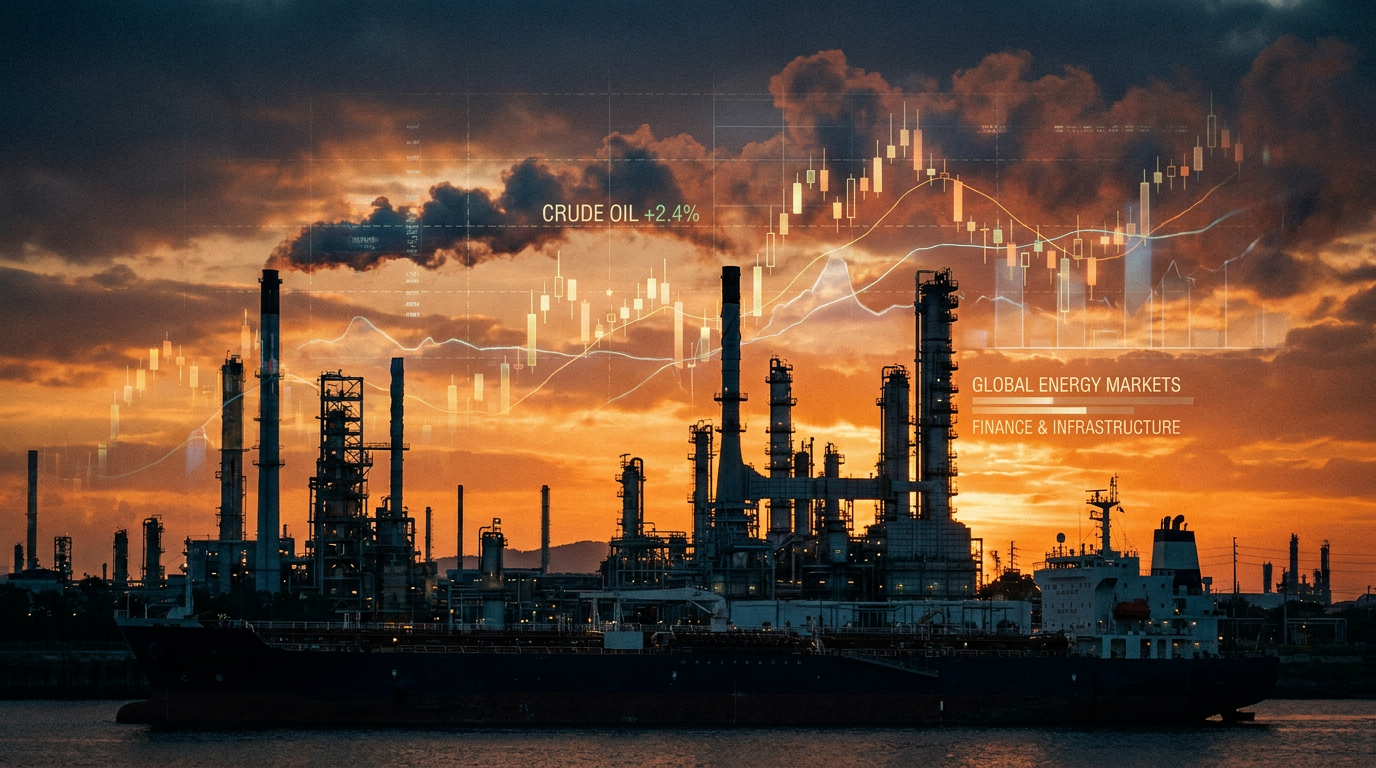
- Global Energy Importers
- Eager for the return of Iranian crude to lower global energy costs and cool sticky inflation.
- OPEC+ Competitors
- Anxious about market share and the dilemma of cutting their own production to accommodate Iran's returning barrels.
- Multinational Investors
- Intrigued by the $300 billion fund but highly cautious of committing capital due to the risk of sanctions snapping back.
- U.S. Defense Hawks
- Highly critical of the financial windfall, arguing it rewards Tehran without sufficient permanent security guarantees.
What's not represented
- · Iranian domestic political opposition
- · European Union trade negotiators
Why this matters
The sudden return of millions of barrels of Iranian crude to the global market could significantly lower energy prices and cool global inflation. However, the fragile political nature of the $300 billion development fund means multinational businesses face immense risks if the peace pact collapses.
Key points
- The US and Iran will sign an interim peace deal in Switzerland on Friday.
- The agreement immediately unfreezes Iranian crude oil exports.
- A $300 billion fund will be established for Iranian civilian infrastructure.
- Energy markets are bracing for a sudden influx of millions of barrels.
- Former President Trump warned he may resume military action if he dislikes the final deal.
The United States and Iran are preparing to formally sign a landmark memorandum of understanding this Friday in Switzerland, an interim peace agreement that carries massive implications for the global economy. Beyond halting military hostilities, the draft agreement fundamentally rewrites the geopolitical energy landscape by offering Tehran sweeping financial incentives in exchange for verifiable security concessions. The centerpiece of this economic realignment is the immediate authorization for Iran to resume unrestricted crude oil exports, a move designed to rapidly reintegrate the nation into global commerce while providing immediate relief to strained energy markets.[1][2]
For years, heavy international sanctions have forced Iranian crude into shadow fleets—a clandestine network of tankers operating without standard insurance or transponders—severely limiting its official output and creating artificial bottlenecks in global supply chains. Transitioning these hidden barrels back into the legitimate, transparent market is a complex logistical mechanism that requires the rapid reinstatement of maritime insurance and international banking letters of credit. Energy analysts estimate that Iran holds substantial spare production capacity and millions of barrels in floating storage, which could flood the market within weeks of the ink drying in Geneva.[5][6][9]
Anticipation of this sudden influx has already sent shockwaves through energy trading desks, with benchmark crude prices plunging as traders price in the return of a major OPEC producer to the open market. The volatility of the preceding months was starkly illustrated by TotalEnergies, which recently reported a doubling of its oil trading profits to roughly $1 billion in the first quarter of the year. That massive financial windfall was driven by an aggressive crude buying spree in the run-up to the recent military escalations, a defensive strategy that energy majors must now rapidly unwind as peace dynamics take hold.[3][5]

The sudden shift from a war-footing to an oversupplied market presents a complex challenge for commodity traders who had bet heavily on prolonged supply disruptions in the Middle East. Beyond the immediate oil shock, the cornerstone of the long-term economic pact is a proposed $300 billion economic development program. This unprecedented fund is explicitly designed to rebuild Iran's battered infrastructure, modernize its aging energy grid, and integrate its financial systems back into the global economy following negotiations for a permanent treaty.[1][2][7]

The mechanics of the $300 billion fund remain highly complex, with European and Asian financial institutions expected to act as strict intermediaries. This financial architecture is designed to ensure that the deployed capital is utilized exclusively for civilian and developmental purposes, such as water management, healthcare infrastructure, and renewable energy projects, rather than military expansion. By routing the funds through heavily audited international channels, negotiators hope to satisfy domestic political critics while still delivering the promised economic relief to the Iranian populace.[6][7]
The mechanics of the $300 billion fund remain highly complex, with European and Asian financial institutions expected to act as strict intermediaries.
In Tehran, the prospect of imminent sanctions relief and massive foreign direct investment has triggered a fierce rally in local equity and currency markets. Iranian businesses, which have been starved of foreign capital and modern technology for over a decade, are already positioning for lucrative joint ventures, particularly in the telecommunications, aviation, and manufacturing sectors. The domestic economic euphoria, however, is heavily tempered by profound political fragility and the historical memory of previous agreements that collapsed under shifting political winds in Washington.[8]

Former President Donald Trump, speaking at the G7 conference on Wednesday, injected massive uncertainty into the global market by declaring that the U.S. will "go right back to dropping bombs" if he determines the final deal is unfavorable. This stark rhetoric underscores the precarious nature of the interim agreement; multinational corporations and institutional investors may hesitate to commit long-term capital to the $300 billion development fund if the geopolitical risk premium remains sky-high. The specter of a sudden U.S. withdrawal casts a long shadow over the boardroom discussions of European and Asian conglomerates currently evaluating Iranian market entry.[4][6]
The threat of a sudden policy reversal forces businesses to weigh the massive upside of an untapped market of over 80 million consumers against the catastrophic risk of stranded assets and secondary sanctions. Furthermore, the sudden re-entry of Iranian oil poses a delicate and immediate challenge for the broader OPEC+ alliance, which has spent the last two years carefully managing production quotas to prop up global prices. Saudi Arabia, Russia, and other major producers will now face intense pressure to recalibrate their own export strategies.[6][9]

The cartel will have to decide whether to accommodate Iran's returning barrels by cutting their own output, or risk a bruising market-share war that could drive energy prices even lower. The internal diplomacy of the oil group will be severely tested as Iran seeks to reclaim its historical export volumes regardless of the broader impact on the coalition's revenue targets. For global central banks and consumers, however, a sustained drop in energy prices resulting from the peace dividend could provide crucial relief in the ongoing fight against sticky inflation.[5][9]
Cheaper fuel costs ripple through the entire supply chain, lowering the cost of transportation, manufacturing, and agricultural production, which could in turn accelerate interest rate cuts by major central banks. Ultimately, Friday's signing in Switzerland represents only the first step in a highly volatile economic transition, one where the promise of a $300 billion revitalization must navigate the treacherous waters of domestic politics, global energy competition, and decades of entrenched mistrust.[1][2][7]
How we got here
Q1 2026
Military escalations in the Middle East drive massive volatility and record profits for oil traders.
June 17, 2026
Details of the $300 billion development fund and immediate oil export resumption leak to the press.
June 19, 2026
Scheduled signing of the interim memorandum of understanding in Switzerland.
Viewpoints in depth
Global Energy Importers
Eager for the return of Iranian crude to lower global energy costs and cool sticky inflation.
For nations heavily dependent on imported energy, the peace deal is a massive economic relief valve. The sudden influx of Iranian crude is expected to drive down benchmark oil prices, which directly lowers the cost of transportation, manufacturing, and consumer goods. Central banks view this potential drop in energy costs as a critical tailwind in their ongoing battle against inflation, potentially accelerating timelines for interest rate cuts.
OPEC+ Competitors
Anxious about market share and the dilemma of cutting their own production to accommodate Iran's returning barrels.
The broader oil cartel faces a severe strategic dilemma. Saudi Arabia, Russia, and other allied producers have spent years carefully restricting their own output to prop up global prices. The sudden, unrestricted return of Iranian oil forces these nations to either surrender market share to Tehran or engage in a bruising price war that could devastate their own national budgets. The internal diplomacy required to balance these competing interests will be intensely fraught.
Multinational Investors
Intrigued by the $300 billion fund but highly cautious of committing capital due to the risk of sanctions snapping back.
European and Asian conglomerates see massive potential in a newly opened Iranian market of over 80 million consumers, particularly given the $300 billion earmarked for infrastructure. However, the boardroom enthusiasm is heavily suppressed by geopolitical reality. The explicit threat from U.S. political figures to tear up the deal and resume hostilities means that any long-term capital deployed in Iran carries an extreme risk of becoming a stranded asset if secondary sanctions are suddenly reimposed.
U.S. Defense Hawks
Highly critical of the financial windfall, arguing it rewards Tehran without sufficient permanent security guarantees.
Critics of the interim agreement argue that unfreezing oil exports and establishing a $300 billion fund prematurely surrenders Washington's most powerful economic leverage. They contend that enriching the Iranian government before a permanent, verifiable treaty is signed allows Tehran to rebuild its economy while maintaining the capacity to fund regional proxies. This camp demands that any financial relief be strictly tethered to irreversible dismantling of military capabilities.
What we don't know
- How quickly Iran can physically scale its oil exports from shadow fleets to the open market.
- Whether OPEC+ will cut its own production to accommodate the influx of Iranian crude.
- If multinational banks will actually process the $300 billion fund given the lingering threat of U.S. political whiplash.
Key terms
- Memorandum of Understanding (MOU)
- A formal agreement between two or more parties that establishes a framework for cooperation, often serving as an interim step before a permanent treaty.
- Spare Capacity
- The volume of oil production that can be brought online within 30 days and sustained for at least 90 days, acting as a buffer for global markets.
- Shadow Fleet
- A clandestine network of aging oil tankers that operate without standard international insurance or tracking transponders to evade economic sanctions.
- OPEC+
- An alliance of crude producers, including the core OPEC members and allies like Russia, that coordinates production quotas to influence global oil prices.
Frequently asked
When can Iran start selling oil under the deal?
The interim memorandum of understanding allows Iran to resume unrestricted crude oil exports immediately upon signing.
What is the $300 billion fund for?
The fund is designed to rebuild Iran's civilian infrastructure, modernize its energy grid, and integrate its financial systems, strictly excluding military use.
Are all U.S. sanctions permanently lifted?
No. This is an interim agreement; permanent sanctions relief depends on the successful negotiation of a final, permanent peace treaty.
Sources
Source coverage
9 outlets
4 viewpoints surfaced







[1]BloombergOPEC+ Competitors
What Iran Stands to Gain Under Proposed Peace Deal
Read on Bloomberg →Iran to See Broad Financial Gains in US Peace Deal
Read on Bloomberg →Total Oil Trading Gain Doubled to About $1 Billion Last Quarter
Read on Bloomberg →[4]CNBCU.S. Defense Hawks
Trump says U.S. will 'go right back to dropping bombs' if he doesn't like Iran deal
Read on CNBC →[5]ReutersGlobal Energy Importers
Oil prices plunge as US-Iran interim peace deal unlocks crude exports
Read on Reuters →[6]The Wall Street JournalOPEC+ Competitors
Energy markets brace for Iranian crude influx as peace pact nears
Read on The Wall Street Journal →[7]Financial TimesMultinational Investors
Inside the $300bn economic development fund for Iran
Read on Financial Times →[8]Al JazeeraMultinational Investors
Tehran markets rally on prospect of sanctions relief and $300bn fund
Read on Al Jazeera →[9]IEAGlobal Energy Importers
Oil Market Report - June 2026: Assessing Iranian Spare Capacity
Read on IEA →


Every angle. Every day.
Get business stories with full source coverage and perspective breakdowns delivered to your inbox.