
Induction vs. Gas Cooktops: The 2026 Guide to Efficiency, Health, and Performance
As induction technology matures and concerns over indoor air quality rise, the debate between gas and electric cooktops has shifted from culinary preference to a complex calculation of health, efficiency, and cost.
By Factlen Editorial Team
- Public Health Advocates
- Focus on the hidden respiratory risks and indoor air pollution caused by gas combustion.
- Energy & Efficiency Analysts
- Focus on the thermodynamic superiority and long-term economic benefits of electrification.
- Culinary Traditionalists
- Value the tactile feedback, cookware versatility, and historical reliability of open-flame cooking.
- Modern Appliance Experts
- Focus on speed, safety, precision, and practical installation trade-offs in modern kitchens.
What's not represented
- · Natural Gas Utility Companies
- · Cookware Manufacturers
Why this matters
Choosing between gas and induction impacts more than just how quickly you can boil water; it directly affects your home's indoor air quality, long-term energy bills, and the safety of your kitchen environment. Understanding these trade-offs ensures you invest in an appliance that aligns with your family's health needs and financial goals.
Key points
- Induction cooktops are up to 90% energy efficient, compared to 32-40% for traditional gas stoves.
- Gas stoves emit nitrogen dioxide and benzene, pollutants that can significantly degrade indoor air quality.
- Switching to induction can reduce indoor nitrogen dioxide concentrations by more than 50%.
- Gas remains advantageous for its compatibility with all cookware types and its ability to function during power outages.
- The upfront cost of induction is often offset by long-term savings on utility bills and reduced kitchen cooling needs.
The debate over the ideal kitchen cooktop has evolved significantly by 2026, shifting from a simple matter of culinary preference to a complex calculation involving public health, energy efficiency, and household economics. For generations, the visible flame of a gas stove was considered the gold standard for serious home cooks and professional chefs alike. However, the rapid maturation of electromagnetic cooking technology has positioned induction as a thermodynamically superior alternative that fundamentally changes how heat is generated in the kitchen. As consumers weigh the upfront costs of appliance replacement against long-term utility savings and indoor air quality concerns, the decision between gas and induction requires a careful analysis of how each technology aligns with specific household needs and existing infrastructure.[1][4]
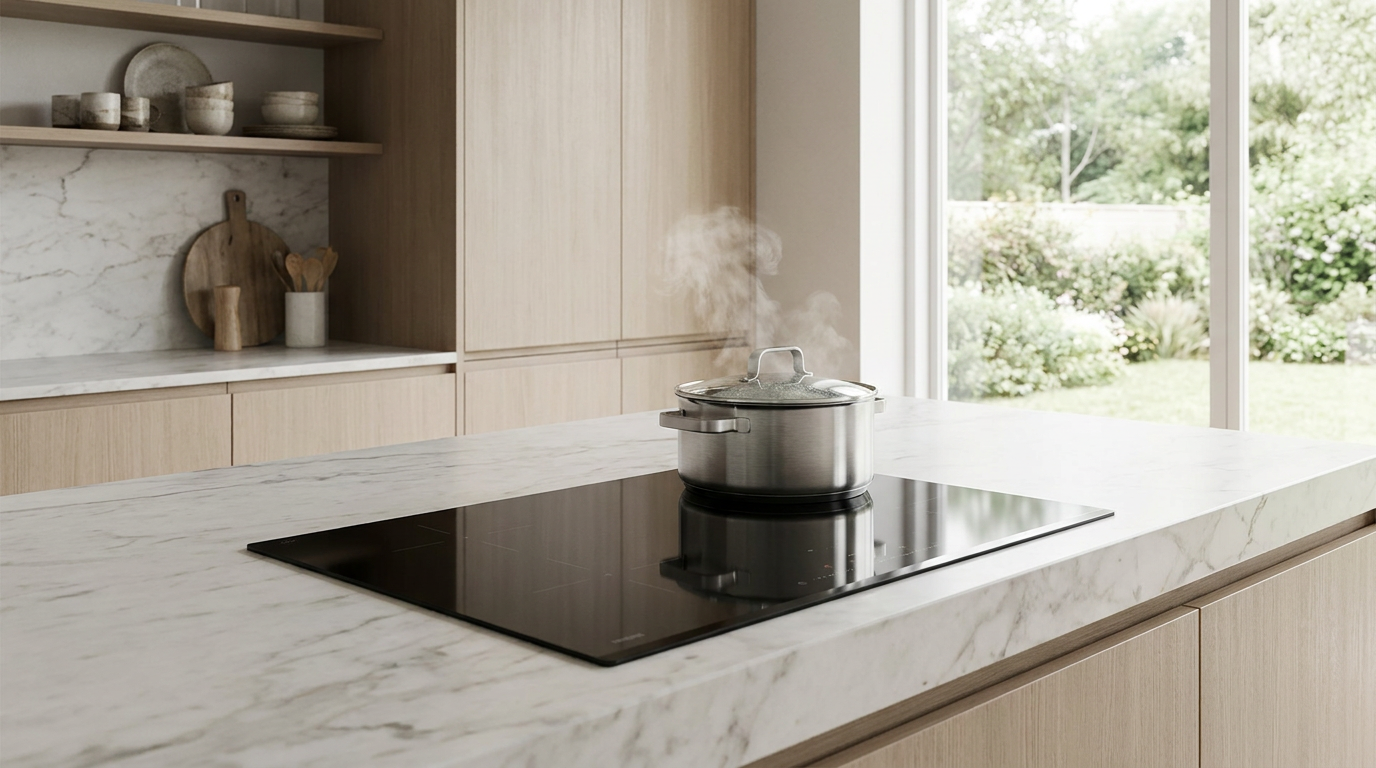
Understanding the trade-offs begins with the fundamental physics of how each system generates heat. Gas cooktops rely on the combustion of natural gas or propane to produce an open flame, which then transfers heat to the bottom of the cookware and, inevitably, into the surrounding air. In contrast, induction cooktops utilize copper coils beneath a glass surface to generate a rapidly alternating magnetic field. This field induces electrical currents directly within the iron molecules of compatible cookware, causing the pot or pan itself to become the heat source. Because the glass surface is only warmed residually by the hot pan, induction fundamentally alters the thermal dynamics of the kitchen, eliminating the ambient heat loss that characterizes traditional gas cooking.[1][7]
When evaluating energy efficiency and raw heating speed, the data heavily favors induction technology. Industry analyses reveal that induction cooktops convert between eighty-five and ninety percent of their electrical energy into useful cooking heat. Gas stoves, hampered by the physics of combustion and radiant heat loss, typically achieve an efficiency rate of only thirty-two to forty percent. This massive disparity in energy transfer translates directly to performance metrics; induction burners can bring a pot of water to a rolling boil up to forty percent faster than high-output gas burners. For households focused on minimizing energy waste and accelerating meal preparation times, the direct-heating mechanism of induction offers a quantifiable advantage over traditional gas models.[1][4]

Despite the efficiency gap, gas cooktops maintain distinct advantages regarding cookware versatility and traditional culinary techniques. The open flame of a gas burner accommodates any type of pot or pan, including copper, aluminum, ceramic, and traditional round-bottomed woks. Induction, conversely, strictly requires cookware with a magnetic base, such as cast iron or specific grades of stainless steel, which may necessitate a costly kitchenware upgrade for some households. Furthermore, gas provides immediate visual feedback through the size and color of the flame, a tactile form of control that many experienced cooks rely on intuitively. Techniques that require an open flame, such as charring peppers or flambéing, are inherently impossible on the flat glass surface of an induction range.[7][8]
However, a growing contingent of professional chefs are transitioning to induction due to its unparalleled precision and the improvements it brings to the working environment. While gas offers visual cues, induction provides exact, digitally controlled power levels that yield highly repeatable results. Chefs note that induction allows for holding delicate sauces at a consistent simmer without the risk of a low flame blowing out or fluctuating. Additionally, because induction transfers energy directly into the cookware rather than the surrounding air, kitchens remain significantly cooler. This reduction in ambient heat not only improves comfort for the cook but also substantially lowers the burden on household air conditioning systems and reduces the need for aggressive, high-volume ventilation hoods.[5][8]
While gas offers visual cues, induction provides exact, digitally controlled power levels that yield highly repeatable results.
Beyond culinary performance, the most significant catalyst for the transition toward induction in 2026 is mounting scientific evidence regarding indoor air quality. Extensive research, including studies from Stanford University and public health departments, has documented that gas stoves emit a complex mixture of pollutants during combustion. These emissions include nitrogen dioxide, carbon monoxide, formaldehyde, and fine particulate matter. Alarmingly, researchers have also found that gas stoves can leak benzene—a known carcinogen—even when the appliance is turned off. For households without high-efficiency, externally vented range hoods, these invisible pollutants can rapidly accumulate in the kitchen and migrate to other living spaces, posing hidden risks to respiratory health.[2][6][9]
The health implications of these emissions are particularly pronounced for vulnerable populations, including children and individuals with pre-existing respiratory conditions. Public health data indicates that homes utilizing gas stoves frequently experience indoor nitrogen dioxide concentrations that exceed outdoor air quality standards set by environmental protection agencies. Epidemiological studies have linked this exposure to an increased risk of childhood asthma and the exacerbation of chronic pulmonary diseases. Conversely, intervention studies have demonstrated that replacing a gas stove with an electric induction model can reduce indoor nitrogen dioxide concentrations by more than fifty percent, providing a quantifiable and immediate improvement to the household's respiratory environment.[2][3][6]

Safety and daily maintenance represent another critical area of comparison where the two technologies diverge sharply. Induction surfaces inherently eliminate the dangers associated with open flames, such as accidental clothing ignition, as well as the risk of combustible gas leaks. Because the glass surface remains relatively cool and only heats up beneath the pan, the likelihood of severe burns is significantly reduced, making induction a highly attractive option for families with young children. In terms of maintenance, the flat, seamless glass of an induction cooktop allows for effortless wiping of spills, which do not bake onto the cool surface. Gas stoves, with their heavy cast-iron grates, burner caps, and intricate crevices, require considerably more labor to disassemble, degrease, and scrub clean.[4][7][8]
The economic calculation of choosing between gas and induction involves weighing upfront installation costs against long-term operational savings. While the purchase price of induction ranges has decreased, they generally remain more expensive than basic gas models. Furthermore, transitioning from gas to induction often requires upgrading the kitchen's electrical infrastructure to support a dedicated 220-volt, 40- or 50-amp circuit, which can add substantial electrician fees to the total project cost. For homes already equipped with existing gas lines, simply dropping in a replacement gas stove represents the path of least resistance and the lowest immediate financial outlay, particularly in regions where natural gas prices remain lower than residential electricity rates.[1][4]
Over the lifespan of the appliance, however, the superior thermodynamic efficiency of induction can help offset its higher initial premium. By utilizing less primary energy to accomplish the same cooking tasks, induction cooktops can lower monthly utility bills, especially in areas with favorable electricity rates or homes equipped with solar panels. Additionally, the reduced ambient heat generated by induction lowers the cooling load on the home's HVAC system during summer months, providing secondary energy savings. When factoring in the potential health costs associated with indoor air pollution and the time saved on daily cleaning, the long-term return on investment for induction becomes increasingly compelling for modern households.[1][4]

Ultimately, deciding between these two technologies requires aligning their specific trade-offs with your household's priorities and infrastructure. Induction technology fits exceptionally well when indoor air quality and respiratory health are paramount concerns, making it the optimal choice for eco-conscious consumers and families with young children. It is highly recommended for those who value rapid heating speeds, exact temperature control, and the convenience of effortless cleanup. Induction is also the logical upgrade for homeowners undertaking a comprehensive kitchen remodel where electrical rewiring is already part of the project scope, allowing them to future-proof their home against potential future restrictions on residential gas appliances.[1][4][8]
Conversely, a traditional gas cooktop remains a highly practical choice and fits well when a home already possesses established gas infrastructure and the owners wish to avoid the steep costs of electrical retrofitting. It is the preferred option for culinary traditionalists who rely heavily on visual flame control, frequently utilize non-magnetic cookware like copper or aluminum, or regularly employ high-heat techniques such as wok cooking and open-flame charring. Gas is also advantageous in regions prone to frequent electrical grid outages, as most gas burners can still be ignited manually with a match, ensuring that the household retains the ability to cook meals and boil water during power failures.[1][4][7]
How we got here
1970s
Induction cooking technology is first introduced to the consumer market but fails to gain widespread traction due to high costs and low reliability.
Early 2010s
Induction begins to capture significant market share in Europe and Asia as energy costs rise and the technology becomes more affordable.
2022
Major medical and environmental studies highlight the indoor air quality risks associated with gas stoves, sparking renewed consumer interest in electric alternatives.
2024
Several U.S. municipalities and states begin implementing building codes that require new construction to be 'all-electric ready,' accelerating the shift away from gas.
2026
Induction cooktops reach price parity with premium gas models, becoming the default choice for eco-conscious kitchen renovations.
Viewpoints in depth
Public Health Advocates
Emphasize the hidden respiratory risks and indoor air pollution caused by gas combustion.
This camp points to mounting epidemiological evidence linking gas stove emissions—such as nitrogen dioxide and benzene—to increased rates of childhood asthma and respiratory irritation. They argue that the transition to induction is not merely an appliance upgrade but a necessary public health intervention, noting that gas stoves can leak carcinogens even when turned off and frequently push indoor air quality past EPA outdoor safety limits.
Culinary Traditionalists
Value the tactile feedback, versatility, and historical reliability of open-flame cooking.
Traditionalists argue that the visual cue of a flame provides an intuitive level of control that digital induction interfaces cannot replicate. They emphasize the importance of cookware versatility, noting that gas accommodates copper, aluminum, and round-bottomed woks without requiring a magnetic base. For this camp, the ability to char ingredients directly on the burner and cook during power outages makes gas an indispensable tool.
Energy & Efficiency Analysts
Focus on the thermodynamic superiority and long-term economic benefits of electrification.
Analysts in this camp highlight the stark contrast in energy transfer, noting that induction converts up to 90% of its energy into useful heat compared to gas's 40%. They argue that while the upfront cost of induction and electrical retrofitting may be higher, the long-term savings on utility bills, combined with reduced HVAC loads from cooler kitchens, make induction the economically and environmentally superior choice over the appliance's lifespan.
What we don't know
- How quickly the secondary market for used gas appliances will depreciate as more municipalities ban new gas hookups.
- Whether future iterations of induction technology will successfully adapt to non-magnetic cookware materials like pure copper or aluminum.
- The exact long-term epidemiological impact of removing gas stoves on adult-onset respiratory conditions, which requires decades of longitudinal data.
Key terms
- Electromagnetic Induction
- A process where a rapidly alternating magnetic field generates an electric current directly inside a magnetic object, such as an iron pan, causing it to heat up.
- Nitrogen Dioxide (NO2)
- A toxic gas produced as a byproduct of combustion, including the burning of natural gas, which can irritate the respiratory system and exacerbate asthma.
- Thermal Efficiency
- The percentage of energy consumed by an appliance that is successfully converted into useful heat for cooking, rather than being lost to the surrounding air.
- Benzene
- A volatile organic compound and known carcinogen that can be emitted by gas stoves both during combustion and while the appliance is turned off.
Frequently asked
Do I need to buy all new pots and pans for an induction stove?
Only if your current cookware is not magnetic. Cast iron, enameled cast iron, and many types of stainless steel work perfectly on induction, but pure aluminum, copper, and glass will not.
Is induction cooking the same as a traditional electric glass-top stove?
No. Traditional electric stoves use radiant heat coils beneath the glass to heat the surface, which then heats the pan. Induction uses electromagnetic fields to heat the pan directly, making it much faster and more energy-efficient.
Can I still cook on an induction stove if the power goes out?
No. Unlike gas stoves, which can often be lit manually with a match during a power outage, induction cooktops require electricity to generate the magnetic field and will not function without power.
Are induction cooktops safe for people with pacemakers?
Because induction cooktops generate an electromagnetic field, manufacturers and medical professionals generally recommend that individuals with pacemakers maintain a distance of at least two feet from the active cooking surface, though risks are considered low.
Sources
Source coverage
9 outlets
4 viewpoints surfaced









[1]Energy SolutionsEnergy & Efficiency Analysts
Induction vs Gas Cooktops: The Definitive Health, Efficiency & Economic Analysis
Read on Energy Solutions →[2]Columbia University Mailman School of Public HealthPublic Health Advocates
Switching from Gas to Electric Stoves Cuts Indoor Air Pollution
Read on Columbia University Mailman School of Public Health →[3]ForbesPublic Health Advocates
What Your Gas Stove Is Doing To Your Health
Read on Forbes →[4]Yale ApplianceModern Appliance Experts
Induction vs. Gas 2026: Don't Decide Until You Watch This
Read on Yale Appliance →[5]The GuardianModern Appliance Experts
'I use it because it's better': why chefs are embracing the electric stove
Read on The Guardian →[6]Colorado Department of Public HealthPublic Health Advocates
Credible, Evidence-Based Information on the Health Impacts of Gas-Fueled Stoves
Read on Colorado Department of Public Health →[7]BrevilleCulinary Traditionalists
Induction cooktop vs. gas stove: Which is better?
Read on Breville →[8]National Product ReviewModern Appliance Experts
Gas Or Induction...The Experts Weigh In!
Read on National Product Review →[9]Stanford University via PSE Healthy EnergyPublic Health Advocates
The little-known health risks to cooking with gas indoors
Read on Stanford University via PSE Healthy Energy →

More in shopping
See all 5 stories →


Every angle. Every day.
Get shopping stories with full source coverage and perspective breakdowns delivered to your inbox.