
Iron Age Burial Reveals Human Bones Whittled Into Tools in Complex Ritual
A 2,000-year-old burial in Scotland shows that Iron Age communities deliberately removed the brains of the deceased and fashioned their bones into tools before reassembling them in the grave.
By Factlen Editorial Team
- Mortuary Archaeologists
- Focusing on the spatial and physical evidence of care in the burial.
- Biomolecular Researchers
- Highlighting the genetic and chemical data that maps ancient mobility.
- Broader Prehistorians
- Placing the Scottish discovery within the wider context of European Iron Age traditions.
What's not represented
- · Descendant communities or modern Celtic cultural groups
- · Ethicists specializing in the display and analysis of indigenous human remains
Why this matters
This discovery fundamentally shifts how we view ancient British cultures, proving that practices once dismissed as primitive or violent were actually sophisticated, deeply reverent rituals designed to keep ancestors integrated into the living community.
Key points
- A 2,000-year-old burial in Scotland revealed an adult woman whose brain was intentionally removed after death.
- Four of her long bones were deliberately broken and whittled into smooth, sharp tools.
- The skeleton was meticulously reassembled in the grave, indicating a high level of care and reverence.
- DNA mapping confirmed the woman was buried alongside a teenage boy who was her maternal second cousin.
- Isotope analysis showed both individuals migrated approximately 50 miles from their childhood home.
- The findings challenge the idea that ancient bone modification was inherently violent or disrespectful.
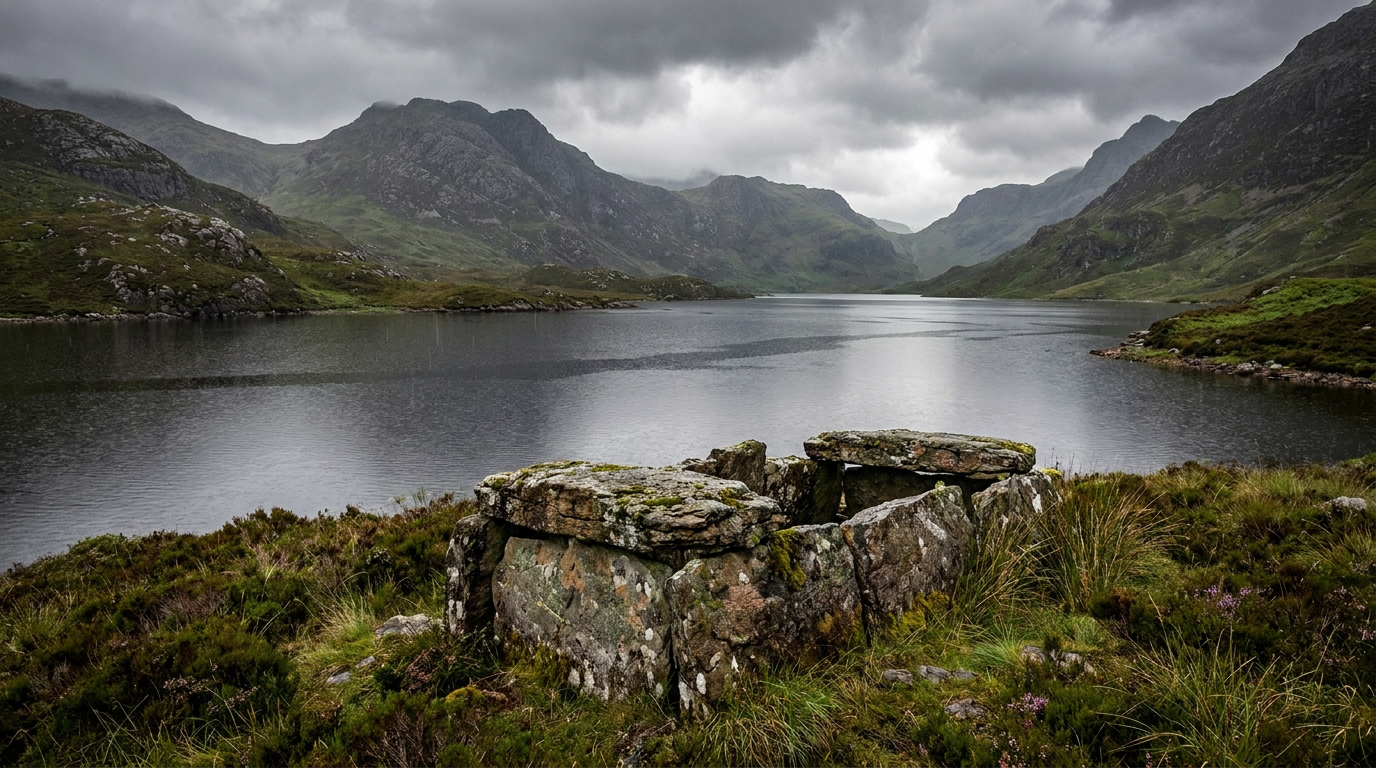
In 1998, rabbits burrowing near Loch Borralie in the remote Scottish Highlands unearthed a human skull, prompting a formal archaeological excavation in 2000. Beneath a low rectangular stone cairn, researchers discovered the remarkably preserved remains of an adult woman and a teenage boy dating back 2,000 years to Britain's Iron Age. For decades, the bones sat in storage, their secrets locked away and initially dismissed as having been gnawed by wild animals. Now, a comprehensive peer-reviewed study published in the journal Antiquity by researchers from the University of York has reopened the cold case. Using modern osteological and biomolecular techniques, the research team has compiled an evidence pack that fundamentally rewrites our understanding of prehistoric mortuary practices.[1][2][4]
The new analysis shifts the narrative from animal scavenging to deliberate, highly complex human intervention. The research team, led by Dr. Laura Castells Navarro, utilized a multi-disciplinary approach combining microscopic bone surface analysis, ancient DNA sequencing, and isotopic chemical tracing. This methodology allows archaeologists to map specific claims about how these individuals lived, moved, and were ultimately processed after death. The resulting data reveals a culture that engaged in elaborate modifications of the dead, challenging long-held assumptions about the simplicity of Iron Age burials in the British Isles.[1][2][6]
The first major claim presented in the study is that the adult woman's brain was intentionally extracted shortly after her death. The primary evidence for this assertion rests on distinct physical trauma to the skull. Osteologists identified an unusual fracture at the base of the cranium, accompanied by a series of precise, deliberate cut marks and striations on the interior bone surface. These incisions, made by a sharp implement, are entirely inconsistent with natural decay or the random scratching of burrowing rodents. The precision of the cuts indicates a methodical approach to accessing and emptying the cranial cavity.[1][4][7]

While the physical evidence of the brain extraction is strong, the underlying motivation remains shrouded in transparent uncertainty. Researchers theorize that the removal could have been a practical step to clean and preserve the skull for prolonged display, a common practice in other parts of Iron Age Europe where heads were venerated. Alternatively, it could have been a component of a highly specific localized ritual, or potentially even a form of ritualistic cannibalism designed to absorb the essence of the deceased. Without written records, the exact spiritual or practical reasoning cannot be definitively proven, but the intentionality of the act is undeniable.[1][4][5]
Beyond the skull, the research team documented profound postmortem modifications to the woman's appendicular skeleton. The evidence shows that four of her long bones—both humeri from the arms, an ulna, and a femur from the leg—were deliberately broken in half. The internal layers of these bones were then carefully whittled and worked down to create smooth, tapered, and highly sharpened points. The craftsmanship mirrors the techniques used to create utilitarian tools from animal bones during the same period, demonstrating a high level of skill and intentional design applied directly to human remains.[1][2][7]
Beyond the skull, the research team documented profound postmortem modifications to the woman's appendicular skeleton.
Despite the clear evidence of shaping, uncertainty remains regarding the actual use of these bone points. Because the researchers have not yet identified definitive microscopic wear-and-tear patterns that would prove these implements were utilized for daily tasks like leatherworking, weaving, or hunting, their functional status is unconfirmed. It is entirely possible that the "tools" were purely symbolic objects, crafted exclusively for the funerary rite to equip the deceased for the afterlife, or to serve as ritual focal points during the burial ceremony before being interred.[2][6][7]

If the breaking and whittling of human bones sounds inherently violent or disrespectful to modern sensibilities, the archaeological context strongly suggests the exact opposite. The critical piece of evidence altering this narrative is the spatial arrangement of the grave. After the woman's brain was removed and her limbs were fashioned into sharp implements, her skeleton was meticulously reassembled. The modified bones were placed back into their correct anatomical positions within the stone cairn. This spatial data is crucial; it proves the body was not discarded as refuse, but rather curated with immense precision.[4][6][7]
Lead author Dr. Laura Castells Navarro argues that this deliberate reconstruction is indicative of a profound tradition of care. The extensive time and effort required to process, shape, and reassemble the body suggests that the deceased commanded a high level of reverence and respect from her community. Rather than being the victim of desecration or a violent end, the woman was likely an important ancestor whose physical remains were manipulated as a way to honor her memory and keep her integrated into the social fabric of the living.[2][4][5]
To understand who these individuals were, the research team turned to biomolecular evidence, specifically ancient DNA mapping and isotope analysis. The genetic data provides a definitive link between the two bodies in the cairn: the adult woman and the 15-year-old boy were closely related, identified most likely as maternal second cousins. This biological connection strongly implies that the burial site was organized around family lineage. Furthermore, the chemical signatures preserved in their tooth enamel—which act as a geographical diary of the water and food consumed during childhood—revealed a surprising origin story.[1][2][4]
The isotope data confirms that neither individual grew up near the Loch Borralie burial site. Instead, they spent their formative years approximately 50 miles to the southeast. This evidence forces a reevaluation of Iron Age social dynamics in northern Scotland, proving that these prehistoric communities were not isolated, static settlements. They were highly mobile populations that maintained complex, long-distance social and familial networks. The fact that these individuals migrated across the rugged Scottish landscape, and that the woman's body was subjected to such an elaborate mortuary ritual, suggests that funerary traditions were shared and maintained across vast distances.[1][5][6]

The robust nature of this evidence pack is largely due to a rare environmental anomaly. Identifying funerary practices in Iron Age Britain—a period spanning roughly 800 BCE to 43 CE—is notoriously difficult because the primary evidence simply does not survive. The vast majority of British soil is composed of highly acidic peat, which actively dissolves calcium phosphate and erases human bone from the archaeological record over millennia. However, the specific micro-environment near Loch Borralie features alkaline conditions that act as a natural preservative, allowing these skeletons to survive intact for 2,000 years and providing an unprecedented window into the past.[3][6][7]
Ultimately, the evidence synthesized from the Loch Borralie cairn challenges modern observers to discard anachronistic assumptions about ancient cultures. Practices that might initially appear grisly or macabre are revealed through careful osteological and spatial analysis to be acts of profound devotion. By transforming the bones of a revered relative into tools and carefully laying them to rest alongside her kin, this Iron Age community ensured that the dead were never truly gone. They remained active, tangible participants in the social fabric, bridging the gap between the ancestors and the living in a landscape that they had traversed together.[2][5][7]
How we got here
800 BCE – 43 CE
The British Iron Age, the broader historical period during which these individuals lived.
50 BCE – 70 CE
The estimated radiocarbon date range for the burial at Loch Borralie.
1998
Rabbits burrowing near the loch dislodge a human skull, bringing the site to the attention of locals.
2000
Archaeologists formally excavate the stone cairn, recovering the remains of the woman and teenager.
June 2026
A new peer-reviewed study in Antiquity reveals the evidence of brain removal and bone whittling.
Viewpoints in depth
Mortuary Archaeologists
Focusing on the spatial and physical evidence of care in the burial.
For researchers focused on the physical treatment of the body, the Loch Borralie site is a masterclass in prehistoric reverence. They argue that modern sensibilities often misinterpret bone modification as violence. By pointing to the meticulous reassembly of the skeleton in its correct anatomical position, these archaeologists contend that the community invested immense time and labor into the burial. The act of whittling the bones was not a desecration, but a transformative ritual designed to keep the ancestor's physical form active and integrated within the community's ongoing spiritual life.
Biomolecular Researchers
Highlighting the genetic and chemical data that maps ancient mobility.
Scientists specializing in ancient DNA and isotope analysis view the Loch Borralie skeletons primarily as data points for mapping human geography. Their evidence reveals that the adult woman and teenage boy were maternal second cousins who migrated 50 miles from their childhood home. This camp argues that the true significance of the find lies in proving that Iron Age Britain was not a patchwork of isolated, static tribes, but a highly interconnected landscape where complex families moved, traded, and shared elaborate cultural practices across vast distances.
Broader Prehistorians
Placing the Scottish discovery within the wider context of European Iron Age traditions.
Historians looking at the broader European context emphasize that the Loch Borralie modifications, while unique in their specific details, fit perfectly into a wider continental pattern. They point to discoveries like the Bar Hill comb in Cambridgeshire—a functional object carved from a human skull—and similar amulets found in France and Bulgaria. This perspective argues that utilizing human remains for tools or symbolic objects was a standard, widespread cultural norm in the Iron Age, reflecting a worldview where the boundary between the living and the dead was highly permeable.
What we don't know
- Whether the bone tools were actually used for practical tasks like leatherworking, or if they were purely symbolic objects.
- The exact spiritual or practical motivation behind the intentional removal of the woman's brain.
- Why these specific individuals migrated 50 miles from their childhood home to the Loch Borralie area.
Key terms
- Osteology
- The scientific study of bones, used by archaeologists to determine age, health, and postmortem modifications.
- Isotope analysis
- A technique that examines chemical signatures in teeth and bones to determine where an individual lived and what they ate during their lifetime.
- Cairn
- A human-made pile of stones, often used in prehistoric times as a burial monument or a marker.
- Postmortem modification
- Physical changes made to a body or skeleton after death, such as cut marks, bone breaking, or intentional shaping.
- Appendicular skeleton
- The portion of the skeleton consisting of the limbs, including the arms and legs.
Frequently asked
Why did Iron Age people make tools out of human bones?
While the exact motivation is unknown, archaeologists believe it was a way to keep the deceased integrated into the community, treating their remains with reverence and transforming them into active, symbolic objects rather than discarding them.
How do scientists know the two individuals were related?
Researchers used ancient DNA mapping to sequence the genomes of the remains, revealing that the adult woman and the teenage boy buried together were most likely maternal second cousins.
Why are Iron Age bones so rarely found in Britain?
Most of Britain's soil is composed of highly acidic peat, which dissolves bone over millennia. The unique alkaline environmental conditions in northwest Scotland allowed these specific skeletons to survive intact for 2,000 years.
Sources
Source coverage
7 outlets
3 viewpoints surfaced






[1]AntiquityMortuary Archaeologists
Reconnecting the dead in Iron Age Britain: funerary processing and long-distance connectivity at Loch Borralie, Scotland
Read on Antiquity →[2]University of YorkMortuary Archaeologists
Scientists uncover evidence of Iron Age brain removal and bone tools
Read on University of York →[3]NatureBiomolecular Researchers
Daily briefing: Iron-Age human bones were made into tools before interment
Read on Nature →[4]Live ScienceBiomolecular Researchers
Iron Age woman's brain was scooped out and her bones whittled into tools, 2,000-year-old burial reveals
Read on Live Science →[5]CTV NewsBroader Prehistorians
Burial rituals involving removing the brain, sharpening bones provide clues to Iron Age connections
Read on CTV News →[6]The DebriefBroader Prehistorians
Archaeologists say bones unearthed from an Iron Age burial in Scotland are revealing new insights
Read on The Debrief →[7]New ScientistBroader Prehistorians
Iron Age human bones were made into tools before interment
Read on New Scientist →


Every angle. Every day.
Get science stories with full source coverage and perspective breakdowns delivered to your inbox.