
The Science of Starting Over at 73: How Cognitive Reserve Powers Late-in-Life Medical Residencies
As a 73-year-old former nurse begins a grueling medical residency, neuroscientists point to 'cognitive reserve' and neuroplasticity as the biological engines that allow the aging brain to adapt to extreme demands.
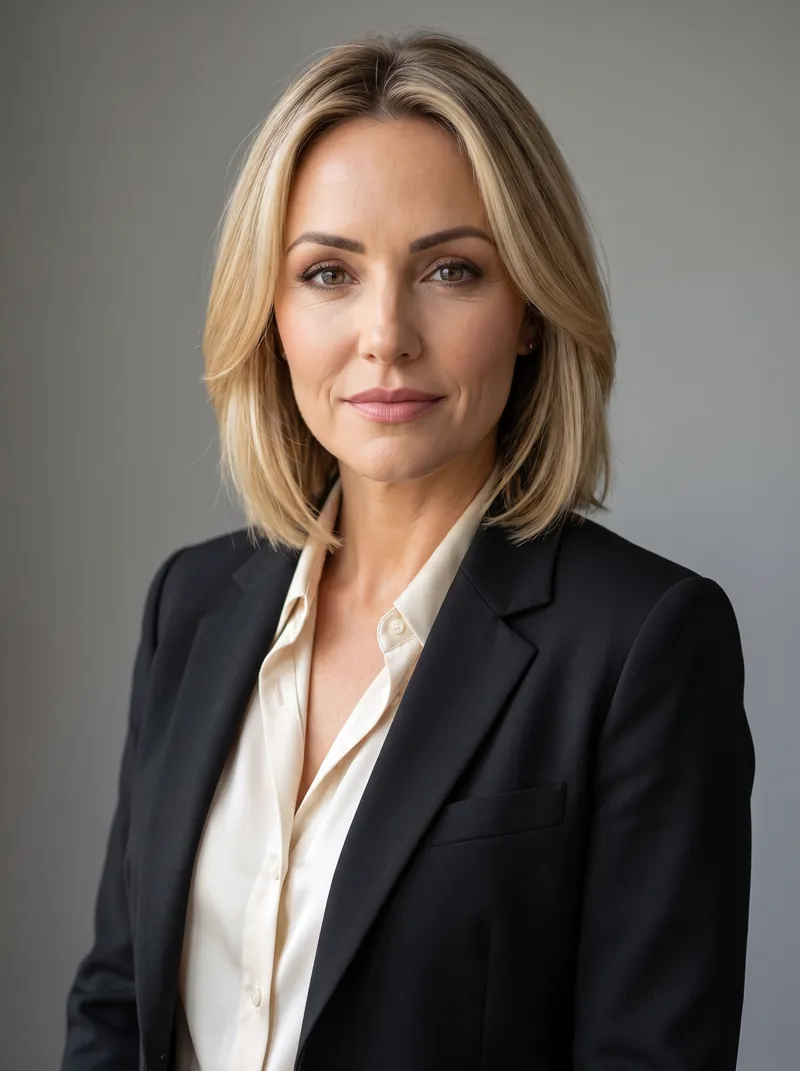
In July, Dawn Zuidgeest-Craft will begin a three-year family medicine residency at a hospital in West Michigan. She will manage the same grueling clinical rotations, high-pressure environments, and long hours as her peers. But Zuidgeest-Craft is not a typical medical intern; at 73 years old, she is believed to be the oldest graduating medical student in the world.[1][2]
Her journey to the residency program defies conventional timelines. After working as a neonatal nurse practitioner for four decades and raising four children, Zuidgeest-Craft decided in her late 60s to dip into her retirement funds and enroll in a Caribbean medical school. She completed clinical rotations across Chicago, West Virginia, and South Texas, matching into a residency program that recognized her vast clinical empathy and stamina.[2][3]
Beyond the human-interest triumph, Zuidgeest-Craft’s milestone presents a fascinating case study in human biology. Medical residency is notoriously punishing, designed to test the limits of cognitive endurance and memory retention in young adults. The fact that a septuagenarian brain can successfully absorb the firehose of modern medical training challenges long-held assumptions about how the human brain ages.[2][4]
For decades, the prevailing scientific consensus held that the human brain was a finite resource that peaked in early adulthood and gradually declined, permanently losing neurons along the way. But modern neuroscience has dismantled this pessimistic view. Researchers now understand that the brain retains an astonishing capacity for structural and functional adaptation throughout the lifespan—a phenomenon known as neuroplasticity.[5][8]
Neuroplasticity is the biological mechanism that allows the brain to reorganize its neural connections in response to environmental stimuli, new experiences, and learning. While the young brain is highly plastic and absorbs information rapidly, the older brain shifts to a different form of adaptation. In older adults, neuroplasticity becomes highly experience-dependent, requiring focused attention, relevance, and repetition to forge new neural pathways.[5][8]
This lifelong adaptability fuels a critical protective mechanism known as cognitive reserve. To understand cognitive reserve, neuroscientists often distinguish it from "brain reserve." Brain reserve refers to the physical hardware of the brain—its size, the number of neurons, and structural density, much of which is determined early in life.[4][7]
Cognitive reserve, by contrast, is the brain’s software. It reflects how efficiently and flexibly the brain uses its available resources. Developed over a lifetime through education, complex occupational engagement, and continuous learning, cognitive reserve allows the brain to adapt to age-related structural changes by finding alternative ways to process information.[4][7]
Functional MRI (fMRI) studies provide a real-time window into this phenomenon. When researchers observe older adults with high cognitive reserve performing complex tasks, their brains often activate different or additional neural networks compared to younger adults or those with lower reserve. If a primary neural pathway is weakened by age or disease, a brain with high cognitive reserve simply reroutes the signal through a secondary, stronger network to maintain performance.[4][6]
However, building this reserve requires specific conditions. Passive activities, such as watching television or performing highly routine tasks, do little to stimulate neuroplasticity. The brain requires "effort and novelty" to grow. Activities that are slightly frustrating, complex, and demand real problem-solving—such as learning a new language, mastering a musical instrument, or, in Zuidgeest-Craft's case, attending medical school—force the brain to build and strengthen new connections.[6][8]
The biological principle at play is often summarized as "neurons that fire together, wire together." When an older adult engages in a highly demanding task, the repeated engagement of specific brain circuits strengthens the synaptic connections between those neurons. Over time, this increased synaptic density provides a robust buffer against cognitive decline.[7][8]
A 40-year career in a high-stakes environment like a neonatal intensive care unit likely provided Zuidgeest-Craft with a massive foundational cognitive reserve. Her decision to pursue a medical degree then introduced the ultimate dose of novelty and effort, forcing her brain to continuously adapt and expand its functional capacity well into her 70s.[2]
The protective power of cognitive reserve is profound, but researchers emphasize a crucial nuance: it does not prevent the physical aging of the brain or stop the accumulation of disease pathology, such as the amyloid plaques associated with Alzheimer's disease. Instead, cognitive reserve delays the clinical expression of these changes.[4][6]
Individuals with high cognitive reserve can often sustain normal cognitive function and independence long after physical brain scans indicate significant pathology. The brain simply compensates for the damage. However, when the damage eventually overwhelms the brain's compensatory networks, cognitive decline in these individuals can sometimes progress more rapidly.[4][7]
Harnessing neuroplasticity in later life also requires a supportive biological environment. Physical exercise, adequate sleep, and the management of cardiovascular health conditions like high blood pressure are essential. These lifestyle factors ensure that the brain receives the necessary blood flow and metabolic support to physically build new neural connections when challenged.[5][7]
Furthermore, emotional and psychological factors play a vital role. Purpose-driven activities engage the brain's motivation and emotional regulation networks, which heavily influence learning and memory retention. Zuidgeest-Craft's deep-seated desire to serve patients and bring decades of maternal and nursing empathy to her medical practice likely provided the neurochemical motivation necessary to sustain her through the rigors of medical school.[6][8]
Ultimately, the science of cognitive reserve reframes aging from a process of inevitable decline to one of ongoing adaptation. While few will choose to embark on a medical residency in their 70s, the underlying biological reality applies to everyone. By continuously seeking out novel, demanding, and purposeful challenges, older adults can actively shape the architecture of their brains, maintaining resilience and capability far longer than previously thought possible.[5][7]
Key points
- Dawn Zuidgeest-Craft, 73, is beginning a three-year family medicine residency after a 40-year career as a nurse practitioner.
- Her ability to handle the rigorous training highlights the power of neuroplasticity, the brain's lifelong ability to rewire itself.
- Older brains rely on 'cognitive reserve'—the ability to recruit alternative neural pathways to bypass age-related structural changes.
- Building cognitive reserve requires continuous exposure to novel, demanding tasks, rather than passive or highly routine activities.
Open questions
- The exact threshold at which cognitive reserve can no longer compensate for physical brain pathology.
- How different types of demanding tasks (e.g., physical vs. purely intellectual) compare in their efficiency at building synaptic density.
- Whether the extreme sleep deprivation of a medical residency counteracts some of the neuroplastic benefits of the intense learning environment for older adults.
Timeline
1982
Dawn Zuidgeest-Craft begins her career as a neonatal nurse practitioner, building decades of clinical experience.
2020
Following her husband's health scare, Zuidgeest-Craft decides to pursue her lifelong dream of attending medical school in her late 60s.
May 2026
Zuidgeest-Craft graduates from a Caribbean medical school, becoming the oldest known medical graduate in the world.
July 2026
Zuidgeest-Craft begins a rigorous three-year family medicine residency at a hospital in West Michigan.
- Neuroscience Researchers
- Scientists studying the biological mechanisms of brain aging and adaptability.
- Clinical Practitioners
- Therapists and physicians focused on maintaining functional independence in older adults.
- Non-Traditional Medical Students
- Older professionals entering highly demanding fields later in life.
Perspectives this story doesn't cover
- Younger medical residents
- Residency program directors
Sources
Source coverage
8 outlets
3 viewpoints surfaced





- [1]STAT NewsNon-Traditional Medical Students
Opinion: ‘I’m pretty much all in’: An interview with a woman starting medical residency at almost 73
Read on STAT News → - [2]The Washington PostNon-Traditional Medical Students
Woman, 72, will graduate medical school, start residency
Read on The Washington Post → - [3]The IndependentNon-Traditional Medical Students
This 72-year-old mom of four is set to graduate from medical school
Read on The Independent → - [4]National Institutes of HealthNeuroscience Researchers
Defining Cognitive Reserve and Implications for Cognitive Aging
Read on National Institutes of Health → - [5]Mayo Clinic PressNeuroscience Researchers
The power of neuroplasticity: How your brain adapts and grows as you age
Read on Mayo Clinic Press → - [6]SeniorsTodayClinical Practitioners
Cognitive Reserve: The Brain's Quiet Superpower in Later Life
Read on SeniorsToday → - [7]MedbridgeClinical Practitioners
Building Cognitive Reserve: Strategies for Aging in Place and Brain Health
Read on Medbridge → - [8]PMCNeuroscience Researchers
Exploring the Role of Neuroplasticity in Development, Aging, and Neurodegeneration
Read on PMC →

More in Health
See all →Longevity Science
Major Analysis Finds Prescription Drugs and Lifestyle Changes, Not Supplements, Reduce Biological Age
5 sources

Bone Metabolism
The Molecular Tug-of-War: How the RANKL, OPG, and M-CSF Proteins Control Bone Density
9 sources
Health Workforce
WHO Warns One in Four Doctors Worldwide Nearing Retirement, Intensifying Global Health Workforce Gap
6 sources

Genetic Risk
How the APOE4 Allele Multiplies Alzheimer's Risk and Why It Is Not a Deterministic Cause
7 sources
Comments
Every angle. Every day.
Get Health stories with full source coverage and perspective breakdowns, free every day.