
The Science of 'Slow Dating': How Intentional Courtship is Replacing the Swipe
Exhausted by endless swiping and ghosting, singles are embracing 'slow dating'—a movement prioritizing deep conversations, clear intentions, and shared values over instant gratification.
By Factlen Editorial Team
- Intentional Daters
- Singles prioritizing slow dating, clear coding, and values-based matching over volume.
- Digital Matchmakers
- App developers and AI platforms trying to adapt to fatigue by offering curated, low-volume matches.
- Traditional Matchmakers
- Professionals facilitating offline, organic connections and vetted introductions.
- Solo-Maxxers
- Individuals consciously choosing singlehood and self-growth over the dating market.
- Cultural Analysts
- Observers analyzing the broader societal shift away from gamified romance.
What's not represented
- · Married couples observing the modern dating market
- · Sociologists studying long-term marriage rates
Why this matters
As dating app fatigue reaches an all-time high, understanding the shift toward intentional dating can help singles navigate courtship with less anxiety and build healthier, longer-lasting relationships.
Key points
- Dating app fatigue has led to a widespread rejection of high-volume swiping in favor of 'slow dating.'
- Singles are increasingly using 'clear coding' to state their exact relationship intentions in their first conversation.
- Values-based matching is replacing surface-level attraction as the primary screening tool for compatibility.
- Offline dating events and traditional matchmaking services are experiencing a major resurgence.
For years, the digital search for romance was defined by a single, repetitive motion: the swipe. Dating applications gamified human connection, promising that the perfect partner was always just one more profile away. But as 2026 unfolds, the era of volume-based dating is rapidly giving way to a new paradigm. Singles are overwhelmingly rejecting the fast-paced, disposable culture of modern courtship in favor of what relationship experts are calling "slow dating." This movement is not just a passing fad; it represents a fundamental rewiring of how people approach love in the digital age. By stepping off the algorithmic treadmill, daters are reclaiming their time and emotional energy, proving that the most revolutionary thing you can do in a hyper-connected world is to simply slow down.[7]
The shift is born out of widespread exhaustion. "Dating app fatigue" has transitioned from a niche complaint to a defining cultural mood. Faced with endless scrolling, ghosting, and superficial interactions, daters are experiencing what psychologists term "choice overload"—a phenomenon where an abundance of options leads to decision paralysis and emotional burnout. Instead of feeling hopeful about the prospect of meeting someone new, many users report that the sheer volume of matches makes relationships feel transactional and disposable. The constant dopamine hits of matching have lost their luster, replaced by a deep craving for stability and genuine understanding.[1][4]
In response, a movement toward "intentional dating" has taken root across demographics. Rather than juggling dozens of shallow conversations, singles are deliberately limiting their matches to focus on quality over quantity. This approach emphasizes emotional intelligence, shared values, and long-term compatibility from the very first interaction. It is a conscious uncoupling from the gamified mechanics that defined the early 2020s dating landscape. Platforms that have adapted to this shift by introducing "slow dating" modes or daily match limits have seen a 39 percent decrease in app deletions, indicating that users feel significantly more in control of their romantic lives when the pace is reduced.[5][9]
The data reflects this behavioral pivot in real time. According to recent industry trend reports, there has been a 27 percent increase in users explicitly stating their relationship intentions within their very first conversation. This practice, often referred to as "clear coding," eliminates the ambiguity that used to define the early stages of talking to someone new. Whether a user is looking for marriage, casual dating, or simply friendship, the goal is radical transparency. By putting their cards on the table immediately, singles are saving both themselves and their potential partners from investing time and emotional labor into a fundamentally mismatched connection.[2]

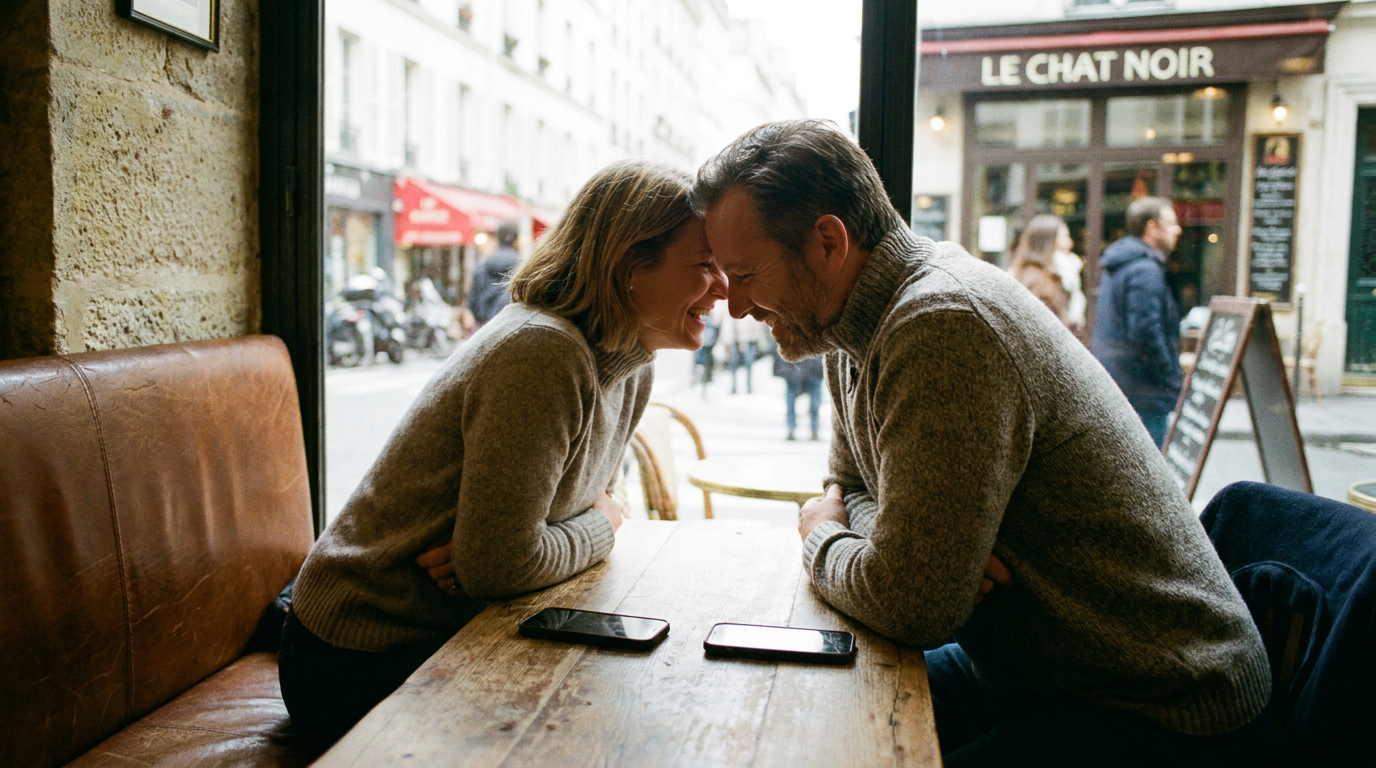
Slow dating also fundamentally changes the pacing of courtship. The rush to meet up, define the relationship, or become physically intimate is being replaced by a much more measured approach. Couples are increasingly engaging in longer digital "vibe checks"—extended voice notes, deep text conversations, or video calls—before ever committing to an in-person date. This creates a buffer that protects their energy and ensures that when they do finally meet, it is worth the effort. By the time they sit down for coffee or a drink, a baseline of trust and intellectual chemistry has already been established, significantly reducing first-date anxiety.[3][8]
Slow dating also fundamentally changes the pacing of courtship.
This intentionality extends to how people filter their potential partners. "Values-based matching" has become a primary screening tool, replacing the superficial swipe. Surface-level attraction is no longer enough to sustain interest; singles are prioritizing alignment on core beliefs, lifestyle choices, financial habits, and future goals. Dating platforms are adapting to this demand by moving away from photo-centric interfaces to highlight prompts about mental health, political affiliations, and relationship readiness. Daters want to know if their lives actually fit together before they worry about whether they look good together in a photograph.[5]
Paradoxically, as daters seek more authentic human connection, they are increasingly turning to artificial intelligence to facilitate it. Over 68 percent of singles now use some form of AI-powered platform or tool to navigate their romantic lives. Rather than replacing human interaction, AI is being deployed as a digital wingman. Users are leveraging these tools to draft opening messages to overcome social anxiety, analyze potential red flags in text conversations, and filter out incompatible matches based on deep compatibility scoring. It is a pragmatic use of technology designed to bypass the awkwardness of early courtship and get to the human element faster.[6]
For those who want to bypass algorithms entirely, traditional matchmaking is experiencing a massive renaissance. Professional matchmakers, once viewed as a luxury reserved for the ultra-wealthy, are seeing a surge in clients from all walks of life who are willing to pay for curated, human-vetted introductions. These services offer accountability, expert guidance, and personalized insight that a swipe simply cannot replicate. By handing the vetting process over to a professional, singles can avoid the choice overload of the apps and focus entirely on building a connection with someone who has already been screened for shared values and relationship readiness.[4]

The desire for organic connection is also driving a significant boom in offline dating. After years of digital-first romance, in-person events like local run clubs, hobby meetups, and curated speed-dating nights are surging in popularity. Singles are finding that shared experiences and face-to-face chemistry provide a much more reliable foundation for a relationship than a carefully curated online profile. These environments remove the pressure of a formal one-on-one date, allowing people to interact naturally and gauge compatibility in a low-stakes, community-driven setting.[8]
Even the concept of singlehood is being radically rebranded in 2026. The trend of "solo-maxxing" has gained widespread traction, reframing being single not as a waiting period for a relationship, but as a deliberate and highly desirable lifestyle choice. Driven by inflation, app fatigue, and a deep desire for personal growth, many are choosing to focus on their own independence, careers, and platonic friendships rather than settling for unfulfilling romantic relationships. It is a powerful assertion that a complete life does not strictly require a romantic partner.[1]

However, psychologists and relationship experts caution that intentional singlehood must be rooted in genuine self-discovery rather than emotional avoidance. While taking a dedicated break from the dating scene can restore depleted emotional energy and provide much-needed clarity on personal goals, completely isolating oneself from romantic prospects out of fear or past trauma can ultimately hinder personal development. The healthiest approach to solo-maxxing balances fierce self-sufficiency with a lingering openness to genuine connection, should the truly right person come along. It is fundamentally about raising one's standards and refusing to settle, rather than building impenetrable walls to keep the world out.[1]
Ultimately, the rise of slow dating represents a profound maturation of digital courtship. It is a collective realization that human relationships cannot be optimized for speed, scale, or gamified engagement. By slowing down the pace, setting clear boundaries, and prioritizing shared values over fleeting sparks, singles in 2026 are proving that quality will always triumph over quantity. As the landscape continues to shift away from the endless swipe, daters are finding that the most effective way to find lasting love is to treat the process—and each other—with the intentionality and respect that genuine connection demands.[7]
How we got here
2020–2021
Pandemic isolation forces a temporary shift toward video dating and slower relationship pacing.
2022–2023
Post-pandemic freedom sparks a dating app boom and a return to high-volume swiping.
2024–2025
Widespread 'dating app fatigue' sets in as users experience burnout from ghosting and superficial interactions.
2026
'Slow dating' and 'intentional dating' become the dominant trends, with singles prioritizing values-based matching.
Viewpoints in depth
The Intentional Dater's View
Prioritizing emotional safety and shared values over instant chemistry.
For this camp, the gamification of romance was a failed experiment. They argue that 'spark' is often just anxiety disguised as chemistry, and that true compatibility takes time to reveal itself. By utilizing 'clear coding'—stating their exact relationship goals in their first message—they aim to ruthlessly filter out mismatched partners, protecting their time and emotional energy.
The Platform Developer's View
Adapting algorithms to foster quality connections rather than endless engagement.
Dating app companies are caught between a rock and a hard place: their business models historically relied on continuous swiping, but user burnout is forcing a pivot. Developers are now integrating AI to act as a 'digital wingman,' helping users draft better messages and limiting daily matches to encourage deeper conversations. They argue that technology can still solve the dating crisis if it optimizes for long-term success rather than short-term dopamine.
The Solo-Maxxer's View
Embracing singlehood as a deliberate and fulfilling lifestyle choice.
This growing demographic rejects the premise that finding a romantic partner is a necessary life milestone. Driven by a mix of app fatigue, economic pressures, and a desire for personal autonomy, Solo-Maxxers argue that society overvalues romantic love at the expense of platonic community and self-actualization. For them, remaining single is not a waiting room for marriage, but a destination in itself.
What we don't know
- Whether the shift toward slow dating will permanently alter the revenue models of major dating conglomerates that rely on high-volume swiping.
- How the increasing reliance on AI to draft messages will impact the authenticity of early-stage romantic communication.
- If the resurgence of offline dating events can scale to meet the demand of singles living outside major metropolitan areas.
Key terms
- Slow Dating
- An approach to courtship that prioritizes deep, meaningful connections over a high volume of superficial matches.
- Choice Overload
- A psychological phenomenon where having too many options leads to decision paralysis and emotional burnout.
- Clear Coding
- The practice of stating one's exact relationship goals upfront to eliminate ambiguity and wasted time.
- Solo-Maxxing
- The deliberate embrace of singlehood to focus on self-improvement, financial independence, and personal peace.
- Vibe Check
- A preliminary digital interaction, such as a voice note or video call, used to gauge chemistry before committing to an in-person date.
Frequently asked
What is slow dating?
Slow dating is the practice of taking time to build a genuine connection before rushing into physical intimacy or a committed relationship, focusing on fewer matches and deeper conversations.
What does clear coding mean in dating?
Clear coding is the trend of explicitly stating your relationship intentions (e.g., seeking marriage, casual dating, or friendship) in your profile or very first conversation to avoid ambiguity.
How is AI being used in modern dating?
Singles are using AI as a 'digital wingman' to draft opening messages, practice difficult conversations, and filter matches based on deep compatibility scoring.
What is Solo-Maxxing?
Solo-Maxxing is the conscious choice to remain single and focus on personal growth, independence, and platonic relationships, rather than participating in an exhausting dating culture.
Sources
Source coverage
9 outlets
5 viewpoints surfaced









[1]Psychology TodaySolo-Maxxers
"Solo-Maxxing" and the Embrace of Singlehood
Read on Psychology Today →[2]Bumble Data / MediumIntentional Daters
Love in the Age of Algorithms: How 2026 Is Teaching Us to Be Truly Human Again
Read on Bumble Data / Medium →[3]Star MagazineTraditional Matchmakers
Slow Dating Is The New Celebrity Secret
Read on Star Magazine →[4]It's Just LunchTraditional Matchmakers
Why More Singles Are Returning to Matchmaking After Dating App Fatigue
Read on It's Just Lunch →[5]MaroonIntentional Daters
The Rise of Intentional Dating: A New Era in Romantic Connections
Read on Maroon →[6]Pew Research CenterDigital Matchmakers
Dating in 2026: AI, App Fatigue, and the Search for Connection
Read on Pew Research Center →[7]Factlen Editorial TeamCultural Analysts
Synthesis by Factlen editorial team
Read on Factlen Editorial Team →[8]Fizzy MagIntentional Daters
Dating Life In 2026: Trends, Challenges, & Opportunities
Read on Fizzy Mag →[9]WINGEDIntentional Daters
7 Surprising Truths About Dating in 2026
Read on WINGED →


Every angle. Every day.
Get lifestyle stories with full source coverage and perspective breakdowns delivered to your inbox.