
PHEV vs. BEV in 2026: Which Electrified Vehicle Fits Your Life?
As electric vehicles dominate the 2026 market, buyers face a critical choice between the zero-emission purity of a Battery Electric Vehicle and the road-trip flexibility of a Plug-in Hybrid. We break down the costs, the evidence, and exactly when each powertrain makes sense.
By Factlen Editorial Team
- Pure EV Advocates
- Argue that BEVs are the only true zero-emission solution and that PHEVs are a compromised half-step.
- Pragmatic Transitioners
- Believe PHEVs are a necessary bridge technology for consumers who face range anxiety or lack home charging.
- Fleet & Financial Analysts
- Focus purely on total cost of ownership, tax incentives, and real-world fuel economy data.
What's not represented
- · Independent mechanics facing the transition away from combustion engine repairs.
- · Apartment building developers managing the cost of retrofitting parking garages with chargers.
Why this matters
Choosing between a pure electric vehicle and a plug-in hybrid is the most expensive and consequential automotive decision most households will make this decade. Picking the wrong powertrain for your specific living situation can result in thousands of dollars in wasted fuel, higher taxes, and daily logistical frustration.
Key points
- Battery Electric Vehicles (BEVs) account for 67% of the global EV market in 2026, driven by zero emissions and low running costs.
- Plug-in Hybrids (PHEVs) offer 40 to 80 miles of electric range, acting as a bridge technology that eliminates road-trip range anxiety.
- Charging a BEV at home costs roughly $0.07 per mile, significantly undercutting the fuel costs of traditional gasoline engines.
- PHEVs require dual maintenance for both electric and gas systems, and suffer poor fuel economy if not plugged in daily.
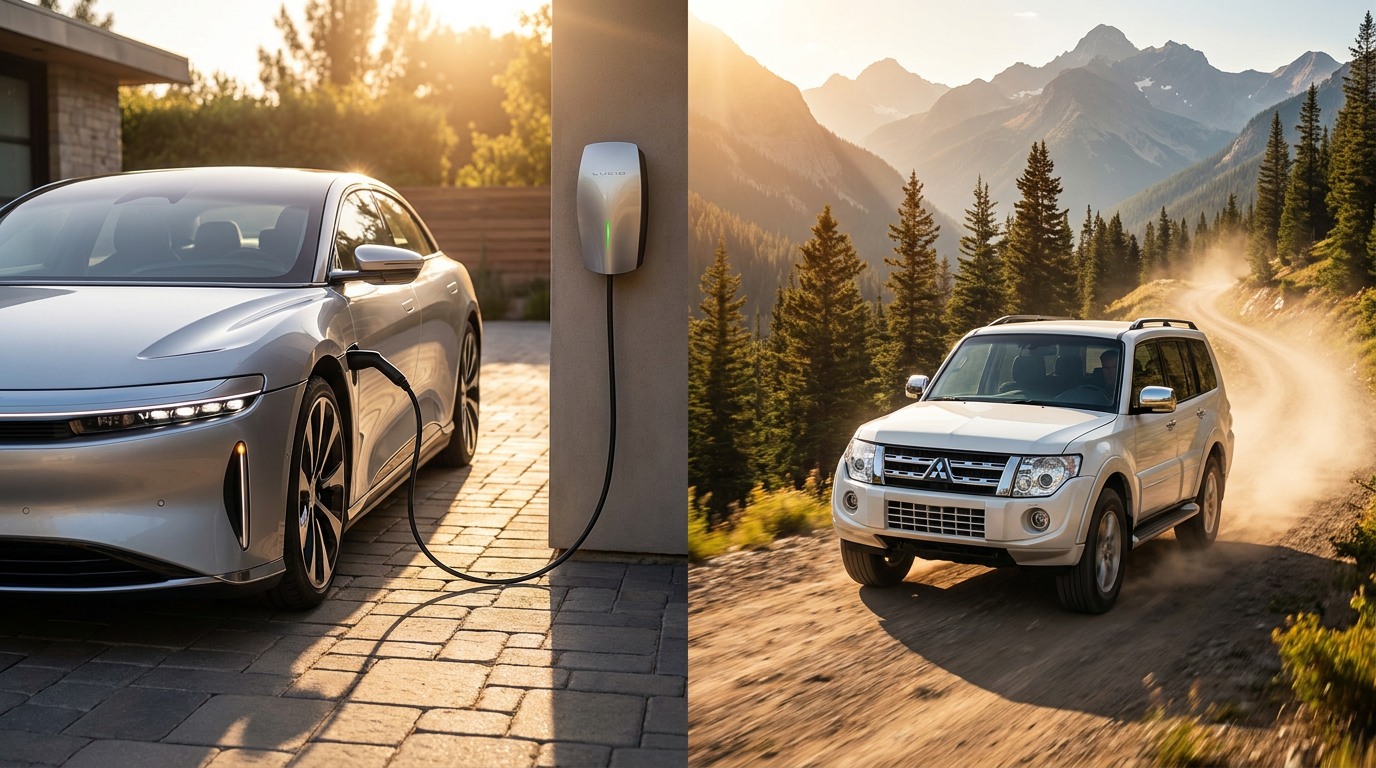
As the automotive industry accelerates into 2026, the global fleet of electrified vehicles has surpassed 80 million, fundamentally altering how consumers approach their next car purchase. Yet, for millions of buyers, the transition away from traditional gasoline engines presents a paralyzing choice between two dominant technologies: the Battery Electric Vehicle (BEV) and the Plug-in Hybrid Electric Vehicle (PHEV). While both plug into a wall to recharge, their underlying philosophies and daily operational realities are vastly different. The BEV represents a complete break from fossil fuels, relying entirely on a large battery pack and electric motors. The PHEV, conversely, acts as a bridge, pairing a smaller battery designed for daily commutes with a traditional internal combustion engine for extended journeys. Deciding between the two is no longer just a matter of environmental idealism; it is a complex calculation of daily driving habits, localized charging infrastructure, and total cost of ownership over the vehicle's lifespan.[3][4]
The case for the battery electric vehicle centers on its mechanical simplicity, environmental purity, and rock-bottom daily operating costs. By eliminating the internal combustion engine entirely, a BEV removes the need for oil changes, spark plug replacements, and complex transmission maintenance. The financial advantage becomes starkly apparent at the plug: charging a BEV at home on an off-peak electricity tariff costs roughly $0.07 per mile, a fraction of the cost of fueling a comparable gasoline vehicle. Furthermore, BEVs deliver instant torque for rapid acceleration and operate in near-total silence, providing a refined driving experience that luxury automakers have eagerly adopted. For drivers motivated by ecological concerns, the BEV is the only option that guarantees zero tailpipe emissions, ensuring that daily commutes do not contribute to urban smog or global carbon output.[1][6]
The case against the BEV revolves primarily around persistent infrastructure hurdles and lingering upfront price premiums. Despite a massive global push that installed over two million new public charging stations by the start of 2026, the network remains patchy in rural areas and highly congested along major holiday travel corridors. For apartment dwellers or those without dedicated off-street parking, relying exclusively on public fast chargers negates much of the BEV's cost advantage and introduces significant logistical friction into daily life. Additionally, while battery costs are falling, the average transaction price for a new electric vehicle in early 2026 still hovers around $54,500 in the United States, keeping them out of reach for many budget-conscious buyers. Extreme cold weather also remains a physical limitation, capable of sapping a BEV's maximum range by up to thirty percent when cabin heating is running at full blast.[1]

The evidence supporting the BEV's long-term dominance is clearly visible in global sales data and shifting tax incentives. According to the International Energy Agency, pure electric vehicles now account for roughly 67 percent of the total electrified vehicle market, reflecting a decisive consumer shift toward fully electric models. Governments are heavily subsidizing this transition; in the United Kingdom, for example, the Benefit-in-Kind tax rate for company car drivers is set at a mere 3 percent for BEVs in the 2025/2026 tax year, compared to 8 to 12 percent for most PHEVs. This massive tax discrepancy saves BEV drivers thousands of pounds annually, making the pure electric route the default choice for corporate fleets. Furthermore, advancements in battery chemistry have pushed the median range of new BEVs well past the 300-mile mark, effectively neutralizing range anxiety for the vast majority of routine driving scenarios.[3][4][5]
The case for the plug-in hybrid rests on its unparalleled flexibility and its role as the ultimate psychological safety net for hesitant buyers. A modern 2026 PHEV typically offers an electric-only range of 40 to 80 miles, which is more than sufficient to cover the average driver's daily commute, school runs, and grocery trips without burning a single drop of gasoline. Yet, when the weekend arrives and a 400-mile road trip is on the itinerary, the internal combustion engine seamlessly takes over. This dual-powertrain setup completely eliminates the range anxiety and charging-station logistics that still plague BEV owners on long journeys. For families who can only afford a single vehicle to serve all purposes, the PHEV promises the best of both worlds: the silent, cheap, emission-free operation of an EV from Monday to Friday, and the limitless, rapid-refueling freedom of a gas car on the weekends.[2][9]
The case for the plug-in hybrid rests on its unparalleled flexibility and its role as the ultimate psychological safety net for hesitant buyers.
The case against the PHEV highlights the inherent mechanical burden of carrying two entirely separate powertrains within a single chassis. Owners must maintain both a high-voltage electrical system and a traditional combustion engine, meaning they are still on the hook for regular oil changes, exhaust system repairs, and transmission servicing. This dual maintenance reality can make PHEVs more expensive to keep on the road over a ten-year lifespan compared to a mechanically simpler BEV. Furthermore, when the battery is depleted, a PHEV effectively becomes a standard gasoline car that is burdened by the dead weight of an empty battery pack and an electric motor. This added mass significantly degrades the vehicle's fuel efficiency, often resulting in worse highway mileage than a comparable, non-hybrid gasoline vehicle would achieve.[6][8]

The evidence regarding PHEV efficiency reveals a stark divide between official brochure claims and real-world consumer behavior. Official testing cycles often credit PHEVs with astonishing fuel economy figures—sometimes exceeding 200 miles per gallon—based on the assumption that the vehicle begins every journey with a fully charged battery. However, real-world telemetry data from fleet operators in 2026 paints a different picture. Many PHEVs are rarely plugged in by their owners, particularly if those drivers are using company fuel cards. When driven primarily on gasoline, a PHEV's actual fuel economy plummets; fleet data shows some popular PHEV SUVs returning less than 47 miles per gallon in real-world conditions, a far cry from their advertised efficiency. Consequently, environmental groups increasingly view PHEVs with skepticism, arguing that their ecological benefits are entirely dependent on the discipline of the driver to plug them in every single night.[5]
A BEV fits well when a driver has dedicated, reliable access to overnight charging at home or at their workplace. If the vehicle can be plugged in while the owner sleeps or works, the BEV experience is virtually frictionless, offering a full tank every morning at a fraction of the cost of gasoline. It is the ideal choice for households with two cars, where the BEV can handle all local and regional duties, or for drivers whose daily routes are highly predictable. Furthermore, a BEV is the perfect fit for consumers who are deeply committed to minimizing their personal carbon footprint and who want to permanently sever their reliance on the volatile global oil market. For these drivers, the occasional inconvenience of planning a charging stop during a rare road trip is a minor trade-off for years of silent, zero-emission driving.[1][8]
A BEV does not fit when the owner relies entirely on public charging networks for their daily energy needs. For residents of dense urban apartments or terraced housing without driveways, the necessity of hunting for an available, working public fast-charger transforms car ownership into a logistical chore. The cost of public fast-charging is also significantly higher than residential electricity rates, rapidly eroding the BEV's primary financial advantage. Additionally, a pure electric vehicle is a poor fit for drivers who regularly tow heavy loads over long distances, as towing drastically reduces battery range and necessitates frequent, time-consuming charging stops. Drivers living in regions with extreme, prolonged winter cold may also find a BEV frustrating, as sub-zero temperatures inherently reduce battery efficiency and demand heavy energy usage just to keep the cabin warm.[1][2]

A PHEV fits well when daily commutes are short enough to remain purely electric, but the driver frequently embarks on long, unpredictable journeys into areas with sparse charging infrastructure. It is the optimal solution for rural drivers who want to dabble in electrification but cannot risk being stranded miles from a fast charger. The PHEV also serves as an excellent transitional vehicle for consumers who are intrigued by electric driving but remain highly anxious about the current state of public charging networks. By offering a tangible, low-risk introduction to plug-in technology, the PHEV allows drivers to build the habit of home charging while retaining the familiar safety net of a gasoline tank, making it a highly pragmatic choice for single-car households that demand maximum versatility.[8][9]
A PHEV does not fit when the driver lacks a home charger or the discipline to use it daily. Without regular, consistent charging, the owner is simply hauling around a heavy, unused battery, resulting in worse fuel economy and higher emissions than a standard gasoline car. It is also a poor financial choice for high-mileage highway commuters; once the 40-to-80-mile electric range is exhausted, the vehicle relies on its combustion engine for the remainder of the trip, negating the cost benefits of electricity. Finally, a PHEV is increasingly ill-suited for corporate fleet drivers in regions with strict emissions-based tax codes, as governments are rapidly closing the tax loopholes that previously favored plug-in hybrids, pushing the financial calculus heavily in favor of pure battery electric vehicles.[5][8]
Ultimately, the 2026 automotive landscape proves that there is no single, universal winner in the debate between battery electric and plug-in hybrid vehicles. Instead, the market has matured to offer highly specialized tools for distinct lifestyles. The BEV has undeniably won the argument for the future, capturing the lion's share of global sales growth and offering the purest vision of sustainable transport. Yet, the PHEV remains a vital, highly relevant bridge technology, capturing a third of the plug-in market by serving those whom the charging infrastructure has not yet reached. For consumers, the decision no longer hinges on which technology is objectively superior, but rather on an honest assessment of their own daily routines, parking situations, and travel habits. By matching the right powertrain to the right lifestyle, drivers can maximize their financial savings while actively participating in the global shift toward cleaner mobility.[4]
How we got here
1997
Toyota introduces the Prius, popularizing the traditional hybrid vehicle that does not plug into a wall.
2010
The Nissan Leaf and Chevrolet Volt launch, bringing the first mass-market BEVs and PHEVs to consumers.
2020
Global EV sales begin to surge as battery costs drop and ranges push past the 200-mile mark.
2024
PHEVs experience a resurgence in popularity as mainstream buyers seek a bridge technology amid charging infrastructure growing pains.
Early 2026
BEVs capture 67% of the global plug-in market, solidifying their position as the dominant future powertrain.
Viewpoints in depth
Pure EV Advocates
Focus on the environmental necessity and long-term cost benefits of fully eliminating the combustion engine.
This camp, heavily represented by environmental policy groups and pure-play electric manufacturers, argues that plug-in hybrids are a dangerous distraction. They point to real-world telemetry data showing that many PHEVs are rarely plugged in, effectively turning them into heavy, inefficient gasoline cars. For these advocates, the rapidly expanding fast-charging network and the advent of 300-plus-mile battery ranges mean that the 'range anxiety' argument is largely obsolete. They view the BEV as the only legitimate path to decarbonizing personal transport, emphasizing that the total elimination of tailpipe emissions and oil changes is worth the occasional inconvenience of public charging.
Pragmatic Transitioners
Emphasize the immediate utility of PHEVs for drivers who lack reliable charging infrastructure.
Transition advocates argue that the push for pure electric vehicles ignores the lived reality of millions of drivers. For apartment dwellers, rural residents, and single-car families, relying entirely on public charging networks remains a logistical nightmare in 2026. This camp views the PHEV as the perfect compromise, allowing drivers to complete 90 percent of their daily driving on cheap electricity while retaining a gasoline engine for the remaining 10 percent of long-haul trips. They argue that putting a smaller 50-mile battery into a PHEV is a more efficient use of scarce global lithium resources than putting a massive 300-mile battery into a BEV that rarely drives more than 30 miles a day.
Fleet & Financial Analysts
Evaluate powertrains strictly through the lens of depreciation, tax incentives, and total cost of ownership.
Financial analysts strip away the environmental emotion and focus entirely on the spreadsheet. From their perspective, the BEV is currently winning the corporate fleet battle due to massive government tax incentives, such as the UK's aggressively low Benefit-in-Kind rates for pure electrics. However, they also note that the retail market is more nuanced. While BEVs offer lower per-mile running costs, their steep upfront purchase price and historically volatile depreciation curves give some buyers pause. Analysts point out that PHEVs often hold their resale value better in regions with poor charging infrastructure, making the 'cheaper' option highly dependent on local tax codes and the buyer's specific geographic location.
What we don't know
- How the impending commercialization of solid-state batteries will impact the resale value of current lithium-ion BEVs and PHEVs.
- Whether governments will begin taxing public EV charging at higher rates to replace lost gasoline tax revenues.
- If automakers will continue to invest in developing new PHEV models, or phase them out entirely as BEV infrastructure improves.
Key terms
- BEV
- Battery Electric Vehicle; a car powered entirely by an electric battery and motors, producing zero tailpipe emissions.
- PHEV
- Plug-in Hybrid Electric Vehicle; a car with both an electric motor and a gasoline engine, capable of driving short distances on plugged-in battery power.
- WLTP
- Worldwide Harmonised Light Vehicle Test Procedure; the global standard used to measure a car's fuel economy and electric driving range.
- Range Anxiety
- The fear that an electric vehicle will run out of battery power before reaching a charging station.
- Benefit-in-Kind (BIK)
- A tax levied on employees who receive a company car, which heavily favors zero-emission vehicles in many European markets.
Frequently asked
What is the main difference between a BEV and a PHEV?
A Battery Electric Vehicle (BEV) runs entirely on electricity and must be plugged in to recharge. A Plug-in Hybrid Electric Vehicle (PHEV) has a smaller battery for short electric trips, plus a traditional gas engine that takes over for longer journeys.
Is it cheaper to charge an EV or buy gas?
Charging an EV is significantly cheaper. In 2026, charging a BEV at home costs roughly $0.07 per mile, whereas fueling a comparable gasoline or hybrid vehicle costs substantially more depending on local fuel prices.
Do I have to plug in a PHEV?
Yes, to get the financial and environmental benefits. If you do not plug in a PHEV, it operates solely on its gas engine. Because it carries the extra weight of an unused battery, it will often get worse gas mileage than a standard non-hybrid car.
How far can a PHEV go on electricity alone?
Most modern 2026 PHEVs offer an electric-only range of 40 to 80 miles before the gasoline engine seamlessly engages.
Are electric cars more expensive to maintain?
No, BEVs are generally cheaper to maintain because they lack an internal combustion engine, meaning no oil changes, spark plugs, or transmission fluid. PHEVs, however, require maintenance for both their electric and gas systems.
Sources
Source coverage
9 outlets
3 viewpoints surfaced









[1]Kelley Blue BookPragmatic Transitioners
Electric Cars vs Hybrids: Key Considerations for Your Next Vehicle
Read on Kelley Blue Book →[2]CarsalesPragmatic Transitioners
2026 EV Guide: HEV vs PHEV vs BEV Explained
Read on Carsales →[3]IEAPure EV Advocates
Global EV Outlook 2026: Sales Trends
Read on IEA →[4]Autovista24Fleet & Financial Analysts
Global electric vehicle sales trends in 2026
Read on Autovista24 →[5]OrbisioPure EV Advocates
PHEV vs BEV: The UK Fleet Electrification Guide
Read on Orbisio →[6]BeevPure EV Advocates
Electric vs. hybrid vehicles: which is cheaper to buy and run in 2026?
Read on Beev →[7]RechargedFleet & Financial Analysts
PHEV vs BEV: Which Is Better for You in 2026?
Read on Recharged →[8]FleetPartnersFleet & Financial Analysts
PHEV vs BEV: Which one is right for you?
Read on FleetPartners →[9]Classic ToyotaPragmatic Transitioners
2026 Toyota EV Guide: HEV vs PHEV vs BEV Explained
Read on Classic Toyota →

Every angle. Every day.
Get automotive stories with full source coverage and perspective breakdowns delivered to your inbox.