
US and Iran Reach Framework Peace Deal to End 15-Week War and Reopen Strait of Hormuz
The United States and Iran have agreed to a tentative memorandum of understanding to halt military operations, lift the US naval blockade, and reopen the Strait of Hormuz. The breakthrough deal initiates a 60-day window to negotiate Iran's nuclear program, though Israel has strongly rejected the framework.
By Factlen Editorial Team

- US Administration
- Prioritizes ending the costly conflict, reopening global shipping lanes, and securing a diplomatic win.
- Israeli Government
- Views the deal as a betrayal that fails to eliminate the Iranian threat or dismantle Hezbollah.
- Iranian Leadership
- Seeks immediate sanctions relief and the end of the naval blockade while preserving domestic stability.
- Iranian Hardliners
- Opposes any compromise with the US, viewing the framework as a capitulation.
What's not represented
- · Lebanese civilians caught in the crossfire
- · European nations facing war-induced inflation
Why this matters
This framework halts a 15-week war that severely disrupted global shipping and energy markets, immediately lowering oil prices. However, the exclusion of Israel and the unresolved status of Iran's nuclear program mean the region remains highly volatile.
Key points
- The US and Iran agreed to a framework peace deal to end their 15-week conflict.
- The Strait of Hormuz will reopen within 30 days after naval mines are cleared.
- The US will lift its naval blockade and release $25 billion in frozen Iranian assets.
- A 60-day negotiation window will determine the fate of Iran's nuclear program.
- Israel, excluded from the talks, rejected the deal and vowed to remain in Lebanon indefinitely.
After 15 weeks of a devastating regional conflict, the United States and Iran have reached a framework peace agreement to immediately halt military operations and reopen the Strait of Hormuz.[1][2]
The breakthrough, mediated heavily by Pakistan and Qatar, takes the form of a Memorandum of Understanding scheduled to be signed formally in Switzerland on Friday.[1][5]
President Donald Trump announced the deal on Sunday evening, declaring an immediate end to the U.S. naval blockade of Iranian ports. "Ships of the world, start your engines. Let the oil flow!" Trump wrote, framing the accord as a historic diplomatic victory that will stabilize the global economy.[1][5]
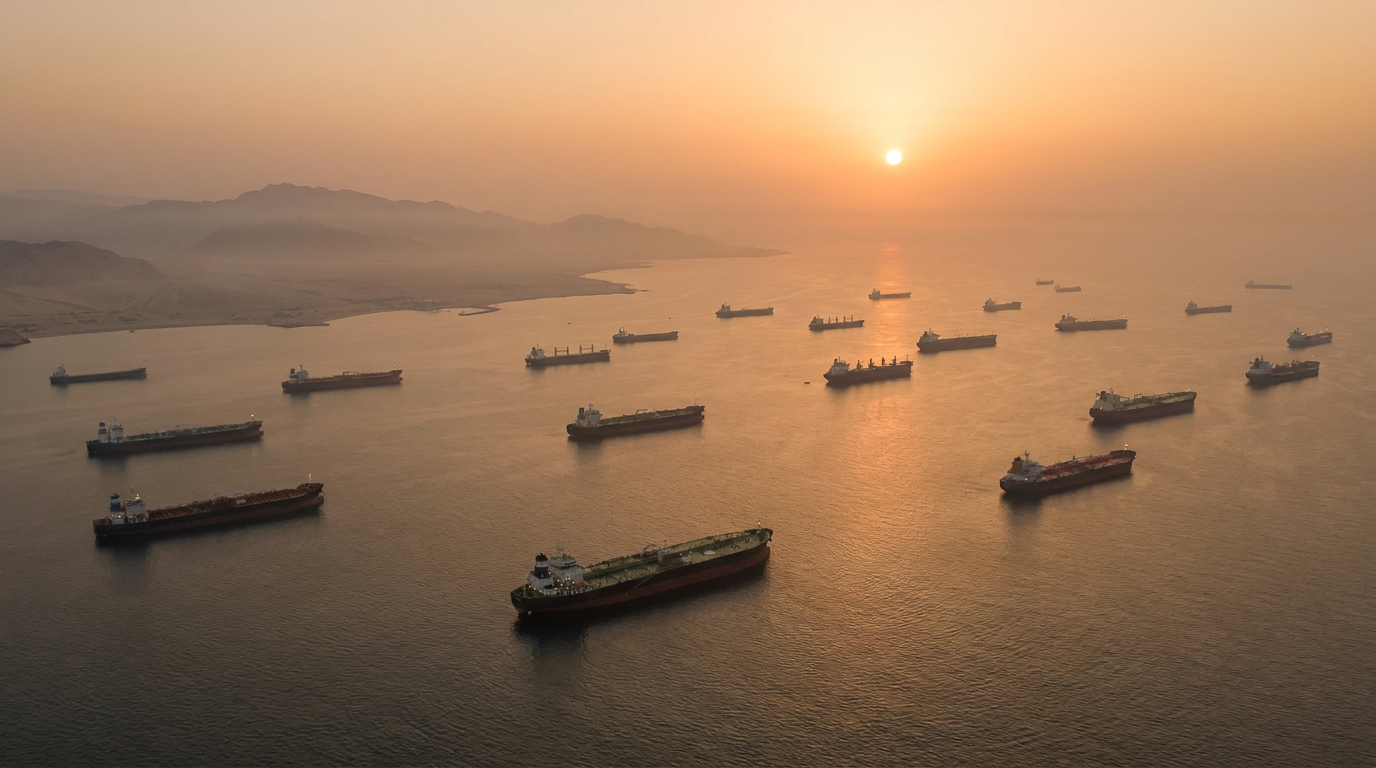
The immediate economic impact was swift. Global energy markets, which had been whipsawed by the closure of a waterway that handles a fifth of the world's oil supply, breathed a sigh of relief. Brent crude futures plunged nearly five percent to $83.68 a barrel by Monday morning, their lowest level since early March.[6]

However, the memorandum is an interim framework, not a final treaty. It establishes a fragile 60-day window for intensive technical negotiations to resolve the most intractable issues, primarily Iran's nuclear program and the lifting of international sanctions.[2][7]
Under the immediate terms of the draft deal, the Strait of Hormuz will be reopened to international shipping within 30 days. This period will allow Iranian and international maritime forces to clear naval mines deployed during the conflict and restore safe navigation protocols.[2][6]
In exchange for reopening the strait and halting attacks, the United States has agreed to lift its naval blockade and begin releasing an estimated $25 billion in frozen Iranian assets.[6]
The most complex pillar of the 60-day negotiation window involves Iran's nuclear capabilities. For now, Tehran has agreed to maintain the nuclear status quo, halting further uranium enrichment and freezing the expansion of its nuclear facilities.[3][6]
The most complex pillar of the 60-day negotiation window involves Iran's nuclear capabilities.
But the ultimate fate of Iran's existing stockpile of highly enriched uranium remains fiercely contested. U.S. officials insist the final agreement must mandate the complete destruction and removal of the nuclear material. Iranian negotiators, conversely, are pushing to dilute the enriched uranium domestically, keeping their infrastructure intact.[3]

While the U.S. and Iran celebrate the de-escalation, the agreement has triggered a political earthquake in Israel. Despite launching the initial February strikes alongside the United States, the Israeli government was entirely frozen out of the Pakistan-mediated negotiations.[2][3]
Israeli officials woke up Monday to a deal they view as a profound betrayal. Far-right Finance Minister Bezalel Smotrich condemned the framework as bad for Israel and the entire free world, arguing it leaves the Iranian regime in power and its proxy networks functional.[3][4]
The most immediate flashpoint is Lebanon. While Iran's Supreme National Security Council claimed the ceasefire applies to all fronts, including Hezbollah's operations in Lebanon, Israel insists it is not bound by the Washington-Tehran accord.[1][3]
Israeli Defense Minister Israel Katz declared that the Israel Defense Forces will remain in security buffer zones in southern Lebanon, Syria, and the Gaza Strip indefinitely. This stance directly contradicts the broader regional de-escalation envisioned by the U.S. administration.[3][4]

The disconnect over Lebanon highlights a critical vulnerability in the peace framework. Hezbollah officials stated they have paused operations to monitor Israel's adherence to the ceasefire, but warned that any Israeli military movement in Lebanon would shatter the truce.[2]
Domestic political pressures are also threatening the deal's viability in Tehran. Hardline factions held protests in cities like Mashhad over the weekend, chanting against the negotiators and demanding their resignation for allegedly capitulating to American demands without securing permanent sanctions relief.[6]
Foreign policy analysts warn of a significant delta between the aspirations of the memorandum and the reality of a final, binding treaty. The 60-day window requires both sides to make painful concessions that domestic audiences fiercely oppose.[7]
For the U.S. administration, the immediate goal is securing a calm global market ahead of the Group of Seven summit in France, where European allies battered by war-induced inflation are desperate for a permanent resolution.[7]

How we got here
Feb 2026
The US and Israel launch coordinated strikes on Iranian military and nuclear infrastructure, initiating the war.
March 2026
Iran retaliates, mining the Strait of Hormuz and disrupting global energy markets.
Early June 2026
Pakistan and Qatar intensify backchannel mediation efforts between Washington and Tehran.
June 14, 2026
Negotiators finalize a 14-point draft framework; Trump announces the deal on Truth Social.
June 19, 2026
Official signing ceremony scheduled to take place in Switzerland.
Viewpoints in depth
US Administration's view
The deal is a historic diplomatic victory that stabilizes the global economy.
U.S. officials argue the framework achieves their primary goals: preventing a nuclear-armed Iran and reopening the Strait of Hormuz without committing to endless Middle Eastern wars. They emphasize the immediate economic relief of falling oil prices ahead of the G7 summit, framing the 60-day window as a necessary step to secure a permanent, verifiable treaty.
Israeli Government's view
The framework is a dangerous capitulation that ignores Israel's security.
Israeli officials feel profoundly betrayed by their exclusion from the talks. They argue that leaving Iran's regime in power and failing to dismantle Hezbollah guarantees future conflicts. Consequently, Israel maintains it will continue its military operations in Lebanon and Gaza regardless of Washington's commitments to Tehran.
Iranian Leadership's view
The agreement is a necessary step to lift crippling economic blockades.
Tehran's pragmatic negotiators view the unfreezing of $25 billion and the end of the U.S. naval blockade as essential for the country's economic survival. However, they face intense domestic pressure from hardliners who view any compromise on the nuclear program as a surrender to American aggression, making the upcoming 60-day negotiations politically perilous.
What we don't know
- Whether Iran will agree to destroy its highly enriched uranium or insist on diluting it domestically.
- How Israel will conduct its military operations in Lebanon now that the US and Iran have declared a ceasefire.
- If the 60-day technical negotiations will produce a permanent treaty or collapse under domestic political pressure.
Key terms
- Memorandum of Understanding (MOU)
- A formal, non-binding agreement outlining the broad terms of a deal before a final treaty is drafted.
- Strait of Hormuz
- A critical maritime chokepoint between the Persian Gulf and the Gulf of Oman, through which a fifth of the world's oil supply passes.
- Highly Enriched Uranium (HEU)
- Uranium that has been processed to a high concentration of the U-235 isotope, making it capable of being used in nuclear weapons.
- Naval Blockade
- A military operation in which ships are used to prevent vessels from entering or leaving a country's ports.
Frequently asked
Is the war between the US and Iran completely over?
The framework establishes an immediate ceasefire and lifts blockades, but a permanent end to the conflict depends on a final treaty being negotiated over the next 60 days.
What happens to Iran's nuclear program?
Under the interim deal, Iran agrees to freeze enrichment. The US wants the enriched uranium removed, while Iran wants to dilute it domestically—this will be negotiated next.
Why is Israel opposed to the deal?
Israel was excluded from the negotiations and argues the deal leaves the Iranian regime and its proxy network, Hezbollah, intact to threaten Israeli security.
Will gas prices go down?
Global oil prices dropped nearly 5% immediately after the announcement, as markets anticipate the reopening of the Strait of Hormuz within 30 days.
Sources
Source coverage
7 outlets
4 viewpoints surfaced







[1]Fox NewsUS Administration
Trump says peace pact reached with Iran, oil set to flow through Strait of Hormuz
Read on Fox News →[2]The Guardian
US and Iran reach framework peace deal to end war
Read on The Guardian →[3]Times of IsraelIsraeli Government
US and Iran to end war, say Israel not bound by terms of the agreement
Read on Times of Israel →[4]The Washington PostIsraeli Government
Israelis disparage US-Iran peace deal as a 'catastrophe'
Read on The Washington Post →[5]Al JazeeraIranian Leadership
World leaders welcome US-Iran tentative deal to end war
Read on Al Jazeera →[6]ReutersIranian Hardliners
Oil hits 3-month low as US, Iran reach peace deal to reopen Strait of Hormuz
Read on Reuters →[7]Atlantic CouncilUS Administration
Experts react: The US and Iran just announced an interim peace deal
Read on Atlantic Council →
More in news politics
See all 7 stories →Strait of Hormuz
US and Iran Reach Interim Deal to Reopen Strait of Hormuz After 100-Day Disruption
0 sources

Middle East Conflict
US and Iran Reach Framework Peace Deal to End 15-Week Conflict
0 sources

US-Iran Deal
US and Iran Reach Framework Peace Deal, Reopening Strait of Hormuz
0 sources
Federal AI
Federal Government AI Deployments Double to Over 3,600 Amid Transparency Concerns
0 sources

Every angle. Every day.
Get news politics stories with full source coverage and perspective breakdowns delivered to your inbox.