
The James Webb Telescope Just Solved Cosmology's 'Chicken or the Egg' Problem
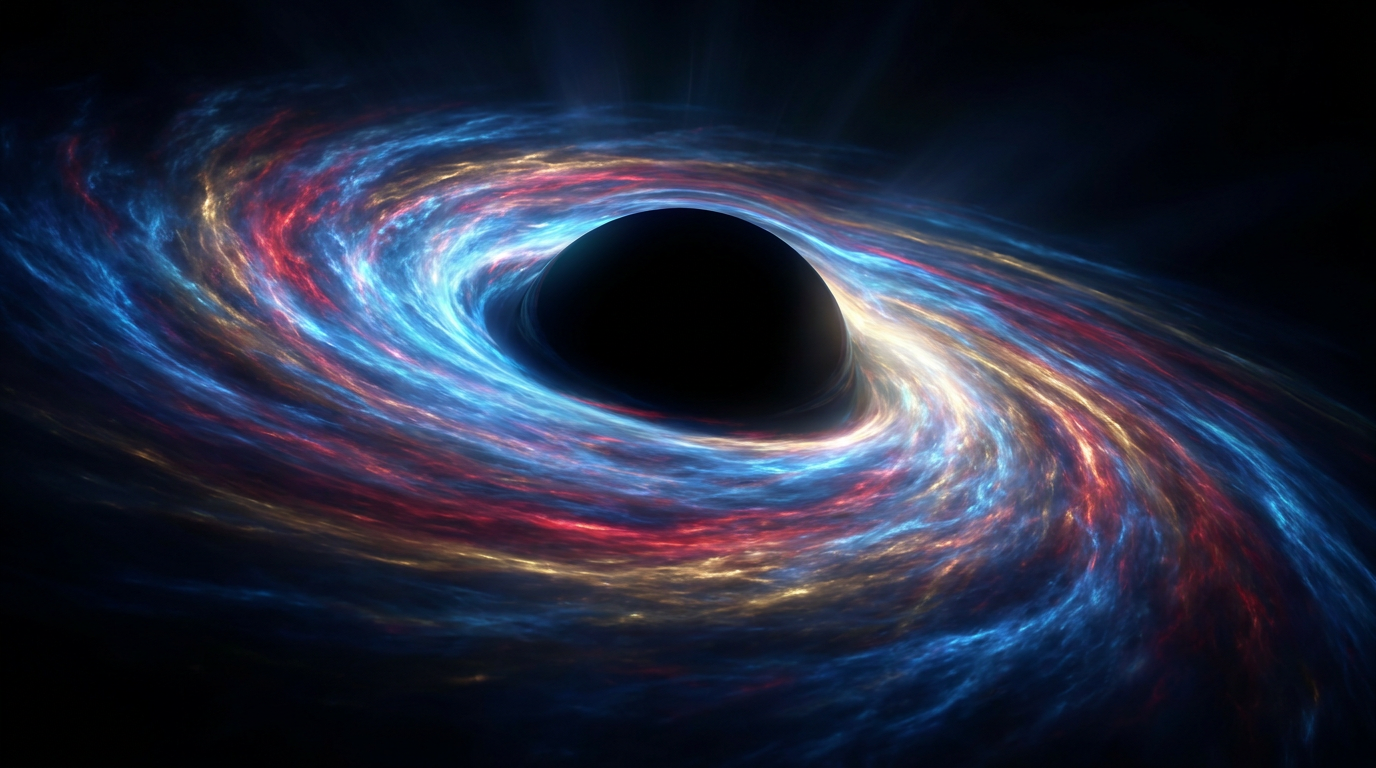
New observations from the James Webb Space Telescope reveal that supermassive black holes existed before the galaxies that surround them, upending decades of classical astrophysical theory.
By Factlen Editorial Team
- Astrophysical Observers
- Focus on the empirical data from JWST, arguing that direct measurements of ancient light prove early black holes were overmassive and preceded their host galaxies.
- Theoretical Modelers
- Now focusing on 'direct collapse' scenarios, arguing that under the extreme conditions of the early universe, pristine gas clouds bypassed the star phase entirely to form giant black hole seeds.
- Classical Cosmologists
- Historically maintained that black holes grew slowly from the remnants of the first generation of massive stars, a model that worked perfectly for the local, modern universe.
What's not represented
- · Particle physicists studying the role of dark matter in early black hole formation
Why this matters
This breakthrough rewrites our fundamental understanding of how the universe began, proving that the giant black holes anchoring modern galaxies were the engines of creation, not just the byproducts of dead stars.
Key points
- Astronomers have long debated whether galaxies formed before their central supermassive black holes, or vice versa.
- New data from the James Webb Space Telescope reveals a 50-million-solar-mass black hole existing just 700 million years after the Big Bang.
- The black hole accounts for roughly 66 percent of its host galaxy's mass, compared to just 0.1 percent in modern galaxies.
- The extreme ratio proves the black hole formed first, likely through the direct collapse of a pristine gas cloud, and subsequently triggered the galaxy's star formation.
For decades, astrophysicists have wrestled with a cosmic version of the chicken-or-the-egg paradox: when looking at the architecture of the universe, which came first—the galaxy or the supermassive black hole at its center?[1][8]
In the modern universe, almost every large galaxy, including our own Milky Way, is anchored by a supermassive black hole. Because the two are so intimately linked, their masses scaling in lockstep, astronomers long assumed they grew up together.[1][7]
The classical model of cosmic evolution dictated that galaxies took the lead. According to this timeline, vast clouds of primordial gas collapsed to form the first generations of stars. When the most massive of these early stars exhausted their fuel, they died in spectacular supernovae, leaving behind relatively small "seed" black holes.[5][6]
Over billions of years, these stellar-mass black holes supposedly merged and gorged on surrounding gas, slowly ballooning into the supermassive behemoths we see today. It was a tidy, logical progression that perfectly explained the mature cosmos.[6]

But as telescopes peered deeper into space—and therefore further back in time—a glaring mathematical problem emerged. Astronomers began spotting quasars powered by billion-solar-mass black holes existing when the universe was less than a billion years old. There simply had not been enough time for them to grow so large through the slow, steady diet of dead stars.[6][7]
The launch of the James Webb Space Telescope (JWST) provided the ultimate tool to break this theoretical deadlock. Designed specifically to capture the faint, stretched infrared light from the dawn of time, JWST began identifying mysterious objects dubbed "Little Red Dots"—compact, ancient galaxies from the universe's infancy.[4][5]
One of these objects, known as Abell2744-QSO1, has now provided the definitive answer to the chicken-or-egg question. Dating back to just 700 million years after the Big Bang, the object represents the cosmos at merely five percent of its current age.[4][5]
One of these objects, known as Abell2744-QSO1, has now provided the definitive answer to the chicken-or-egg question.
Observing such a distant speck of light is notoriously difficult, but astronomers were aided by a phenomenon known as gravitational lensing. The massive galaxy cluster Abell 2744, also known as Pandora's Cluster, sits between Earth and QSO1, acting as a natural magnifying glass that bends and amplifies the ancient galaxy's light.[4][5]
Using JWST's near-infrared spectrometer, a team led by researchers at the University of Cambridge achieved a cosmological milestone: the first direct dynamic measurement of a supermassive black hole's mass in the early universe.[2][4]
The results were staggering. The black hole at the center of QSO1 weighs in at roughly 50 million times the mass of our Sun. But the true shock lay in its proportion to its host galaxy, which measures a mere 1,300 light-years across.[4][5]
In the local, modern universe, a supermassive black hole typically accounts for about 0.1 percent of its host galaxy's total stellar mass. In QSO1, the black hole makes up an astonishing 66 percent of the galaxy's mass. It is a giant trapped in a microscopic home.[4][7]

This extreme ratio proves that the black hole did not slowly grow alongside its galaxy. Instead, it was "born huge," predating the formation of the stars around it. The black hole came first.[1][4][6]
To explain how such a monster could form without a preceding generation of stars, theoretical modelers are turning to the "direct collapse" scenario. In the extreme, dense conditions of the early universe, massive clouds of pristine hydrogen and helium may have collapsed under their own gravity directly into black holes, bypassing the stellar phase entirely.[6][7]
Once established, these heavy black hole seeds became the engines of galaxy formation. As they consumed surrounding matter, they generated intense magnetic storms and high-speed outflows of ionized gas. These violent winds acted as cosmic snowplows, crushing adjacent gas clouds and triggering rapid, explosive star formation at rates far exceeding those of modern galaxies.[1][8]

The chemical signature of QSO1 supports this pristine origin story. The galaxy contains almost entirely hydrogen and helium, with a near-total absence of heavier elements like oxygen that are forged inside stars. It is a naked, primordial black hole caught in the very act of birthing its host galaxy—a paradigm shift that fundamentally rewrites the story of how our universe began.[6][8]
How we got here
13.8 Billion Years Ago
The Big Bang initiates the expansion of the universe, filling it with a hot, dense soup of primordial particles.
13.1 Billion Years Ago
The supermassive black hole at the center of Abell2744-QSO1 forms, growing to 50 million solar masses.
Late 20th Century
Astronomers establish the classical model of galaxy formation, assuming stars formed first and black holes grew from their remnants.
December 2021
The James Webb Space Telescope launches, designed to peer further back into cosmic history than ever before.
June 2026
Researchers publish direct mass measurements of ancient black holes, proving they predated their host galaxies.
Viewpoints in depth
Astrophysical Observers
Relying on direct measurements from next-generation telescopes to rewrite cosmic timelines.
For observational astronomers, the debate over the early universe has always been constrained by the limits of human technology. Until recently, the mass of ancient black holes could only be inferred indirectly. The James Webb Space Telescope has changed that calculus entirely. By capturing the spectral signatures of ionized gas swirling around these distant behemoths, observers can now calculate their exact mass. The data from objects like Abell2744-QSO1 provides hard, empirical evidence that these black holes were vastly 'overmassive' compared to their host galaxies, proving that the black hole had to come first.
Classical Cosmologists
Defending the traditional models of stellar collapse that perfectly explain the modern universe.
The classical view of galaxy formation was not born out of thin air; it perfectly describes the mechanics of the local, mature universe. In this model, gravity slowly pulls gas together to form stars, and only when the most massive of those stars die do black holes form. These stellar-mass black holes then spend billions of years merging and feeding to reach supermassive status. While classical cosmologists acknowledge the new JWST data, many caution against entirely discarding the old models, suggesting instead that the universe may have had two distinct pathways for black hole creation: one for the primordial era, and one for the modern epoch.
Theoretical Modelers
Developing new physics frameworks to explain how giant black holes could form without stars.
Faced with the reality of 50-million-solar-mass black holes existing just 700 million years after the Big Bang, theoretical physicists are championing the 'direct collapse' scenario. They argue that the early universe was fundamentally different from today—denser, hotter, and filled with pristine clouds of hydrogen and helium untouched by heavier elements. Under these unique conditions, a massive gas cloud could bypass the fragmentation process that normally creates stars, collapsing directly under its own immense gravity into a heavy black hole seed. This framework elegantly explains how the universe could spawn such monsters so quickly.
What we don't know
- Whether the 'direct collapse' mechanism was the only way early supermassive black holes formed, or if other unknown processes contributed.
- Exactly how the violent winds from these early black holes triggered star formation rather than simply blowing all the gas away.
- Whether every modern galaxy, including our Milky Way, originated from one of these primordial 'born huge' black holes.
Key terms
- Supermassive black hole
- A black hole containing millions to billions of times the mass of our Sun, typically found at the center of a galaxy.
- Gravitational lensing
- A phenomenon where the gravity of a massive foreground object bends and magnifies the light from a more distant object behind it.
- Direct collapse
- A theoretical process where a massive cloud of pristine gas collapses under its own gravity to form a black hole directly, without first becoming a star.
- Redshift
- The stretching of light toward the red end of the spectrum as it travels across the expanding universe, used to measure cosmic distances and age.
- Quasar
- An extremely luminous active galactic nucleus, powered by a supermassive black hole actively consuming vast amounts of gas.
Frequently asked
What is the cosmic chicken-or-the-egg problem?
It is the long-standing astrophysical debate over whether galaxies formed first and birthed supermassive black holes, or if black holes formed first and built galaxies around them.
What is a 'Little Red Dot' in astronomy?
It is a faint, reddish object seen by the James Webb Space Telescope, representing an extremely distant, compact, and ancient galaxy from the universe's infancy.
How do scientists measure the mass of a black hole so far away?
They use a technique called gravitational lensing, where a closer galaxy cluster acts as a magnifying glass, allowing them to analyze the light and movement of gas swirling around the distant black hole.
Why couldn't the black hole have grown from dead stars?
The universe was only 700 million years old at the time—not enough time for generations of stars to live, die, and merge into a black hole 50 million times the mass of our Sun.
Sources
Source coverage
8 outlets
3 viewpoints surfaced








[1]New ScientistAstrophysical Observers
We may have finally solved cosmology's chicken-or-the-egg problem
Read on New Scientist →[2]NatureClassical Cosmologists
Direct measurement of a supermassive black hole mass in the early universe
Read on Nature →[3]NASATheoretical Modelers
Webb Finds Supermassive Black Holes Grew First
Read on NASA →[4]GizmodoAstrophysical Observers
'A Paradigm Shift': Supermassive Black Hole Without a Galaxy Changes What We Thought Came First
Read on Gizmodo →[5]EarthSkyAstrophysical Observers
The black hole or galaxy: Which came 1st?
Read on EarthSky →[6]Earth.comClassical Cosmologists
Clear evidence found that some supermassive black holes form without a stellar collapse
Read on Earth.com →[7]Big ThinkTheoretical Modelers
At 36 billion solar masses, is the heaviest black hole too massive?
Read on Big Think →[8]Factlen Editorial TeamAstrophysical Observers
Synthesis by Factlen editorial team
Read on Factlen Editorial Team →
More in science
See all 6 stories →Cosmology
JWST Solves Cosmology's 'Chicken or Egg' Mystery: Black Holes Came Before Galaxies
0 sources
Cosmic Origins
JWST Solves the Ultimate Cosmic Mystery: Black Holes Came Before Galaxies
0 sources
Wildlife AI
How AI is Decoding the Secret Lives of Animals
0 sources
Personalized Medicine
Personalized mRNA Cancer Vaccine Halves Melanoma Recurrence in 5-Year Study
0 sources

Every angle. Every day.
Get science stories with full source coverage and perspective breakdowns delivered to your inbox.