
US and Iran Reach Peace Deal to Reopen Strait of Hormuz, Sparking Fierce Backlash in Israel
The United States and Iran have agreed to a tentative peace deal ending their 100-day war and reopening the critical Strait of Hormuz to global shipping. While the breakthrough sent global oil prices tumbling, Israeli officials fiercely denounced the agreement and vowed to continue their military operations in Lebanon.
By Factlen Editorial Team
- US Administration & Mediators
- Focuses on the economic victory of reopening the Strait of Hormuz and ending a costly 100-day war.
- Israeli Government
- Views the deal as a premature capitulation that fails to dismantle Hezbollah's military infrastructure.
- Tehran & Allied Factions
- Frames the agreement as a successful defense of sovereignty that forced the US to lift its naval blockade.
- Global Energy Markets
- Prioritizes the immediate resumption of oil shipments and the stabilization of global inflation.
What's not represented
- · Lebanese civilians caught in the crossfire
- · European energy consumers facing sustained inflation
Why this matters
The reopening of the Strait of Hormuz promises immediate relief for global energy markets and inflation-weary consumers, ending a 100-day blockade that choked off 20 percent of the world's oil supply. However, the severe diplomatic rift between the US and Israel over the ceasefire threatens to isolate Jerusalem and could spark a renewed, localized war in Lebanon.
Key points
- The US and Iran have agreed to a tentative peace deal to end their 100-day war, with an official signing scheduled for Friday in Switzerland.
- The agreement includes the reopening of the Strait of Hormuz, prompting a nearly 5 percent drop in global crude oil prices.
- The memorandum establishes a 60-day negotiating window to address Iran's nuclear program and potential sanctions relief.
- Israeli officials fiercely denounced the deal, stating they are not bound by it and will not withdraw forces from Lebanon.
- Hezbollah has paused its rocket operations but warned it will resume strikes if Israel violates Lebanese sovereignty.
After more than a hundred days of devastating conflict, the United States and Iran have reached a tentative peace agreement to end a war that has reshaped the Middle East and severely disrupted the global economy. The breakthrough was first announced by Pakistani Prime Minister Shehbaz Sharif, whose government served as a key mediator, and was swiftly confirmed by US President Donald Trump. In a characteristic social media post, Trump declared the deal complete, authorizing the immediate removal of the US naval blockade on Iranian ports and proclaiming, 'Let the oil flow!' The memorandum of understanding, which is scheduled to be officially signed in Switzerland on Friday, outlines an immediate and permanent termination of military operations across all fronts.[1][5][9]
The conflict erupted in late February following unprecedented US and Israeli military strikes on Iranian soil, which resulted in the assassination of Supreme Leader Ayatollah Ali Khamenei and other senior officials. In retaliation, Tehran effectively closed the Strait of Hormuz, deploying mines and anti-ship batteries to choke off one of the world's most vital economic arteries. The ensuing naval standoff and mutual blockades triggered a massive global energy shock, sending inflation soaring and forcing the International Energy Agency to release record levels of emergency crude reserves. The new agreement represents a sudden off-ramp for both Washington and Tehran, who appeared locked in an escalating cycle of retaliation with no clear military resolution in sight.[2][4][6]
The immediate global reaction to the diplomatic breakthrough was profound economic relief. Brent crude futures, the international benchmark, plunged nearly 5 percent to $83.11 a barrel in early Monday trading. US West Texas Intermediate followed suit, tumbling 5.2 percent to $80.47. Both contracts hit their lowest levels since the opening days of the war in early March. Wall Street also responded with surging optimism; the S&P 500 jumped 1.5 percent and the Dow Jones Industrial Average reached a new all-time high as investors bet that the cessation of hostilities would finally bring relief to businesses and consumers battered by energy-driven inflation.[1][3][6]

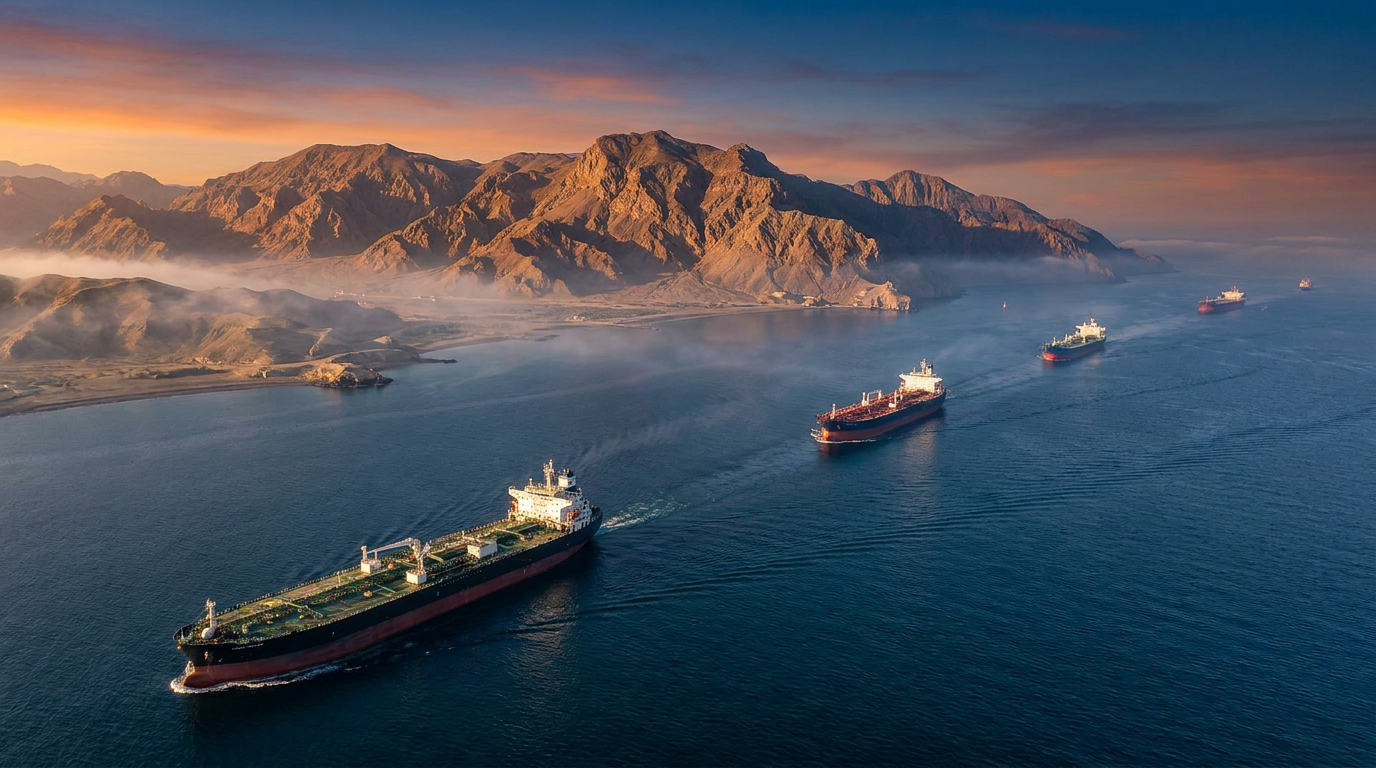
The Strait of Hormuz serves as the world's most critical maritime chokepoint, historically handling roughly 20 percent of global crude oil and a significant portion of liquefied natural gas supplies. Trump declared that the waterway would be reopened 'toll-free' for international shipping. However, Iranian state media offered a slightly different timeline and framework, indicating that the reopening would occur within 30 days 'under Iranian arrangements.' This discrepancy highlights potential friction over who ultimately controls and monitors the maritime traffic, as Tehran has long viewed the strait as its sovereign territorial waters and a primary point of strategic leverage.[1][5][8]
The logistics of resuming full maritime trade remain highly complex and fraught with physical danger. During the height of the conflict, the US Central Command redirected over 140 commercial ships and actively disabled non-compliant vessels attempting to run the blockade. The waters are currently heavily mined, and clearing safe shipping lanes will require extensive coordination between formerly hostile naval forces. The Japanese Shipowners' Association reported that dozens of vessels remain stranded in the channel, waiting for concrete security guarantees before attempting to move.[2][8]
Energy analysts caution that restoring pre-war traffic levels of 20 million barrels a day could take weeks or even months. Tamas Varga, an analyst at PVM Oil Associates, noted that financial markets are currently pricing in future physical supply rather than immediate delivery. The slow resumption of tanker traffic means that the global market may still face a supply deficit throughout the remainder of 2026. Even with the recent dip in prices, American consumers are still paying significantly more at the pump than they did prior to the outbreak of the war.[1][6]
Energy analysts caution that restoring pre-war traffic levels of 20 million barrels a day could take weeks or even months.
Beyond the immediate ceasefire and the reopening of maritime trade routes, the memorandum of understanding establishes a 60-day negotiating window to address deeper structural issues. Chief among these is the future of Iran's nuclear program and the framework for broader sanctions relief. Trump claimed that under the new arrangement, Iran no longer wishes to pursue a nuclear weapon and that the US would eventually retrieve and destroy existing nuclear waste. However, the exact mechanisms for verification and the scope of the sanctions that Washington is willing to lift remain entirely opaque.[1][5][8]

The diplomatic breakthrough was the result of exhaustive mediation efforts led by Pakistan and Qatar. Qatari negotiators reportedly spent 17 hours in intensive talks in Tehran over the weekend to finalize the framework of the agreement. European leaders, including EU Commission President Ursula von der Leyen, warmly welcomed the deal, emphasizing that freedom of navigation must be restored to stabilize the global economy. A joint statement from G7 leaders congratulated the mediators and called the agreement a vital window of opportunity to restore regional stability.[1][5]
Yet, the euphoria in global capitals stands in stark contrast to the furious reaction in Jerusalem. The agreement has exposed a severe and highly public rift between Washington and the Israeli government. Israeli officials woke up to the news with fierce opposition, viewing the US-Iran deal as a dangerous capitulation that throws a lifeline to a hostile regime just as it was severely weakened. The mounting pressure from across the Israeli political spectrum threatens to place the broader peace talks on a hair trigger.[4][9]
Israeli National Security Minister Itamar Ben Gvir and Finance Minister Bezalel Smotrich publicly denounced the agreement, stating unequivocally that Israel is not a party to it and will not be bound by its terms. 'Trump's agreement does not bind us... it does not safeguard our security,' Ben Gvir declared, insisting that Israel must not settle for anything less than the complete dismantling of Hezbollah. The sentiment was echoed by opposition figures as well, who criticized Prime Minister Benjamin Netanyahu for losing influence over Washington's strategic calculus.[2][4]

The most immediate flashpoint remains the northern front in Lebanon. Defense Minister Israel Katz affirmed that the Israel Defense Forces will remain 'indefinitely' in lands seized in Lebanon, Syria, and the Gaza Strip. This directly contradicts the memorandum's central provision for a comprehensive ceasefire across all regional fronts, including the Lebanese border. Katz reportedly clarified to US Defense Secretary Pete Hegseth that Israel will strike Iran with great force if Tehran attempts to intervene in Israel's ongoing military operations against Hezbollah infrastructure.[2][5]
Hezbollah, Iran's primary proxy force in Lebanon, welcomed the diplomatic agreement and reportedly paused its rocket operations on Monday morning. However, a senior Hezbollah official warned that the group's long-term adherence to the ceasefire is strictly tied to Israel respecting Lebanese sovereignty and halting its aerial bombardment. The militant group stated unequivocally that it would not accept any ongoing Israeli freedom of movement within southern Lebanon, setting the stage for an inevitable and violent clash if Israeli ground forces refuse to withdraw from their newly established forward positions.[2]
This volatile dynamic leaves the entire region balancing on a knife's edge. While the United States and Iran have found a mutually acceptable off-ramp to end their direct naval and aerial confrontations, the deeply entrenched ground war between Israel and Hezbollah threatens to unravel the fragile peace before the ink in Switzerland is even dry. If Israel continues its offensive in Lebanon, Iran may feel compelled to respond, potentially dragging Washington back into the very conflict it just declared over.[4][7][9]

How we got here
Late Feb 2026
US and Israeli forces launch unprecedented strikes on Iran, assassinating Supreme Leader Ayatollah Ali Khamenei.
March 2026
Iran retaliates by closing the Strait of Hormuz, triggering a US naval blockade and a massive global energy shock.
Mid-June 2026
Pakistani and Qatari mediators facilitate a 14-point memorandum of understanding between Washington and Tehran.
June 14, 2026
President Trump and Iranian officials publicly announce the tentative peace deal and the imminent reopening of the Strait.
June 19, 2026
The official signing ceremony for the peace agreement is scheduled to take place in Switzerland.
Viewpoints in depth
US Administration & Mediators
Focuses on the economic victory of reopening the Strait of Hormuz and shifting regional security to diplomatic channels.
For Washington and the mediating nations of Pakistan and Qatar, the memorandum of understanding represents a vital stabilization of the global economy. The 100-day conflict had triggered an unprecedented energy shock, driving up inflation and forcing emergency interventions in global oil markets. By securing a commitment to reopen the Strait of Hormuz, the US administration argues it has neutralized Iran's most potent economic weapon while shifting the burden of regional security back to diplomatic channels. Mediators emphasize that the 60-day negotiating window provides a structured off-ramp to address Iran's nuclear ambitions without the immediate threat of a broader regional war.
Israeli Defense Establishment
Argues that the deal prematurely relieves pressure on Tehran and fails to dismantle Hezbollah's military infrastructure.
The Israeli government and its defense establishment view the US-Iran agreement with profound alarm, characterizing it as a premature capitulation. From Jerusalem's perspective, the deal throws a critical lifeline to the Iranian regime just as it was severely weakened by the assassination of its Supreme Leader and the destruction of key military assets. Israeli officials argue that the agreement fails to dismantle Hezbollah's entrenched military infrastructure in Lebanon, leaving Israel vulnerable to future proxy attacks. Consequently, Israeli leaders insist they are not bound by the ceasefire and will maintain their military presence in seized territories to ensure their own security.
Tehran & Allied Factions
Views the agreement as a successful defense of Iranian sovereignty that forced the US to lift a crippling naval blockade.
Iranian state media and allied proxy groups frame the agreement as a successful defense of national sovereignty against Western aggression. By effectively closing the Strait of Hormuz, Tehran demonstrated its capacity to inflict severe economic pain on the global market, ultimately forcing the United States to lift its naval blockade. Iranian officials emphasize that the reopening of the strait will occur on their own timeline and under their own security arrangements, projecting strength and control. Meanwhile, allied factions like Hezbollah view the deal as a validation of their resistance strategy, agreeing to pause operations only conditionally while demanding a full Israeli withdrawal from Lebanon.
What we don't know
- Whether Iran will attempt to impose tolls or strict conditions on vessels passing through the Strait of Hormuz.
- How the US will respond if Israel launches a major ground offensive into Lebanon despite the ceasefire.
- What specific concessions Washington is willing to make regarding Iran's nuclear program during the 60-day negotiation window.
Key terms
- Strait of Hormuz
- A narrow maritime chokepoint between the Persian Gulf and the Gulf of Oman, through which roughly 20 percent of the world's oil supply passes.
- Memorandum of Understanding (MOU)
- A formal agreement between two or more parties that outlines the framework of a deal before a final, legally binding treaty is signed.
- Brent Crude
- A major trading classification of sweet light crude oil that serves as a benchmark price for purchases of oil worldwide.
- Hezbollah
- A heavily armed, Iran-backed Shia Islamist political party and militant group based in Lebanon.
Frequently asked
What does the US-Iran peace deal actually do?
It ends direct military operations between the two nations, lifts the US naval blockade on Iranian ports, and reopens the Strait of Hormuz to international shipping.
When will the Strait of Hormuz reopen?
The US claims it will be immediate and toll-free, while Iranian state media has stated it will take up to 30 days under their own arrangements, including mine removal.
Will Israel stop fighting in Lebanon?
No. Israeli officials have stated they are not bound by the US-Iran deal and plan to remain indefinitely in seized Lebanese territory to dismantle Hezbollah.
What happens to Iran's nuclear program?
The memorandum of understanding triggers a 60-day negotiating window to address Iran's nuclear ambitions and the potential lifting of broader economic sanctions.
Sources
Source coverage
9 outlets
4 viewpoints surfaced









[1]CBS NewsUS Administration & Mediators
Oil prices sink, stocks soar after Trump announces deal with Iran
Read on CBS News →[2]The GuardianIsraeli Government
Middle East crisis live: US and Iran say peace deal reached but Israel rules out withdrawing from Lebanon
Read on The Guardian →[3]AxiosGlobal Energy Markets
Oil prices sink on announcement of Iran deal
Read on Axios →[4]The Washington PostIsraeli Government
Trump's deal with Iran faces fierce backlash in Israel
Read on The Washington Post →[5]Al JazeeraTehran & Allied Factions
World welcomes US-Iran 'peace deal' criticised by Israel
Read on Al Jazeera →[6]ReutersGlobal Energy Markets
Oil hits 3-month low as US, Iran reach peace deal to reopen Strait of Hormuz
Read on Reuters →[7]Atlantic CouncilUS Administration & Mediators
Experts react: The US and Iran just announced an interim peace deal. Here's what we know so far.
Read on Atlantic Council →[8]Seatrade MaritimeGlobal Energy Markets
Strait of Hormuz set to reopen under US - Iran peace deal
Read on Seatrade Maritime →[9]BBCUS Administration & Mediators
Bowen: Iran deal ends Trump's war that revealed limit of US dominance
Read on BBC →
Every angle. Every day.
Get news politics stories with full source coverage and perspective breakdowns delivered to your inbox.