
The 2026 Guide to Heat Pump Retrofits: How Deep Energy Remodels Actually Work
Home remodeling is shifting from aesthetic updates to performance-based energy retrofits. Here is how modern heat pumps, 'fabric first' insulation, and new state rebates are transforming household heating and cooling.
By Factlen Editorial Team
- Energy Efficiency Advocates
- Focus on the health and climate benefits of removing combustion appliances, alongside the long-term financial stability of electric heating.
- HVAC Contractors & Trade Professionals
- Emphasize the logistical realities of retrofitting, including the necessity of electrical panel upgrades and navigating complex rebate programs.
- Building Science Researchers
- Argue that heat pumps must be paired with building envelope improvements (insulation and air sealing) to achieve true efficiency.
- Factlen Editorial Team
- Synthesizes the transition from aesthetic remodeling to performance-based home upgrades.
What's not represented
- · Renters who cannot authorize structural retrofits but face rising utility costs.
- · Utility grid operators managing the increased winter electrical demand from mass heat pump adoption.
Why this matters
As federal tax credits expire and state rebates take over in 2026, understanding the mechanics and financing of heat pump retrofits allows homeowners to drastically cut utility bills and improve indoor comfort during renovations.
Key points
- Home remodeling is increasingly focused on deep energy retrofits rather than purely aesthetic upgrades.
- Heat pumps displace heat rather than generate it, making them up to three times more efficient than traditional furnaces.
- The Section 25C federal tax credit expired in 2025, shifting focus to state-administered IRA rebates in 2026.
- A 'fabric first' approach prioritizes insulation and air sealing before installing a heat pump.
- Electrical panel upgrades are frequently required to handle the increased load of a fully electric heating system.
The definition of a successful home remodel is fundamentally shifting in 2026. While aesthetic upgrades to kitchens and bathrooms remain popular, a growing share of renovation budgets is being redirected behind the walls. Homeowners are increasingly prioritizing "deep energy retrofits"—comprehensive upgrades designed to drastically reduce energy consumption and eliminate fossil fuels. At the center of this transformation is the heat pump, a technology that has evolved from a niche green-building component into a mainstream remodeling staple.[7]
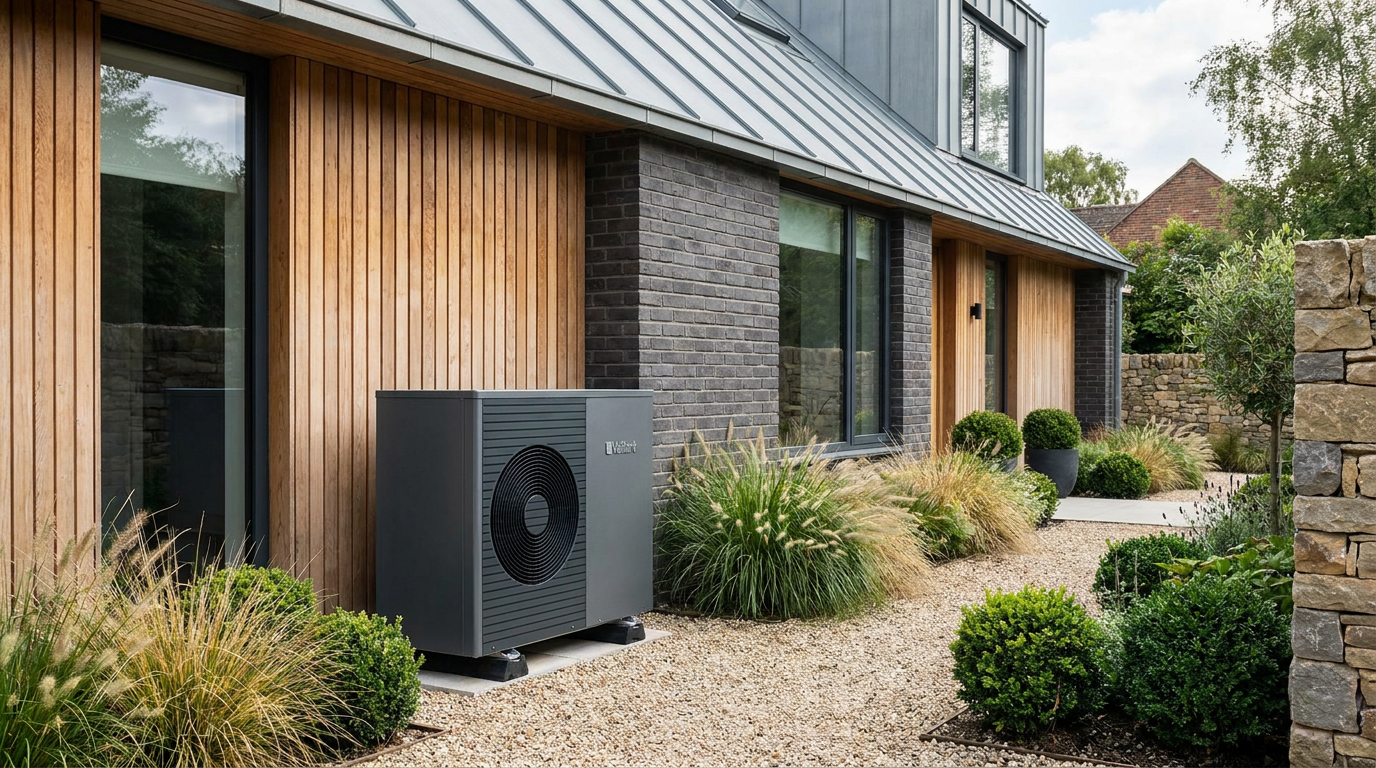
Unlike traditional furnaces or boilers that burn fuel to generate heat, heat pumps operate on a displacement principle. They use electricity and advanced refrigerants to absorb ambient heat from the outside air—even in sub-freezing temperatures—and transfer it indoors. During the summer, the cycle reverses, pulling heat out of the house to provide high-efficiency air conditioning. Because they move heat rather than create it, modern heat pumps can deliver up to three times more heating energy than the electrical energy they consume.[3]
This mechanical efficiency translates directly into household savings, though the exact financial return depends heavily on the home's previous heating fuel. According to energy analysts, the average household in the United States can save approximately $370 annually by making the switch. However, for homeowners transitioning away from expensive, inefficient systems like fuel oil, propane, or traditional electric resistance baseboards, those savings can approach $1,000 per year.[4]

Beyond monthly utility bills, the shift toward electric heating is being driven by a massive influx of government incentives, though the landscape of these programs has changed significantly in 2026. The widely utilized Section 25C federal tax credit, which previously offered up to $2,000 for air-source heat pumps, expired for new installations at the end of 2025. In its place, the focus has shifted to state-administered rebate programs funded by the Inflation Reduction Act.[2]
These state-level programs, such as the Home Electrification and Appliance Rebates (HEEHRA) and the HOMES performance-based rebates, are designed to lower the upfront cost of equipment at the point of sale. For income-qualified households—specifically those earning under 80 percent of their area's median income—HEEHRA can provide up to $8,000 toward a heat pump installation. Moderate-income households can access up to $4,000, making deep retrofits financially attainable for a broader demographic.[2]

Integrating a heat pump into an older home during a remodel requires careful logistical planning. For properties with existing, well-maintained ductwork, a central air-source heat pump can often be swapped in with minimal disruption, utilizing the home's current ventilation infrastructure. This "drop-in" approach keeps installation costs manageable while immediately upgrading the home's efficiency and comfort profile.[3]
However, many older homes—particularly those historically heated by radiators or baseboards—lack the necessary ductwork for a central system. In these cases, contractors frequently recommend ductless mini-split heat pumps. These systems feature a single outdoor compressor connected to multiple indoor air-handling units mounted on walls or ceilings. Mini-splits allow for precise, room-by-room temperature zoning, giving homeowners the ability to heat or cool only the spaces they are actively using.[3]
However, many older homes—particularly those historically heated by radiators or baseboards—lack the necessary ductwork for a central system.
While the technology itself is highly efficient, building science researchers caution that installing a heat pump in a drafty, poorly insulated house can lead to disappointing results. A "fabric first" approach is widely considered the gold standard for energy retrofits. This means prioritizing upgrades to the building envelope—such as adding attic insulation, sealing air leaks, and upgrading windows—before sizing and installing the new HVAC equipment.[6]

If a home loses heat rapidly through its walls and roof, a heat pump will be forced to run continuously at maximum capacity, driving up electricity usage and potentially failing to maintain comfortable indoor temperatures during extreme cold snaps. Studies evaluating retrofit outcomes have found that combining fabric improvements with a heat pump installation significantly improves system performance and reduces long-term running costs.[6]
In some cases, particularly in historic homes with solid masonry walls where deep insulation is cost-prohibitive, contractors must carefully balance the size of the heat pump with the home's inherent heat loss. Upgrading to larger radiators or installing low-temperature underfloor heating can help the system operate efficiently without requiring a complete gutting of the home's historical fabric.[6]
Another critical consideration during a heat pump retrofit is the home's electrical capacity. Transitioning from gas or oil heating to a fully electric system often increases the peak electrical load on the property. Many older homes still operate on 100-amp electrical panels, which may be insufficient to power a new heat pump alongside an electric stove, a heat pump water heater, and an electric vehicle charger.[1]
Consequently, electrical panel upgrades have become a standard companion project to HVAC retrofits. Recognizing this bottleneck, the federal rebate programs also include provisions to help cover the costs of electrical infrastructure upgrades, offering up to $4,000 for panel upgrades and $2,500 for associated wiring when completed as part of a broader home electrification project.[2]

The commercial sector is also experiencing a parallel surge in heat pump adoption. Driven by municipal electrification mandates and corporate decarbonization goals, commercial real estate owners are increasingly replacing fossil fuel boilers with large-scale heat pump systems. The global energy retrofit systems market is projected to reach $181.3 million in 2026, with HVAC upgrades representing the largest and fastest-growing segment of that investment.[5]
For commercial facilities managers, the decision to retrofit often hinges on long-term operational savings and compliance with looming emissions penalties. Hybrid systems—which pair a geothermal or air-source heat pump with a backup boiler for peak winter days—are emerging as a pragmatic stepping stone for large buildings, balancing capital expenditure with meaningful carbon reductions.[1]
Ultimately, the 2026 remodeling landscape reflects a maturation of the home improvement market. Homeowners are increasingly viewing their properties as integrated energy systems rather than just collections of rooms. By leveraging state rebates, prioritizing insulation, and embracing heat pump technology, a modern remodel can deliver not only a refreshed aesthetic but also decades of thermal comfort, improved indoor air quality, and insulation against volatile fossil fuel prices.[7]
How we got here
August 2022
The Inflation Reduction Act is signed into law, allocating billions for home energy rebates.
December 2025
The Section 25C federal tax credit for air-source heat pumps expires for new installations.
Early 2026
States begin rolling out localized HEEHRA and HOMES rebate programs to replace federal tax credits.
2026-2030
Projected rapid expansion of the energy retrofit market as electrification mandates take effect.
Viewpoints in depth
Energy Efficiency Advocates
Focus on the health and climate benefits of removing combustion appliances, alongside the long-term financial stability of electric heating.
Advocacy groups and government energy departments view heat pumps as the linchpin of residential decarbonization. They emphasize that removing combustion appliances from the home not only slashes greenhouse gas emissions but also eliminates the risk of carbon monoxide leaks and improves indoor air quality. From a financial perspective, these advocates argue that while the upfront cost of a heat pump can be high, the long-term insulation against volatile fossil fuel prices makes it a sound investment for homeowners.
HVAC Contractors & Trade Professionals
Emphasize the logistical realities of retrofitting, including the necessity of electrical panel upgrades and navigating complex rebate programs.
For the professionals executing these remodels, the focus is on the practical hurdles of installation. Contractors frequently point out that a heat pump retrofit is rarely a simple one-to-one swap. It often requires coordinating with electricians to upgrade 100-amp panels and navigating the bureaucratic complexities of state-administered rebate programs. They caution homeowners against simply buying the largest unit available, stressing that proper system sizing and ductwork evaluation are critical to preventing short-cycling and premature equipment failure.
Building Science Researchers
Argue that heat pumps must be paired with building envelope improvements to achieve true efficiency.
Building scientists advocate heavily for a 'fabric first' approach, warning that heat pumps are not a silver bullet for drafty, poorly insulated homes. They point to studies showing that installing a high-efficiency heat pump in a home with significant heat loss can lead to continuous operation, high electricity bills, and a failure to maintain comfortable temperatures during extreme cold. Their consensus is that remodeling budgets must first address attic insulation, air sealing, and window upgrades before the HVAC equipment is replaced.
What we don't know
- How quickly all 50 states will fully deploy their allocated IRA rebate funds.
- Whether local utility grids in older neighborhoods will require significant infrastructure upgrades to handle the surge in winter electrical demand.
Key terms
- Air-Source Heat Pump
- A system that transfers heat between the inside of a home and the outside air, providing both heating and cooling without burning fossil fuels.
- Ductless Mini-Split
- A type of heat pump that delivers conditioned air directly into individual rooms via wall or ceiling units, eliminating the need for ductwork.
- Building Envelope
- The physical separator between the conditioned and unconditioned environment of a building, including the roof, walls, windows, and foundation.
- HEEHRA
- The Home Electrification and Appliance Rebates program, a state-administered initiative funded by the Inflation Reduction Act to subsidize energy-efficient upgrades.
- Deep Energy Retrofit
- A comprehensive whole-home upgrade that significantly reduces energy consumption through a combination of insulation, air sealing, and high-efficiency HVAC systems.
Frequently asked
Do heat pumps work in freezing weather?
Yes. Modern cold-climate heat pumps use advanced refrigerants to extract heat from the outside air even when temperatures drop well below freezing.
Is the $2,000 federal tax credit still available in 2026?
No. The Section 25C federal tax credit for air-source heat pumps expired at the end of 2025, but it has been replaced by state-administered IRA rebates.
Do I need to replace my ductwork to install a heat pump?
Not necessarily. If your existing ductwork is in good condition, a central heat pump can use it. Alternatively, ductless mini-splits require no ductwork at all.
Why might I need an electrical panel upgrade?
Switching from gas or oil to an electric heat pump increases your home's electrical load, which older 100-amp panels often cannot safely support.
Sources
Source coverage
7 outlets
4 viewpoints surfaced







[1]Facilities DiveHVAC Contractors & Trade Professionals
Government decarbonization strategies call for widespread deployment of heat pumps
Read on Facilities Dive →[2]Budget HeatingHVAC Contractors & Trade Professionals
Inflation Reduction Act HVAC Incentives for 2026
Read on Budget Heating →[3]U.S. Department of EnergyEnergy Efficiency Advocates
Heat Pump Systems and Energy Savings
Read on U.S. Department of Energy →[4]Rewiring AmericaEnergy Efficiency Advocates
How much can you save with a heat pump?
Read on Rewiring America →[5]Fact.MRBuilding Science Researchers
Energy Retrofit Systems Market Analysis
Read on Fact.MR →[6]ClimateXChangeBuilding Science Researchers
Decarbonising heat while addressing fuel poverty
Read on ClimateXChange →[7]Factlen Editorial TeamFactlen Editorial Team
Synthesis by Factlen editorial team
Read on Factlen Editorial Team →
Every angle. Every day.
Get home stories with full source coverage and perspective breakdowns delivered to your inbox.