
SpaceX Executes Largest IPO in History, Reaching $2.1 Trillion Valuation on Debut
SpaceX raised a record-shattering $75 billion in its Nasdaq debut, instantly becoming the world's sixth most valuable public company and pushing CEO Elon Musk's net worth past $1.2 trillion.
By Factlen Editorial Team
- Institutional Investors
- Focused on the massive $2.1 trillion valuation and the precedent set for upcoming AI mega-IPOs.
- Space Economy Builders
- Viewing the IPO as the ultimate validation of commercial space infrastructure and orbital development.
- Retail Investors
- Enthusiastic participants driving massive oversubscription based on the generational growth story.
- Local Communities
- Bracing for the localized economic impact and wealth trickle-down from the massive liquidity event.
What's not represented
- · Traditional Aerospace Competitors
- · Tax Policy Advocates
Why this matters
The SpaceX IPO is the largest liquidity event in financial history, fundamentally reshaping the global stock market and assigning a definitive price tag to the commercial space economy. For everyday investors, it opens public access to the defining aerospace and AI infrastructure company of the century, while setting a massive precedent for upcoming mega-listings from AI giants.
Key points
- SpaceX raised $75 billion in its Nasdaq debut, shattering the previous IPO record held by Saudi Aramco.
- Shares surged 19 percent on the first day of trading, closing at $160.95 and valuing the company at $2.1 trillion.
- The massive liquidity event pushed CEO Elon Musk's net worth past $1.2 trillion, making him the first trillionaire.
- SpaceX bypassed traditional Wall Street bookbuilding, offering a fixed price of $135 per share.
- Major index providers like Nasdaq and Russell rewrote their rules to fast-track the mega-cap company into their indexes.
- The capital raise will fund the continued development of the Starship rocket and orbital AI data centers.
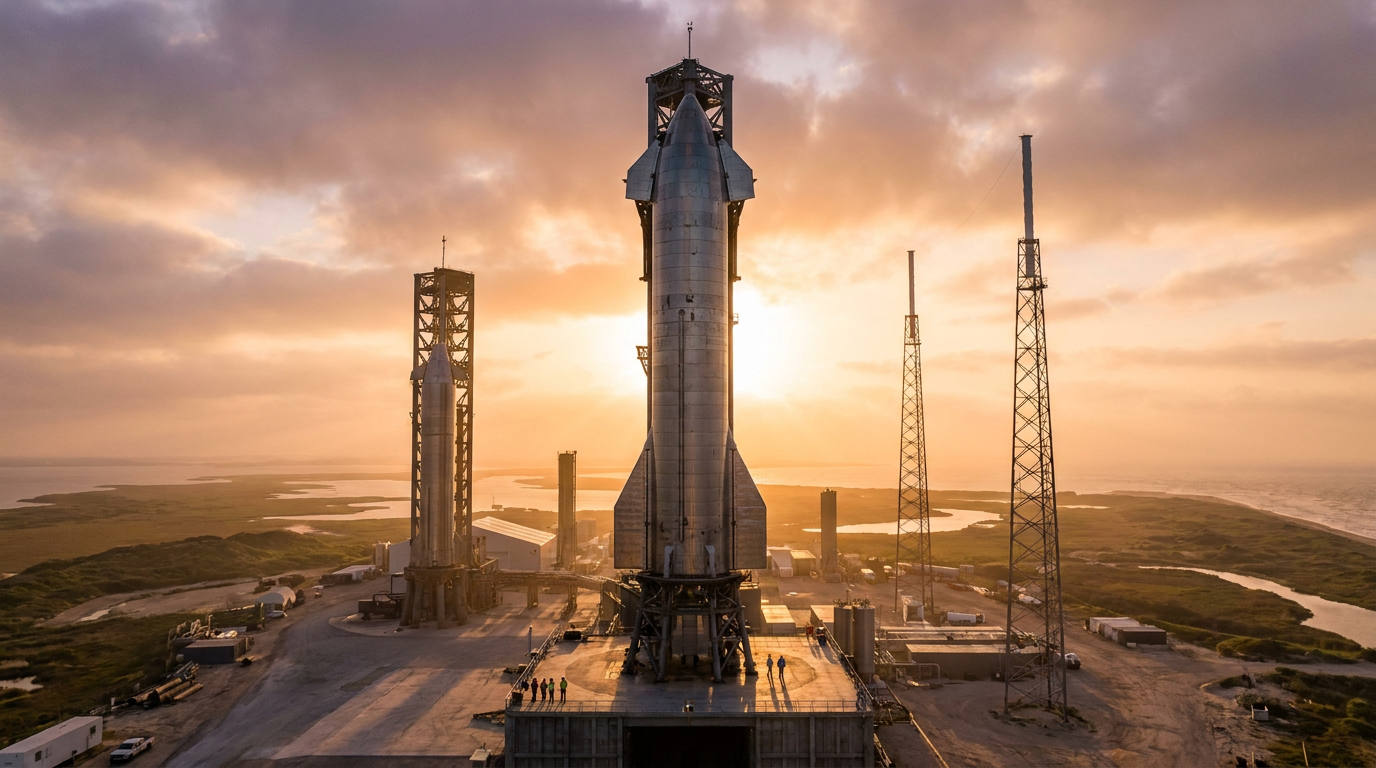
On June 12, 2026, the financial history books were rewritten as Space Exploration Technologies Corp. made its long-awaited debut on the Nasdaq. Trading under the ticker SPCX, the rocket and satellite manufacturer executed the largest initial public offering ever recorded, raising a staggering $75 billion. The sheer scale of the liquidity event eclipsed the previous record holder—Saudi Aramco’s $29 billion debut in 2019—by more than double, fundamentally altering the landscape of global capital markets.[4][5]
The market's reception was nothing short of euphoric. Bypassing the traditional Wall Street price-discovery process, SpaceX set a fixed, take-it-or-leave-it listing price of $135 per share. When public trading commenced just before midday, the stock immediately popped to $150 and climbed as high as $176 before settling at $160.95 at the closing bell. That 19 percent first-day surge cemented a market capitalization of roughly $2.1 trillion, instantly making SpaceX the sixth most valuable publicly traded company on Earth.[4][7]
The astronomical valuation also pushed chief executive Elon Musk across a historic threshold. Retaining a 42 percent ownership stake and 82 percent of the voting power, Musk’s net worth surged by nearly $100 billion in a single trading session. By the end of the day, his total wealth eclipsed $1.2 trillion, making him the world’s first trillionaire and cementing his unprecedented financial influence across the aerospace, automotive, and artificial intelligence sectors.[1][4]

For the broader space economy, the IPO represents a watershed moment of validation. For decades, the commercial space sector has operated on venture capital, government contracts, and long-horizon promises. Now, the public market has finally assigned a definitive price tag to the industry's premier infrastructure builder. Executives across the sector, including those at space infrastructure firms like Redwire, noted that the successful debut proves institutional capital is ready to underwrite the massive costs of orbital development.[3]
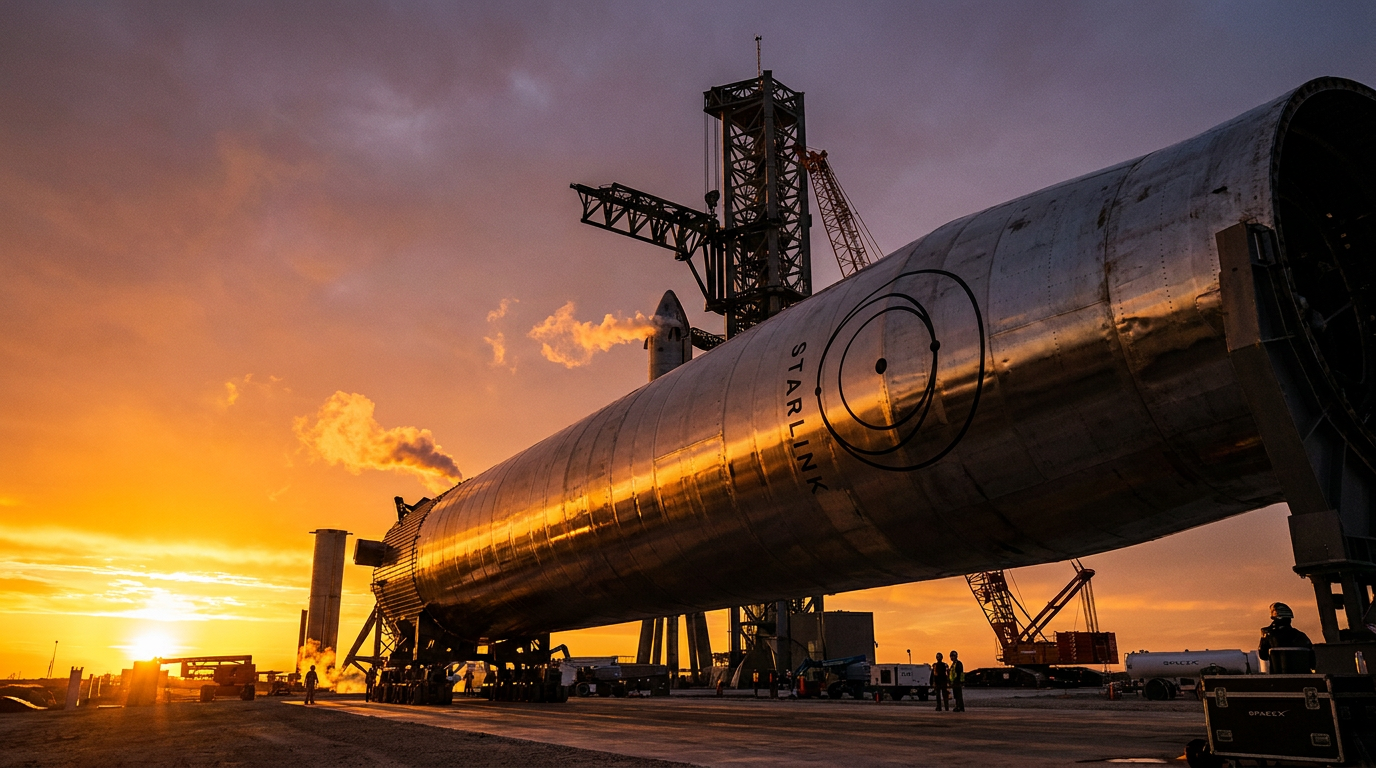
The engine driving this investor frenzy is Starlink, SpaceX’s satellite internet constellation. According to the company's S-1 prospectus, Starlink now boasts 10.3 million active subscribers across 164 countries, generating the lion's share of the company's $18.7 billion in 2025 revenue. Operating more than 75 percent of all active maneuverable satellites in low Earth orbit, Starlink has established a near-monopoly on space-based connectivity, providing the cash flow necessary to fund the company's more experimental ventures.[5]
The engine driving this investor frenzy is Starlink, SpaceX’s satellite internet constellation.
Yet, SpaceX's pitch to Wall Street extended far beyond rockets and routers. The company leaned heavily into the artificial intelligence boom, highlighting its recent acquisition of Musk’s xAI subsidiary. In its filings, SpaceX outlined a staggering $28.5 trillion total addressable market, with roughly 90 percent of that figure attributed to AI infrastructure. The company’s long-term roadmap includes deploying massive data centers in orbit to support the immense computing power required by next-generation AI models.[5][6]

Despite the towering valuation, traditional financial metrics reveal a company still in its heavy-investment phase. Unlike the highly profitable tech giants it now rivals in market cap—such as Apple, Alphabet, and Nvidia—SpaceX remains unprofitable. The company reported an $8.7 billion loss between the start of 2025 and March 2026, driven by the capital-intensive development of its next-generation Starship rocket and the rapid expansion of its satellite network. Investors are effectively paying a premium for future dominance rather than current dividends.[5][7]
The sheer gravity of the $2.1 trillion debut forced the financial ecosystem to adapt on the fly. Major index providers, including Nasdaq and Russell, scrambled to rewrite their inclusion rules to accommodate the mega-cap listing. Under new fast-track provisions, companies with market caps that would place them in the top 40 of the Nasdaq-100 can now be included after just 15 days of trading, ensuring that passive index funds will soon be forced to absorb billions of dollars in SPCX shares.[6]
The liquidity event is also sending shockwaves through the private markets and alternative exchanges. Crypto firms and blockchain-based trading platforms, which had spent years attempting to build secondary markets for private SpaceX shares, faced a major stress test as the company transitioned to the Nasdaq. While the results were mixed, the massive retail demand—reportedly exceeding $100 billion in pre-IPO orders—demonstrated the growing appetite for democratized access to generational tech companies.[4][8]

On a local level, the IPO is poised to transform the communities hosting SpaceX's sprawling operations. In Bastrop, Texas, a town of just 14,000 residents where Musk has built a massive manufacturing complex, locals are bracing for the economic ripple effects. As early employees and engineers unlock their equity, the sudden influx of liquid wealth is expected to drive a localized boom in real estate, small business development, and regional infrastructure.[2]
Looking ahead, Wall Street analysts view the SpaceX debut as the opening salvo in a new era of mega-IPOs. With AI heavyweights Anthropic and OpenAI reportedly preparing for their own public listings later this year, the market's enthusiastic absorption of SpaceX's $75 billion raise suggests that institutional appetite for capital-intensive moonshots remains robust. If these subsequent offerings follow suit, 2026 is on track to become the largest year for US equity issuance in history.[6][7]

Ultimately, the historic IPO serves a singular, stated purpose for its founder. The $75 billion war chest is earmarked for the continued development of Starship and the infrastructure required to establish a permanent human presence on Mars. By successfully tapping the public markets at an unprecedented scale, SpaceX has secured the financial runway to pursue what its prospectus describes as its ultimate mission: extending the light of consciousness to the stars.[4]
How we got here
2002
Elon Musk founds Space Exploration Technologies Corp. with the goal of reducing space transportation costs.
2019
Saudi Aramco sets the previous global IPO record by raising $29 billion.
February 2026
SpaceX acquires Musk's artificial intelligence company, xAI, expanding its total addressable market.
May 20, 2026
SpaceX publicly files its S-1 prospectus with the SEC, revealing its financials and subscriber counts.
June 3, 2026
The company sets a fixed IPO price of $135 per share, bypassing traditional Wall Street price discovery.
June 12, 2026
SpaceX debuts on the Nasdaq, raising $75 billion and closing with a $2.1 trillion valuation.
Viewpoints in depth
Institutional Investors
Focused on the massive valuation and the precedent set for upcoming AI mega-IPOs.
For Wall Street institutions, the SpaceX IPO is less about rockets and more about the sheer scale of capital absorption. Analysts point out that the market's willingness to hand $75 billion to an unprofitable company signals a massive appetite for generational growth stories. Furthermore, institutions view this debut as a critical test run for the upcoming public listings of AI giants like Anthropic and OpenAI, proving that the market can digest trillion-dollar debuts without breaking.
Space Economy Builders
Viewing the IPO as the ultimate validation of commercial space infrastructure.
Executives and founders across the commercial space sector see the SpaceX debut as the moment their industry finally received a public price tag. For years, space infrastructure companies have relied on venture capital and government contracts. By proving that public markets will enthusiastically back a $2.1 trillion space conglomerate, SpaceX has effectively lowered the cost of capital for the entire sector, validating business models ranging from orbital manufacturing to satellite servicing.
Market Regulators & Index Providers
Grappling with the scale of the listing and forcing fast-track inclusion rules.
The unprecedented size of the SpaceX offering forced the plumbing of the stock market to adapt overnight. Index providers like Nasdaq and Russell had to rewrite their inclusion rules to fast-track the company into their top tiers, recognizing that excluding a $2.1 trillion entity would render their indexes unrepresentative of the broader market. This rapid adaptation highlights the growing power of mega-cap tech companies to dictate terms to traditional financial institutions.
Retail Investors
Enthusiastic participants driving massive oversubscription based on the generational growth story.
Retail investors flooded brokerages with over $100 billion in pre-IPO orders, driven by a belief in Elon Musk's vision of a multiplanetary future and the dominance of the Starlink network. For this camp, traditional valuation metrics like price-to-earnings ratios are secondary to the company's monopoly on low Earth orbit and its ambitious AI roadmap. They view the stock as a long-term hold, willing to weather current unprofitability for the promise of future technological supremacy.
What we don't know
- How quickly SpaceX can transition from its heavy-investment phase into consistent profitability.
- Whether the massive influx of passive index fund capital will artificially inflate the stock's volatility in its first few months of trading.
- How the successful debut will impact the exact timing and pricing of upcoming AI mega-IPOs from Anthropic and OpenAI.
Key terms
- Initial Public Offering (IPO)
- The process of offering shares of a private corporation to the public in a new stock issuance, allowing everyday investors to buy in.
- Market Capitalization
- The total dollar market value of a company's outstanding shares of stock, calculated by multiplying the stock price by the total number of shares.
- Total Addressable Market (TAM)
- The overall revenue opportunity that is available to a product or service if 100% market share was achieved.
- Bookbuilding
- The traditional process by which an underwriter attempts to determine the price at which an IPO will be offered, which SpaceX notably bypassed.
- Low Earth Orbit (LEO)
- An Earth-centered orbit with an altitude of 2,000 kilometers or less, where SpaceX's Starlink satellites operate to provide internet connectivity.
Frequently asked
What was the SpaceX IPO price?
SpaceX bypassed traditional Wall Street price discovery, setting a fixed listing price of $135 per share.
How much money did SpaceX raise?
The company raised $75 billion, making it the largest initial public offering in global financial history.
Is SpaceX a profitable company?
Not currently. The company reported an $8.7 billion loss over the last 15 months due to heavy investments in Starship and satellite infrastructure.
What is SpaceX's stock ticker symbol?
SpaceX trades on the Nasdaq exchange under the ticker symbol SPCX.
How did the IPO affect Elon Musk's wealth?
The successful debut pushed Musk's net worth past $1.2 trillion, making him the world's first trillionaire.
Sources
Source coverage
8 outlets
4 viewpoints surfaced







[1]ForbesRetail Investors
Musk’s Net Worth Surges Nearly $100 Billion More—Hitting $1.2 Trillion As SpaceX Soars 11%
Read on Forbes →[2]NYTLocal Communities
Will SpaceX Fortunes Trickle Down to This Texas Town?
Read on NYT →[3]BloombergSpace Economy Builders
Redwire and the Space Infrastructure Boom
Read on Bloomberg →[4]The GuardianRetail Investors
SpaceX makes history with largest stock market debut, making Elon Musk a trillionaire
Read on The Guardian →[5]CBS NewsInstitutional Investors
SpaceX IPO leapfrogs Saudi Aramco as largest global public offering
Read on CBS News →[6]The Washington PostInstitutional Investors
Wall Street rewrites rules for AI giants following SpaceX debut
Read on The Washington Post →[7]MorningstarInstitutional Investors
SpaceX IPO shows appetite for moonshots amid inflation concerns
Read on Morningstar →SpaceX IPO Stress Tests Crypto’s Bid to Reinvent Stock Markets
Read on Bloomberg →
Every angle. Every day.
Get business stories with full source coverage and perspective breakdowns delivered to your inbox.