
The $70 Billion Loop: How the EV Battery Supply Chain is Finally Going Circular
As the first major wave of electric vehicles ages, a booming $16 billion recycling industry is transforming dead batteries into 'black mass' to recover up to 99% of critical minerals. But a short-term shortage of scrap is testing the sector's resilience.
By Factlen Editorial Team
- Circular Economy Advocates
- View battery recycling as an ecological imperative that eliminates the need for destructive virgin mining.
- Automotive Manufacturers
- Focus on securing domestic supply chains and complying with strict new recycled-content regulations.
- Supply Chain Pragmatists
- Highlight the short-term financial risks and logistical hurdles of scaling recycling before end-of-life volumes peak.
What's not represented
- · Local communities near planned recycling hubs
- · Traditional mining companies facing demand shifts
Why this matters
The transition from mining virgin ores to recycling old batteries ensures that the clean energy revolution doesn't create a new ecological crisis. For consumers, a robust circular supply chain will ultimately drive down the cost of electric vehicles and consumer electronics while securing domestic energy independence.
Key points
- The global battery recycling market has reached $16.4 billion in 2026 and is projected to hit $70 billion by 2040.
- Advanced chemical processes can now recover up to 99% of critical minerals from dead batteries.
- Recycled battery materials can reduce the carbon emissions of new battery production by up to 40%.
- A current shortage of end-of-life batteries, known as the 'scrap gap,' has caused financial distress for some early recycling startups.
- New EU mandates require at least 25% of materials in new EV batteries to come from recycled sources.
The global transition to electric vehicles has long harbored a dirty secret: the linear, extraction-heavy nature of its supply chain. For years, the industry relied entirely on mining virgin lithium, cobalt, and nickel from geographically concentrated regions, raising severe environmental and geopolitical concerns. But in 2026, the narrative is fundamentally shifting. The automotive and energy sectors are rapidly scaling a "circular supply chain," a closed-loop system designed to recover and reuse the critical minerals from end-of-life batteries. It is a transformation that promises to turn the world's aging EV fleets into the most lucrative mines on the planet.[1][6]
The economics driving this shift are staggering. The global electric vehicle battery recycling market has reached an estimated $16.4 billion in 2026, up from roughly $13 billion just a year prior. According to projections from McKinsey & Company, revenues across the battery recycling chain are expected to surge to between $70 billion and $95 billion annually by 2040. This explosive growth is fueled by a simple mathematical reality: a standard 75-kilowatt-hour battery pack contains more than $2,000 worth of recoverable metals. Extracting those metals from old cars is rapidly becoming more cost-effective than pulling them from the earth.[1][2]
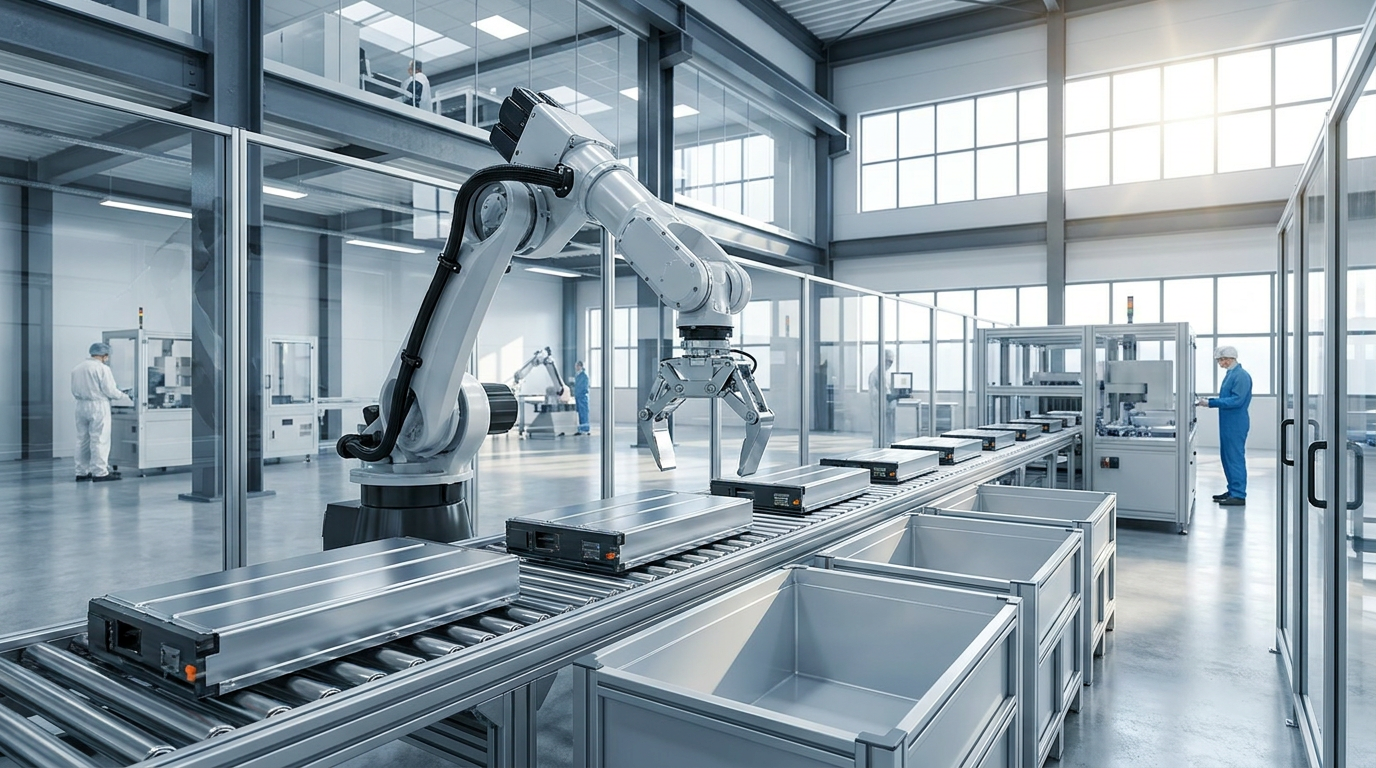
To understand how this circular economy functions, one must look at the mechanism of modern battery recycling. The process begins when an end-of-life battery pack is safely discharged and mechanically shredded. This shredding produces a mineral-rich powder industry insiders refer to as "black mass." This dark sludge contains the highly valuable cathode and anode materials that make energy storage possible. From there, the black mass undergoes advanced refining to separate the individual elements so they can be reintroduced into the manufacturing line.[1][6]

Currently, the industry relies on two primary refining pathways. Pyrometallurgy involves high-temperature smelting, which is effective but energy-intensive and often loses the lithium in the process. The increasingly preferred method in 2026 is hydrometallurgy, a chemical leaching process that uses liquid solvents to dissolve the black mass. Hydrometallurgical facilities can achieve astonishing recovery rates, reclaiming between 95% and 99% of the cobalt, nickel, and copper, and up to 95% of the lithium. These recovered materials are virtually indistinguishable from virgin mined metals.[1]
The environmental implications of these recovery rates are profound. By substituting recycled materials for newly mined ores, battery manufacturers can slash the carbon emissions associated with battery production by 30% to 40%. Furthermore, closed-loop recycling drastically reduces the industry's reliance on environmentally degrading mining practices, such as water-intensive lithium extraction in South America or cobalt mining in the Democratic Republic of Congo. It represents a rare scenario where economic incentives perfectly align with ecological preservation.[1][2]

Leading the charge in the United States is Redwood Materials, founded by former Tesla executive JB Straubel. Operating the largest lithium-ion battery recycling facility outside of Asia at its Tahoe Campus in Nevada, Redwood currently processes over 20 gigawatt-hours of batteries annually. That is enough material to supply hundreds of thousands of new electric vehicles. By capturing production scrap and end-of-life consumer devices, Redwood has effectively created the largest active lithium and cobalt "mine" in North America, entirely above ground.[1]
The push for circularity is not limited to electric vehicles; consumer electronics giants are also closing the loop. In early 2026, Samsung Electronics implemented a fully closed-loop recycling system for its flagship Galaxy S25 smartphones. By partnering with regional extraction plants, Samsung now recovers cobalt directly from discarded older-generation Galaxy batteries, refining it into new cathode materials for their latest devices. This micro-level circularity proves that the closed-loop model can be scaled across different form factors and industries.[5]
The push for circularity is not limited to electric vehicles; consumer electronics giants are also closing the loop.
Governments are aggressively accelerating this transition through targeted industrial policy. In the European Union, the updated Battery Regulation now mandates a minimum recycling efficiency of 65% for lithium-ion batteries, a target that will rise to 70% by 2030. More critically, the European Critical Raw Materials Act requires that at least 25% of the materials used in new EV batteries must be sourced from European recycling facilities. These mandates are forcing automakers to design vehicles with end-of-life disassembly in mind.[1][2]
Similar policy tailwinds are reshaping the landscape in the United Kingdom and the United States. In April 2026, the UK government awarded £18.5 million to clean technology company Altilium to construct the country's first commercial refinery for critical battery materials. Located in Plymouth, the facility will process 24,000 EV batteries annually, producing high-value intermediates like nickel mixed hydroxide precipitate and lithium sulfate. Meanwhile, the US Inflation Reduction Act continues to provide lucrative tax credits for domestically sourced recycled battery materials.[4][6]
However, despite the massive long-term potential, the recycling sector is currently navigating a painful structural bottleneck known as the "scrap gap." The industry aggressively built out processing capacity in anticipation of a tidal wave of dead EV batteries. But because modern electric vehicle batteries are lasting significantly longer than early estimates predicted—often outliving the chassis of the car itself—that wave has not yet arrived. The International Energy Agency notes that the vast majority of recycling feedstock today comes from factory manufacturing scrap, not end-of-life vehicles.[3][6]

This timing mismatch has created severe turbulence for several high-profile recycling startups. In April 2026, Ascend Elements, a major US battery materials firm, filed for Chapter 11 bankruptcy protection. Despite securing hundreds of millions in Department of Energy grants, the company struggled with delayed project timelines and a lack of immediate feedstock. Similarly, Canadian recycler Li-Cycle entered creditor protection in late 2025 after facing massive cost overruns. The sector is currently undergoing a brutal sorting phase, separating companies with the capital to wait out the scrap gap from those that expanded too quickly.[3]
Logistics present another formidable challenge to the circular supply chain. End-of-life electric vehicle batteries are heavy, bulky, and classified as hazardous materials due to the risk of thermal runaway and fire. Transporting these massive packs across state or national borders to centralized recycling hubs is incredibly expensive and heavily regulated. To optimize the supply chain, the industry must develop decentralized "spoke" facilities that can safely shred batteries locally, shipping only the dense, inert black mass to central "hub" refineries.[1][6]
Looking ahead, technological shifts in battery chemistry introduce a layer of uncertainty. The rapid rise of Lithium Iron Phosphate (LFP) batteries, which are cheaper and safer but contain no high-value cobalt or nickel, alters the economic calculus of recycling. Recovering lithium from LFP cells is technically feasible but yields lower profit margins than processing traditional nickel-manganese-cobalt (NMC) batteries. Recyclers must continuously adapt their hydrometallurgical processes to remain profitable regardless of which chemistry dominates the automotive market.[1][2]

Furthermore, the looming commercialization of solid-state batteries could require entirely new recycling infrastructure. Because solid-state cells replace the liquid electrolyte with a solid conductive material, the mechanical shredding and chemical leaching steps will need to be re-engineered. The recyclers that survive the current market consolidation will be those that invest heavily in flexible, chemistry-agnostic processing technologies.[2][6]
Ultimately, the establishment of a closed-loop battery supply chain is not merely an environmental preference; it is an industrial necessity. The global transition to clean energy cannot be sustained by finite terrestrial mining. By transforming the millions of electric vehicles currently on the road into the strategic mineral reserves of tomorrow, the recycling industry is building a resilient, low-carbon foundation for the future of transportation. The road to true circularity is currently bumpy, but the destination promises to rewrite the geopolitics of energy.[1][2][6]
How we got here
2022
The US Inflation Reduction Act passes, providing lucrative tax credits for domestically sourced recycled battery materials.
2025
The European Union implements regulations mandating a 65% recycling efficiency for all lithium-ion batteries.
Late 2025
The 'scrap gap' begins to squeeze the industry, leading to financial restructuring for early players like Li-Cycle.
April 2026
The UK government awards £18.5 million to Altilium to build the country's first commercial EV battery refinery.
2030
EU recycling efficiency mandates will rise to 70%, coinciding with the expected arrival of millions of end-of-life EVs.
Viewpoints in depth
Established Recyclers
Companies with deep capital reserves are scaling operations to dominate the future market.
Well-funded operators like Redwood Materials view the current market as a land grab. By securing massive contracts to process factory manufacturing scrap today, they are building the infrastructure and logistical networks necessary to process the tidal wave of end-of-life vehicles expected in the 2030s. They argue that early scale is the only way to achieve cost parity with virgin mining.
Automakers & OEMs
Car manufacturers are treating recycling as a regulatory and supply-chain security imperative.
For global automakers, battery recycling is no longer just an environmental initiative; it is a compliance requirement. With the EU mandating that 25% of battery materials come from recycled sources, companies like BMW and Volkswagen are actively redesigning their battery packs to be easily disassembled. They view closed-loop systems as the ultimate hedge against volatile commodity prices and geopolitical export controls.
Market Skeptics
Analysts warning that the transition to circularity will be financially turbulent.
Financial pragmatists point to the recent bankruptcies of companies like Ascend Elements as proof that the recycling sector expanded too fast. They warn that the 'scrap gap' could last for several more years as EV batteries prove more durable than expected. Furthermore, they note that the rising popularity of cheaper Lithium Iron Phosphate (LFP) batteries—which lack high-value metals like cobalt—could severely compress the profit margins of recycling operations.
What we don't know
- Exactly when the 'scrap gap' will close and end-of-life vehicle volumes will finally surpass factory manufacturing scrap.
- How the increasing market share of cheaper Lithium Iron Phosphate (LFP) batteries will impact the long-term profitability of recyclers.
- Whether the commercialization of solid-state batteries will require recyclers to completely overhaul their current chemical leaching infrastructure.
Key terms
- Closed-loop supply chain
- A system where materials from an end-of-life product are recovered and directly reused to manufacture the exact same type of product.
- Hydrometallurgy
- A chemical recycling process that uses liquid solvents to dissolve battery materials and separate individual critical minerals with high purity.
- Black Mass
- The shredded, crushed remains of a lithium-ion battery that contains a mixture of valuable metals waiting to be chemically refined.
- Scrap Gap
- The current period where recycling capacity exceeds the available supply of end-of-life batteries, forcing recyclers to rely primarily on factory manufacturing scrap.
- Cathode Active Material (CAM)
- The highly engineered chemical compounds containing lithium, nickel, and cobalt that determine a battery's capacity and power.
Frequently asked
What is 'black mass'?
Black mass is the industry term for the dark, mineral-rich powder created when an end-of-life lithium-ion battery is mechanically shredded. It contains valuable metals like lithium, cobalt, and nickel.
Why are some battery recycling companies struggling?
Many companies built massive processing facilities expecting a wave of dead EV batteries, but modern batteries are lasting longer than expected. This 'scrap gap' has left some recyclers without enough raw material to sustain operations.
Can all battery materials be recycled?
Yes, using advanced hydrometallurgical processes, recyclers can recover up to 99% of the critical metals (like cobalt and nickel) and up to 95% of the lithium from a spent battery.
How does recycling reduce carbon emissions?
Extracting and refining metals from old batteries requires significantly less energy than mining virgin ores from the earth, reducing the carbon footprint of battery production by 30% to 40%.
Sources
Source coverage
6 outlets
3 viewpoints surfaced






[1]Energy SolutionsCircular Economy Advocates
EV Battery Recycling 2026: Complete Process Guide, Top Companies, Costs & Regulations
Read on Energy Solutions →[2]McKinsey & CompanySupply Chain Pragmatists
Battery recycling: The $70 billion circular economy
Read on McKinsey & Company →[3]Resource RecyclingSupply Chain Pragmatists
Battery recycler Ascend Elements files for bankruptcy
Read on Resource Recycling →[4]AltiliumAutomotive Manufacturers
Altilium awarded £18.5M to build UK's first commercial EV battery refinery
Read on Altilium →[5]SamsungAutomotive Manufacturers
Inside Samsung's Circular Battery Supply Chain
Read on Samsung →[6]Factlen Editorial TeamCircular Economy Advocates
Synthesis by Factlen editorial team
Read on Factlen Editorial Team →
Every angle. Every day.
Get business stories with full source coverage and perspective breakdowns delivered to your inbox.