
Hub Motor vs. Mid-Drive: Which E-Bike Architecture Is Right for You?
Choosing the right electric bike comes down to a fundamental choice in motor placement. We break down the costs, maintenance, and performance trade-offs of hub and mid-drive systems.
By Factlen Editorial Team
- Urban Commuters & Budget Riders
- Prioritizes affordability, low maintenance, and effortless riding on flat terrain.
- Off-Road & Hilly Terrain Cyclists
- Prioritizes torque, natural ride feel, and balanced handling for varied elevation.
- E-Bike Mechanics & Technicians
- Focuses on long-term durability, serviceability, and component wear.
What's not represented
- · Cargo Bike Couriers
- · E-Bike Battery Recyclers
Why this matters
The motor you choose dictates not only the upfront cost of your e-bike, but how it handles hills, how often it needs maintenance, and whether it feels like a bicycle or a moped. Getting this decision wrong can lead to expensive buyer's remorse.
Key points
- Hub motors are generally more affordable and require less maintenance, making them ideal for flat urban commutes.
- Mid-drive motors leverage the bicycle's gears, providing massive torque for steep hills and off-road trails.
- Hub motors operate independently of the drivetrain, meaning they do not accelerate wear on the chain or cassette.
- Mid-drive systems offer a more balanced center of gravity and a natural pedaling feel thanks to advanced torque sensors.
- Buyers should choose based on their local terrain and willingness to perform routine drivetrain maintenance.
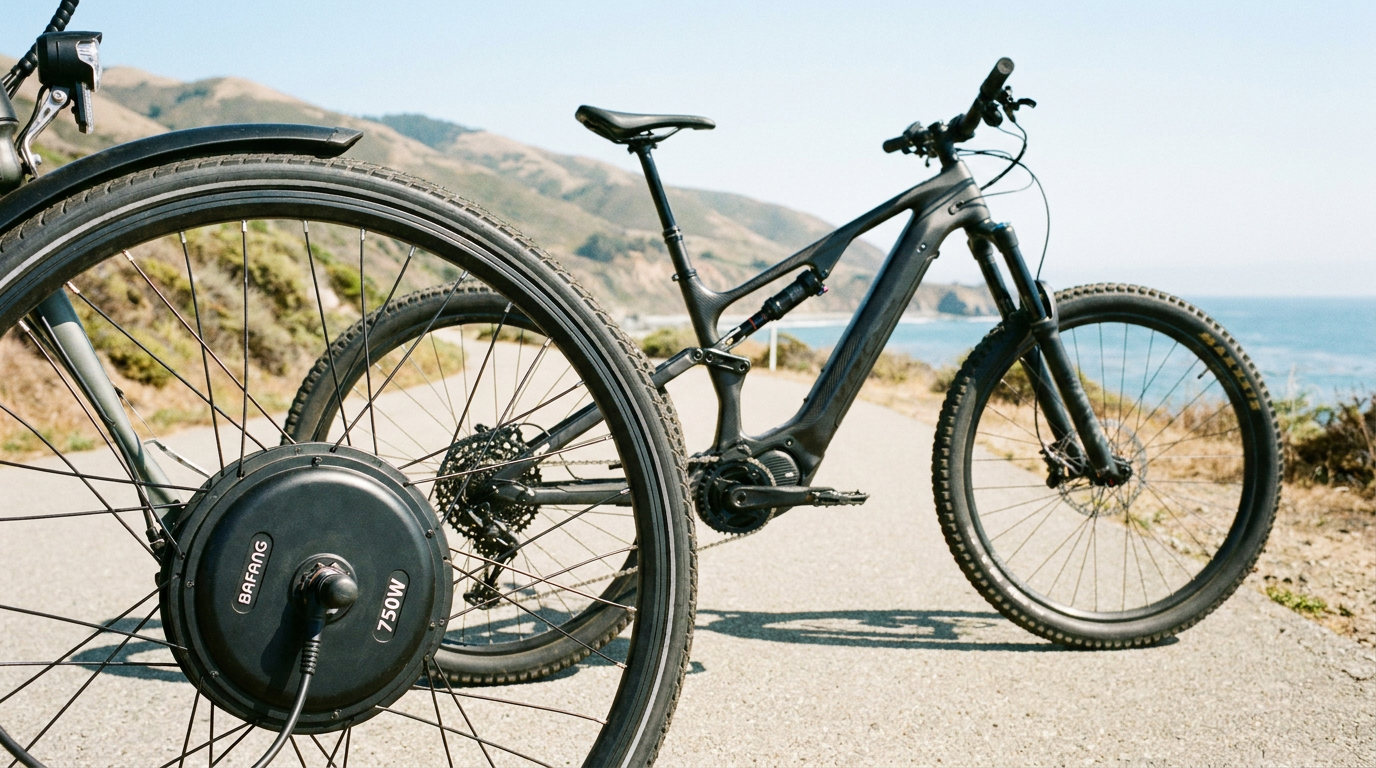
The electric bike market has matured past the early days of bulky batteries and clunky wiring, leaving buyers with a dizzying array of sophisticated options. Yet, beneath the marketing jargon and sleek frame designs, the most consequential decision a rider must make comes down to a single component: the motor. Specifically, buyers must choose between a hub motor, which sits inside the center of the wheel, and a mid-drive motor, which is integrated directly into the bike's pedal crank. This choice is the foundation of the entire e-bike experience.[8]
This architectural difference dictates entirely how the bike handles, how much it costs, and how it conquers varying terrain. It is not merely a matter of premium versus budget components, but a fundamental divergence in mechanical philosophy and engineering. Understanding the specific trade-offs between these two distinct systems is the difference between purchasing a machine that feels like a natural, intuitive extension of your own legs and one that feels like a heavy, cumbersome scooter you are constantly fighting to control on tight corners and steep inclines.[1][5]
To make a truly informed investment in an electric bicycle, buyers must carefully weigh the evidence across three primary battlegrounds that define the ownership experience. First, they must consider the upfront purchase cost versus the long-term maintenance requirements and potential repair bills. Second, they must evaluate raw motor power versus mechanical efficiency, particularly when navigating steep hills or carrying heavy cargo. Finally, they must account for the highly subjective 'feel' of the ride, which varies wildly depending on how the motor senses the rider's effort and delivers its electrical assistance.[3]
The case for the hub motor begins with its brilliant mechanical simplicity and broad accessibility for everyday consumers. Because the motor is housed entirely within the front or rear wheel hub, it operates completely independently of the bicycle's standard drivetrain. This mechanical isolation is arguably its greatest strength in daily use. A hub motor simply spins the wheel directly to propel the bike forward, meaning it does not add any extra torque or stress to the bicycle's chain, cassette, or derailleurs, thereby preserving the lifespan of those traditional cycling components.[4][7]

Evidence of this distinct advantage is most apparent when reviewing long-term maintenance logs and repair bills. Hub motors are generally sealed, self-contained units that require virtually zero routine internal upkeep from the owner, making them incredibly reliable year after year. Furthermore, if a rider snaps a chain or damages a derailleur while out on a long ride, a hub-motor e-bike equipped with a throttle can still be driven home entirely on electric power. This provides a crucial level of mechanical redundancy and peace of mind that mid-drive systems simply cannot offer to daily commuters.[3][4]
Cost is the other major, undeniable argument for the hub motor architecture. Because these motors have been manufactured in massive global volumes for years and do not require custom, proprietary frame designs to mount, they are significantly cheaper to produce and install at the factory level. A reliable, well-built hub-motor e-bike typically retails between $1,200 and $2,500, making it the undisputed champion of budget-friendly commuting. This lower barrier to entry has successfully opened the door to electric cycling for a much wider demographic of riders who might otherwise be priced out.[4][6]
However, the arguments against hub motors become glaringly obvious the moment the road tilts upward into mountainous territory. Because a hub motor drives the wheel directly, it cannot take advantage of the bicycle's mechanical gears to ease its workload. When a rider hits a steep incline, the motor is forced to work at a very low RPM under massive physical load. This rapid loss of efficiency not only quickly drains the battery, but it can also lead to the motor overheating and temporarily shutting down to protect itself on long, sustained climbs.[1][5]
Additionally, hub motors fundamentally alter the bike's overall weight distribution and handling dynamics. Placing a heavy, copper-wound motor in the rear wheel makes the bike noticeably back-heavy, which can complicate lifting the bike over curbs, carrying it up apartment stairs, or loading it onto a vehicle rack. Finally, many budget hub motors rely on basic cadence sensors, which deliver power based simply on whether the pedals are turning, regardless of effort. This results in a ride that can feel jerky or like being artificially 'pushed' from behind, rather than naturally and smoothly assisted.[4][7]
Additionally, hub motors fundamentally alter the bike's overall weight distribution and handling dynamics.
The case for the mid-drive motor is built entirely around maximizing mechanical leverage, optimizing battery efficiency, and delivering a premium ride quality. Positioned directly at the bottom bracket between the pedals, a mid-drive motor powers the front chainring rather than the wheel itself. This means it sends its electrical force through the bike's chain and rear gears in the exact same manner that the rider's own legs do, creating a highly synergistic and mechanically harmonious relationship between human effort and machine assistance.[2]
The evidence for this system's superiority shines brightest on steep, challenging terrain where raw power alone is not enough. Because the motor utilizes the bike's rear cassette, a rider can shift into a low gear for a steep climb, giving the motor a massive mechanical advantage. The motor continues spinning at its optimal, highly efficient RPM while the gearing converts that speed into raw, stump-pulling torque at the rear wheel. This mechanical leverage allows mid-drives to easily conquer steep hills and rugged trails that would completely stall a comparable hub motor.[1][5]

This mechanical efficiency translates directly to extended riding range, which is a critical metric for serious cyclists. By leveraging the bicycle's gears, mid-drive motors use battery power much more conservatively when navigating varied elevation and changing wind conditions. Industry testing and real-world data consistently show that a mid-drive system can squeeze an additional 10 to 15 miles of range out of the exact same capacity battery compared to a hub motor, allowing riders to easily push past the 40-mile mark on a single charge without experiencing range anxiety.[4]
Furthermore, mid-drives offer a vastly superior center of gravity that transforms the handling experience. By keeping the heaviest electrical component low and perfectly centered on the frame, the bike maintains the balanced, agile handling characteristics of a traditional, non-electric bicycle. Paired almost exclusively with sophisticated torque sensors that measure exactly how hard the rider is pushing on the pedals in real-time, mid-drives deliver power in a smooth, intuitive curve that feels like having bionic legs rather than riding a motorized scooter.[2][7]
The arguments against mid-drive motors center primarily on their significantly higher upfront cost and the increased wear and tear they inflict on traditional bicycle components. Integrating a motor directly into the bottom bracket requires a specialized, reinforced frame design that cannot be easily retrofitted from standard bike molds. This engineering complexity and premium manufacturing process pushes the entry price for a high-quality mid-drive e-bike into the $2,000 to $4,000 range, placing it out of reach for many casual riders and budget-conscious commuters.[4]
More critically, because a mid-drive motor channels up to 600 watts of extra electrical power directly through the bicycle's standard chain and gears, it dramatically accelerates the wear and tear on those specific components. Riders who shift poorly under heavy motor load can easily snap chains or strip the metal teeth off their rear cassette. This reality means mid-drive owners must be much more diligent about routine drivetrain cleaning, regular lubrication, and the eventual, inevitable replacement of worn-out parts to keep the bike running smoothly.[2][7]
Ultimately, choosing between these two distinct technologies requires abandoning the idea of a single objectively 'best' motor and instead matching the hardware to the specific conditions of the rider's daily life. The decision should be driven entirely by local topography, intended use cases, budget constraints, and the rider's personal tolerance for routine bicycle maintenance. What works perfectly for a flat-city commuter will likely fail miserably for a weekend mountain biker, making an honest assessment of riding habits absolutely essential before making a purchase.[6]
The hub motor fits well when the rider is navigating mostly flat urban environments, commuting on paved city streets, or looking for a reliable, low-maintenance entry into the e-bike world. It is the ideal choice for budget-conscious buyers who want the option of a throttle to cruise without pedaling, and who do not want to worry about accelerated chain wear or complex gear shifting. For the vast majority of casual recreational riders, a hub motor provides more than enough power and reliability to make cycling enjoyable again.[4]

Conversely, the hub motor does not fit well when the rider's daily route includes sustained hills steeper than an 8 percent grade, or when the rider expects the nimble, balanced handling required for technical off-road trails. Pushing a hub motor outside of its intended flat-terrain environment will only lead to frustrating battery drain, sluggish climbing performance, and potential overheating issues that can cut a weekend ride disappointingly short. Riders who demand a highly responsive, athletic feel from their bicycle will likely find the cadence-sensor power delivery of a basic hub motor to be unrefined and disconnected from their actual physical effort.[5]
The mid-drive motor fits well when the rider lives in a hilly or mountainous region, plans to tackle off-road mountain biking trails, or places a premium on a natural, seamless cycling experience. It is the absolutely necessary choice for carrying heavy cargo up steep inclines or maximizing battery range over varied elevation where mechanical gear leverage is critical. For cycling purists who want their e-bike to feel exactly like a traditional bicycle—only with superhuman leg strength—the mid-drive system is the only architecture that truly delivers.[1]
The mid-drive does not fit well when the buyer is on a strict budget, prefers to ride using only a throttle without actively pedaling, or is unwilling to perform basic, regular maintenance on their bicycle's chain and gears. For riders who view their e-bike purely as an effortless commuter appliance rather than a piece of sporting equipment, the added cost and mechanical complexity of a mid-drive system is simply an unnecessary burden that will not yield a noticeable return on investment during a flat, paved commute.[7]
Viewpoints in depth
Urban Commuters & Budget Riders
Prioritizes affordability, low maintenance, and effortless riding on flat terrain.
This camp argues that for 70% of everyday riders, the premium paid for a mid-drive system is unnecessary. They value the simplicity of a sealed hub motor that doesn't chew through chains or require constant gear shifting. For riders who want to arrive at work without breaking a sweat, the availability of a throttle—common on hub motors but rare on mid-drives—is a massive selling point.
Off-Road & Hilly Terrain Cyclists
Prioritizes torque, natural ride feel, and balanced handling for varied elevation.
Mountain bikers and riders in hilly cities argue that a hub motor's inability to leverage the bike's gears is a fatal flaw. They point out that a mid-drive motor's centered weight distribution is non-negotiable for technical handling. For this camp, the intuitive response of a torque sensor combined with the mechanical advantage of a low gear justifies the higher upfront cost and increased drivetrain maintenance.
E-Bike Mechanics & Technicians
Focuses on long-term durability, serviceability, and component wear.
Mechanics view the debate through the lens of the repair stand. They note that while hub motors are generally bulletproof, changing a flat rear tire on a heavy hub-motor wheel can be a frustrating, cable-tangled ordeal for the average consumer. Conversely, while mid-drive rear wheels are easy to remove, mechanics see far more mid-drive bikes in the shop for prematurely worn cassettes and snapped chains caused by riders shifting under heavy motor load.
What we don't know
- Whether emerging lightweight mid-drive motors will eventually drop in price enough to completely phase out premium hub motors.
- How upcoming solid-state battery technology might alter the weight distribution calculus for both motor types.
Key terms
- Hub Motor
- An electric motor built directly into the center of a bicycle's front or rear wheel, driving the wheel independently of the pedals.
- Mid-Drive Motor
- An electric motor mounted at the bicycle's bottom bracket (between the pedals) that powers the bike through its standard chain and gears.
- Cadence Sensor
- A basic sensor that measures whether the pedals are turning, delivering a set amount of motor power regardless of how hard the rider is pushing.
- Torque Sensor
- An advanced sensor that measures exactly how much physical force the rider is applying to the pedals, adjusting the motor's output to match and amplify their effort.
- Drivetrain
- The mechanical system of a bicycle that transmits power from the pedals to the wheel, including the chain, cassette (rear gears), and derailleurs.
Frequently asked
Can I ride a hub motor e-bike up steep hills?
Yes, but with limitations. Hub motors handle moderate hills well, but on long, steep inclines (above 8-10% grade), they lose efficiency and can overheat because they cannot gear down.
Do mid-drive motors have throttles?
Generally, no. Most mid-drive systems rely entirely on pedal-assist (torque sensors) to provide a natural cycling feel, whereas hub motors frequently include a thumb or twist throttle.
Which motor type lasts longer?
The motors themselves both have long lifespans, but hub motors require less overall maintenance. Mid-drive motors put significant stress on the bicycle's chain and gears, requiring more frequent replacement of those parts.
Is it harder to fix a flat tire on an e-bike?
It can be on a rear hub motor e-bike, as the wheel is heavier and connected to the bike via a power cable that must be carefully unplugged. Mid-drive e-bikes use standard wheels that are as easy to remove as a regular bicycle's.
Sources
Source coverage
8 outlets
3 viewpoints surfaced








[1]Polygon BikesOff-Road & Hilly Terrain Cyclists
Hub vs Mid Electric Bike Motors
Read on Polygon Bikes →[2]Gazelle BikesOff-Road & Hilly Terrain Cyclists
eBike Hub Motor vs Mid Motor : The Pros and Cons
Read on Gazelle Bikes →[3]eBikelingE-Bike Mechanics & Technicians
Hub vs Mid Drive: The Ultimate Ebike Motor Comparison
Read on eBikeling →[4]HimiwayUrban Commuters & Budget Riders
Compare Hub vs Mid-Drive Motors for Electric Bikes
Read on Himiway →[5]VelectriX eBikesUrban Commuters & Budget Riders
Hub Motor vs. Mid Drive Motor: Which One Is Right for You?
Read on VelectriX eBikes →[6]MeloYeloUrban Commuters & Budget Riders
Mid-Drive vs. Rear Hub Motors: Choose the Best E-Bike for NZ Terrain
Read on MeloYelo →[7]r/ebikes CommunityE-Bike Mechanics & Technicians
What Actually Matters When Picking a Motor: Hub vs Mid-Drive
Read on r/ebikes Community →[8]Factlen Editorial TeamOff-Road & Hilly Terrain Cyclists
Synthesis by Factlen editorial team
Read on Factlen Editorial Team →

Every angle. Every day.
Get shopping stories with full source coverage and perspective breakdowns delivered to your inbox.