
The Clinical Evidence for 'Awe Walks' and Nature Prescriptions in Mental Health
Healthcare providers are increasingly prescribing structured time in nature, backed by clinical trials showing that 'awe walks' can significantly reduce cortisol, disrupt anxiety loops, and boost prosocial emotions.
By Factlen Editorial Team
- Clinical Neuroscientists
- Focus on the measurable neurological mechanisms of awe, such as Default Mode Network deactivation and cortisol reduction.
- Public Health Administrators
- Prioritize the scalability, cost-effectiveness, and population-level benefits of integrating nature into formal healthcare systems.
- Frontline Therapists
- View nature prescriptions as a powerful adjunct therapy that helps patients build resilience, while maintaining the need for traditional acute care.
What's not represented
- · Urban planners designing green spaces
- · Patients with severe mobility limitations
Why this matters
As rates of anxiety and depression remain high, nature prescriptions offer a free, highly accessible, and side-effect-free intervention. Understanding how to deliberately cultivate 'awe' empowers individuals to actively regulate their own nervous systems without relying solely on clinical environments.
Key points
- Healthcare providers are increasingly issuing formal 'nature prescriptions' to combat rising rates of anxiety and depression.
- Clinical trials show that 15-minute weekly 'awe walks' significantly boost positive emotions and reduce daily distress.
- Experiencing awe deactivates the brain's Default Mode Network, interrupting the rumination loops associated with anxiety.
- Just 20 minutes in nature can lower the stress hormone cortisol by an average of 21.3 percent.
- Major institutions, including global insurers and university health systems, are now formally integrating green prescriptions into standard care.
The prescription pad of the modern physician is undergoing a quiet, green revolution. Across clinics in North America and Europe, doctors are increasingly bypassing the pharmacy to issue a different kind of order: a formal, documented prescription for time spent in nature.[1][6]
This is not merely a poetic suggestion to "get some fresh air," but a structured clinical intervention known as a Nature Prescription, or "Green Rx." Backed by a growing body of peer-reviewed evidence, these programs are moving from the fringes of wellness into the center of mainstream preventative care, targeting a global surge in anxiety, depression, and cardiometabolic diseases.[4][7]
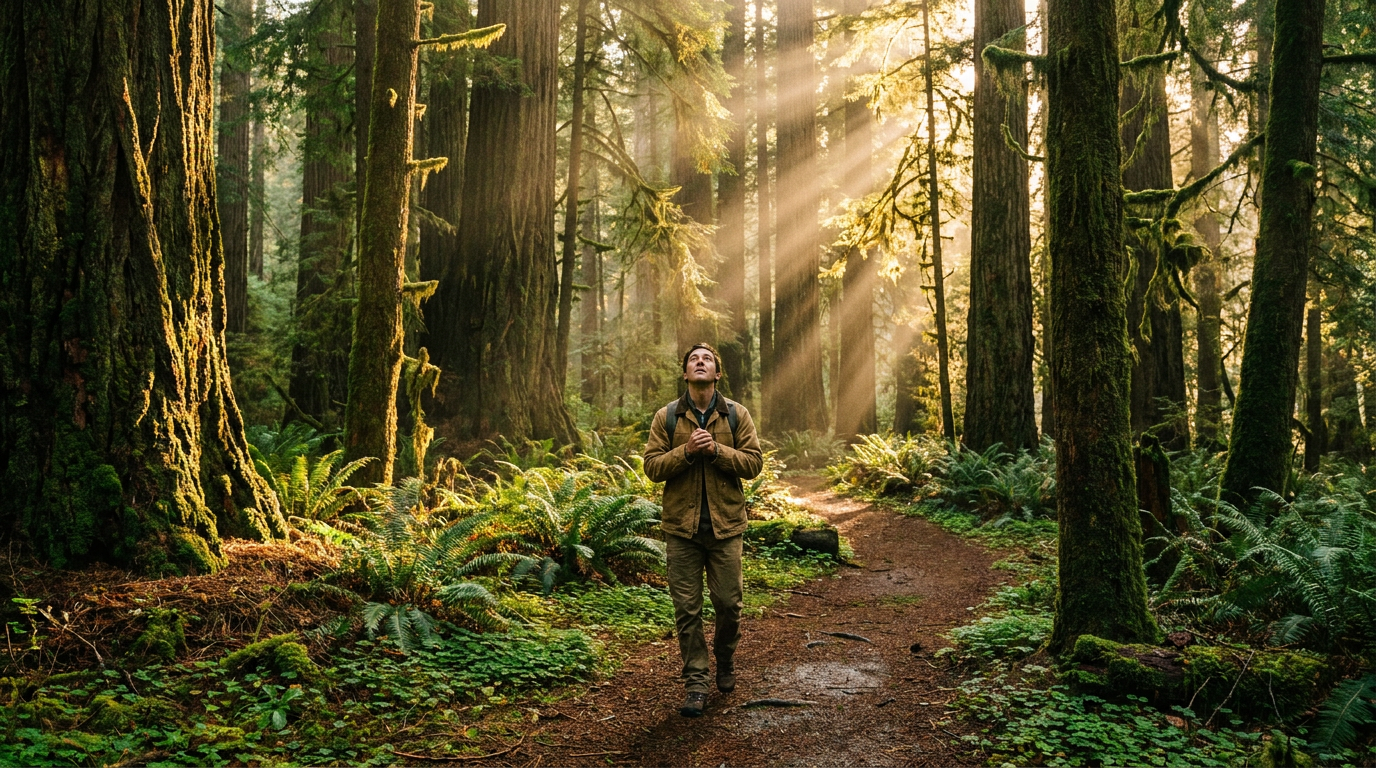
At the forefront of this movement is a specific behavioral protocol known as the "awe walk." Developed and studied by neuroscientists and psychologists at the University of California, San Francisco, and UC Berkeley, an awe walk is a deliberate practice of seeking out the vast and the unexpected during an otherwise ordinary stroll.[2][5]
The protocol is remarkably simple but highly specific. Patients are instructed to walk outdoors for 15 minutes a week, ideally in a novel environment, and consciously orient their attention outward to things that challenge their sense of scale—whether it is the canopy of an ancient tree, the intricate geometry of a leaf, or the sweeping architecture of a city skyline.[5][7]

The clinical results of this subtle cognitive shift are striking. In a landmark randomized controlled trial involving healthy older adults, participants who engaged in weekly awe walks reported significantly greater increases in positive prosocial emotions, such as compassion and gratitude, compared to a control group that simply walked for exercise.[5]
Crucially, the awe walk group also experienced a measurable decrease in daily distress over the eight-week study period. Researchers noted a fascinating behavioral shift documented through self-portraits taken during the walks: over time, the awe participants physically took up less space in their own photographs, allowing the surrounding landscape to fill the frame—a visual manifestation of what psychologists call the "small self."[2][5]
This "small self" phenomenon is central to how awe functions as a therapeutic tool. From a neurological perspective, experiencing awe appears to deactivate the brain's Default Mode Network (DMN), a cluster of interacting regions associated with self-referential thought, rumination, and ego.[7]
In individuals suffering from anxiety and depression, the DMN is often hyperactive, trapping the patient in a loop of negative self-focus. By triggering a sense of vastness that dwarfs personal concerns, awe acts as an acute interrupt to this rumination cycle, offering the nervous system a profound, if temporary, reprieve.[7][9]
In individuals suffering from anxiety and depression, the DMN is often hyperactive, trapping the patient in a loop of negative self-focus.
The physiological benefits extend well beyond subjective mood improvements. A comprehensive 2023 systematic review published in The Lancet Planetary Health analyzed dozens of studies on nature prescriptions, finding consistent, quantifiable improvements in both mental and cardiometabolic health.[4]
Among the most compelling data points is the effect of nature exposure on stress hormones. Studies indicate that just 20 minutes of walking in a natural environment can lower cortisol levels by an average of 21.3 percent compared to walking in an urban setting, while simultaneously reducing blood pressure and heart rate.[4][6]

These mechanisms are proving particularly valuable for patients managing chronic, complex conditions. In a rigorous study published in Nature: Scientific Reports, researchers demonstrated that patients suffering from long COVID could significantly reduce their symptoms of depression by learning to cultivate "everyday awe."[3]
The researchers behind the long COVID study emphasized that awe does not require a trip to the Grand Canyon; it can be reliably sourced in quotidian settings—watching a sunset, observing a complex piece of machinery, or listening to a moving piece of music. This accessibility is what makes awe a scalable public health intervention.[3][7]

Institutional adoption is accelerating rapidly in response to this data. In Canada, the national nature prescription program, PaRx, recently secured a partnership with Manulife, making it the first global life and health insurer to formally support a nature prescription initiative.[6]
Educational institutions are also integrating the practice into student health services. As of the spring 2026 semester, North Carolina State University's Campus Health began allowing providers to formally prescribe time in nature to students, logging the intervention in official medical records alongside traditional treatments.[8]
In the United Kingdom, the NHS has partnered with organizations like Dose of Nature to deliver structured nature therapy. A recent randomized controlled trial conducted with the London School of Economics found that these guided nature prescriptions significantly improved outcomes for anxiety and depression while simultaneously reducing the financial burden on the healthcare system.[1][9]

Despite the overwhelming positivity of the data, clinical researchers are careful to define the boundaries of nature therapy. It is not a panacea, nor is it a replacement for acute psychiatric care, cognitive behavioral therapy, or pharmacological interventions for severe, clinical depression.[4][7]
There are also open questions regarding dosage and adherence. While studies show benefits from as little as two hours a week in nature, researchers are still working to determine the optimal frequency, duration, and specific types of environments that yield the best results for different psychiatric profiles.[4]
Furthermore, access to safe, high-quality green spaces remains a significant equity issue. Public health officials note that nature prescriptions must be paired with urban planning initiatives to ensure that marginalized communities have equal opportunity to fill their "green prescriptions."[1][7]
Nevertheless, the formal medicalization of awe and nature exposure represents a profound shift in how society approaches mental health. By recognizing that human well-being is inextricably linked to our relationship with the wider world, healthcare providers are unlocking a low-cost, side-effect-free tool that doesn't just treat illness, but actively cultivates joy.[2][6][7]
How we got here
2020
UC San Francisco and UC Berkeley publish landmark research on the psychological benefits of 'awe walks' for older adults.
2022
Canada's PaRx program launches nationally, allowing licensed healthcare professionals to prescribe time in national parks.
2023
The Lancet Planetary Health publishes a major systematic review confirming the cardiometabolic and mental health benefits of nature prescriptions.
Spring 2026
Major universities and global insurers begin formally integrating and covering nature prescriptions as standard preventative care.
Viewpoints in depth
Clinical Neuroscientists
Focus on the measurable neurological mechanisms of awe and nature exposure.
For neuroscientists, the value of an awe walk lies in its ability to reliably alter brain state without pharmacological intervention. By studying functional MRI scans, researchers have observed that experiences of awe consistently deactivate the Default Mode Network—the brain's center for self-referential thought and ego. Because an overactive DMN is heavily implicated in the rumination loops characteristic of depression and anxiety, neuroscientists view awe not just as a pleasant emotion, but as a targeted neurological interrupt that forces the brain to process external vastness rather than internal distress.
Public Health Administrators
Prioritize the scalability and cost-effectiveness of green prescriptions.
Public health officials and insurance providers are increasingly viewing nature prescriptions through an economic lens. With mental health crises placing unprecedented strain on medical infrastructure, interventions that are free, highly accessible, and carry zero negative side effects are highly attractive. Administrators point to pilot programs in the UK and Canada showing that formalizing nature time—actually writing it on a prescription pad—significantly increases patient compliance compared to casual advice, ultimately reducing the long-term burden on acute psychiatric services.
Frontline Therapists
View nature prescriptions as a powerful adjunct therapy, not a standalone cure.
Clinical psychologists and therapists welcome the formalization of nature therapy, noting that it gives patients a concrete, actionable tool for emotional regulation between sessions. However, they caution against viewing 'green prescribing' as a panacea. Frontline practitioners emphasize that while awe walks are excellent for building baseline resilience and managing mild-to-moderate distress, they must remain an adjunct therapy. For patients with severe clinical depression or acute trauma, nature prescriptions are integrated alongside, rather than in place of, cognitive behavioral therapy and necessary medications.
What we don't know
- The exact 'dosage' of nature—frequency, duration, and intensity—that is optimal for different specific psychiatric conditions.
- How the therapeutic benefits of urban green spaces compare long-term to immersive wilderness environments.
- Long-term adherence rates for patients who are prescribed nature walks compared to those prescribed traditional medications.
Key terms
- Awe
- A self-transcendent emotion elicited by being in the presence of something vast that challenges one's current understanding of the world.
- Default Mode Network (DMN)
- A network of interacting brain regions that is active during mind-wandering and self-referential thought, often found to be overactive in individuals with depression.
- Nature Prescription (Green Rx)
- A formal, documented recommendation from a healthcare provider for a patient to spend a designated amount of time in natural environments to improve health.
- Small Self
- A psychological phenomenon triggered by awe where an individual's own ego, personal concerns, and physical presence feel less significant in the grand scheme of things.
- Prosocial Emotions
- Feelings such as compassion, gratitude, and empathy that direct attention outward and encourage connection and cooperation with others.
Frequently asked
What exactly is an 'awe walk'?
An awe walk is a deliberate 15-minute stroll where the walker unplugs from devices and consciously focuses their attention outward on things that are vast, unexpected, or challenging to their sense of scale.
Do I need to go to a national park to experience awe?
No. Clinical studies emphasize 'everyday awe,' which can be found in urban environments by observing architecture, watching a sunset, or noticing small, intricate details in a local park.
Can nature prescriptions replace antidepressants?
No. Medical professionals emphasize that nature therapy is an adjunct treatment. While highly effective for managing stress and mild-to-moderate anxiety, it is not a replacement for pharmacological treatments in severe clinical depression.
Does health insurance cover nature prescriptions?
Coverage is beginning to emerge. In Canada, Manulife recently became the first global life and health insurer to formally support a national nature prescription program.
Sources
Source coverage
9 outlets
3 viewpoints surfaced









[1]The GuardianFrontline Therapists
How nature-based therapy is supporting people living with mental illness
Read on The Guardian →[2]The New York TimesFrontline Therapists
Why a Daily 'Awe Walk' Might Be Exactly What Your Brain Needs
Read on The New York Times →[3]Nature: Scientific ReportsClinical Neuroscientists
Awe as an intervention for depression symptoms in long COVID patients
Read on Nature: Scientific Reports →[4]The Lancet Planetary HealthClinical Neuroscientists
Effect of nature prescriptions on cardiometabolic and mental health: a systematic review
Read on The Lancet Planetary Health →[5]National Institutes of HealthClinical Neuroscientists
Big smile, small self: Awe walks promote prosocial positive emotions in older adults
Read on National Institutes of Health →[6]PaRxPublic Health Administrators
The Evidence Behind Nature Prescriptions
Read on PaRx →[7]Factlen Editorial TeamPublic Health Administrators
Synthesis by Factlen editorial team
Read on Factlen Editorial Team →[8]NC State UniversityPublic Health Administrators
Campus Health Now Offering Nature Prescriptions
Read on NC State University →[9]Dose of NatureFrontline Therapists
Nature-Based Therapy: A Growing Movement in Mental Healthcare
Read on Dose of Nature →


Every angle. Every day.
Get health stories with full source coverage and perspective breakdowns delivered to your inbox.