
FISA Section 702 Expires Amid Partisan Gridlock, Triggering Debate Over US Surveillance Powers
A key U.S. intelligence gathering authority has officially lapsed after the House failed to pass a short-term extension. While the administration warns of immediate national security risks, legal experts note that existing surveillance directives remain active until 2027.
By Factlen Editorial Team
- National Security Advocates
- Argue that Section 702 is an indispensable tool for preventing terrorism and that its expiration creates immediate, dangerous blind spots.
- Civil Liberties Advocates
- Contend that the law enables warrantless surveillance of Americans and should not be renewed without strict warrant requirements.
- Legal Realists
- Emphasize that despite the political panic, existing surveillance certifications are grandfathered through early 2027.
What's not represented
- · Telecommunications Companies
- · Foreign Allied Intelligence Agencies
Why this matters
Section 702 is the U.S. government's most powerful tool for intercepting international communications, but it also sweeps up the private data of American citizens. Its expiration forces a historic reckoning over how much privacy the public must sacrifice in the name of national security.
Key points
- FISA Section 702 expired at midnight after the House failed to pass a short-term extension.
- A coalition of progressive Democrats and conservative Republicans blocked the renewal to demand strict warrant requirements.
- The law allows warrantless surveillance of foreign targets abroad, but incidentally collects Americans' communications.
- Despite the expiration, existing surveillance directives are grandfathered through March 2027.
- The intelligence community warns the lapse threatens national security, while legal experts call those claims exaggerated.
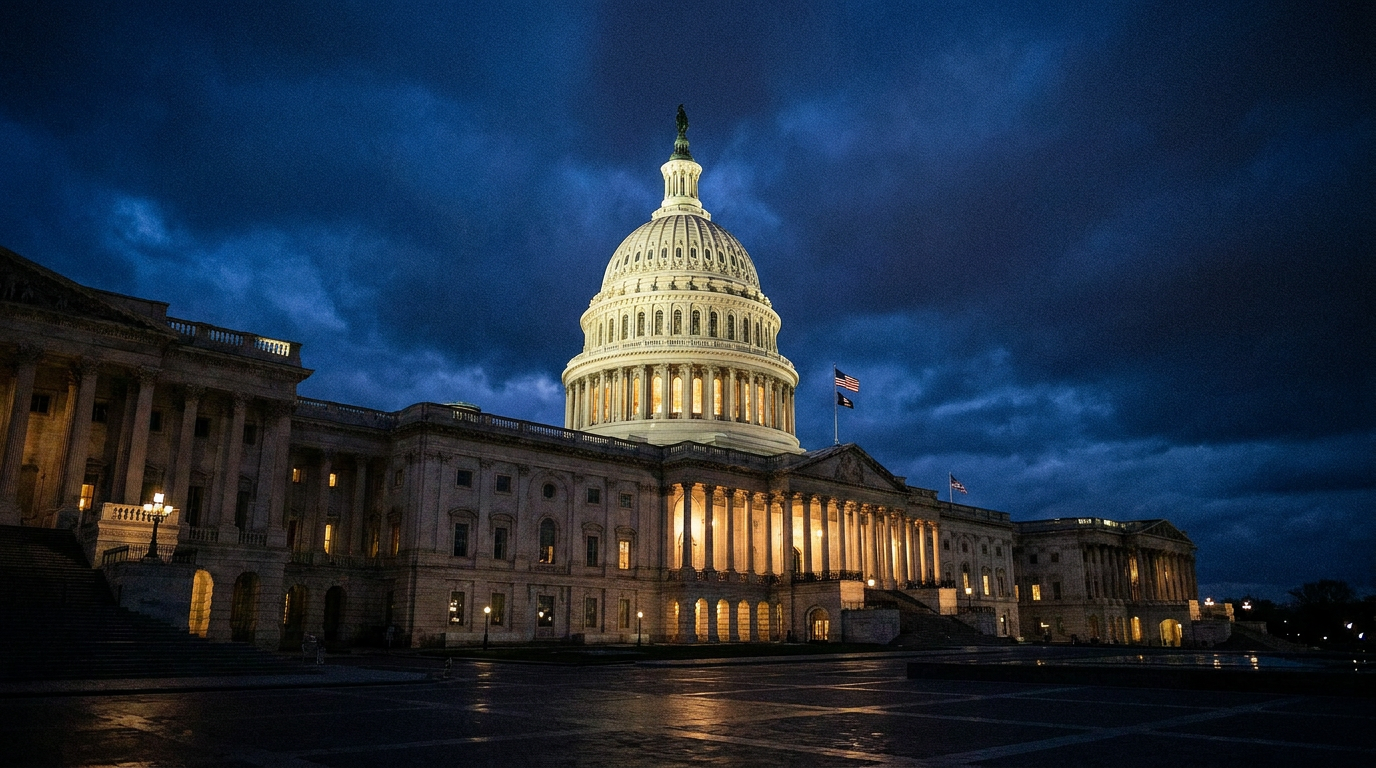
The United States intelligence community has officially lost its statutory authorization for one of its most sweeping surveillance tools. At midnight on Friday, Section 702 of the Foreign Intelligence Surveillance Act (FISA) expired after a deeply divided House of Representatives failed to pass a short-term extension.[1][3]
The legislative failure was the result of an unusual political alliance. Progressive Democrats, long critical of the program's civil liberties implications, joined forces with a bloc of conservative Republicans who have grown deeply skeptical of federal law enforcement. Together, they defeated the extension in a 198-218 vote, demanding that any reauthorization include strict warrant requirements for searches involving American citizens.[2][4][5]
Enacted in 2008, Section 702 allows U.S. spy agencies to compel American telecommunications companies to hand over the communications of non-U.S. citizens located abroad. The government does not need a warrant to collect this data, provided the target is a foreigner reasonably believed to possess intelligence regarding terrorism, weapons proliferation, or cyber threats.[4][7]
Intelligence officials routinely describe the authority as the crown jewel of American counterterrorism efforts. They credit the program with thwarting cyberattacks, disrupting international drug cartels, and locating high-value targets in hostile territories where traditional espionage is impossible.[3][7]

However, the surveillance net inevitably sweeps up the text messages, emails, and phone calls of Americans who communicate with those foreign targets. This "incidental collection" resides in government databases, where agencies like the FBI can query the data using the names, email addresses, or phone numbers of U.S. citizens.[4][6]
Privacy advocates refer to this practice as the "backdoor search loophole," arguing it effectively grants the government warrantless access to Americans' private communications. They argue that allowing domestic law enforcement to sift through this massive intelligence repository circumvents the Fourth Amendment.[4][6]
The expiration arrives at a highly sensitive moment for the intelligence community. Lawmakers and administration officials have warned that the lapse coincides with heightened global terrorism fears and complex security preparations for upcoming international events, including the 2026 FIFA World Cup. Defense and intelligence officials have publicly characterized the expiration as a devastating blow to national security, warning that the United States risks going blind to imminent threats.[1][5]
The expiration arrives at a highly sensitive moment for the intelligence community.
Yet, legal experts and civil liberties advocates argue that the administration's warnings of immediate "darkness" are heavily exaggerated. Section 702 operates under annual programmatic certifications approved by the secretive Foreign Intelligence Surveillance Court (FISC).[2][5]
Because the FISC approved the most recent certifications in March 2026, the existing surveillance directives served on communication providers remain legally binding until March 2027. The grandfather clause built into the FISA Amendments Act ensures that any intelligence collection already in motion can continue uninterrupted for nearly a year.[2][5]

This legal reality provides Congress with a significant buffer to negotiate reforms without immediately severing the intelligence community's data feeds. "Section 702 will not go dark. That is a myth," noted Elizabeth Goitein of the Brennan Center, echoing sentiments shared by several lawmakers who accuse the intelligence community of using scare tactics to force a clean reauthorization.[2][5]
Despite the legal cushion, the expiration creates immediate friction with the private sector. Major technology and telecommunications companies, which facilitate the actual data collection, rely on the statutory framework of Section 702 for legal indemnification. With the underlying law now lapsed, some lawmakers fear that telecom providers may challenge the government's ongoing directives in court, arguing they can no longer be compelled to cooperate without explicit congressional authorization.[2][3]
The debate over Section 702 has been heavily shaped by a history of documented compliance issues. In recent years, declassified FISC opinions revealed that the FBI improperly queried the Section 702 database tens of thousands of times, searching for information on racial justice protesters, political donors, and even a state court judge. These revelations severely damaged the bureau's credibility on Capitol Hill and fueled the bipartisan push for a strict warrant requirement.[4][6]
The FBI maintains that it has fundamentally overhauled its internal procedures. Agency leadership points to recent Department of Justice reports and FISC opinions indicating a 98 to 99 percent compliance rate following reforms implemented in 2021 and 2022. Intelligence officials argue that forcing analysts to obtain a probable-cause warrant for every domestic query would paralyze the system, stripping the tool of the agility required to connect the dots during a fast-moving crisis.[4][7]

Reform advocates dismiss these operational concerns. They note that the primary value of Section 702—collecting the communications of foreign targets—would remain entirely unaffected by a domestic warrant requirement. In the rare instances where searching an American's data is urgently necessary to prevent an attack, the government could rely on existing emergency exceptions to the Fourth Amendment.[4][6]
The political gridlock is further complicated by disputes over intelligence leadership. The FISA fight has become entangled with partisan battles over the confirmation of the acting Director of National Intelligence, adding another layer of dysfunction to the reauthorization effort. For some lawmakers, the refusal to extend Section 702 is as much a protest against the current intelligence apparatus as it is a debate over statutory text.[1][6]
As Congress prepares to return from recess, the path forward remains murky. The intelligence community is pushing for a clean reauthorization, while the bipartisan coalition of reformers insists they will not budge without a vote on the warrant requirement. Until a compromise is reached, the United States will navigate its foreign intelligence operations in a state of statutory limbo, relying on court orders to sustain a program that Congress has, for now, refused to endorse.[2][3][5]
How we got here
2008
Congress enacts Section 702 of the FISA Amendments Act to legalize and regulate warrantless wiretapping programs.
2021–2022
The FBI implements internal reforms after declassified court opinions reveal tens of thousands of improper domestic queries.
March 2026
The Foreign Intelligence Surveillance Court approves the annual certification for Section 702, grandfathering operations for another year.
June 2026
The House votes 198-218 against a short-term extension, allowing the statutory authority to expire at midnight.
Viewpoints in depth
Intelligence Community's View
National security officials argue the program is essential and cannot function with a domestic warrant requirement.
Intelligence agencies view Section 702 as the cornerstone of modern counterterrorism and counter-espionage. They argue that requiring a probable-cause warrant to query the database for U.S. persons would fundamentally break the system's utility. In fast-moving threat scenarios—such as a cyberattack or an unfolding terror plot—analysts need to rapidly search existing data to determine if a foreign threat actor is communicating with someone inside the United States. They point to recent internal reforms that have drastically reduced compliance errors, arguing the system is now functioning as intended.
Civil Liberties Advocates' View
Privacy groups and reformist lawmakers argue the law enables unconstitutional domestic surveillance.
This coalition—spanning progressive organizations like the Electronic Frontier Foundation and conservative groups like the Cato Institute—argues that the "incidental" collection of Americans' data has become a backdoor for warrantless domestic surveillance. They point to the FBI's history of improperly querying the database for information on protesters and political figures as proof that the system is ripe for abuse. They are not demanding an end to foreign surveillance, but insist that if the government wants to search its foreign intelligence database for an American's communications, it must first convince a judge to issue a warrant.
What we don't know
- Whether major telecommunications companies will continue to comply with data requests now that the statutory authority has lapsed.
- How long the political gridlock in the House will last before a compromise on warrant requirements is reached.
- If the intelligence community will attempt to shift some surveillance operations to other executive authorities, such as Executive Order 12333.
Key terms
- Section 702
- A provision of the Foreign Intelligence Surveillance Act that allows the U.S. government to conduct targeted surveillance of foreign persons located outside the United States.
- Incidental Collection
- The unavoidable gathering of Americans' communications when they interact with a foreign target who is under surveillance.
- Backdoor Search
- The practice of intelligence agencies querying a database of foreign intelligence using the identifiers of U.S. citizens without a warrant.
- FISC (Foreign Intelligence Surveillance Court)
- A secretive federal court established to oversee requests for surveillance warrants against foreign spies inside the United States.
Frequently asked
Did U.S. spy agencies lose their surveillance powers?
Not immediately. Because the intelligence court certified the program in March, existing data collection can legally continue until March 2027.
Why did Congress let the law expire?
A bipartisan coalition of lawmakers refused to reauthorize the law unless it included a requirement for the FBI to get a warrant before searching the data for Americans' communications.
Can the government use Section 702 to target Americans?
No. The law strictly prohibits targeting U.S. citizens or anyone located inside the United States. However, Americans' data is collected if they communicate with a foreign target.
What happens if telecom companies stop cooperating?
If companies refuse to hand over data without the active statute, the government would likely take them to the Foreign Intelligence Surveillance Court to compel compliance under the grandfathered directives.
Sources
Source coverage
7 outlets
3 viewpoints surfaced






[1]Fox NewsNational Security Advocates
Reporter's Notebook: Lawmakers scramble as FISA fight comes at the worst possible time
Read on Fox News →[2]CBS NewsLegal Realists
A key spy authority, Section 702, expired due to inaction in Congress. Here's what happens next.
Read on CBS News →[3]Associated PressNational Security Advocates
A key US government surveillance program is set to expire. A look at what that means
Read on Associated Press →[4]NPRCivil Liberties Advocates
What is FISA's Section 702?
Read on NPR →[5]Cato InstituteLegal Realists
FISA Section 702 Lapse Assured—What Now?
Read on Cato Institute →[6]Electronic Frontier FoundationCivil Liberties Advocates
Congress should be in no rush to renew FISA's Section 702 surveillance powers
Read on Electronic Frontier Foundation →[7]FBINational Security Advocates
Foreign Intelligence Surveillance Act (FISA) and Section 702
Read on FBI →
More in news politics
See all 5 stories →Strait of Hormuz
U.S. and Iran Reach Framework Deal for 60-Day Ceasefire and Reopening of Strait of Hormuz
0 sources

Cognitive Immunity
Does 'Prebunking' Actually Work? The Evidence Behind the Psychological Vaccine for Misinformation
0 sources

US-Iran Conflict
US and Iran Sign 60-Day Ceasefire Framework to Open Path for Peace Talks
0 sources
Every angle. Every day.
Get news politics stories with full source coverage and perspective breakdowns delivered to your inbox.