
The US-Iran Peace Agreement: Inside the Deal and the Growing Rift with Israel
Following a period of direct military conflict, the United States and Iran have reached a landmark agreement aimed at regional stabilization, though Israeli leaders vow to maintain territorial occupations in Lebanon and Syria despite the pact.
By Factlen Editorial Team
- US Administration
- Views the agreement as a necessary diplomatic triumph that ends a costly military conflict and stabilizes global markets.
- Israeli Security Cabinet
- Rejects the premise of the deal, arguing it enriches a hostile regime while failing to address the immediate threat of proxy forces on Israel's borders.
- Skeptical Defense Analysts
- Questions the enforceability of the pact and whether the preceding military engagement yielded sufficient strategic concessions from Tehran.
- Global Markets
- Focuses primarily on the economic relief, welcoming the de-escalation as a vital step to lower energy costs and secure shipping lanes.
What's not represented
- · Lebanese civilians living in or near the occupied buffer zones
- · Iranian citizens facing the economic transition from wartime sanctions
Why this matters
This agreement attempts to close one of the most volatile chapters in modern Middle Eastern history, directly impacting global energy prices and the US military footprint. However, Israel's refusal to align with the pact's territorial terms signals that the risk of a broader regional war remains high, forcing allies to navigate a fractured security landscape.
Key points
- The US and Iran have reached a diplomatic agreement to end recent direct military hostilities.
- The deal unfreezes roughly $50 billion in Iranian assets in exchange for military de-escalation and nuclear oversight.
- Israeli PM Netanyahu rejected the pact's regional security assumptions, vowing to maintain military occupations in Lebanon and Syria.
- US conservative lawmakers and defense analysts are questioning the enforceability of the new 15-year nuclear framework.
- Global oil markets have stabilized on the expectation of reliable Iranian crude exports.
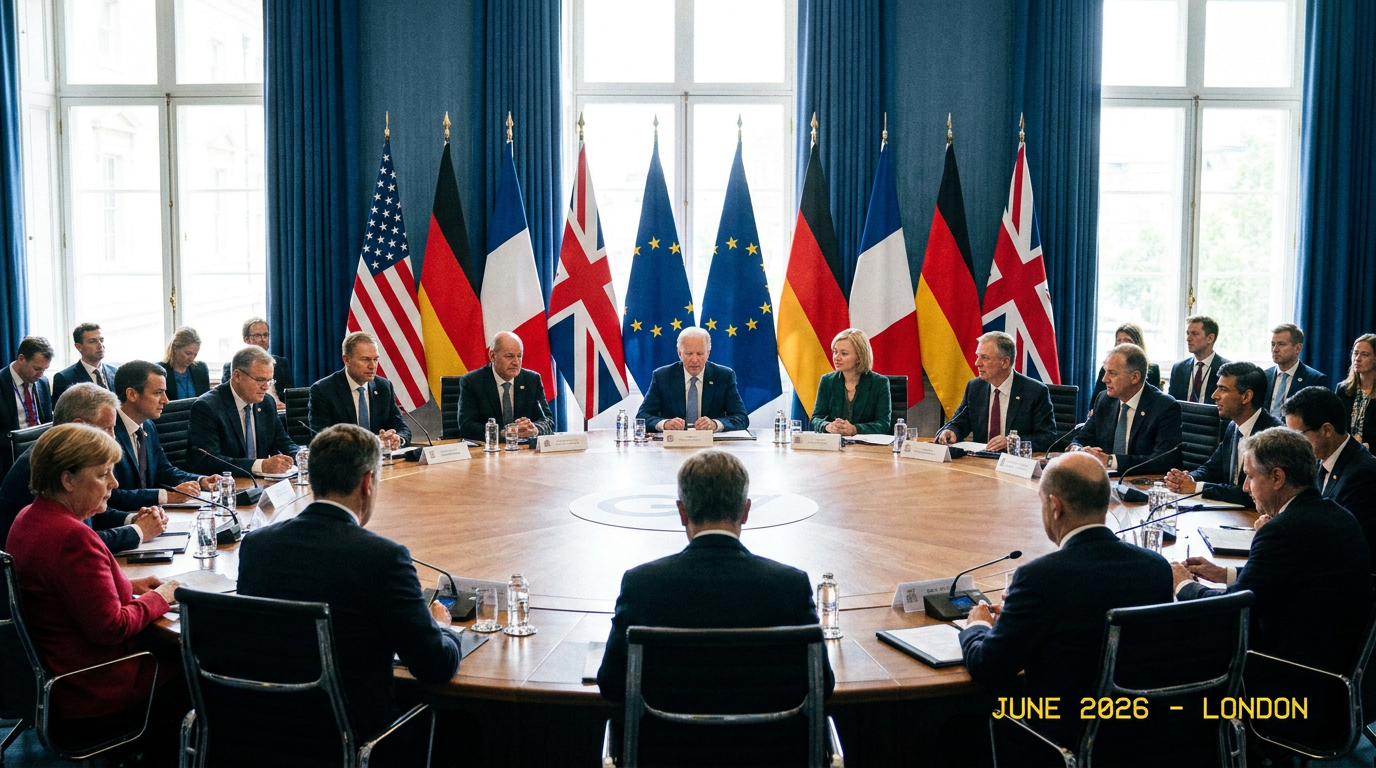
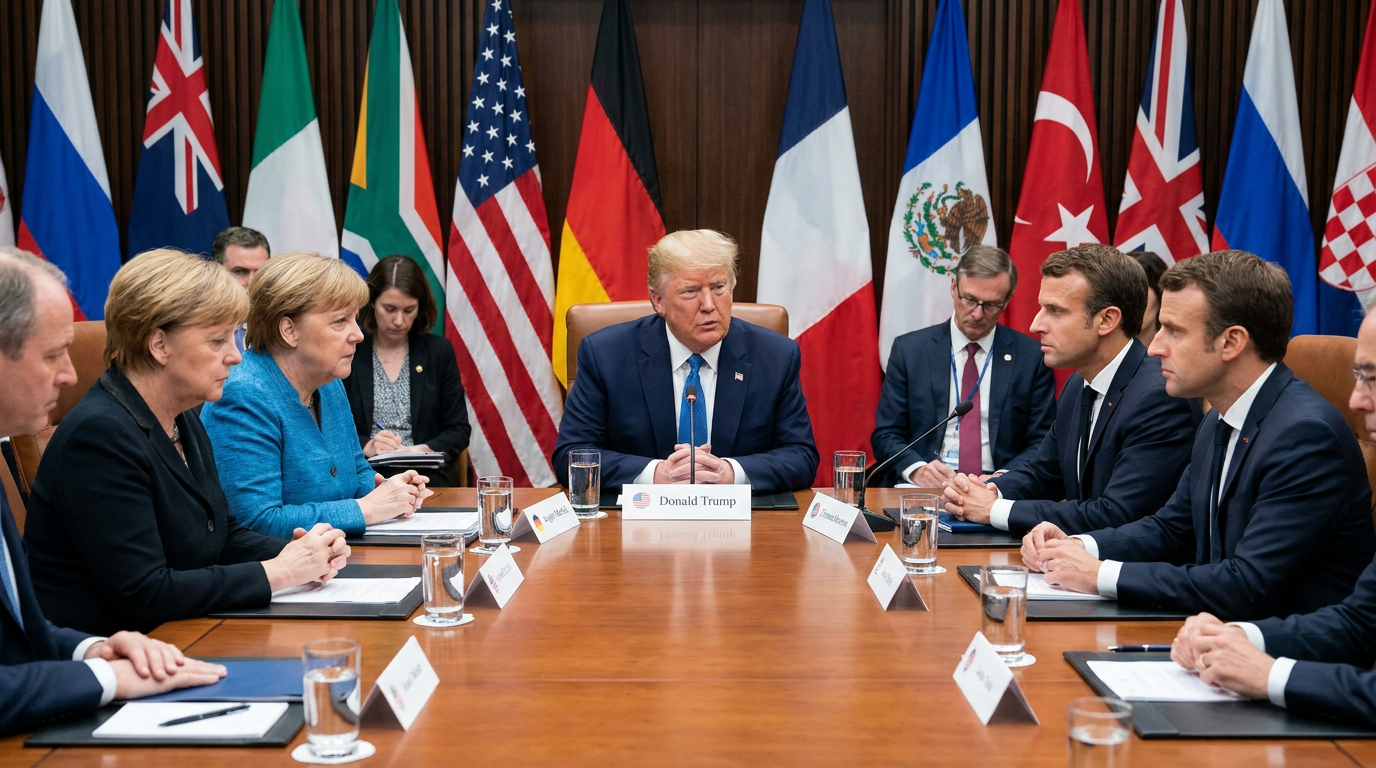
The geopolitical architecture of the Middle East is undergoing a seismic shift as the United States and Iran finalize a landmark peace agreement, effectively halting months of direct military confrontation. Arriving at the G7 summit, President Donald Trump heavily touted the diplomatic breakthrough, framing the Iran agreement as a foundational step toward broader global stability and explicitly linking the momentum to his ambitions for resolving the conflict in Ukraine. The announcement marks a sharp pivot from kinetic warfare to high-stakes diplomacy, catching some regional allies off guard while offering immediate relief to global energy markets that had been severely strained by the hostilities.[1][5]
The agreement arrives in the immediate aftermath of what commentators and policymakers are now referring to as the 'Iran war'—a period of unprecedented direct military engagement between Washington and Tehran that disrupted global shipping lanes and forced a massive reallocation of US naval assets. For months, the international community braced for a cascading regional conflict. The sudden transition to a formalized diplomatic resolution represents a jarring shift for military planners, requiring a rapid de-escalation of forces in the Persian Gulf and a recalibration of strategic priorities across the Department of Defense.[4][6]
At the core of the new framework is a complex exchange of military de-escalation for economic normalization. According to early outlines of the pact, the United States has agreed to a phased unfreezing of an estimated $50 billion in Iranian assets and a targeted relaxation of secondary sanctions. This economic relief is designed to stabilize Iranian oil exports at a capped target of roughly 2.5 million barrels per day. In return, Tehran has committed to a cessation of proxy attacks on US installations and a renewed, 15-year framework for nuclear oversight, which includes enhanced access for international inspectors.[6][8]

While European allies at the G7 have cautiously welcomed the de-escalation, the reaction from Israel has been swift and deeply adversarial. The Israeli government views the US-Iran pact not as a comprehensive peace, but as a dangerous concession that leaves Tehran's regional proxy network largely intact. Prime Minister Benjamin Netanyahu issued a stark public rebuke of the deal's underlying assumptions, declaring unequivocally that Israel's military occupation of newly seized territory in southern Lebanon and parts of Syria will continue indefinitely, regardless of Washington's diplomatic arrangements with Tehran.[2][5]
Netanyahu's stance underscores a fundamental fracture between US and Israeli strategic objectives. For Washington, the priority is extracting US forces from a cycle of direct retaliation with Iran and stabilizing the global economy. For Jerusalem, the primary existential threat remains the presence of heavily armed, Iranian-backed militias on its immediate borders. By maintaining territorial buffer zones in Lebanon and Syria, the Israeli military intends to physically block the transfer of advanced weaponry to these groups, a tactical reality that the US-Iran diplomatic pact fails to address to Israel's satisfaction.[2][6]

Netanyahu's stance underscores a fundamental fracture between US and Israeli strategic objectives.
The domestic political environment in Israel is driving this hardline approach. Key figures in Netanyahu's coalition, including National Security Minister Itamar Ben-Gvir and Finance Minister Bezalel Smotrich, have been highly critical of the US-Iran agreement. They argue that any deal providing economic relief to Tehran will inevitably fund terrorism directed at Israeli citizens. Their vocal opposition severely limits Netanyahu's political maneuverability, ensuring that Israel will maintain an aggressive, unilateral security posture on its northern front even as its primary ally pursues detente.[3]
Back in the United States, the agreement is facing intense scrutiny from both defense analysts and conservative lawmakers. Opinion writers and foreign policy experts are actively debating whether the preceding military conflict was ultimately worth the cost, given that the resulting diplomatic pact shares structural similarities with previous, highly criticized agreements. Skeptics point to Tehran's history of obfuscation, arguing that the enforcement mechanisms in the new deal rely too heavily on Iranian goodwill rather than verifiable, irreversible dismantling of military infrastructure.[4][7]
Conservative critics in Congress have echoed these concerns, questioning the wisdom of releasing billions in frozen assets to a regime that continues to fund proxy militias across the region. Lawmakers are demanding detailed briefings on the specific verification protocols embedded in the 15-year nuclear oversight framework. There is a growing bipartisan consensus that while avoiding a protracted ground war is preferable, the current deal may simply be purchasing a temporary pause in hostilities at the expense of long-term regional security.[4][7]

The economic ramifications of the deal, however, are already materializing. Global oil markets, which had priced in a significant risk premium during the height of the US-Iran military exchanges, have begun to stabilize. The prospect of 2.5 million barrels per day of Iranian crude reliably flowing into the market has eased inflationary pressures in Europe and Asia. This economic dividend is a crucial selling point for the US administration as it attempts to rally international support for the pact at the G7 and beyond.[5][8]
Looking ahead, the durability of the US-Iran peace agreement hinges on two highly volatile variables: Iran's strict compliance with the nuclear and proxy-standdown provisions, and Israel's unilateral military actions in the Levant. If Israeli operations in Lebanon and Syria trigger a massive response from Iranian allies, Tehran may feel compelled to intervene, instantly unraveling the diplomatic framework. Conversely, if Iran uses its unfrozen assets to surge weapons shipments to the border, Israel's preemptive strikes will likely escalate, forcing the United States back into the very conflict it just negotiated its way out of.[2][4][6]
How we got here
Early 2026
Direct military confrontation between the US and Iran severely disrupts global shipping and energy markets.
Spring 2026
Israel seizes territorial buffer zones in southern Lebanon and parts of Syria to block Iranian proxy supply lines.
June 2026
The US and Iran finalize a diplomatic pact exchanging economic relief for military de-escalation.
June 15, 2026
President Trump touts the agreement at the G7 summit, while Israeli leaders publicly refuse to alter their military posture.
Viewpoints in depth
US Administration's View
The agreement is a necessary diplomatic triumph that ends a costly conflict.
For the US administration, the primary objective was extracting American forces from an escalating cycle of direct retaliation that threatened to engulf the entire Middle East. By securing a 15-year nuclear oversight framework and a cessation of proxy attacks on US installations, officials argue they have neutralized the most immediate threats. The administration views the unfreezing of assets as a necessary, calculated concession to stabilize global energy markets and pivot strategic focus toward other global priorities, such as the conflict in Ukraine.
Israeli Security Cabinet's View
The pact enriches a hostile regime while ignoring the immediate threat on Israel's borders.
Israeli leadership, spanning from Prime Minister Netanyahu to hardline ministers like Itamar Ben-Gvir, views the agreement as fundamentally flawed. They argue that providing billions in economic relief to Tehran guarantees a massive influx of funding to proxy militias dedicated to Israel's destruction. Because the US deal does not force the disarmament of these groups, Israel maintains that it has no choice but to rely on unilateral military force, including the indefinite occupation of buffer zones in Lebanon and Syria, to ensure the physical security of its citizens.
Skeptical Defense Analysts
The deal's enforcement mechanisms are weak and rely too heavily on Iranian goodwill.
A significant bloc of foreign policy experts and conservative lawmakers are deeply skeptical of the arrangement. They question whether the preceding military conflict yielded any lasting strategic concessions, pointing out that the new 15-year framework closely mirrors past agreements that failed to permanently halt Tehran's nuclear ambitions. These analysts argue that without verifiable, irreversible dismantling of military and nuclear infrastructure, the United States has simply purchased a temporary pause in hostilities, leaving the underlying regional volatility unresolved.
What we don't know
- How strictly the international community will be able to enforce the 15-year nuclear oversight provisions.
- Whether Iran will use its unfrozen assets to surge funding to proxy militias despite the de-escalation agreement.
- If Israel's continued military occupation in Lebanon and Syria will trigger a localized conflict that drags the US back into the region.
Key terms
- Secondary Sanctions
- Economic penalties applied by the US to third-party countries or foreign companies that do business with Iran, effectively cutting them off from the US financial system.
- Proxy Network
- Various armed groups and militias across the Middle East (such as Hezbollah in Lebanon) that receive funding, training, and weapons from Iran to advance its regional interests.
- Nuclear Oversight Framework
- A negotiated set of rules granting international inspectors access to Iranian nuclear facilities to verify that the country is not developing weapons-grade uranium.
- Buffer Zone
- A neutral or militarily occupied area of land separating hostile forces, used by Israel in Lebanon and Syria to prevent direct cross-border attacks.
Frequently asked
What does the US-Iran agreement actually do?
The pact exchanges military de-escalation and a 15-year nuclear oversight framework for the unfreezing of an estimated $50 billion in Iranian assets and the relaxation of certain oil export sanctions.
Why is Israel opposing the deal?
Israeli leaders argue the deal provides Tehran with funds that will be used to support proxy militias, and it fails to address the physical presence of these hostile forces on Israel's northern borders.
Will Israel withdraw from Lebanon and Syria?
No. Prime Minister Benjamin Netanyahu has explicitly stated that Israel will continue its military occupation of territorial buffer zones in Lebanon and Syria despite the US-Iran agreement.
How are global markets reacting?
Oil markets have stabilized, as the agreement reduces the risk of a broader regional war and paves the way for roughly 2.5 million barrels per day of Iranian crude to reliably enter the global supply.
Sources
Source coverage
8 outlets
4 viewpoints surfaced






[1]Al JazeeraIsraeli Security Cabinet
Trump touts Iran deal and Ukraine ambition as he arrives at G7
Read on Al Jazeera →Netanyahu says Israel won’t leave occupied land in Lebanon
Read on Al Jazeera →What Israeli leaders are saying about US-Iran ‘peace deal’
Read on Al Jazeera →[4]NYTSkeptical Defense Analysts
‘We Cannot Trust Any Iranian Promises’: 3 Opinion Writers Dissect the Iran Deal
Read on NYT →[5]ReutersUS Administration
G7 leaders review US-Iran diplomatic pact amid Middle East realignment
Read on Reuters →[6]Associated PressGlobal Markets
Details emerge on US-Iran agreement following months of hostilities
Read on Associated Press →[7]Fox NewsSkeptical Defense Analysts
Conservative lawmakers question enforcement of new Iran peace agreement
Read on Fox News →[8]BBC NewsGlobal Markets
Oil markets stabilize as Washington and Tehran signal end to direct conflict
Read on BBC News →
More in news politics
See all 5 stories →Strait of Hormuz
U.S. and Iran Reach Framework Deal for 60-Day Ceasefire and Reopening of Strait of Hormuz
0 sources

Cognitive Immunity
Does 'Prebunking' Actually Work? The Evidence Behind the Psychological Vaccine for Misinformation
0 sources

US-Iran Conflict
US and Iran Sign 60-Day Ceasefire Framework to Open Path for Peace Talks
0 sources
Every angle. Every day.
Get news politics stories with full source coverage and perspective breakdowns delivered to your inbox.