
How Sodium-Ion Batteries Are Making EVs Cheaper and Winter-Proof in 2026
Once a laboratory curiosity, sodium-ion batteries have entered mass production, offering a cheaper, cold-resistant alternative to lithium for electric vehicles and grid storage.
By Factlen Editorial Team
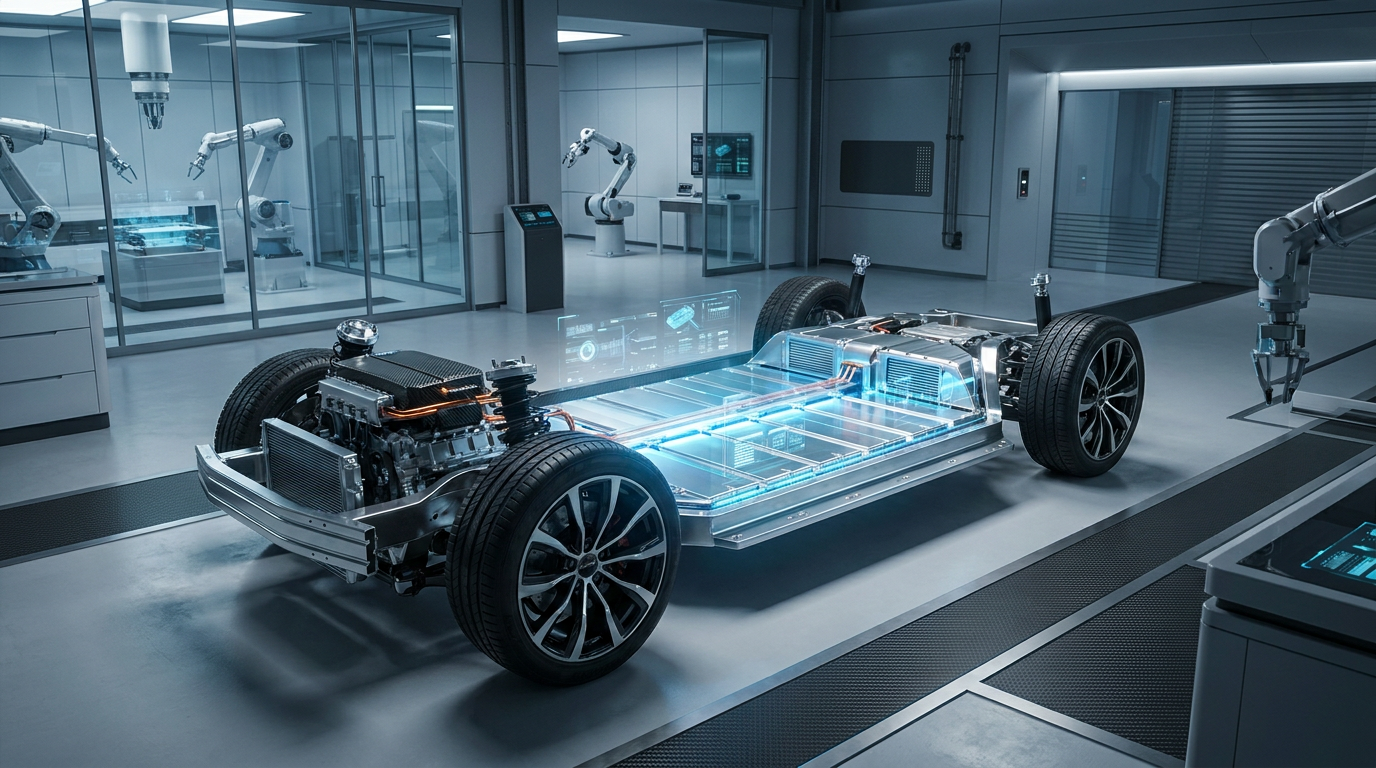
- Mass-Market Automakers
- Prioritizing affordability and supply chain stability over maximum driving range.
- Battery Manufacturers
- Focusing on scaling production and capturing both premium and budget markets through a dual-chemistry strategy.
- Geopolitical Analysts
- Warning that raw material abundance does not equate to supply chain independence.
- Grid Infrastructure Operators
- Viewing sodium-ion as the ultimate solution for stationary renewable energy storage.
What's not represented
- · Lithium Mining Executives
- · Independent EV Repair Technicians
Why this matters
By replacing expensive, geopolitically fraught lithium with the sixth most abundant element on Earth, sodium-ion batteries are poised to drastically lower the cost of electric vehicles while eliminating winter range anxiety for drivers in colder climates.
Key points
- Sodium-ion batteries have officially entered mass production in 2026, powering the first wave of consumer EVs.
- The technology is 30% to 40% cheaper to produce than standard lithium iron phosphate (LFP) batteries.
- Sodium cells retain 90% of their capacity at -30°C, effectively eliminating winter range loss for EV drivers.
- The industry is adopting a dual-chemistry model: lithium for premium range, and sodium for mass-market affordability.
- While sodium is globally abundant, China currently controls over 90% of the manufacturing capacity for the new batteries.
The electric vehicle revolution has long been tethered to a single, temperamental element: lithium. While lithium-ion batteries transformed the automotive landscape and made zero-emission driving a reality, their reliance on scarce, expensive, and geopolitically concentrated minerals has created a persistent bottleneck for the mass adoption of electric vehicles. Furthermore, lithium's notorious vulnerability to freezing temperatures has left drivers in colder climates grappling with severe range anxiety, watching their dashboard battery estimates plummet the moment the thermometer drops below freezing. For years, the industry accepted these limitations as the unavoidable cost of electrification.[3]
But in 2026, the automotive industry is undergoing a quiet but profound chemistry shift that promises to rewrite the economics of driving. Sodium-ion batteries—long dismissed by researchers as a bulky, low-density laboratory curiosity—have officially crossed the threshold into mass production. Led by manufacturing behemoths like CATL and BYD, this alternative energy storage technology is now rolling off assembly lines and into consumer dealerships. By utilizing one of the most abundant elements on the planet, these new batteries promise to democratize electric mobility, drastically lowering upfront vehicle costs while virtually eliminating the winter range loss that has historically plagued EV owners.[1][3][8]
The transition from prototype testing to pavement reality is happening significantly faster than many industry analysts predicted just a few years ago. Earlier this year, the Changan Nevo A06 officially arrived at Chinese dealerships, powered by CATL’s highly anticipated 'Naxtra' battery pack. This milestone marked the world’s first mass-produced passenger EV equipped with sodium-ion technology available to the general public. Crucially, these next-generation cells have already passed China’s stringent GB 38031-2025 national EV traction battery safety standards, cementing their viability for everyday consumer use and proving that sodium is ready for the rigors of the open road.[1][8]
To understand why this chemical shift matters, one must look at the fundamental mechanism of how modern battery chemistry operates. Both lithium-ion and sodium-ion batteries function on a 'rocking-chair' principle, generating power by shuttling charged ions back and forth between a positive cathode and a negative anode through a liquid electrolyte solution. When the vehicle is plugged in and charging, external energy forces the ions into the anode for storage. When the driver presses the accelerator, those ions flow back to the cathode, releasing a steady stream of electrons into the vehicle's circuitry to power the electric motor.[7]

The critical difference between the two technologies lies entirely in the charge carrier. Sodium is the sixth most abundant element on Earth, easily and cheaply extracted from rock salt and seawater across the globe. Because it is so plentiful and widely distributed, battery manufacturers can completely bypass the volatile, multi-billion-dollar supply chains required to mine and refine lithium, cobalt, and nickel. This natural abundance translates directly to the manufacturer's bottom line: sodium-ion batteries are currently estimated to be 30% to 40% cheaper to produce at scale than equivalent lithium iron phosphate (LFP) cells, a saving that can be passed directly to the consumer.[1][3][5]
The cost savings of this new architecture extend well beyond the raw sodium itself. In a traditional lithium-ion battery, the negative current collector must be manufactured out of copper, because lithium reacts adversely with cheaper metals. Sodium, however, does not form an alloy with aluminum. This convenient chemical quirk allows battery manufacturers to replace expensive, heavy copper components with lightweight, highly affordable aluminum foil. This substitution not only drives down raw material costs but also simplifies the manufacturing process, allowing factories to scale up production with fewer supply chain bottlenecks.[5]
However, the fundamental laws of physics demand a trade-off for this affordability. Sodium ions are physically larger and approximately three times heavier than their lithium counterparts. This increased atomic size inherently limits the battery's energy density—the total amount of power it can store relative to its physical weight and volume. While premium lithium-ion cells used in flagship electric vehicles can easily exceed 250 watt-hours per kilogram (Wh/kg), the current generation of commercial sodium-ion cells hovers around 175 Wh/kg, meaning a sodium battery must be physically larger to hold the same amount of energy.[1][3][7]

Because of this inherent density gap, sodium-ion batteries are not destined to power high-performance luxury sedans or ultra-long-haul commercial trucks anytime soon. Instead, the automotive industry is rapidly moving toward a 'dual-chemistry' reality. Lithium will remain the undisputed standard for premium vehicles where maximum driving range and lightweight performance are paramount. Meanwhile, sodium-ion technology is positioned to completely dominate the mass market, becoming the default power source for affordable urban commuters, short-range delivery vans, and entry-level compact cars where price is the primary deciding factor for buyers.[2]
Because of this inherent density gap, sodium-ion batteries are not destined to power high-performance luxury sedans or ultra-long-haul commercial trucks anytime soon.
What sodium lacks in raw energy density, it more than makes up for in extreme environmental resilience. The larger sodium ions move much more freely through the liquid electrolyte at sub-zero temperatures, preventing the sluggish chemical reactions that severely handicap lithium batteries during the winter months. Recent testing data shows that CATL’s commercial sodium-ion cells retain an astonishing 90% of their usable capacity at temperatures as low as -30°C (-22°F), a thermal threshold where traditional lithium-ion packs struggle to deliver even a fraction of their rated power.[3][6][7]
For drivers living in colder regions like Canada, Scandinavia, and the American Midwest, this cold-weather performance represents a paradigm-shifting advantage. Winter range loss has long been cited in consumer surveys as a primary barrier to EV adoption in northern climates, with drivers forced to plan their routes around diminished battery capacity. With sodium-ion technology, that anxiety is effectively neutralized. A vehicle rated for 300 miles of range will reliably deliver close to that distance whether it is driven in a sweltering summer heatwave or a freezing January blizzard.[6]

Safety is another highly compelling advantage driving the adoption of this new chemistry. Sodium-ion architecture carries a significantly lower risk of thermal runaway, the cascading overheating effect that occasionally causes highly publicized lithium-ion battery fires. Furthermore, because of their highly stable electrochemistry, sodium batteries can be safely discharged all the way to zero volts for transport and long-term storage. This is a logistical game-changer, as attempting to discharge a standard lithium-ion cell to absolute zero would permanently destroy the battery and render it useless.[1][5]
Beyond the automotive sector, sodium-ion technology is poised to fundamentally revolutionize the electrical grid. As the world transitions to renewable energy sources like wind and solar, utility companies require massive stationary battery parks to store excess power for when the wind isn't blowing or the sun isn't shining. For these massive, grid-scale applications, the physical weight and volume of the battery are completely irrelevant. This makes the cheaper, bulkier, and safer sodium-ion cells an absolutely ideal fit for stabilizing the power grid.[4]
The timeline for this grid-scale transformation is already underway. CATL has officially announced that it will begin delivering massive, GWh-scale sodium-ion energy storage systems to utility customers in the third quarter of 2026. By utilizing abundant sodium for these heavy, stationary storage projects, the global energy industry can strategically free up the heavily constrained global lithium supply strictly for applications where physical weight truly matters, such as commercial aviation, consumer electronics, and premium long-range electric vehicles.[2][4][8]
Despite the widespread technological optimism, the rapid rise of sodium-ion batteries presents a glaring geopolitical paradox for Western policymakers. For years, governments in the United States and Europe championed the shift away from lithium as a strategic imperative, hoping that alternative chemistries would break China's overwhelming dominance over the global battery supply chain. The assumption was simple: because salt is abundant everywhere, a sodium-based battery economy would naturally lead to a more decentralized and secure global supply chain.[2]

However, raw material abundance alone does not dictate industrial power. While the upstream mining bottleneck has indeed been solved by switching to sodium, the downstream manufacturing bottleneck remains firmly entrenched in Asia. Industry data reveals that China currently controls over 90% of the installed and announced global sodium-ion manufacturing capacity. This means the strategic dependency has simply shifted from the lithium mine to the factory floor, leaving Western nations still reliant on imported technology for their energy transition.[2]
Western companies are now racing to close this manufacturing gap. Startups like Natron Energy in the United States and Phenogy in Europe are aggressively scaling up their own commercial production facilities, focusing heavily on providing sodium-ion backup power for data centers, artificial intelligence infrastructure, and industrial applications. But catching up to the massive, vertically integrated supply chains of established giants like CATL and BYD will require years of sustained capital investment, aggressive policy support, and rapid technological iteration.[1][2]
Looking ahead, the future trajectory of sodium-ion technology depends heavily on incremental chemical refinements. Battery researchers around the world are actively developing advanced hard-carbon anodes and highly efficient Prussian blue cathodes to push energy densities closer to the coveted 200 Wh/kg threshold. If these ongoing laboratory innovations succeed in scaling to commercial production, sodium-ion could eventually achieve true performance parity with standard LFP batteries, further blurring the lines between budget and premium electric vehicles in the global market.[3][7]
Ultimately, 2026 will be remembered as the pivotal year the global battery industry stopped putting all its eggs in the lithium basket. By successfully harnessing the sixth most abundant element on Earth, automakers and energy companies are not just building cheaper cars and grid storage systems; they are actively engineering a more resilient, accessible, and sustainable foundation for the future of global electrification, proving that the most transformative technological solutions are sometimes found in the most common materials.[1][8]
How we got here
1980s
Parallel research into both lithium and sodium batteries begins, but lithium wins out due to higher energy density.
2021
CATL unveils its first-generation sodium-ion battery, signaling a renewed commercial interest in the chemistry.
April 2025
CATL announces the second-generation 'Naxtra' sodium-ion battery, targeting mass production for vehicles.
Early 2026
The Changan Nevo A06 hits dealerships, becoming the first mass-produced passenger EV with a sodium-ion battery.
Q3 2026
First GWh-scale sodium-ion energy storage systems are delivered for utility grid applications.
Viewpoints in depth
Mass-Market Automakers
Prioritizing affordability and supply chain stability over maximum driving range.
For manufacturers targeting the entry-level and urban commuter markets, sodium-ion is a silver bullet. By accepting a slight reduction in overall range, these automakers can slash battery pack costs by up to 40%. This cost reduction is critical for achieving true price parity with internal combustion engine vehicles, allowing brands to sell profitable EVs to budget-conscious consumers who have previously been priced out of the electric transition.
Geopolitical & Supply Chain Analysts
Warning that raw material abundance does not equate to supply chain independence.
Western policymakers initially championed sodium-ion technology as a way to break free from the concentrated lithium and cobalt mining sectors. However, analysts point out a glaring paradox: while salt is available globally, the industrial capacity to refine it into advanced battery cells is not. With China currently controlling over 90% of global sodium-ion manufacturing, the strategic bottleneck has simply shifted from the mine to the factory floor, leaving Western nations scrambling to build domestic production capabilities.
Grid Infrastructure Operators
Viewing sodium-ion as the ultimate solution for stationary renewable energy storage.
For utility companies managing wind and solar farms, the physical weight of a battery is irrelevant. Their primary metrics are cost per kilowatt-hour, cycle life, and safety. Sodium-ion batteries excel in all three categories. Because they carry a lower risk of thermal runaway and can be manufactured cheaply at massive scales, grid operators see sodium as the key to stabilizing renewable energy networks without cannibalizing the lithium supply needed for the automotive sector.
What we don't know
- Whether sodium-ion energy density can eventually match or exceed the 250 Wh/kg threshold of premium lithium-ion cells.
- How quickly Western manufacturers can scale domestic sodium-ion production to compete with established Asian supply chains.
- The long-term degradation rates of sodium-ion packs under real-world, high-mileage driving conditions over a decade.
Key terms
- Sodium-Ion Battery (SIB)
- A rechargeable battery that uses sodium ions as the charge carrier, offering a cheaper and more abundant alternative to lithium.
- Energy Density
- The amount of energy a battery can store relative to its weight or volume, typically measured in watt-hours per kilogram (Wh/kg).
- Thermal Runaway
- A dangerous chain reaction within a battery cell where overheating leads to uncontrollable temperature increases and potential fires.
- Hard Carbon Anode
- A specialized carbon material used in the negative electrode of sodium batteries, designed to accommodate the larger size of sodium ions.
- Dual-Chemistry Strategy
- An industry approach where automakers use different battery types for different vehicles—lithium for premium range, sodium for affordable mass-market models.
Frequently asked
Will sodium-ion batteries replace lithium-ion?
No. The industry is moving toward a dual-chemistry model. Lithium will remain the standard for long-range, premium vehicles, while sodium will dominate affordable, short-range EVs and grid storage.
Why are sodium-ion batteries better in the cold?
Sodium ions are larger and the electrolyte has lower viscosity, allowing the ions to move freely even at -30°C, which prevents the severe range loss seen in lithium batteries.
Are sodium-ion batteries cheaper to make?
Yes. They are currently 30% to 40% cheaper to produce than standard lithium iron phosphate (LFP) batteries because sodium is abundant and the cells use cheap aluminum instead of expensive copper.
Does this solve the battery supply chain problem?
Only partially. While raw sodium is abundant everywhere, over 90% of the manufacturing capacity to turn it into advanced batteries is currently controlled by China.
Sources
Source coverage
8 outlets
4 viewpoints surfaced








[1]TechTargetGrid Infrastructure Operators
How the sodium-ion battery can energize the enterprise
Read on TechTarget →[2]MINING.COMGeopolitical Analysts
Op-Ed: Sodium-ion batteries are not the end of lithium, but they may be the end of something else
Read on MINING.COM →[3]EV CentralMass-Market Automakers
CATL accelerates sodium-ion battery development, announces new battery with 600km range
Read on EV Central →[4]EnergyTrendBattery Manufacturers
Sodium-ion Energy Storage Makes Key Breakthroughs, Batch Deliveries Slated for Q3
Read on EnergyTrend →[5]SodiumBatteryHubGrid Infrastructure Operators
How Sodium-Ion Batteries Can Enhance Electric Vehicles
Read on SodiumBatteryHub →[6]Reddit r/EVCanadaMass-Market Automakers
CATL to mass produce sodium ion batteries in 2026, targets 600 KM range
Read on Reddit r/EVCanada →[7]BLUETTIBattery Manufacturers
How Does a Sodium-Ion Battery Work and Its Difference From a Lithium One
Read on BLUETTI →[8]Yahoo FinanceBattery Manufacturers
CATL to deliver first sodium-ion storage systems in September as material costs halve
Read on Yahoo Finance →

Every angle. Every day.
Get automotive stories with full source coverage and perspective breakdowns delivered to your inbox.