
What the Proposed US-Iran Agreement Means for Middle East Security
President Trump touted a new diplomatic framework with Iran at the G7 summit, drawing immediate pushback from Israeli leadership and raising questions about regional stability.
By Factlen Editorial Team
- Regional Security Hawks
- View any sanctions relief as a financial lifeline for terrorism and demand the complete dismantlement of Iran's nuclear and proxy infrastructure.
- Diplomatic Pragmatists
- Argue that an imperfect deal capping enrichment is preferable to an unconstrained Iranian nuclear program or a preemptive regional war.
- Non-Proliferation Analysts
- Focus strictly on the technical viability of the deal, expressing concern over the IAEA's ability to verify compliance at undeclared military sites.
What's not represented
- · Lebanese civilians living in occupied buffer zones
- · Iranian citizens facing severe domestic economic hardship
Why this matters
If implemented, this agreement would fundamentally reshape the security architecture of the Middle East, capping Iran's nuclear program in exchange for sanctions relief. However, fierce opposition from Israel threatens to escalate parallel conflicts in Lebanon and Syria, risking a broader regional war.
Key points
- President Trump announced a new diplomatic framework with Iran at the G7 summit, aiming to cap nuclear enrichment in exchange for economic relief.
- The deal would reportedly freeze Iranian uranium enrichment at 60% and unfreeze roughly $15 billion in restricted assets.
- Israeli Prime Minister Benjamin Netanyahu fiercely rejected the agreement, vowing to maintain military presence in Lebanon and Syria.
- Hardline Israeli coalition members have threatened to collapse Netanyahu's government if military pressure on Iranian proxies is reduced.
- US critics and non-proliferation experts remain highly skeptical of the IAEA's ability to enforce and verify the nuclear caps.
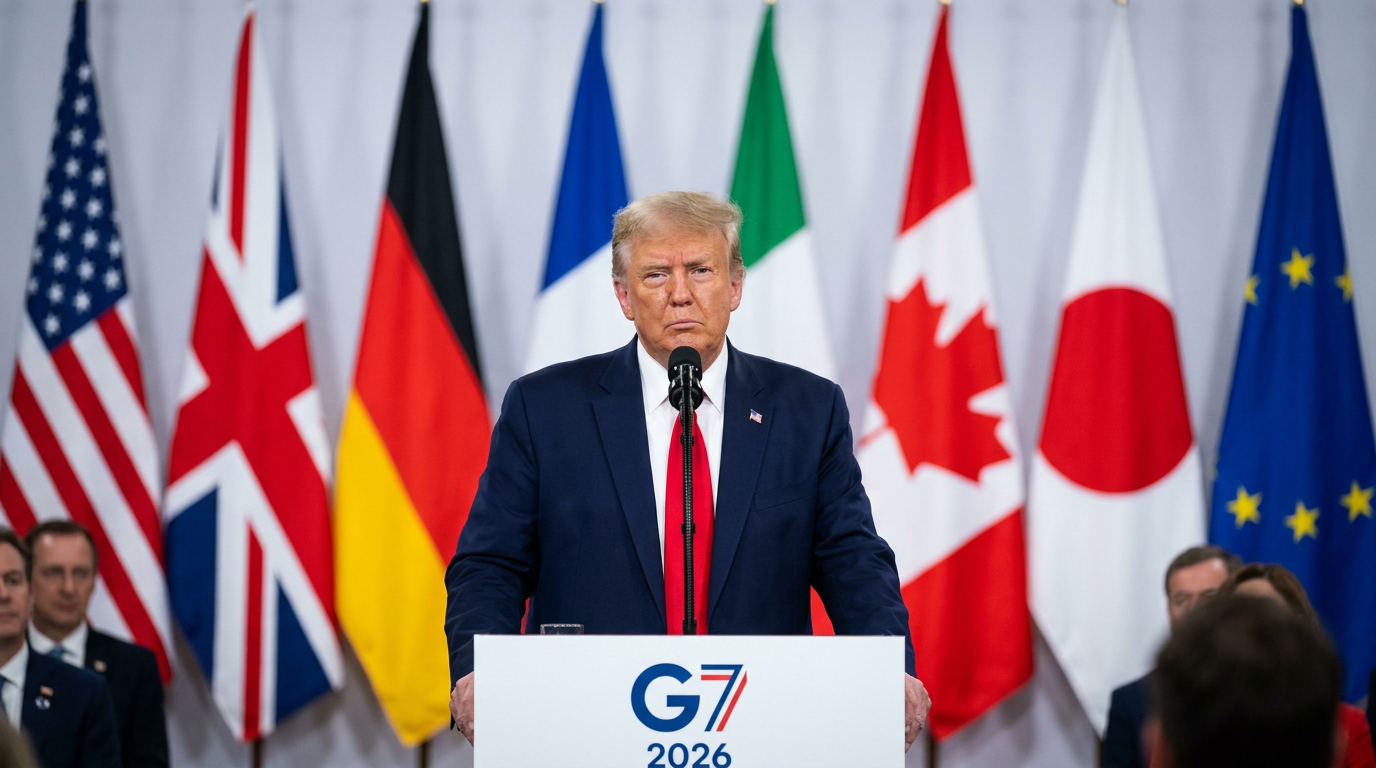
President Donald Trump arrived at the Group of Seven (G7) summit in Italy this week with a sweeping geopolitical declaration, touting a newly negotiated diplomatic framework with Iran. The proposed agreement, which the administration frames as a cornerstone for Middle East peace, aims to halt Tehran's nuclear advancement in exchange for targeted economic relief.[2]
The announcement immediately dominated the summit's agenda, overshadowing scheduled discussions on European security and global trade. European allies, who have long advocated for a return to a structured nuclear agreement following the collapse of the 2015 Joint Comprehensive Plan of Action (JCPOA), offered a cautious welcome to the diplomatic initiative.[5]
At the core of the proposed framework is a mechanism designed to cap Iran's uranium enrichment levels. According to preliminary details circulated among diplomatic corps, Tehran would agree to halt all enrichment at the 60 percent purity threshold and dilute a portion of its existing highly enriched stockpile.[7]
In exchange for these verifiable nuclear concessions, the United States would initiate a phased unfreezing of approximately $15 billion in Iranian assets currently held in restricted international accounts. This sanctions relief is explicitly tied to compliance benchmarks monitored by the International Atomic Energy Agency (IAEA).[8]

However, the agreement extends beyond nuclear infrastructure, touching upon the complex web of regional proxy conflicts. The framework reportedly includes informal understandings regarding the posture of Iranian-backed militias across Iraq, Syria, and Lebanon, though the enforceability of these clauses remains a point of intense debate among security analysts.[8]
The reaction from Israel has been swift, unequivocally hostile, and threatens to complicate the agreement's implementation. Prime Minister Benjamin Netanyahu publicly rejected the premise of the deal, arguing that it provides Tehran with a financial lifeline without dismantling its capacity to fund regional militant groups.[3]
Speaking to reporters shortly after the G7 announcement, Netanyahu emphasized that Israel is not bound by the Washington-Tehran framework. He explicitly stated that Israeli military forces will not withdraw from currently occupied buffer zones in southern Lebanon and parts of Syria, framing the presence as a non-negotiable security imperative.[3]

Speaking to reporters shortly after the G7 announcement, Netanyahu emphasized that Israel is not bound by the Washington-Tehran framework.
This hardline stance is heavily influenced by Israel's domestic political fragility. Key figures in Netanyahu's right-wing coalition, including National Security Minister Itamar Ben-Gvir and Finance Minister Bezalel Smotrich, have issued blistering condemnations of the US-led initiative.[4]
Both ministers have signaled that any Israeli acquiescence to the deal—or any reduction in military pressure on Iranian proxies—would result in the immediate collapse of the governing coalition. This internal pressure severely limits Netanyahu's diplomatic maneuverability, forcing a public confrontation with the US administration.[6]
Within the United States, the proposed agreement faces a steep uphill battle in the court of public opinion and on Capitol Hill. Foreign policy analysts and opinion writers have expressed deep skepticism regarding Tehran's willingness to adhere to the stipulations, citing a history of clandestine nuclear activities.[1]
The central critique revolves around the concept of verification. Critics argue that without unfettered, anytime-anywhere access for IAEA inspectors to undeclared military sites, the enrichment caps are effectively unenforceable. The phrase "we cannot trust any Iranian promises" has become a rallying cry for opponents of the deal.[1][8]

Furthermore, the linkage between the Iran deal and broader geopolitical ambitions has raised eyebrows. During his G7 arrival, Trump explicitly tied the Middle East diplomatic push to his ambitions for resolving the conflict in Ukraine, suggesting a grand strategy of global realignment.[2]
The mechanics of how an Iran agreement facilitates a resolution in Eastern Europe remain opaque. However, analysts speculate that Washington is attempting to sever the growing military and economic partnership between Tehran and Moscow, particularly regarding the supply of drone technology and ballistic missiles.[8]
The immediate future of the agreement hinges on a delicate sequence of diplomatic and political maneuvers. In Washington, the administration must navigate a skeptical Congress, where bipartisan majorities have historically opposed sanctions relief without comprehensive concessions on Iran's ballistic missile program.[7]
In Tehran, the Iranian leadership must sell the deal to a domestic audience and hardline factions within the Islamic Revolutionary Guard Corps (IRGC). The promise of economic revitalization is a powerful incentive, but it must be balanced against the ideological cost of compromising with the United States.[8]
Ultimately, the success or failure of this diplomatic gamble will be determined not in the plenary halls of the G7, but on the ground in the Middle East. If the agreement fails to de-escalate the parallel conflicts involving Hezbollah, Hamas, and Israeli forces, the nuclear caps may prove to be a secondary concern in a region teetering on the edge of a wider war.[3][8]
How we got here
July 2015
The US, Iran, and world powers sign the JCPOA, strictly limiting Iran's nuclear program in exchange for sanctions relief.
May 2018
The United States unilaterally withdraws from the JCPOA and reimposes sweeping economic sanctions on Tehran.
2020–2024
Iran steadily increases its uranium enrichment levels, eventually reaching 60% purity, a short technical step away from weapons-grade material.
June 2026
President Trump touts a new diplomatic framework at the G7 summit, aiming to cap enrichment and de-escalate regional proxy conflicts.
Viewpoints in depth
The US Administration
Views the framework as a pragmatic necessity to prevent a nuclear breakout and stabilize the Middle East.
Proponents within the administration argue that the "maximum pressure" campaigns of the past decade failed to halt Iran's nuclear advancements. By offering targeted, verifiable sanctions relief, they believe Washington can freeze the program at its current state while simultaneously leveraging the deal to sever Tehran's military support for Russia in the Ukraine conflict. They view the agreement not as a grand reconciliation, but as a transactional necessity to prevent a regional war.
The Israeli Government
Considers the agreement an existential threat that rewards Iranian aggression and fails to dismantle proxy networks.
Israeli leadership, across much of the political spectrum, views any financial relief to Tehran as a direct subsidy for Hezbollah, Hamas, and other regional militias. They argue that enrichment caps are easily reversible, whereas the financial windfall from unfrozen assets will permanently alter the regional balance of power. Consequently, Israel maintains that military force—both against proxy groups in Lebanon and Syria, and potentially against Iranian nuclear sites—remains the only reliable deterrent.
Non-Proliferation Experts
Cautiously optimistic about the enrichment caps but highly skeptical of the enforcement and verification mechanisms.
Nuclear watchdogs acknowledge that capping enrichment at 60% prevents an immediate breakout scenario. However, they express deep concern over the lack of "anytime, anywhere" inspection rights for the IAEA. Without the ability to inspect undeclared military sites, experts warn that Iran could maintain a clandestine weapons program parallel to its declared civilian infrastructure, rendering the diplomatic framework largely symbolic.
What we don't know
- Whether the IAEA will be granted sufficient access to verify compliance at undeclared Iranian military sites.
- If Israeli coalition politics will force Prime Minister Netanyahu to take preemptive military action to derail the agreement.
- How the unfreezing of $15 billion will be sequenced, and whether the US can snap back sanctions if violations occur.
Key terms
- Uranium Enrichment
- The process of increasing the concentration of the U-235 isotope in uranium, which is necessary to produce both civilian nuclear power and, at higher purities, nuclear weapons.
- IAEA Safeguards
- A system of inspections and verifications conducted by the International Atomic Energy Agency to ensure that a country's nuclear materials are not diverted for military use.
- Sanctions Relief
- The lifting or suspension of economic penalties, allowing a targeted country to access frozen international bank accounts and resume global trade.
- Proxy Militias
- Armed groups funded, trained, and directed by a state actor to fight conflicts on its behalf, allowing the state to maintain plausible deniability.
Frequently asked
What does the new US-Iran deal actually do?
The proposed framework requires Iran to cap its uranium enrichment at 60% and dilute some existing stockpiles. In return, the US will allow the phased release of roughly $15 billion in frozen Iranian assets.
Why is Israel opposed to the agreement?
Israeli leaders argue the deal provides Iran with billions of dollars that will be funneled to proxy militias like Hezbollah and Hamas, without permanently dismantling Iran's nuclear capabilities.
Will Israel withdraw from Lebanon as part of the deal?
No. Prime Minister Benjamin Netanyahu has explicitly stated that Israeli forces will not leave occupied buffer zones in southern Lebanon or Syria, regardless of the US-Iran framework.
How does this connect to the war in Ukraine?
The US administration hopes that by offering economic relief, it can pressure Tehran to sever its military supply chains with Moscow, specifically halting the transfer of drones and ballistic missiles used in Ukraine.
Sources
Source coverage
8 outlets
3 viewpoints surfaced






[1]NYTRegional Security Hawks
‘We Cannot Trust Any Iranian Promises’: 3 Opinion Writers Dissect the Iran Deal
Read on NYT →[2]Al JazeeraDiplomatic Pragmatists
Trump touts Iran deal and Ukraine ambition as he arrives at G7
Read on Al Jazeera →Netanyahu says Israel won’t leave occupied land in Lebanon
Read on Al Jazeera →What Israeli leaders are saying about US-Iran ‘peace deal’
Read on Al Jazeera →[5]ReutersDiplomatic Pragmatists
G7 leaders cautiously welcome US-Iran diplomatic framework
Read on Reuters →[6]The Jerusalem PostRegional Security Hawks
Smotrich and Ben-Gvir threaten coalition over US-Iran framework
Read on The Jerusalem Post →[7]BBC NewsNon-Proliferation Analysts
Iran nuclear enrichment caps central to new Washington proposal
Read on BBC News →[8]Council on Foreign RelationsNon-Proliferation Analysts
Evaluating the 2026 US-Iran Security Framework
Read on Council on Foreign Relations →
More in news politics
See all 5 stories →Strait of Hormuz
U.S. and Iran Reach Framework Deal for 60-Day Ceasefire and Reopening of Strait of Hormuz
0 sources

Cognitive Immunity
Does 'Prebunking' Actually Work? The Evidence Behind the Psychological Vaccine for Misinformation
0 sources

US-Iran Conflict
US and Iran Sign 60-Day Ceasefire Framework to Open Path for Peace Talks
0 sources
Every angle. Every day.
Get news politics stories with full source coverage and perspective breakdowns delivered to your inbox.