
How Next-Generation Geothermal Is Unlocking 24/7 Clean Power Anywhere
By adapting horizontal drilling techniques from the oil and gas industry, Enhanced Geothermal Systems are breaking geothermal energy out of volcanic regions to provide continuous, carbon-free baseload power.
By Factlen Editorial Team
- Grid Decarbonization Advocates
- Argue that EGS is the missing link for a zero-carbon grid, providing the firm baseload power needed to complement intermittent wind and solar.
- Industrial Power Consumers
- View next-generation geothermal as a critical solution to power energy-intensive operations like AI data centers with reliable, 24/7 clean electricity.
- Energy Transition Pragmatists
- Emphasize the strategic advantage of repurposing the existing oil and gas workforce and drilling technology for clean energy production.
- Economic & Deployment Skeptics
- Caution that despite technological breakthroughs, high upfront capital costs and drilling expenses remain significant barriers to widespread commercialization.
What's not represented
- · Local communities near drilling sites concerned about induced seismicity
- · Environmental groups opposed to any form of hydraulic fracturing
Why this matters
By adapting drilling techniques from the oil and gas industry, next-generation geothermal energy promises to deliver 24/7 carbon-free electricity anywhere on the planet. This breakthrough solves the critical 'baseload' problem of intermittent wind and solar, offering a reliable power source to sustain the AI boom and decarbonize the global grid.
Key points
- Enhanced Geothermal Systems (EGS) create artificial underground reservoirs in hot, dry rock, breaking geothermal energy out of its traditional geographic constraints.
- The technology adapts horizontal drilling and hydraulic stimulation techniques pioneered by the shale oil and gas industry.
- Fervo Energy's Cape Station in Utah is set to become the first large-scale commercial EGS plant in the U.S. when it comes online in 2026.
- The tech industry is heavily backing EGS to secure continuous, zero-carbon electricity for energy-intensive AI data centers.
- The U.S. Department of Energy aims to reduce the cost of EGS by 90 percent to $45 per megawatt-hour by 2035.
The global transition to clean energy has long grappled with a fundamental vulnerability: the intermittency of wind and solar power. As grids decarbonize, the need for "baseload" power—electricity that flows continuously, 24 hours a day, regardless of weather—has become the central bottleneck of the climate fight. While batteries can bridge short gaps, they cannot economically sustain grids through multi-day lulls.[7]
For decades, geothermal energy offered a tantalizing solution, providing continuous, zero-carbon electricity by tapping the immense heat radiating from the Earth's core. Yet, conventional geothermal power has remained a geographic niche, satisfying less than 1 percent of global energy demand. It requires a rare natural alignment of underground heat, water, and permeable rock, restricting development to volcanically active regions like Iceland, New Zealand, or parts of California.[3][5]
That geographic limitation is now being shattered by a wave of next-generation geothermal technologies. By adapting advanced drilling techniques pioneered by the shale oil and gas industry, engineers are no longer hunting for naturally occurring underground reservoirs. Instead, they are creating their own.[4][6]
The most mature of these breakthroughs is known as Enhanced Geothermal Systems (EGS). Rather than relying on natural fluid pathways, EGS targets hot, dry, crystalline rock located several kilometers beneath the surface. Operators drill vertical wells deep into the earth, then steer the drill bits horizontally—a technique perfected during the fracking boom.[4]

Once the wells are drilled, engineers use hydraulic stimulation to inject water at high pressure, creating a network of artificial fractures in the impermeable rock. Cold water is pumped down an injection well, forced through the newly created hot fracture network where it absorbs the earth's heat, and then drawn back up a production well to drive surface turbines.[2][4]
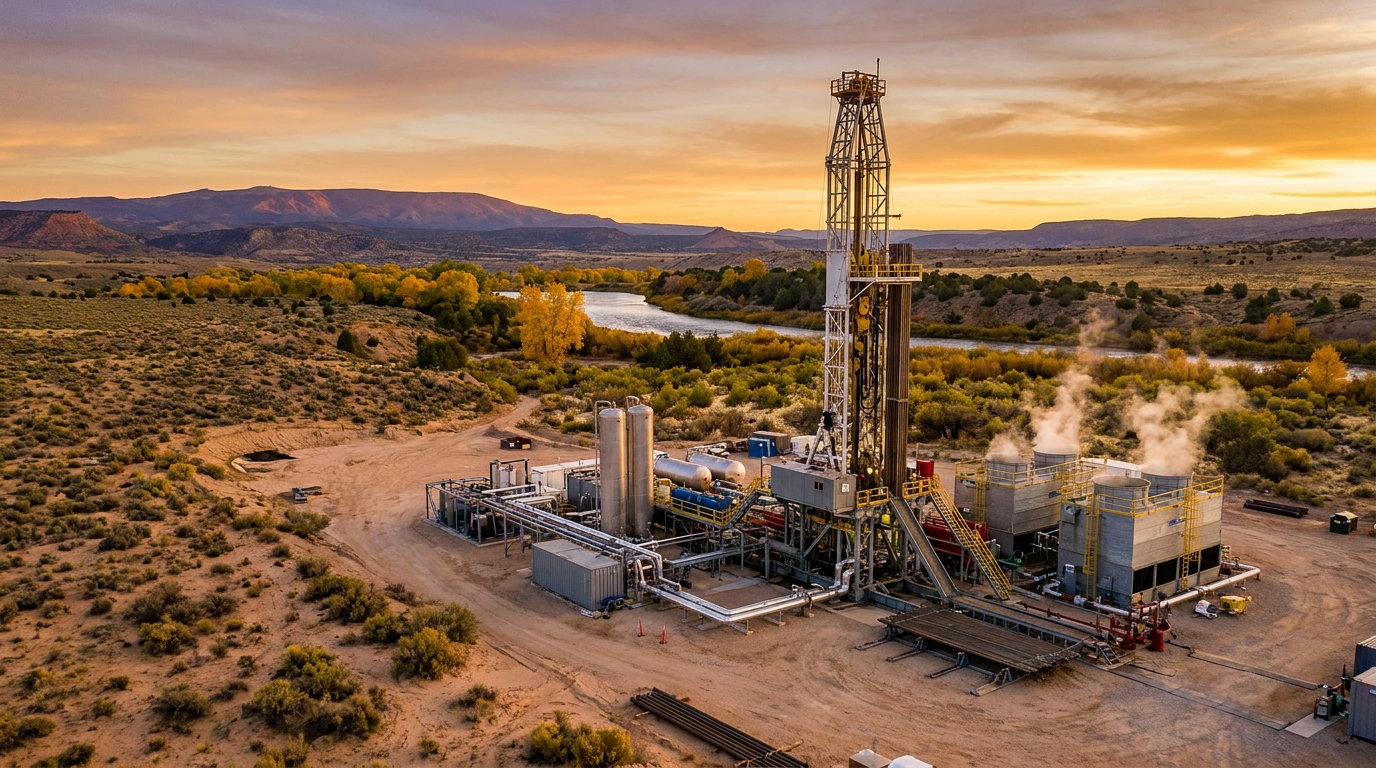
This technology is rapidly transitioning from theoretical research to commercial reality. In Beaver County, Utah, a company called Fervo Energy is constructing Cape Station, the first large-scale commercial EGS power plant in the United States. Utilizing techniques refined at the nearby Department of Energy-sponsored Utah FORGE laboratory, the project represents a watershed moment for the industry.[1][6]
Cape Station is scheduled to begin delivering power to the grid in June 2026. The facility is expected to reach approximately 100 megawatts of operating capacity by early 2027, with long-term plans and permits to scale up to 2 gigawatts of output. This initial deployment is fully contracted to buyers including Southern California Edison, demonstrating strong market confidence in the reliability of engineered geothermal power.[1][6][7]
Cape Station is scheduled to begin delivering power to the grid in June 2026.
The sudden commercial momentum behind EGS is being heavily accelerated by the technology sector. The explosive growth of artificial intelligence and cloud computing has triggered a massive surge in electricity demand from data centers. Because these facilities operate continuously, their operators cannot rely solely on intermittent renewables; they require the exact kind of 24/7 firm power that next-generation geothermal promises.[4][5]
Beyond the tech industry, next-generation geothermal is drawing support from an unlikely coalition: the fossil fuel sector. The skills, supply chains, and equipment required to scale EGS are nearly identical to those used in oil and gas extraction. This presents a unique opportunity to transition a highly skilled workforce—from roughnecks to petroleum geologists—directly into the clean energy economy without requiring them to abandon their core expertise.[2]

While EGS is currently leading the commercialization race, other next-generation approaches are also advancing. Advanced Geothermal Systems (AGS) utilize a closed-loop architecture, circulating a working fluid through sealed underground pipes. Because the fluid never directly touches the rock, AGS requires no hydraulic stimulation, eliminating the risk of induced seismicity, though these systems generally yield lower power outputs than EGS.[4]
Looking further ahead, researchers are targeting "superhot rock" geothermal. This frontier technology aims to drill even deeper to reach rock exceeding 400 degrees Celsius. At these extreme temperatures, water reaches a supercritical state, potentially allowing a single well to generate exponentially more electricity than current designs. Bipartisan legislation was recently introduced in the U.S. Congress to accelerate testing of these superhot systems.[3]
Despite the immense promise, significant hurdles remain before next-generation geothermal can achieve ubiquitous scale. The primary barrier is economic. Drilling deep into hard, crystalline rock is exceptionally expensive, and the elevated capital costs of well construction make early EGS projects difficult to finance without government support or premium power purchase agreements.[1][6]
To bridge this gap, the U.S. Department of Energy launched the "Enhanced Geothermal Shot," an aggressive initiative aimed at reducing the cost of EGS by 90 percent, targeting $45 per megawatt-hour by 2035. Achieving this price point would make engineered geothermal highly competitive with both fossil fuels and conventional renewables.[2]
If these cost reductions are realized, the potential scale is staggering. A 2025 study estimated that next-generation geothermal deployed across the contiguous United States could theoretically produce more than 5 terawatts of power—roughly four times the nation's total current generating capacity.[6]

More conservative models from the Department of Energy project that U.S. next-generation geothermal capacity could reach 90 gigawatts by 2050. This would supply more than 10 percent of the clean, firm power required to stabilize a zero-emissions grid, fundamentally altering the math of the global energy transition.[6]
For decades, the heat beneath our feet has been the forgotten stepchild of the renewable energy family, sidelined by the plunging costs of wind and solar. But as the limitations of a weather-dependent grid become increasingly apparent, the ability to engineer continuous, carbon-free power anywhere on the planet may prove to be the defining energy breakthrough of the decade.[7]
How we got here
1960
The Geysers geothermal field in California begins generating electricity at scale, proving traditional geothermal viability.
2019–2023
Core patents and research for Enhanced Geothermal Systems (EGS) mature, adapting shale drilling techniques.
September 2022
The U.S. Department of Energy launches the 'Enhanced Geothermal Shot' to reduce EGS costs by 90%.
March 2026
Fervo Energy secures $421 million in financing for the first phase of its Cape Station EGS project.
June 2026
Cape Station is scheduled to come online, becoming the first large-scale commercial EGS plant in the U.S.
Viewpoints in depth
The Grid Decarbonization View
Focuses on geothermal's role as the ultimate clean baseload power.
For grid operators and climate scientists, the energy transition has always faced a 'firm power' problem. Wind and solar are cheap but intermittent, and grid-scale batteries remain too expensive for seasonal storage. This camp views Enhanced Geothermal Systems as the holy grail: a zero-carbon power source that runs 24/7. By unlocking geothermal energy outside of volcanic regions, they argue EGS can replace coal and natural gas plants directly, providing the continuous inertia and reliability that modern electrical grids require to function without fossil fuels.
The Tech Industry's View
Driven by the need for continuous, carbon-free electricity to power AI data centers.
Technology giants are increasingly driving the commercialization of EGS. With the explosion of artificial intelligence, data centers are consuming unprecedented amounts of electricity. Because these facilities must run around the clock, tech companies cannot rely solely on solar or wind power to meet their aggressive net-zero emissions pledges. This camp is actively funding early EGS projects through premium power purchase agreements, viewing next-generation geothermal as the only viable way to scale their computing infrastructure without compromising their climate goals.
The Fossil Fuel Transition View
Sees EGS as a lifeline for the oil and gas workforce to enter the clean energy economy.
Perhaps the most unique aspect of the EGS boom is its embrace by the traditional fossil fuel sector. This camp highlights that the core technologies enabling next-generation geothermal—horizontal drilling, hydraulic fracturing, and subsurface reservoir engineering—were entirely pioneered by the shale oil and gas industry. For petroleum engineers and rig operators, EGS offers a seamless transition into the green economy. Advocates argue this alignment could neutralize political opposition to the energy transition in fossil-fuel-heavy regions, turning former oil hubs into clean energy powerhouses.
What we don't know
- Whether the aggressive cost-reduction targets set by the Department of Energy can be met by 2035.
- How frequently induced seismicity (minor earthquakes) will occur as EGS projects scale near populated areas.
- If superhot rock geothermal technology can overcome the extreme material science challenges of drilling into 400°C environments.
Key terms
- Enhanced Geothermal Systems (EGS)
- A technology that creates artificial underground reservoirs by injecting fluid into hot, dry rock to extract heat.
- Baseload Power
- The minimum level of electricity demand on a grid over a 24-hour period, requiring power sources that run continuously.
- Hydraulic Stimulation
- The process of injecting high-pressure fluid into rock formations to open or create fractures, adapted from the oil and gas industry.
- Superhot Rock Geothermal
- An early-stage technology aiming to drill into rock exceeding 400°C to extract exponentially more energy.
- Closed-Loop Systems
- A geothermal approach where fluid circulates through sealed underground pipes, absorbing heat without directly touching the rock.
Frequently asked
How is next-generation geothermal different from traditional geothermal?
Traditional geothermal relies on naturally occurring underground water and permeable rock, limiting it to volcanic regions. Next-generation systems engineer artificial reservoirs in hot, dry rock, allowing deployment almost anywhere.
Does this technology use fracking?
Yes, Enhanced Geothermal Systems use hydraulic stimulation techniques adapted from the oil and gas industry to create fractures in deep rock. However, it circulates water to harvest heat rather than extracting hydrocarbons.
When will this technology be widely available?
The first commercial-scale EGS plant is expected to come online in Utah in 2026, with the Department of Energy targeting widespread, cost-competitive deployment by 2030 to 2035.
Why are tech companies investing in geothermal?
Data centers for artificial intelligence require massive amounts of electricity 24 hours a day. Geothermal provides the continuous, carbon-free power that intermittent sources like wind and solar cannot guarantee.
Sources
Source coverage
7 outlets
4 viewpoints surfaced







[1]U.S. Energy Information AdministrationEconomic & Deployment Skeptics
Enhanced geothermal systems could expand geothermal power generation
Read on U.S. Energy Information Administration →[2]U.S. Department of EnergyGrid Decarbonization Advocates
Enhanced Geothermal Shot: Unlocking the Power of Geothermal Energy
Read on U.S. Department of Energy →[3]Massachusetts Institute of TechnologyGrid Decarbonization Advocates
How Next-Generation Geothermal Is Redefining Clean Baseload Power
Read on Massachusetts Institute of Technology →[4]Information Technology and Innovation FoundationIndustrial Power Consumers
Accelerating Next-Generation Geothermal
Read on Information Technology and Innovation Foundation →[5]Columbia University Center on Global Energy PolicyIndustrial Power Consumers
Next-Generation Geothermal: Breaking Geographic Constraints
Read on Columbia University Center on Global Energy Policy →[6]Proceedings of the National Academy of SciencesEnergy Transition Pragmatists
Buried Treasure: The Potential of Next-Generation Geothermal
Read on Proceedings of the National Academy of Sciences →[7]Factlen Editorial TeamGrid Decarbonization Advocates
Synthesis by Factlen editorial team
Read on Factlen Editorial Team →

Every angle. Every day.
Get guides stories with full source coverage and perspective breakdowns delivered to your inbox.