
The 7-Year Smartphone: How Extended Software and the Circular Economy Are Changing How We Buy Phones
With tech giants promising seven years of updates and new 'Right to Repair' laws taking effect, the smartphone market is rapidly shifting from disposable upgrades to long-term durability.
By Factlen Editorial Team

- Right-to-Repair Advocates
- Argue that true device longevity requires accessible, affordable hardware repairs, not just software updates.
- Circular Economy Proponents
- Focus on the massive environmental and economic benefits of extending device lifespans through refurbishment.
- Hardware Manufacturers
- Highlight their unprecedented software support commitments while balancing hardware design constraints.
What's not represented
- · Independent Repair Shop Owners
- · E-waste Recycling Facility Operators
Why this matters
As flagship smartphones cross the $1,000 threshold, the shift toward seven-year lifespans and certified refurbished markets empowers consumers to save hundreds of dollars while drastically reducing their environmental footprint.
Key points
- Tech giants are now offering up to seven years of software updates for flagship phones.
- Hardware repairability remains a bottleneck, with manufacturers scoring poorly due to glued batteries and software locks.
- The EU's Right to Repair directive will mandate accessible spare parts by July 2026.
- Buying a refurbished phone cuts its lifetime carbon footprint by up to 91 percent.
The era of the mandatory two-year smartphone upgrade cycle is officially drawing to a close. For over a decade, consumers were carefully conditioned to replace their pocket-sized computers the moment their carrier contract expired. This relentless churn was driven by rapidly advancing technology, software that quickly became obsolete, and lithium-ion batteries that stubbornly refused to hold a charge after a few hundred cycles. Today, however, that linear model of consumption—where devices are manufactured, briefly used, and promptly discarded—is being actively dismantled by a combination of consumer fatigue and industry evolution. Shoppers are no longer dazzled by incremental camera upgrades or slightly thinner bezels, prompting a fundamental reevaluation of what makes a smartphone valuable.
A powerful convergence of extended software support, booming refurbished marketplaces, and aggressive new consumer protection legislation is transforming the smartphone from a disposable commodity into a durable, long-term investment. As the retail prices for flagship devices from major brands comfortably exceed the thousand-dollar mark, the financial calculus for the average buyer has shifted dramatically. Consumers are holding onto their devices longer than ever before, demanding that their expensive hardware go the distance. This shift is not just a temporary reaction to economic inflation; it represents a permanent change in consumer psychology, prioritizing longevity, repairability, and environmental sustainability over the fleeting thrill of owning the newest shiny gadget.
The most visible and impactful shift has come directly from the manufacturers themselves, who are finally responding to the demand for longevity. Tech giants like Google and Samsung have fundamentally altered the value proposition of their flagship devices by guaranteeing an unprecedented seven years of operating system and security updates. Starting with recent flagship releases, a phone purchased today is theoretically supported with the latest software features and critical security patches well into the 2030s. This is a massive departure from the historical industry standard, where devices were often abandoned by their makers after just two or three years, leaving users vulnerable to malware and unable to download new applications.[4]
This extended software runway ensures that older devices remain secure, functional, and compatible with the ever-evolving ecosystem of mobile apps, removing one of the primary artificial drivers of forced upgrades. However, a seven-year software promise immediately collides with a harsh physical reality: the hardware inside the phone is not immortal. While the operating system might be pristine in year five, the lithium-ion batteries that power these devices chemically degrade over time, and the glass screens remain highly susceptible to drops and impacts. A phone cannot truly last seven years if the battery dies by lunchtime and costs a fortune to replace.[4]

Because the software now outlives the hardware, this discrepancy has placed a massive, unavoidable spotlight on device repairability. If a smartphone is genuinely meant to remain in a consumer's pocket until 2033, that consumer needs the ability to easily and affordably replace degraded batteries, cracked displays, or worn-out charging ports without being forced to abandon the device entirely. The industry is currently at a crossroads, caught between the marketing promise of long-lasting phones and the physical design choices that make actually fixing those phones a frustrating, expensive ordeal for the average user.
Currently, the hardware side of the industry is struggling to meet the new expectations set by their own software promises. A comprehensive 2026 "Failing the Fix" scorecard released by the U.S. Public Interest Research Group (PIRG) evaluated the repairability of popular consumer electronics. The report gave major manufacturers like Apple and Samsung near-failing grades—a D- and a D, respectively—highlighting a stark contrast between their longevity marketing and the physical reality of their hardware. The scorecard relies on data evaluating how easy devices are to disassemble, the availability of spare parts, and the accessibility of official repair manuals.[1]
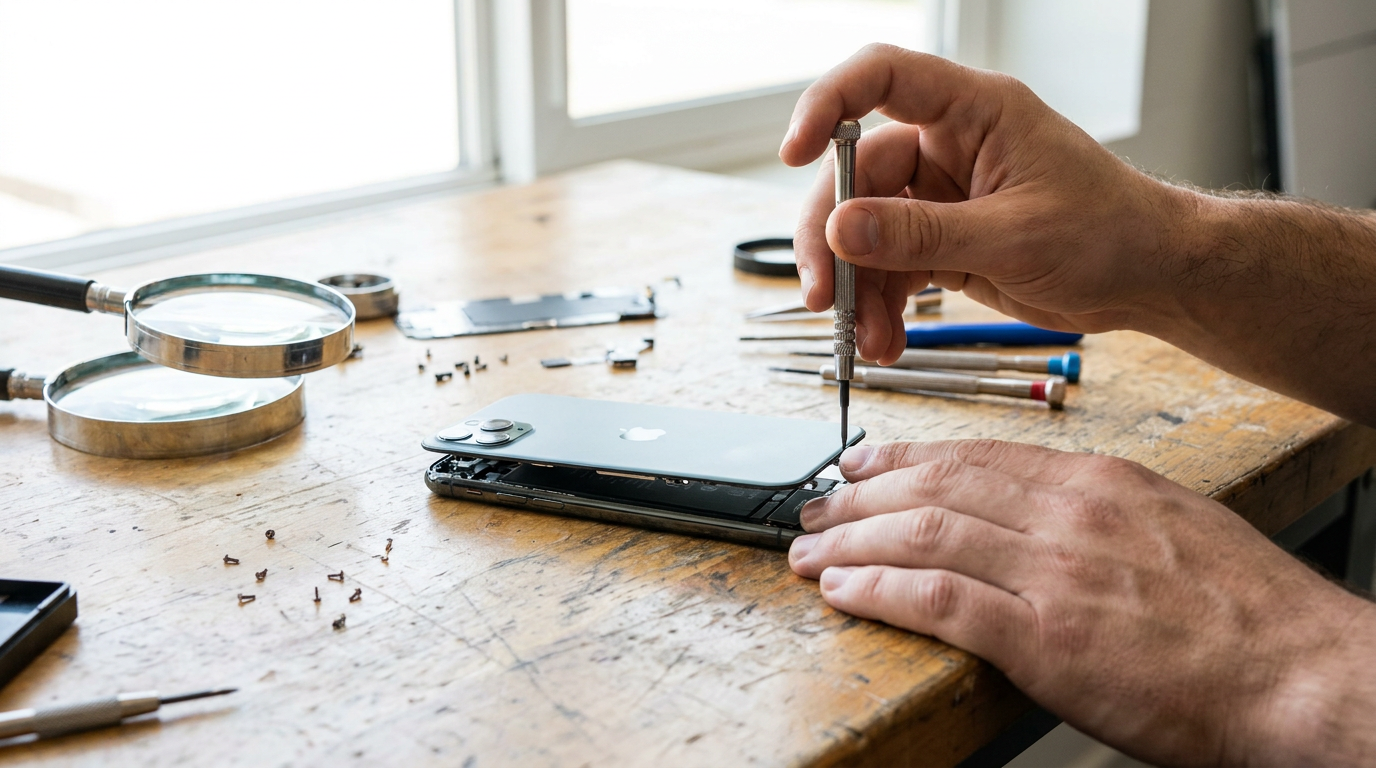
The low scores from consumer advocacy groups stem from deliberate design choices that actively hinder independent repairs. Modern smartphones frequently feature heavily glued-in batteries that require heat guns and chemical solvents to remove, proprietary screws that demand specialized tools, and software-based "part pairing." Part pairing is a particularly controversial practice where a specific hardware component, like a screen or biometric sensor, is cryptographically tied to the device's motherboard. If a third-party repair shop replaces the screen with an identical, functional part, the software may reject it or disable key features, artificially inflating the cost of repairs and pushing consumers toward buying new devices.[1]
The low scores from consumer advocacy groups stem from deliberate design choices that actively hinder independent repairs.
But regulatory patience with these restrictive practices has officially run out. In Europe, the sweeping Right to Repair directive is set to be fully implemented by all member states by July 31, 2026. This landmark legislation fundamentally rewrites the rules of hardware ownership, shifting the balance of power away from manufacturers and back into the hands of consumers and independent technicians. The directive is designed to make repairing a broken device the easiest and most logical choice, rather than a frustrating labyrinth of high costs and voided warranties.[2][7]
Under the new EU Right to Repair directive, manufacturers are legally required to provide independent repair shops and everyday consumers with direct access to spare parts at reasonable prices for up to seven years after a product's release. Crucially, the legislation also directly targets the software locks and restrictive contractual clauses that companies have historically used to monopolize the repair process. By banning practices that impede independent repair, the EU is fostering a competitive repair market that will naturally drive down costs and extend the functional lifespan of millions of devices across the continent.[2]

The momentum for repairability isn't limited to the European continent; it is rapidly gaining ground in the United States as well. Currently, roughly one-third of Americans live in a state that has passed some form of Right to Repair legislation, with dozens of active bills pushing for broader consumer protections across the country. The political pressure has become so immense that even massive technology companies, which historically spent millions of dollars lobbying against these exact bills, have begun to publicly endorse them. This capitulation signals that the regulatory tide has permanently turned in favor of consumer repair rights.[2]
As devices are built to live longer and become easier to fix, the secondary market for technology is exploding in popularity. The "circular economy"—an economic model specifically designed to eliminate waste by keeping products, components, and materials in use for as long as possible—has found its strongest and most lucrative foothold in the refurbished smartphone sector. What was once considered a risky, informal market of used goods has rapidly professionalized into a massive, globally recognized industry of certified restoration.[5][6]
Buying a refurbished smartphone is no longer a niche, buyer-beware gamble relegated to shady online auction sites. It has evolved into a highly certified, industrialized process. According to a recent 2025 survey conducted by the marketplace Recommerce, a staggering 46 percent of Europeans have already taken the plunge and purchased a second-hand device. Consumers are increasingly drawn by professional refurbishment processes that include rigorous multi-point testing, brand-new battery installations, and comprehensive multi-year warranties that rival those offered on brand-new devices.[3][8]

The financial incentives driving this secondary market boom are impossible to ignore. Refurbished flagship phones typically cost between 20 and 50 percent less than their factory-fresh counterparts, offering access to premium technology at mid-range prices. In an era defined by persistent global inflation and squeezed purchasing power, price remains the ultimate deciding factor for the majority of second-hand buyers. For a family looking to upgrade multiple devices, choosing the refurbished route can easily save thousands of dollars without sacrificing performance or software security.[3][8]
Yet, while the financial savings are a massive draw, the environmental benefits of the circular economy are equally staggering and increasingly urgent. The world generated a record-breaking 62 million tonnes of electronic waste in 2024, a figure that the Global E-Waste Monitor projects will reach a devastating 82 million tonnes by 2030. The extraction of rare earth metals, cobalt, and lithium required to manufacture millions of new devices every year carries a massive ecological footprint, driving deforestation, water pollution, and immense carbon emissions.[5]
Choosing a refurbished device directly interrupts this destructive linear cycle. Industry data shows that buying a refurbished smartphone reduces its lifetime CO2 impact by up to 91 percent compared to manufacturing a brand-new one. By bypassing the resource-intensive manufacturing phase entirely, a single refurbished phone saves roughly 77 kilograms of carbon emissions. When multiplied across the millions of devices sold globally, the shift toward second-hand technology represents one of the most effective, immediate actions consumers can take to reduce their personal carbon footprint.[5]

This fundamental shift in consumer behavior is also creating a powerful "trickle-down" effect within households and communities. Research from the GSMA indicates that nearly a third of smartphone owners globally now choose to pass their older, still-functional devices down to family members or friends rather than leaving them to gather dust in a drawer. Because these older phones are now supported by extended software updates and can be easily repaired, they provide safe, reliable connectivity for younger users or older relatives, further reducing the demand for newly manufactured budget devices.[6]
The smartphone industry is currently undergoing a necessary and long-overdue maturation. Driven by widespread consumer fatigue with high prices, urgent environmental necessity, and the undeniable force of new global legislation, the market is finally aligning around a simple, empowering concept. The technology we rely on every single day should be built to last, we should have the fundamental right to fix it when it breaks, and the era of treating complex electronics as disposable trash is finally coming to an end.
How we got here
2023-2024
Google and Samsung announce unprecedented seven-year OS update guarantees for flagship phones.
2024
Global electronic waste hits a record 62 million tonnes, accelerating calls for sustainability.
2025
The refurbished smartphone market achieves record profitability as 46% of Europeans adopt second-hand devices.
July 2026
The EU's landmark Right to Repair directive takes full effect, mandating accessible spare parts.
Viewpoints in depth
Right-to-Repair Advocates
Argue that true device longevity requires accessible, affordable hardware repairs, not just software updates.
Advocacy groups like U.S. PIRG and Repair.eu argue that manufacturers still use hostile design tactics—such as glued-in batteries and software-based part pairing—to monopolize the repair market. They believe that without strong legislation forcing companies to provide cheap spare parts and open repair manuals, the promise of a "seven-year phone" is an illusion, as the cost of fixing a degraded battery or cracked screen will simply push consumers to buy new devices anyway.
Circular Economy Proponents
Focus on the massive environmental and economic benefits of extending device lifespans through refurbishment.
Organizations like the GSMA and environmental watchdogs emphasize that manufacturing a single new smartphone generates up to 85 kilograms of CO2 and requires the extraction of rare earth metals. By championing the refurbished market, they argue that consumers can cut a device's carbon footprint by 91 percent while saving money. For this camp, the goal is to shift society away from a linear "make, use, discard" model toward a system where every phone sees a second or third life.
Hardware Manufacturers
Highlight their unprecedented software support commitments while balancing hardware design constraints.
Tech giants like Apple and Samsung point to their recent commitments to provide up to seven years of operating system and security updates as proof of their dedication to device longevity. While they have faced criticism for hardware repairability, manufacturers often argue that tightly integrated components, strong adhesives, and proprietary parts are necessary to ensure devices remain water-resistant, ultra-thin, and secure from third-party tampering.
What we don't know
- Whether independent repair shops will actually see a drop in spare part prices once the EU directive is fully enforced.
- How battery chemistry will evolve to match the seven-year software lifespans promised by manufacturers.
Key terms
- Circular Economy
- An economic model that keeps products and materials in use for as long as possible, eliminating waste.
- Right to Repair
- Legislation that requires manufacturers to provide consumers and independent repair shops with access to parts, tools, and manuals.
- Part Pairing
- A software restriction used by manufacturers that ties a specific hardware component to the device's motherboard, preventing third-party replacements.
- E-waste
- Electronic waste, encompassing discarded electrical or electronic devices that often contain hazardous materials.
- Refurbished
- A used device that has been professionally tested, repaired, and cleaned to function like new before being resold.
Frequently asked
Will my phone actually get updates for seven years?
Yes. Google and Samsung have committed to providing seven years of security and operating system updates for their latest flagship devices, ensuring they remain secure well into the 2030s.
Is it safe to buy a refurbished smartphone?
Yes, provided you buy from a certified refurbisher. Professional marketplaces rigorously test devices, replace degraded batteries, and typically offer one-to-two-year warranties.
What is the Right to Repair directive?
It is a landmark EU law taking effect in July 2026 that requires manufacturers to provide spare parts at reasonable prices and bans software locks that prevent independent repair shops from fixing devices.
How much money can I save buying refurbished?
Consumers typically save between 20 and 50 percent compared to the price of a brand-new device, depending on the model's age and cosmetic condition.
Sources
Source coverage
8 outlets
3 viewpoints surfaced








[1]ConsumerAffairsRight-to-Repair Advocates
A new repairability report gives Apple and Samsung low marks
Read on ConsumerAffairs →[2]CyberNewsRight-to-Repair Advocates
EU Right to Repair directive to be implemented by July 2026
Read on CyberNews →[3]eNCACircular Economy Proponents
Second-hand smartphone market surges amid eco-friendly push
Read on eNCA →[4]SammyFansHardware Manufacturers
Samsung's extended 7-year OS updates guarantee is in effect
Read on SammyFans →[5]Refurb.meCircular Economy Proponents
The circular economy case for refurbished tech
Read on Refurb.me →[6]GSMACircular Economy Proponents
How old phones are finding new life in a circular world
Read on GSMA →[7]Right to Repair EuropeRight-to-Repair Advocates
What should we expect from 2026 for repair and right to repair in Europe?
Read on Right to Repair Europe →[8]India TimesCircular Economy Proponents
Second-hand market for smartphones has surged in recent years
Read on India Times →

More in shopping
See all 5 stories →

Every angle. Every day.
Get shopping stories with full source coverage and perspective breakdowns delivered to your inbox.