
Thermal Recovery Explained: The Science of Heat and Cold for Muscle Repair
While cold plunges and saunas dominate fitness culture, sports science reveals that timing is everything. Understanding how manipulating temperature affects inflammation and muscle growth allows athletes to optimize recovery without sabotaging their gains.
By Factlen Editorial Team
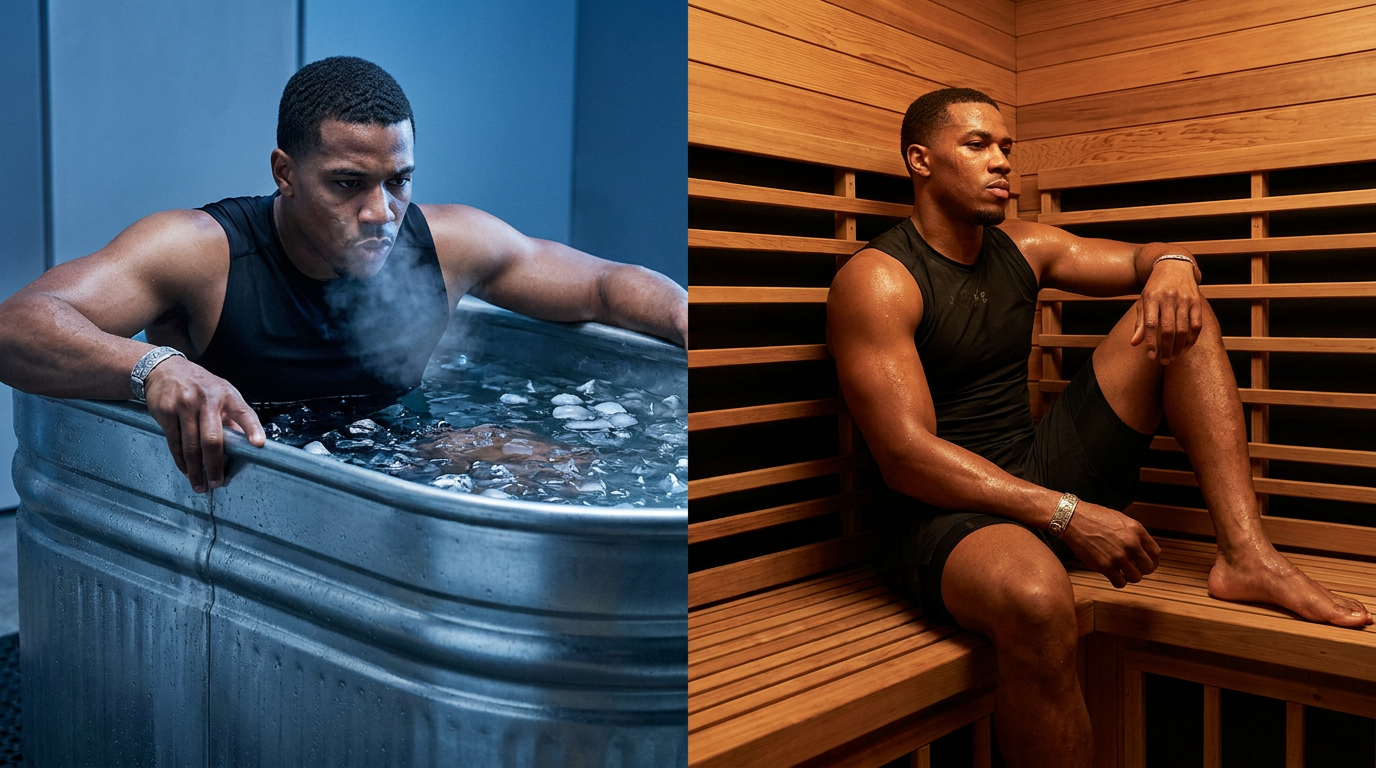
- Strength & Hypertrophy Coaches
- Prioritize muscle adaptation and advise against cold exposure immediately following resistance training to preserve the inflammatory signal.
- Endurance & High-Frequency Athletes
- Value immediate pain reduction and systemic recovery over long-term muscle growth, utilizing cold plunges to survive grueling multi-day events.
- Longevity & Wellness Advocates
- Focus on the systemic benefits of thermal therapy, such as heat shock protein generation and autonomic nervous system regulation, rather than pure athletic performance.
What's not represented
- · Casual gym-goers with limited time
- · Individuals with cardiovascular contraindications to extreme temperatures
Why this matters
Using the wrong thermal therapy at the wrong time can actively sabotage your workout gains. Understanding the physiological mechanisms of heat and cold allows you to reduce soreness and accelerate muscle adaptation without wasting time or effort.
Key points
- Cold water immersion reduces inflammation and is highly effective for treating delayed onset muscle soreness.
- Using cold plunges immediately after resistance training can blunt muscle growth by suppressing necessary inflammatory signals.
- Heat therapy promotes vasodilation, delivering nutrient-rich blood to repairing muscles without halting adaptation.
- Saunas trigger the release of heat shock proteins, which aid in cellular repair and resilience.
- Athletes should periodize thermal recovery: cold for immediate tournament recovery, heat for off-season muscle building.
The explosion of thermal recovery tools has transformed the modern fitness landscape. From professional training facilities to suburban garages, ice baths and infrared saunas have become ubiquitous fixtures of the post-workout routine. Driven by a surge in wellness culture and biohacking trends, everyday athletes are increasingly turning to extreme temperatures to accelerate their recovery.[1]
However, temperature is a highly specific physiological tool, not a universal panacea. The human body's response to extreme heat and extreme cold dictates completely different biochemical cascades. Applying the wrong temperature at the wrong time can not only waste effort but actively blunt the adaptations you just worked so hard to achieve.[1][6]
The physiological journey begins with the cold. Cold Water Immersion (CWI), typically defined in clinical literature as water below 59°F (15°C), triggers an immediate and aggressive peripheral vasoconstriction. Upon contact with the freezing water, the blood vessels in the extremities clamp down tightly to preserve core body temperature and protect vital organs.[4]
This vascular clamping acts as a powerful physiological flush. As blood is rapidly forced away from the muscles and toward the body's core, it carries away metabolic byproducts like lactic acid and significantly reduces acute tissue swelling. The nervous system also numbs the pain receptors in the skin and superficial muscle layers.[4]

For athletes battling Delayed Onset Muscle Soreness (DOMS), CWI is highly effective. Extensive meta-analyses show that cold plunges significantly reduce perceived soreness and muscle stiffness 24 to 48 hours after intense, muscle-damaging exercise compared to passive rest alone.[2][4]
Yet, there is a massive catch for strength trainees and bodybuilders. The very mechanism that makes cold plunges so effective at reducing soreness—blunting the inflammatory response—is the exact mechanism that blunts muscle hypertrophy.[2][6]
Muscle growth fundamentally requires an acute inflammatory signal. When you lift heavy weights, you create microscopic tears in the muscle fibers. The body responds by sending macrophages, inflammatory cytokines, and satellite cells to the site to signal repair, ultimately building the muscle back larger and stronger.[2]
Submerging yourself in ice water immediately after a heavy resistance training session artificially suppresses this crucial signaling pathway. Studies have demonstrated that consistent post-lift cold water immersion can reduce long-term muscle mass and strength gains by up to a third, effectively erasing a significant portion of the workout's benefits.[2][6]

Submerging yourself in ice water immediately after a heavy resistance training session artificially suppresses this crucial signaling pathway.
Enter heat therapy. Saunas, steam rooms, and hot baths operate on the exact opposite physiological principle: vasodilation. Heat exposure causes the blood vessels to expand, dramatically increasing peripheral blood flow and cardiac output without subjecting the body to the mechanical stress of exercise.[3]
This increased, nutrient-dense blood flow delivers oxygen and amino acids directly to recovering muscle tissues. It accelerates the repair of micro-tears and clears metabolic waste, all without blunting the necessary inflammatory signals required for muscle adaptation.[3][6]
Furthermore, heat exposure triggers the release of Heat Shock Proteins (HSPs) at the cellular level. These specialized molecules act as cellular chaperones, repairing misfolded proteins, protecting cells from oxidative stress, and promoting overall cellular resilience and longevity.[3]

So, how should an athlete navigate these opposing forces? Sports scientists advocate for a periodized, goal-oriented approach to thermal recovery. Cold therapy is ideal during high-frequency competition phases—like a multi-day CrossFit tournament, a tennis championship, or a grueling endurance race—where immediate performance and pain reduction trump long-term muscular adaptation.[4][6]
Conversely, heat therapy is optimal after resistance training or during the off-season, when maximizing muscle growth, strength gains, and cellular adaptation is the primary objective. Heat supports the body's natural rebuilding processes rather than interrupting them.[3][6]
For those seeking the middle ground, Contrast Water Therapy (CWT) offers an intriguing alternative. By alternating between hot and cold environments—typically a ratio of three minutes hot to one minute cold—athletes create a "vascular pump" effect, rapidly shifting the body between vasodilation and vasoconstriction.[5]
While highly popular among elite athletes, clinical evidence on contrast therapy remains mixed. Some studies suggest it clears metabolic waste faster than passive rest, but it may not offer significant physiological advantages over a light, active recovery session, such as a 15-minute ride on a stationary bike.[5]

Beyond the muscular system, thermal therapy profoundly impacts the central nervous system. Cold plunges stimulate the vagus nerve and trigger a massive release of norepinephrine and dopamine, improving mood, focus, and autonomic resilience.[1]
How we got here
Early 2000s
Ice baths become standard protocol in professional rugby and football locker rooms for immediate pain relief.
2015
Landmark studies reveal that post-resistance cold water immersion actively blunts muscle hypertrophy pathways.
2020
The biohacking movement popularizes daily cold plunging for central nervous system and metabolic benefits.
2026
Sports science consensus shifts toward 'periodized thermal recovery,' prescribing heat and cold based on specific daily training goals.
Viewpoints in depth
Strength & Hypertrophy Coaches
Prioritize muscle adaptation and advise against cold exposure immediately following resistance training.
For professionals focused on building strength and muscle mass, the post-workout inflammatory response is sacred. When muscle fibers sustain micro-tears from heavy lifting, the body's acute inflammatory cascade is the primary signal that tells satellite cells to begin repairing and enlarging the tissue. Strength coaches argue that introducing severe cold immediately after a session acts as a chemical fire extinguisher, putting out the very fire required for growth. They advocate for passive rest, active recovery, or heat therapy to support, rather than suppress, this natural adaptation process.
Endurance & High-Frequency Athletes
Value immediate pain reduction and systemic recovery over long-term muscle growth.
In the context of a multi-day CrossFit competition, a Grand Slam tennis tournament, or a stage race like the Tour de France, long-term muscle hypertrophy is irrelevant. The sole objective is to clear metabolic waste, reduce perceived pain, and restore central nervous system function so the athlete can perform again in a matter of hours. For these athletes, the vasoconstrictive flush of a cold plunge is an invaluable tool. It rapidly decreases tissue swelling and numbs the peripheral nervous system, allowing for sustained high-level performance across consecutive days.
Longevity & Wellness Advocates
Focus on the systemic, cellular, and psychological benefits of thermal therapy.
Beyond the gym, a growing cohort of wellness practitioners views thermal therapy through the lens of longevity and mental health. They point to the profound autonomic nervous system benefits of temperature manipulation. Cold exposure provides a hormetic stressor that spikes norepinephrine and dopamine, building psychological resilience. Conversely, deliberate heat exposure via saunas mimics the cardiovascular benefits of moderate exercise and triggers the release of heat shock proteins, which are linked to improved cellular health and a reduced risk of neurodegenerative diseases.
What we don't know
- The exact minimum effective dose of heat exposure required to maximize heat shock protein generation in elite athletes.
- Whether the psychological benefits of daily cold plunging outweigh the potential blunting of muscular adaptation in recreational lifters.
- The precise timing window required between resistance training and cold exposure to completely avoid blunting hypertrophy.
Key terms
- Vasoconstriction
- The narrowing of blood vessels, typically triggered by cold, which forces blood away from the extremities and toward the body's core.
- Vasodilation
- The widening of blood vessels, typically triggered by heat, which increases blood flow and nutrient delivery to peripheral tissues.
- Hypertrophy
- The increase in the volume of an organ or tissue due to the enlargement of its component cells; in fitness, this refers to muscle growth.
- Heat Shock Proteins (HSPs)
- A family of proteins produced by cells in response to exposure to stressful conditions, like sauna heat, which help repair damaged proteins and protect cellular health.
- Delayed Onset Muscle Soreness (DOMS)
- The pain and stiffness felt in muscles several hours to days after unaccustomed or strenuous exercise.
Frequently asked
How long should I stay in a cold plunge?
Clinical studies suggest that 11 to 15 minutes total per week, broken into 2-3 minute sessions in water below 59°F (15°C), is sufficient to trigger the metabolic and recovery benefits.
Will an ice bath ruin my workout?
If your goal is muscle growth (hypertrophy) and you plunge immediately after lifting weights, yes, it can blunt your gains. If your goal is endurance recovery or pain relief, it is highly beneficial.
When is the best time to use a sauna?
Saunas are best used after resistance training to promote blood flow for repair, or in the evening on rest days to trigger parasympathetic relaxation and improve sleep quality.
Is contrast therapy better than just cold or hot?
Contrast therapy is excellent for creating a 'vascular pump' to clear metabolic waste, but current evidence suggests it is roughly equal in effectiveness to a light active recovery session, like easy cycling.
Sources
Source coverage
6 outlets
3 viewpoints surfaced





[1]Factlen Editorial TeamLongevity & Wellness Advocates
Synthesis by Factlen editorial team
Read on Factlen Editorial Team →[2]National Center for Biotechnology InformationStrength & Hypertrophy Coaches
The effects of cold water immersion on muscle hypertrophy and strength
Read on National Center for Biotechnology Information →[3]The Journal of PhysiologyLongevity & Wellness Advocates
Heat shock proteins and skeletal muscle adaptation
Read on The Journal of Physiology →[4]Sports MedicineEndurance & High-Frequency Athletes
Cold Water Immersion and Recovery from Delayed-Onset Muscle Soreness
Read on Sports Medicine →Contrast water therapy and exercise-induced muscle damage
Read on European Journal of Applied Physiology →[6]American College of Sports MedicineStrength & Hypertrophy Coaches
Optimizing Recovery: Guidelines for Thermal Interventions
Read on American College of Sports Medicine →


Every angle. Every day.
Get fitness stories with full source coverage and perspective breakdowns delivered to your inbox.