
How Precision Fermentation is Creating Real Dairy Without the Cow
By programming microbes to brew milk proteins, food-tech companies are replicating the exact taste and melt of traditional cheese while dramatically cutting land and water use.
By Factlen Editorial Team
- Food-Tech Innovators
- Focused on replicating the exact taste and functionality of dairy without animals.
- Sustainability Advocates
- Focused on the massive reductions in land, water, and methane emissions.
- Pragmatic Analysts
- Focused on the energy intensity of bioreactors and regulatory hurdles.
What's not represented
- · Traditional dairy farmers facing potential economic displacement
- · Consumers with strict whole-food dietary preferences
Why this matters
Animal agriculture is a leading driver of global greenhouse gas emissions and land use. If precision fermentation can scale affordably, it offers a way to consume biologically identical dairy products with a fraction of the environmental footprint.
Key points
- Precision fermentation uses programmed microbes to produce bio-identical dairy proteins like casein and whey.
- The process removes cows from the equation, eliminating methane emissions and drastically reducing land and water use.
- Formo recently received an FDA 'no questions' letter for its animal-free casein, a major regulatory milestone.
- The technology requires significant electricity and sugar feedstocks, meaning its true climate benefit depends on renewable energy.
- The final purified proteins are identical to cow's milk and contain no genetically modified organisms.
The holy grail of alternative dairy has always been the "stretch and melt" of real cheese. While plant-based milks have successfully captured a massive share of the beverage market, vegan cheeses often fall short on taste and texture, relying on starches and oils that fail to mimic the complex properties of dairy.[7]
Enter precision fermentation. While the term sounds futuristic, it is not a new concept. The food and medical industries have used this exact technology for decades to manufacture human insulin for diabetics and to produce vegetarian rennet, an enzyme used in almost all modern cheesemaking.[4]
But now, a wave of food-tech startups is using precision fermentation to brew the exact macro-proteins found in cow's milk: whey and casein. By doing so, they are creating a new category of "animal-free dairy" that promises the exact same culinary experience as traditional milk, without involving a single cow.[1][7]
The mechanism begins at the genetic level. Scientists isolate the specific genetic sequence in a cow's DNA that codes for a desired dairy protein, such as beta-casein.[1]
They then insert this DNA sequence into a harmless microorganism, typically a specific strain of yeast or fungi. This effectively programs the microbe, turning it into a microscopic protein factory that naturally produces dairy proteins as it grows.[1][4]

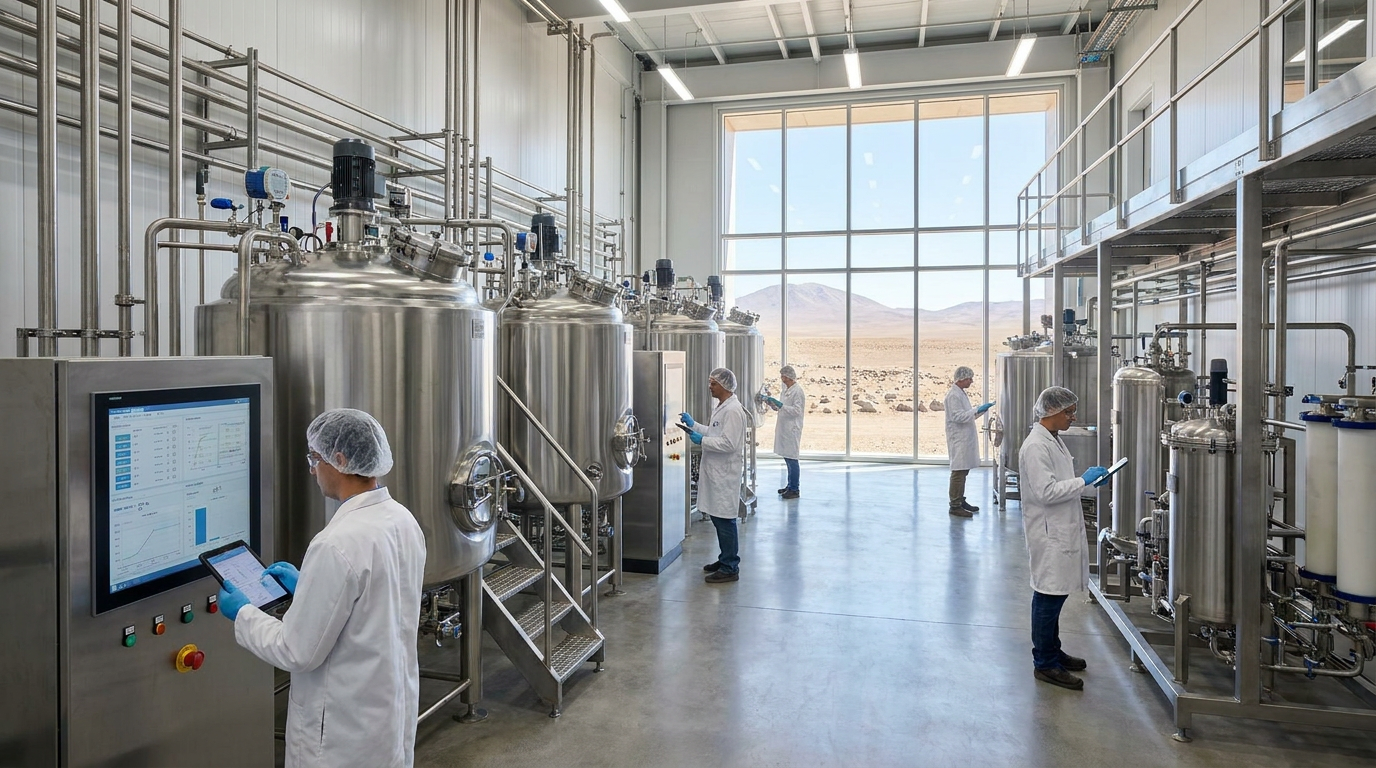
These programmed microbes are placed in large stainless-steel fermentation tanks, known as bioreactors, which look identical to the equipment used in a commercial craft brewery. Inside, they are fed a nutrient-rich broth of simple sugars, vitamins, and minerals.[1]
As the microbes consume the sugar, they multiply rapidly and produce the target dairy protein with absolute precision. Because the environment is strictly controlled, the process yields a highly consistent product without the variability of traditional agriculture.[1]
Once the fermentation cycle is complete, the protein is separated from the microorganisms and the growth medium, then rigorously purified. The final result is a bio-identical dairy powder that can be hydrated and blended with plant-based fats to create milk, cheese, or ice cream.[1][3]
Recent regulatory milestones have dramatically accelerated the industry's path to supermarket shelves. In June 2026, Berlin-based food-tech company Formo received a highly coveted "no questions" letter from the U.S. Food and Drug Administration for its precision-fermented casein.[1]
Recent regulatory milestones have dramatically accelerated the industry's path to supermarket shelves.
Casein makes up roughly 80% of the protein in cow's milk and is the crucial element that allows cheese to melt, stretch, and emulsify. Formo's regulatory clearance paves the way for realistic, animal-free mozzarella and cheddar to enter the American market at scale.[1]
Meanwhile, the momentum is global. Australian startup Eden Brew recently filed for novel food approval for its animal-free beta-casein with Food Standards Australia New Zealand, marking the first application of its kind in the region, with a decision expected by late 2026.[2]
The environmental promise driving this investment is staggering. Independent life cycle assessments from pioneering companies like Perfect Day and Bon Vivant suggest their animal-free proteins emit up to 96% less carbon than conventional dairy production.[2]
These assessments also show roughly 99% less water usage and 92% less land use. The savings primarily come from eliminating the need to grow massive amounts of feed crops for herds of cows, which themselves produce significant amounts of methane—a potent greenhouse gas.[2]

However, the technology is not without its environmental caveats. Maintaining the precise temperatures, aeration, and stirring required inside commercial bioreactors demands a massive amount of continuous electricity.[5][6]
If that electricity is drawn from a grid powered by fossil fuels rather than renewable sources, the overall carbon footprint of precision fermentation can quickly approach that of traditional dairy farming.[5]
Furthermore, the microbes require a constant food source. Currently, they are typically fed sugars derived from industrially farmed corn or cane sugar, which require their own agricultural land, water, and chemical fertilizers.[5][6]
To truly revolutionize the sustainability of the food system, environmental analysts argue the industry must eventually transition to inedible carbohydrate feedstocks—such as upcycled agricultural waste—and ensure all facilities run entirely on renewable energy.[6]

Consumer acceptance also remains a critical hurdle. Because the microbes are genetically engineered to produce the cow's protein, some shoppers may be wary of the technology, confusing it with traditional GMO crops.[4]
The scientific reality is highly nuanced: while the microbes themselves are genetically modified, they are completely filtered out during the purification process. The final protein powder contains no GMOs and is molecularly identical to what comes from a cow.[4]
Despite these scaling and educational challenges, institutional investment continues to pour into the sector. As production bottlenecks ease and costs approach parity with conventional milk, precision fermentation is poised to offer a genuine, zero-compromise alternative to the traditional dairy aisle.[3][7]
How we got here
1990s
Precision fermentation is first used to produce vegetarian rennet for cheesemaking, replacing calf stomach enzymes.
2021
Perfect Day releases life cycle assessments showing massive environmental savings for its animal-free whey.
Late 2025
Australian startup Eden Brew files for novel food approval for its animal-free beta-casein.
June 2026
Formo receives an FDA 'no questions' letter for its recombinant casein, clearing a path to the US market.
Viewpoints in depth
Food-Tech Innovators
Startups focused on replicating the exact taste and functionality of dairy.
Companies like Formo and Eden Brew argue that plant-based alternatives will never fully capture the mainstream market because they lack the complex proteins that give dairy its unique properties. By brewing bio-identical casein and whey, they believe they can offer consumers a zero-compromise swap that melts, stretches, and tastes exactly like traditional cheese, while completely removing animals from the supply chain.
Sustainability Analysts
Researchers evaluating the true environmental footprint of fermentation.
While celebrating the massive reductions in land use and methane emissions, sustainability experts caution that precision fermentation is not a magic bullet. They point out that the process is highly energy-intensive. If the bioreactors are powered by coal or natural gas, and the microbes are fed with industrially farmed corn syrup, the overall ecological benefits shrink. They advocate for pairing the technology strictly with renewable energy grids and upcycled agricultural waste.
Traditional Dairy Industry
Established agricultural producers adapting to the new technology.
Many legacy dairy conglomerates are not fighting the trend, but rather investing in it. Recognizing the growing consumer demand for sustainable options and the looming pressure of corporate climate targets, major players are partnering with fermentation startups. However, some farming advocates express concern about the long-term economic impact on rural communities if lab-grown proteins begin to displace traditional milk production at scale.
What we don't know
- How quickly companies can scale production to reach price parity with heavily subsidized conventional dairy.
- Whether mainstream consumers will embrace lab-brewed proteins or view them as overly processed.
- How traditional dairy farmers will economically transition if animal-free dairy captures a significant market share.
Key terms
- Precision Fermentation
- A technology that programs microorganisms to produce specific complex molecules, such as proteins or fats, in a controlled brewing process.
- Casein
- The primary family of proteins found in cow's milk, responsible for the melting, stretching, and structural properties of cheese.
- Bioreactor
- A large, temperature-controlled stainless steel tank where microorganisms are fed nutrients to grow and produce target proteins.
- Recombinant Protein
- A protein produced by a microbe that has been genetically engineered to carry the DNA sequence of another organism.
Frequently asked
Is precision-fermented dairy vegan?
Yes. It contains no animal products and requires no animals in its production, though the resulting protein is biologically identical to cow's milk.
Is it safe for people with dairy allergies?
No. Because the proteins are molecularly identical to those found in cow's milk, they will trigger the exact same dairy allergies.
Are these products genetically modified?
The microbes used to produce the proteins are genetically modified, but the final purified protein is completely free of the microbes and their DNA, meaning the food itself is not a GMO.
Sources
Source coverage
7 outlets
3 viewpoints surfaced







[1]FlavoristFood-Tech Innovators
Animal-Free Dairy Gets a Boost: Precision Fermentation Casein Clears Major FDA Hurdle
Read on Flavorist →[2]Green QueenSustainability Advocates
Eden Brew Files for Novel Food Approval in Australia
Read on Green Queen →[3]DairyReporterPragmatic Analysts
Why investors are turning to cow-free dairy
Read on DairyReporter →[4]FoodUnfoldedSustainability Advocates
Precision fermentation: the technology that could transform our food system
Read on FoodUnfolded →[5]Sustainable Nutrition InitiativePragmatic Analysts
Environmental Impacts of Precision Fermentation
Read on Sustainable Nutrition Initiative →[6]The Vegetarian Resource GroupPragmatic Analysts
Environmental Impacts of Precision Fermentation
Read on The Vegetarian Resource Group →[7]PeakBridgeFood-Tech Innovators
Deep Dive into Precision Fermentation
Read on PeakBridge →

Every angle. Every day.
Get food drink stories with full source coverage and perspective breakdowns delivered to your inbox.