
Mid-Drive vs. Hub Motor: The 2026 E-Bike Buyer's Guide
Choosing the right electric bike motor fundamentally changes how the bike climbs, accelerates, and requires maintenance. Here is the definitive breakdown of mid-drive versus hub motor systems.
By Factlen Editorial Team
- Performance & Off-Road Riders
- Argues that gear leverage, natural ride feel, and centered weight distribution make mid-drives essential for serious cycling.
- Urban Commuters
- Values the simplicity, lower upfront cost, and virtually maintenance-free reliability of direct-to-wheel hub motors.
- Industry Retailers
- Focuses on matching the motor technology to the customer's actual terrain rather than upselling unnecessary performance.
What's not represented
- · Traditional acoustic bicycle purists
- · E-bike battery manufacturers
Why this matters
The motor is the most expensive and consequential component of an electric bike. Choosing the wrong system for your local terrain can lead to burnt-out parts, drained batteries, and a frustrating ride, while the right choice guarantees years of effortless, reliable transportation.
Key points
- Mid-drive motors are located at the pedals and power the bike through its existing gears.
- Hub motors are built into the center of the wheel and drive the bike independently of the chain.
- By leveraging the bike's gears, mid-drives offer vastly superior hill-climbing ability and efficiency.
- Hub motors are significantly cheaper, simpler, and require almost zero long-term maintenance.
- Mid-drives provide a natural cycling feel, while hub motors often feel more like a moped.
The electric bike market in 2026 has matured well past the early days of clunky retrofits and heavy lead-acid batteries, offering consumers highly specialized machines designed for every conceivable use case. From ultra-lightweight road bikes to rugged, dual-suspension hunting rigs, the options are virtually limitless. Yet, beneath the varied frame geometries, tire widths, and battery capacities, buyers face one foundational mechanical decision that dictates exactly how the bike will perform in the real world: the placement of the electric motor.[7]
This choice is not merely a matter of aesthetics, brand preference, or chasing the highest advertised wattage numbers on a specification sheet. The motor's location fundamentally alters the physics of the bicycle, changing how it climbs steep hills, how it distributes weight across the frame, and how often it will need to visit a local repair shop. Understanding this mechanical divide between mid-drive and hub systems is the single most important step in purchasing an electric bike that actually matches a rider's daily needs.[7]
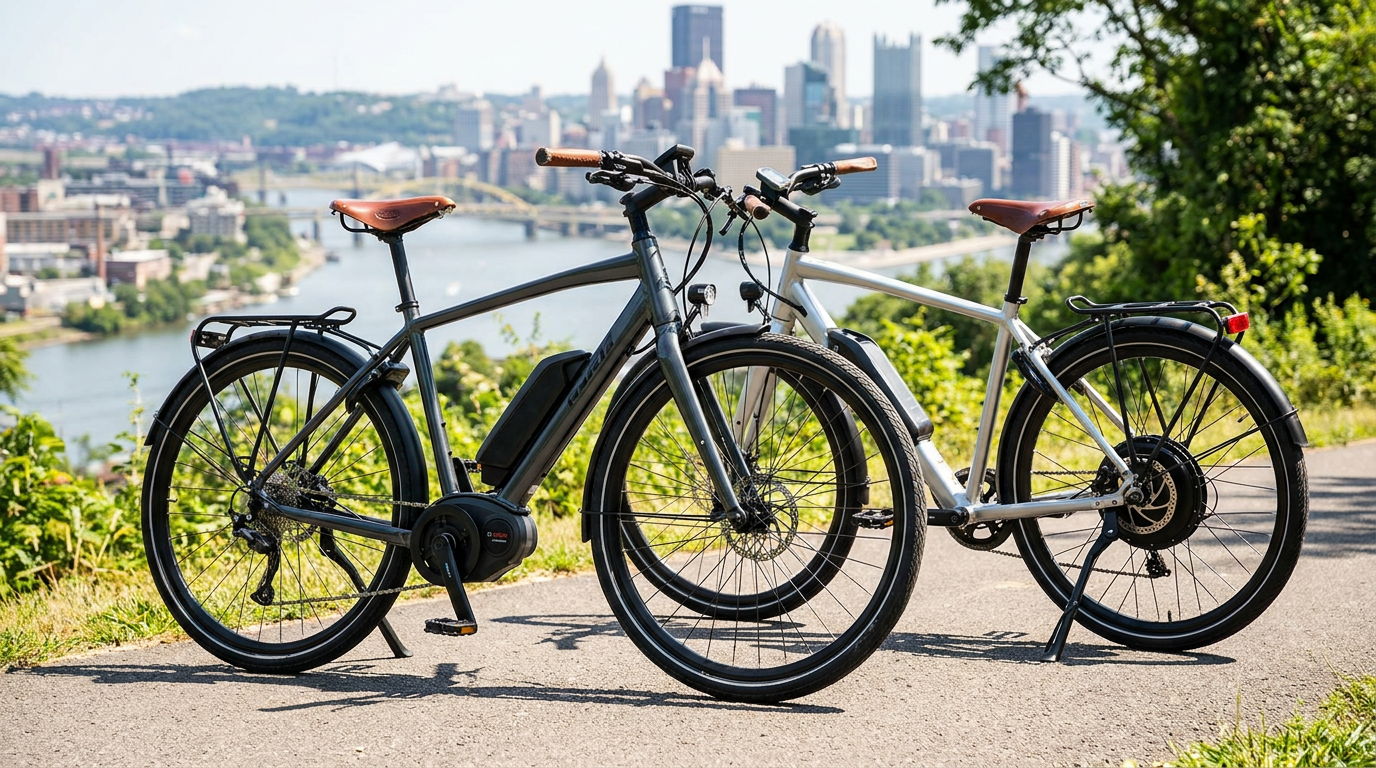
The first option dominating the premium segment of the market is the mid-drive motor, which is integrated directly into the bottom bracket of the bicycle frame, situated right between the rider's pedals. Instead of spinning the wheel directly, a mid-drive motor applies its rotational power to the front chainring. This action pulls the bicycle's chain and drives the rear wheel through the existing cassette and derailleur, fully integrating the electric assist with the traditional mechanical drivetrain. This design requires manufacturers to build custom frames specifically molded to house the motor unit, which is a major reason why these bikes look so sleek and integrated.[3][5]
The alternative is the hub motor, a self-contained electrical unit built directly into the center of either the front or rear wheel, though rear placement is far more common in 2026. When activated by the rider, the hub motor spins the wheel independently of the bicycle's chain, cassette, and gears. It acts essentially as a motorized wheel that pushes or pulls the rest of the bicycle forward, completely bypassing the traditional human-powered drivetrain components. Because it does not require a custom bottom bracket, a hub motor can theoretically be laced into any standard bicycle rim and attached to almost any traditional frame design, making it highly versatile for manufacturers.[4][6]

The case for the mid-drive motor centers entirely on mechanical leverage and overall efficiency. Because the motor's output travels through the bicycle's geared drivetrain, it benefits from the exact same mechanical advantage that a human rider gets when shifting into a lower gear to climb a steep hill. This means that a relatively small, lower-wattage mid-drive motor can produce an astonishing amount of effective torque at the rear wheel simply by utilizing the bike's lowest gear ratios.[3][4]
The evidence for this mechanical advantage is starkly visible on sustained, steep inclines. When a rider shifts a mid-drive electric bike into a low climbing gear, the motor is allowed to spin at a high, highly efficient RPM while the rear wheel turns slowly. This multiplies the torque and allows the bicycle to conquer grueling 15-percent grades without overheating the internal components or rapidly draining the battery, making it the undisputed champion of mountainous terrain. Riders testing these systems on technical trails consistently report that the gear leverage makes steep ascents feel effortless compared to direct-drive alternatives.[2][3]
However, the case against the mid-drive motor involves the accelerated wear and tear it inevitably inflicts on standard bicycle components. Traditional bicycle drivetrains were originally engineered to handle the limited wattage of human legs, not the sustained, high-torque output of an electric motor pulling relentlessly on the same delicate steel chain and aluminum gears. Every time the rider accelerates, the motor places immense tension on these parts, dramatically shortening their functional lifespan. This reality forces owners to be meticulous about cleaning, lubricating, and monitoring their drivetrains to prevent catastrophic failures.[1][5]
The evidence against mid-drives is frequently found in the maintenance logs of busy bike shops worldwide. Riders who frequently use high-power mid-drive systems must replace stretched chains and worn rear cassettes far more often than traditional cyclists, adding a recurring maintenance cost to the ownership experience. Furthermore, if a chain snaps under the extreme tension of a mid-drive motor while deep in the woods, the rider loses both pedal power and motor assist, leaving them stranded on the trail.[3][4]
Conversely, the case for the hub motor focuses heavily on its elegant simplicity, long-term reliability, and overall cost-effectiveness. Because the hub motor is entirely separate from the bicycle's mechanical drivetrain, it places absolutely zero additional stress on the chain, cassette, or derailleur. This separation allows those traditional components to last just as long as they would on a completely unpowered bicycle, drastically reducing the frequency of required tune-ups and parts replacements. For daily commuters who simply want to ride without thinking about mechanical wear, this isolation of power is a massive advantage.[1][6]
Conversely, the case for the hub motor focuses heavily on its elegant simplicity, long-term reliability, and overall cost-effectiveness.
The evidence supporting hub motors highlights their virtually maintenance-free lifespan and robust durability. Direct-drive hub motors contain very few moving parts—often just magnets and copper coils—and can operate for thousands of miles without ever requiring internal service. Additionally, they offer the unique safety net of an independent throttle; if the bicycle's chain completely breaks during a commute, the rider can simply press the throttle and let the hub motor power the bike the rest of the way home.[3][5]

The case against the hub motor, however, points directly to its poor performance under heavy loads at low speeds and its negative impact on the bicycle's overall handling. Because a hub motor cannot leverage the bicycle's gears to multiply its force, it is forced to operate at a fixed one-to-one ratio with the wheel, regardless of how steep the terrain becomes. It must rely entirely on brute electrical force to push the rider up a hill. This lack of mechanical advantage means the motor has to work significantly harder when gravity works against it.[3][4]
The evidence against hub motors becomes painfully obvious on steep, technical climbs. As the bicycle slows down on a severe incline, the hub motor's rotational speed drops out of its optimal efficiency zone, causing it to consume massive amounts of battery power and generate excess heat. Furthermore, housing a heavy motor inside the rear wheel adds significant unsprung weight to the back of the bike, which makes the suspension less responsive and causes the bike to feel sluggish and unbalanced over bumps.[3][5]
Beyond raw power delivery and hill-climbing physics, the two motor types typically utilize entirely different sensor technologies that drastically alter the subjective ride feel. Mid-drive systems almost universally employ sophisticated torque sensors, which measure exactly how much physical force the rider is applying to the pedals in real-time. These sensors communicate with the motor thousands of times per second to adjust the electrical output to perfectly match the human input. This creates a highly responsive system that reacts instantly to changes in terrain or rider effort.[5][6]
This torque-sensing technology creates a seamless, bionic sensation; the harder the rider pushes on the pedals, the more power the motor delivers, making a mid-drive feel like a natural, superhuman extension of the rider's own body. In stark contrast, many budget-friendly hub motors rely on basic cadence sensors that simply detect whether the pedals are turning at all. These cadence sensors deliver a fixed surge of power that can feel more like an on/off switch, providing a moped-like experience rather than a traditional cycling feel.[5]

The financial trade-off between the two systems remains a major deciding factor for most consumers in 2026. Because mid-drive motors require specialized, custom-built frames to house the motor unit securely at the bottom bracket, they significantly drive up the initial purchase price of the bicycle. Hub motors, on the other hand, can be laced into standard bicycle wheels and bolted onto almost any mass-produced frame design, allowing manufacturers to keep production costs low and pass those savings directly to the consumer.[1][2]
Ultimately, the mid-drive system fits well when the rider frequently faces steep, sustained hills, regularly carries heavy cargo, or intends to tackle technical off-road mountain bike trails. It is the definitive choice for experienced cyclists who want to actively shift gears, manage their drivetrain, and desire an electric assist that feels like a natural, intuitive amplification of their own cardiovascular fitness. The ability to keep the motor in its optimal power band through active shifting makes it an indispensable tool for serious outdoor enthusiasts. For these demanding applications, the premium price tag of a mid-drive is entirely justified.[2][4]
Conversely, the mid-drive system does not fit well when the buyer's budget is strictly capped, or when the rider simply wants a zero-maintenance commuter vehicle. If a rider plans to operate the bicycle primarily via a hand throttle without the desire to constantly monitor and shift mechanical gears, the complexity of a mid-drive is entirely wasted. Furthermore, riders who neglect basic chain maintenance will quickly find themselves frustrated by the accelerated wear and tear that a mid-drive system produces.[4][6]
The hub motor fits well when the primary riding environment consists of flat city streets, paved suburban bike paths, or gentle, rolling hills. It is the ideal, practical solution for budget-conscious commuters, casual weekend riders who prefer to let the motor do the majority of the heavy lifting, and those who prioritize long-term, turn-key reliability over high-end athletic performance. For the vast majority of urban transportation needs, a quality hub motor provides more than enough power and utility.[2][4]

However, the hub motor does not fit well when the daily commuting route involves grueling 10-percent grades, or when the rider intends to navigate rough, technical singletrack trails. In these environments, the heavy rear-wheel weight bias and the distinct lack of low-end, gear-leveraged torque become significant, unavoidable liabilities. Pushing a hub motor up a mountain trail will quickly result in a drained battery, an overheated motor core, and a highly frustrating riding experience. Riders attempting to use hub motors for aggressive off-road applications often find themselves walking their bikes up the steepest sections.[3][5]
In the end, the decision between a mid-drive and a hub motor should not be based on which technology is objectively superior in a vacuum, but rather on an honest, pragmatic assessment of where and how the bike will actually be ridden. By carefully matching the motor's mechanical strengths to the local terrain and the rider's personal maintenance tolerance, buyers can ensure their electric bike investment delivers exactly the capable, uplifting ride they expect for years to come.[2][7]
How we got here
2010s
Hub motors dominate the early e-bike market due to low manufacturing costs and simple retrofitting.
2018
Premium mid-drive systems from Bosch and Shimano begin to take over the electric mountain bike sector.
2022
Direct-to-consumer brands popularize high-wattage rear hub motors for budget-friendly urban commuters.
2026
The market clearly bifurcates, with mid-drives dominating performance categories and hub motors ruling the affordable commuter space.
Viewpoints in depth
Performance & Off-Road Riders
Argues that gear leverage and natural ride feel make mid-drives essential.
For mountain bikers, hunters, and serious cyclists, the mid-drive is the only viable option. They point out that a motor must be able to leverage the bike's mechanical gears to conquer steep, technical terrain without overheating. This camp values the bionic, natural feel of torque sensors and is willing to accept higher upfront costs and more frequent chain replacements in exchange for superior handling and climbing capability.
Urban Commuters
Values the simplicity and virtually maintenance-free reliability of hub motors.
City riders and daily commuters prioritize getting from point A to point B with minimal fuss. This camp argues that the direct-drive hub motor is superior for urban environments because it bypasses the delicate bicycle chain entirely, eliminating a major point of mechanical failure. They appreciate the lower purchase price, the ability to use a throttle, and the peace of mind that comes from a sealed motor unit that rarely requires professional servicing.
Industry Retailers
Focuses on matching the motor technology to the customer's actual terrain.
Bike shop owners and industry analysts emphasize that neither motor is objectively better in a vacuum. They caution buyers against simply shopping for the highest wattage number, noting that a 500W mid-drive will easily out-climb a 750W hub motor on a steep hill due to gear leverage. This camp advocates for a pragmatic approach: sell hub motors to flat-land commuters and mid-drives to hill-climbers, ensuring long-term customer satisfaction and fewer mismatched returns.
What we don't know
- How upcoming solid-state batteries might change the weight distribution penalties of hub motors.
- Whether emerging automatic electronic shifting will eliminate the learning curve of mid-drive systems.
Key terms
- Mid-Drive Motor
- An electric bike motor located at the pedals that powers the bike by pulling the chain through the existing gears.
- Hub Motor
- An electric motor built directly into the center of the front or rear wheel, spinning the wheel independently of the bike's gears.
- Torque Sensor
- A sensor that measures how hard the rider is pedaling and delivers motor assistance proportionally, creating a natural ride feel.
- Cadence Sensor
- A basic sensor that detects whether the pedals are turning and delivers a fixed amount of motor power, often feeling like an on/off switch.
- Unsprung Weight
- The mass of the bike's components not supported by the suspension, such as a heavy rear hub motor, which can negatively affect handling on rough terrain.
Frequently asked
Can I ride a hub motor e-bike up a steep hill?
Yes, but it will rely entirely on the motor's raw wattage rather than gear leverage, which drains the battery faster and can cause the motor to overheat on sustained climbs.
What happens if my chain breaks on a mid-drive e-bike?
Because the motor delivers power through the chain, a broken chain means you lose both pedal and motor propulsion. You will need to repair the chain to continue riding.
Are mid-drive motors louder than hub motors?
Generally, yes. Mid-drive motors produce mechanical noise from their internal gears and the bike's chain moving under load, whereas direct-drive hub motors are virtually silent.
Which motor type is better for riding in the rain or snow?
Mid-drive motors offer better traction control because they use torque sensors that respond smoothly to your pedaling, whereas hub motors can sometimes slip on wet surfaces due to sudden power delivery.
Sources
Source coverage
7 outlets
3 viewpoints surfaced






[1]Bicycle RetailerIndustry Retailers
Hub motors gain respectability in the e-bike market
Read on Bicycle Retailer →[2]Bike-EVUrban Commuters
Honest 2026 comparison of mid-drive vs hub motor e-bikes
Read on Bike-EV →[3]HPC BikesPerformance & Off-Road Riders
Mid-Drive vs. Hub Motor: Which is Better in 2026?
Read on HPC Bikes →[4]Zeus eBikesUrban Commuters
Mid-Drive vs Hub Motor: The Honest Canadian Guide
Read on Zeus eBikes →[5]eBike GenerationPerformance & Off-Road Riders
Mid-Drive vs Hub Motor: The Fundamental Choice for Hunters
Read on eBike Generation →[6]UpwayIndustry Retailers
Hub vs. Mid-Drive Motors: Which is Right for You?
Read on Upway →[7]Factlen Editorial TeamIndustry Retailers
Synthesis by Factlen editorial team
Read on Factlen Editorial Team →


Every angle. Every day.
Get shopping stories with full source coverage and perspective breakdowns delivered to your inbox.