
How Hydrogen Trains Work: The Tech Decarbonizing Rural Rail
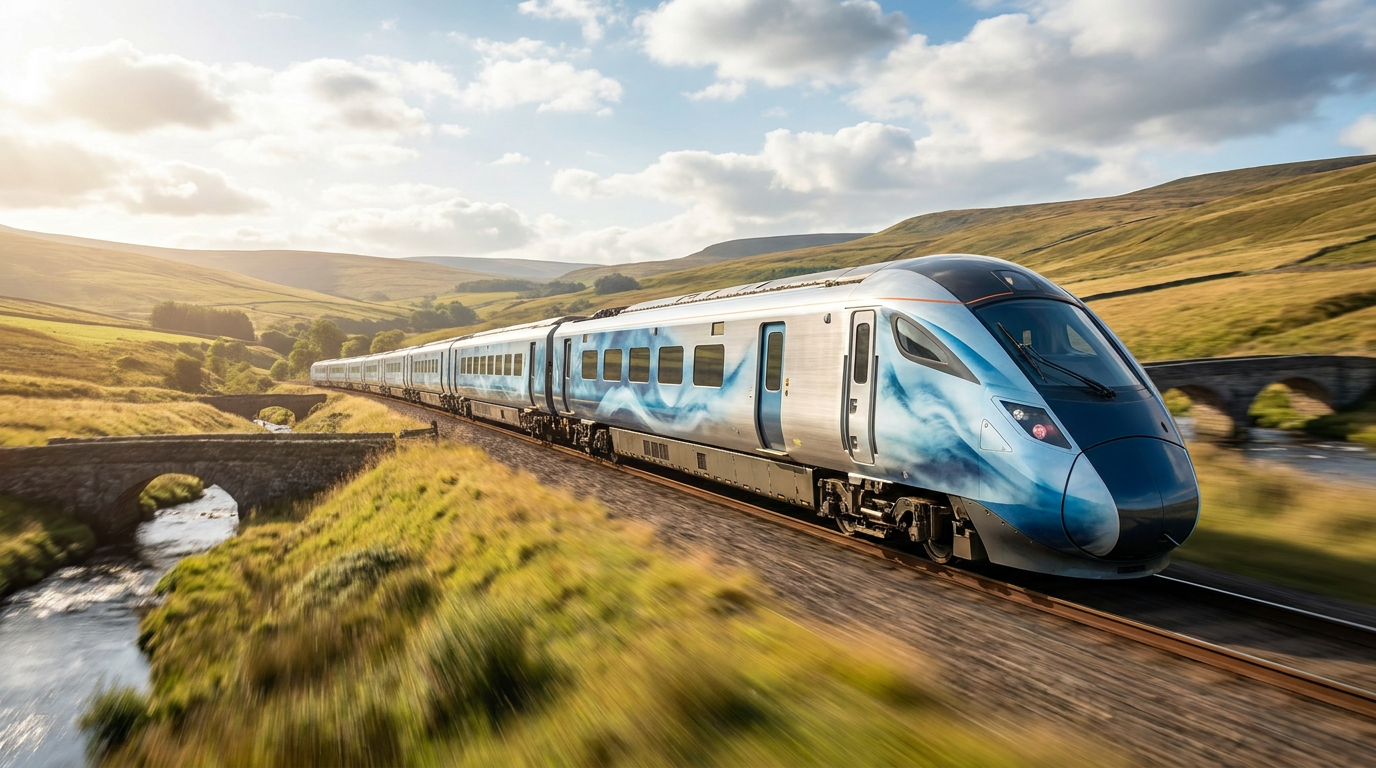
Hydrogen-powered trains are replacing diesel locomotives on non-electrified routes, using onboard fuel cells to generate electricity while emitting only water vapor.
By Factlen Editorial Team
- Rail Decarbonization Advocates
- Environmental groups and clean-energy researchers who view hydrogen as the missing puzzle piece for zero-emission transit.
- Transit Authorities & Operators
- The municipal and regional agencies tasked with actually buying, running, and maintaining the new trains.
- Infrastructure Skeptics
- Analysts and economists who warn about the high costs and energy inefficiencies of the hydrogen supply chain.
What's not represented
- · Fossil Fuel Suppliers
- · Local Residents near Refueling Depots
Why this matters
Heavy rail is one of the hardest transportation sectors to decarbonize because electrifying rural tracks is prohibitively expensive. Hydrogen trains offer a plug-and-play zero-emission alternative that can run on existing infrastructure, drastically reducing local air pollution and global carbon emissions.
Key points
- Hydrogen trains, or 'hydrail,' use onboard fuel cells to generate electricity by combining hydrogen gas with oxygen from the air.
- The electrochemical reaction produces zero direct emissions, exhausting only pure water vapor and heat into the atmosphere.
- Hydrail offers a cost-effective alternative to stringing expensive overhead electric wires on rural, mountainous, or lightly trafficked rail networks.
- North America's first hydrogen passenger train, the ZEMU, entered service in California in late 2025, boasting a continuous range of over 1,700 miles.
- Major European deployments are accelerating, with Italy and Germany launching dedicated hydrogen rail fleets and refueling valleys in 2026.
Rail is highly efficient, but vast stretches of the global network still rely on heavily polluting diesel locomotives. Because electrifying these remote or rural routes requires stringing continuous overhead wires, the infrastructure costs are often prohibitive.[2]
Enter the hydrogen train, broadly categorized by the industry as "hydrail." Instead of drawing power from an external grid, these trains carry their own zero-emission power plants onboard.[2]
The core technology is the hydrogen fuel cell. Hydrogen gas, typically stored in high-pressure tanks on the train's roof, is fed into the cell where it meets oxygen taken from the outside air.[2]
Inside the fuel cell, an electrochemical reaction splits the hydrogen molecules into electrons and protons. The electrons are forced through a circuit, generating the electrical current needed to drive the train's traction motors.[2]

The environmental triumph of this process lies in its exhaust. When the leftover hydrogen protons combine with the oxygen, the only byproduct released into the atmosphere is pure water vapor and heat.[1][2]
Most modern hydrail vehicles do not rely on fuel cells alone; they are sophisticated hybrids. The trains pair the hydrogen fuel cells with onboard lithium-ion battery packs.[3][4]
In this hybrid architecture, the fuel cell provides a steady, continuous baseline of electricity. The batteries store excess power and capture kinetic energy during regenerative braking, deploying it instantly when the train needs a surge of power to accelerate or climb a steep grade.[2][3]
In this hybrid architecture, the fuel cell provides a steady, continuous baseline of electricity.
The pioneer of this technology was Alstom's Coradia iLint, which became the world's first hydrogen-powered passenger train when it entered commercial service in Germany in 2018. It has since completed successful passenger demonstrations across Europe and the Americas, including a major pilot in Quebec.[1]

North America reached its own milestone in late 2025 with the debut of the ZEMU (Zero Emission Multiple Unit). Built by Swiss manufacturer Stadler, the train began carrying passengers on a 9-mile stretch of the Arrow Corridor in San Bernardino, California.[3][4]
The ZEMU was designed to prove that hydrogen can handle the grueling demands of American transit. Before entering service, the train set a Guinness World Record by traveling 1,741.8 miles continuously without refueling, demonstrating a range that rivals traditional diesel engines.[7]
Europe is now moving from pilot projects to fleet-wide replacements. In Italy, the Lombardy region is investing nearly €367 million to build a "Hydrogen Valley," which includes dedicated refueling infrastructure and a fleet of 14 Coradia Stream H trains set to launch in 2026 on the Brescia-Iseo-Edolo route.[5]

The technology is also scaling up to tackle the freight sector, which is responsible for a massive share of rail emissions. Companies like CPKC and the Sierra Northern Railway are currently testing high-capacity hydrogen fuel cells in heavy-duty switching locomotives.[6]
The primary hurdle remaining for hydrail is the fuel supply itself. While the trains produce zero direct emissions, the environmental benefit depends entirely on how the hydrogen is manufactured.[2][8]
Currently, much of the world's commercial hydrogen is extracted from natural gas, a process that still generates carbon emissions. To achieve true climate neutrality, transit agencies must secure "green hydrogen" produced via electrolysis powered by wind or solar energy.[2][8]

Despite the supply chain challenges, the deployment of hydrogen trains marks a definitive turning point for global transit. By offering the range of diesel with the quiet, clean performance of electric rail, hydrail is poised to decarbonize the hardest-to-reach corners of the transportation network.[8]
How we got here
2016
Alstom unveils the Coradia iLint, the world's first hydrogen fuel cell passenger train concept, at the InnoTrans trade fair.
September 2018
The Coradia iLint enters commercial passenger service in Lower Saxony, Germany, marking the first real-world deployment of hydrail.
June 2023
Alstom successfully demonstrates the hydrogen train in North America with a four-month pilot project in Quebec, Canada.
September 2025
The ZEMU, North America's first federally compliant hydrogen passenger train, officially enters service in San Bernardino, California.
2026
Major regional hydrail fleets are scheduled to launch across Europe, including Italy's H2iseO project and Siemens deployments in Germany.
Viewpoints in depth
Rail Decarbonization Advocates
Environmental groups and clean-energy researchers who view hydrogen as the missing puzzle piece for zero-emission transit.
This camp argues that while battery-electric trains are excellent for short commuter hops, they are too heavy and range-limited for long rural routes or heavy freight. They point to the massive cost of stringing overhead catenary wires—often exceeding $1 million per kilometer—as proof that full network electrification is a financial fantasy. For these advocates, hydrogen fuel cells are the only viable way to eliminate diesel engines from the hardest-to-reach segments of the global rail network.
Transit Authorities & Operators
The municipal and regional agencies tasked with actually buying, running, and maintaining the new trains.
For transit operators, the appeal of hydrogen is operational flexibility. Hydrail vehicles can be dropped onto existing, unmodified tracks, allowing agencies to upgrade their fleets without undertaking decade-long infrastructure mega-projects. However, these operators are highly focused on the logistics of refueling. They emphasize the need for robust, localized hydrogen supply chains and specialized maintenance depots, noting that a train is only as reliable as the fuel network that supports it.
Infrastructure Skeptics
Analysts and economists who warn about the high costs and energy inefficiencies of the hydrogen supply chain.
Skeptics do not doubt the trains' performance, but they question the broader economics of the fuel. They highlight that creating 'green hydrogen' via electrolysis requires massive amounts of renewable electricity, and the process of creating, compressing, and transporting the gas results in significant energy losses. This camp argues that in some edge cases, it might actually be more efficient to invest the upfront capital in overhead wires rather than committing to the ongoing premium costs of green hydrogen.
What we don't know
- How quickly the global supply of fully renewable 'green hydrogen' can scale up to meet the demands of massive regional transit networks.
- Whether hydrogen fuel cells or advanced solid-state batteries will ultimately win out as the dominant technology for heavy-duty freight locomotives.
- The long-term maintenance costs of hydrogen fuel cells compared to traditional diesel engines over a 30-year transit lifecycle.
Key terms
- Hydrail
- A broad industry term for any rail vehicle that uses hydrogen as its primary fuel source, typically via onboard fuel cells.
- Hydrogen Fuel Cell
- A device that generates electricity through an electrochemical reaction between hydrogen gas and oxygen, emitting only water and heat.
- Electrolysis
- The process of using electricity to split water into hydrogen and oxygen; when powered by renewable energy, it creates zero-emission 'green hydrogen.'
- Bi-mode Train
- A train capable of drawing power from overhead electric wires on electrified routes, and switching to an onboard power source (like hydrogen) for non-electrified tracks.
- Regenerative Braking
- A system that captures the kinetic energy normally lost as heat during braking and converts it into electricity to recharge the train's onboard batteries.
Frequently asked
Do hydrogen trains emit any pollution?
No. The only byproducts emitted by a hydrogen fuel cell are water vapor and heat. They produce zero greenhouse gases or local air pollutants during operation.
Why not just use battery-electric trains?
While battery trains are useful for short trips, batteries are extremely heavy and take a long time to recharge. Hydrogen fuel cells offer much longer ranges and faster refueling times, making them better suited for long rural routes.
Why not electrify all train tracks with overhead wires?
Stringing continuous overhead electric wires is prohibitively expensive, often costing upwards of $1 million per kilometer. Hydrogen trains offer a cheaper way to decarbonize rural, mountainous, or lightly trafficked routes.
Is the hydrogen fuel itself completely green?
It depends on how it is made. While the train itself is zero-emission, much of the world's commercial hydrogen is currently extracted from natural gas. The industry is pushing toward 'green hydrogen' produced using renewable solar and wind energy.
Sources
Source coverage
8 outlets
3 viewpoints surfaced








[1]AlstomRail Decarbonization Advocates
Alstom Coradia iLint – the world's 1st hydrogen powered passenger train
Read on Alstom →[2]TWI GlobalInfrastructure Skeptics
What is a Hydrogen Train and How Do They Work?
Read on TWI Global →[3]Railway-NewsTransit Authorities & Operators
First US Hydrogen Train to Enter Service in San Bernardino
Read on Railway-News →[4]CBS NewsTransit Authorities & Operators
Zero emissions train rolls into the Inland Empire
Read on CBS News →[5]AutonocionInfrastructure Skeptics
Italy Is About to Launch Its First Hydrogen Train
Read on Autonocion →[6]Fuel Cell & Hydrogen Energy AssociationRail Decarbonization Advocates
Fuel Cells and Hydrogen Helping Zero-Emissions Trains Leave the Station
Read on Fuel Cell & Hydrogen Energy Association →[7]Mott MacDonaldTransit Authorities & Operators
North America's first federally compliant zero-emission passenger train
Read on Mott MacDonald →[8]Factlen Editorial TeamInfrastructure Skeptics
Synthesis by Factlen editorial team
Read on Factlen Editorial Team →
Every angle. Every day.
Get automotive stories with full source coverage and perspective breakdowns delivered to your inbox.