
Sodium-Ion Batteries Arrive in Mass-Market EVs, Promising Cheaper Cars and Cold-Weather Resilience
The first mass-produced electric vehicles powered by sodium-ion batteries are hitting the roads in 2026, offering a 30% cost reduction and immunity to freezing temperatures. The breakthrough reduces the auto industry's reliance on scarce lithium while democratizing access to zero-emission transport.
By Factlen Editorial Team
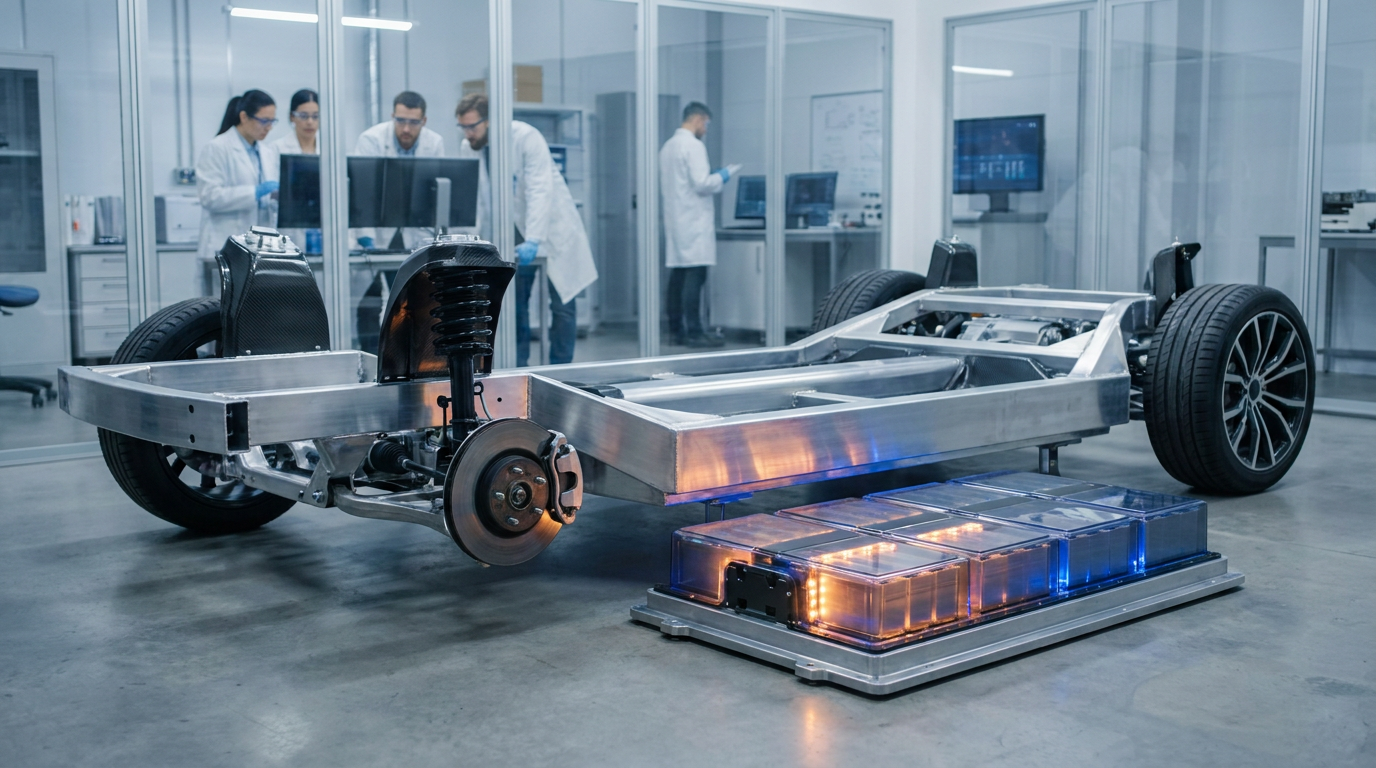
- Battery Manufacturers
- Focused on scaling production, lowering raw material costs, and segmenting the market between premium lithium and budget sodium.
- Automakers
- View sodium as the key to unlocking the mass-market, budget-conscious consumer segment and solving cold-weather performance complaints.
- Supply Chain Analysts
- Highlight the manufacturing bottlenecks, specifically hard carbon anode yields, and the geopolitical shift away from lithium dependency.
- Western Market Observers
- Grappling with the reality of Chinese dominance in this next-generation chemistry after Western startups struggled to scale.
What's not represented
- · Lithium mining executives facing potential demand destruction
- · Consumers in Nordic and cold-weather climates waiting for resilient EVs
Why this matters
By replacing expensive, geopolitically sensitive lithium with abundant salt, automakers can drastically lower the entry price of electric vehicles. Furthermore, sodium's unique chemistry solves the notorious winter range drop that has historically deterred buyers in colder climates.
Key points
- The first mass-produced EVs powered by sodium-ion batteries are launching in mid-2026.
- Sodium chemistry reduces manufacturing costs by 30 to 40 percent compared to standard lithium batteries.
- The batteries retain over 90 percent of their capacity in sub-zero temperatures, solving winter range anxiety.
- First-generation sodium EVs offer roughly 400 to 450 kilometers of range and can fast-charge in 11 minutes.
- Major manufacturers are splitting strategies: CATL is targeting passenger cars, while BYD focuses on grid storage.
- The technology relieves pressure on the global lithium supply chain, democratizing access to EVs.
Mid-2026 marks a quiet but profound turning point in the automotive industry. As the Changan Nevo A06 rolls off assembly lines in China, it is not just another electric sedan; it is the world's first mass-produced passenger vehicle powered by salt. After years of laboratory testing and pilot programs, sodium-ion batteries have officially crossed the threshold into commercial viability, fundamentally altering the economics of zero-emission transport.[1][3]
For the past decade, the electric vehicle transition has been entirely dependent on lithium. While highly effective at storing energy, lithium is geographically concentrated, environmentally intensive to extract, and subject to wild price volatility. When lithium carbonate prices spiked to unprecedented levels in recent years, the cost of manufacturing entry-level EVs skyrocketed, threatening to price budget-conscious consumers out of the market entirely. The industry urgently needed a fallback chemistry.[6]
The solution lies in sodium, an element that sits just below lithium on the periodic table. Sodium-ion batteries operate on the exact same mechanism as their lithium counterparts: they generate power by shuttling ions back and forth between a positive cathode and a negative anode. The critical difference is the raw material. Sodium is roughly 1,000 times more abundant than lithium and can be cheaply extracted from seawater or rock salt, completely bypassing the constrained lithium supply chain.[3][5][6]
This abundance translates directly into manufacturing savings. Because sodium does not alloy with aluminum, battery makers can replace the expensive copper foil traditionally used for the negative current collector with cheap, lightweight aluminum. Combined with the low cost of the active materials, sodium-ion cells are between 30 and 40 percent cheaper to produce than standard lithium-iron-phosphate (LFP) batteries, offering automakers a massive margin advantage for entry-level vehicles.[2][6]

Beyond cost, sodium-ion technology solves one of the most stubborn pain points of EV ownership: winter range anxiety. Lithium-ion batteries notoriously become sluggish in freezing temperatures, leading to drastically reduced driving ranges and slower charging speeds. Sodium ions, however, possess different electrochemical kinetics that allow them to move freely even in extreme cold.[1][2]
Testing by industry giants like CATL and BAIC Group has demonstrated that sodium-ion cells retain over 90 percent of their usable capacity at temperatures as low as -20°C (-4°F), and can safely operate down to -40°C. For drivers in Nordic countries, Canada, and the northern United States, this resilience removes a major barrier to EV adoption, ensuring that a car's dashboard range remains reliable regardless of a blizzard outside.[2][5]

The technology also boasts remarkable charging speeds. Because sodium ions transfer charge efficiently, the latest mass-production cells can accept ultra-fast currents without degrading the battery's internal structure. BAIC's validated prototypes and CATL's new Naxtra battery packs can charge from 10 percent to 80 percent in roughly 11 minutes. This brings the EV charging experience significantly closer to the time it takes to fill a traditional combustion engine vehicle with gasoline.[1][5]
Because sodium ions transfer charge efficiently, the latest mass-production cells can accept ultra-fast currents without degrading the battery's internal structure.
However, the chemistry does come with a notable trade-off: energy density. Because sodium atoms are larger and heavier than lithium atoms, they cannot pack as much energy into the same physical footprint. The first generation of commercial sodium-ion cells achieves an energy density of approximately 170 to 175 watt-hours per kilogram (Wh/kg). By comparison, premium lithium-ion cells used in long-range luxury vehicles routinely exceed 250 Wh/kg.[2][3]
In real-world terms, this means the first wave of sodium-powered cars will not be cross-country road-trippers. The 45-kWh battery pack in the Changan Nevo A06 delivers a driving range of roughly 400 to 450 kilometers (248 to 280 miles) under the optimistic CLTC testing cycle. While insufficient for a heavy luxury SUV, this range is more than adequate for daily commuting, urban mobility, and multi-car households.[1][5]
The market is already bifurcating based on these physical realities. CATL, the world's largest battery manufacturer, is aggressively pushing sodium into the passenger vehicle sector. The company's chief scientists believe that by optimizing the cell architecture, they can push sodium's energy density high enough to deliver 600 kilometers of range within the next three years, putting it in direct competition with entry-level lithium batteries.[1][4]
Conversely, BYD—the world's second-largest battery maker—is taking a different strategic route. BYD is focusing its third-generation sodium polyanion technology almost entirely on stationary grid storage and low-speed micro-mobility. By pivoting away from the demanding passenger car market, BYD aims to drive manufacturing costs down to an astonishing $0.04 per watt-hour by 2027, creating a dirt-cheap solution for storing intermittent solar and wind energy on the national grid.[4]

Scaling this technology globally is not without friction. The supply chain for "hard carbon"—the specialized material required for the battery's anode—remains fragmented. Manufacturers are still working to standardize the processing pathways to prevent yield variations on the factory floor. Analysts project that full-scale cost parity between optimized sodium lines and mature lithium lines will not fully materialize until 2027.[4]
Furthermore, the commercialization of sodium-ion technology is currently dominated by China. While Asian manufacturers are launching consumer vehicles, Western efforts have struggled to move past the pilot stage. High-profile European contenders have faced financial restructuring, and several US startups have ceased operations, leaving Western automakers highly dependent on Chinese battery giants for this next-generation chemistry.[7]

Ultimately, industry experts do not view sodium as a "lithium killer," but rather as a vital complementary technology. Lithium will continue to do the heavy lifting for performance vehicles, heavy-duty trucks, and long-range transport. But by taking over the budget, urban, and cold-weather segments, sodium-ion batteries are relieving the immense pressure on the global lithium supply chain, ensuring the EV revolution can scale to billions of drivers without hitting a geological ceiling.[4][7]
How we got here
Early 2026
Lithium carbonate prices spike, accelerating the auto industry's search for alternative battery chemistries.
February 2026
CATL and Changan Automobile unveil the Nevo A06, the world's first mass-produced sodium-ion passenger EV.
April 2026
CATL announces its Naxtra sodium-ion cells have overcome engineering bottlenecks and entered GWh-level industrialization.
Mid-2026
The first sodium-powered passenger vehicles officially begin rolling off assembly lines and reaching consumers.
2027 (Projected)
Sodium-ion manufacturing is expected to reach full cost parity with mature lithium-iron-phosphate lines.
Viewpoints in depth
Battery Manufacturers' Strategy
Leading producers view sodium as a necessary parallel track to lithium to ensure infinite scaling.
For giants like CATL and BYD, the pivot to sodium is less about replacing lithium and more about resource security. By offloading the massive volume requirements of entry-level cars and stationary grid storage to abundant sodium, they can reserve their constrained lithium supplies for high-margin, long-range premium vehicles. This dual-track strategy protects them from macroeconomic commodity shocks while allowing them to capture the absolute bottom of the market.
Automakers' Mass-Market Push
Car brands see sodium as the key to finally unlocking the budget-conscious consumer demographic.
Automakers have long struggled to produce a genuinely affordable electric vehicle without taking a loss, largely due to the floor price of lithium batteries. By integrating sodium-ion packs, brands like Changan and BAIC can drastically lower the sticker price of their entry-level sedans. Furthermore, the cold-weather resilience of sodium allows these automakers to aggressively market their vehicles in northern regions where consumers have historically rejected EVs due to winter range degradation.
Supply Chain Analysts' Caution
Financial and industrial analysts warn that scaling a new chemistry comes with near-term friction.
While the laboratory results are spectacular, analysts point out that mass manufacturing introduces new variables. The global supply chain for 'hard carbon'—the specialized anode material required for sodium cells—is still immature and fragmented. This lack of standardization leads to yield variations on the factory floor, meaning that the theoretical 40 percent cost savings will not be fully realized until the manufacturing ecosystem matures, likely around 2027.
What we don't know
- How quickly Western automakers and battery startups can catch up to China's massive lead in sodium commercialization.
- Whether future iterations of sodium-ion cells can genuinely reach the 600 km range target required to compete with mid-tier lithium batteries.
- How the long-term degradation and lifespan of mass-produced sodium cells will compare to lithium after a decade of real-world driving.
Key terms
- Sodium-ion battery (Na-ion)
- An energy storage device that shuttles sodium ions between an anode and a cathode to generate electricity, prized for its low cost and cold-weather resilience.
- Lithium-iron-phosphate (LFP)
- The current standard battery chemistry for entry-level electric vehicles, which sodium-ion technology aims to undercut in price.
- Energy density
- The amount of energy a battery can hold relative to its weight, typically measured in watt-hours per kilogram (Wh/kg).
- Hard carbon
- A specialized carbon material used as the negative electrode (anode) in sodium-ion batteries, currently facing supply chain scaling challenges.
- CLTC
- The China Light-Duty Vehicle Test Cycle, a standardized method for measuring the driving range of electric vehicles.
Frequently asked
What is a sodium-ion battery?
It is a rechargeable battery that uses sodium ions to store and release energy, functioning similarly to a lithium-ion battery but using cheap, abundant salt instead of expensive lithium.
Will sodium batteries replace lithium-ion?
No. Industry experts expect them to co-exist. Lithium will be used for long-range and performance vehicles, while sodium will power budget-friendly city cars and stationary grid storage.
Why are sodium batteries better in the cold?
Sodium ions have different electrochemical kinetics that allow them to move freely in freezing temperatures, allowing the battery to retain over 90% of its capacity at -20°C (-4°F).
Can I buy a sodium-ion EV today?
The first mass-produced models, such as the Changan Nevo A06, are launching in China in mid-2026, with broader global availability expected in the coming years.
Sources
Source coverage
7 outlets
4 viewpoints surfaced







[1]ElectrekBattery Manufacturers
CATL is bringing sodium-ion batteries to EVs in 2026
Read on Electrek →[2]EV CentralBattery Manufacturers
CATL accelerates sodium-ion battery development, announces new battery with 600km range will enter production this year
Read on EV Central →[3]Live ScienceAutomakers
First sodium-ion battery car in general production holds the potential to revolutionize EVs forever
Read on Live Science →[4]CarNewsChinaSupply Chain Analysts
Mid-2026 market data shows a structural bifurcation in the sodium-ion battery sector
Read on CarNewsChina →[5]Latam MobilityAutomakers
The future of electric mobility is being redefined by a technology that promises to democratize access to zero-emission vehicles
Read on Latam Mobility →[6]SodiumBatteryHubBattery Manufacturers
CATL and BYD Accelerate Adoption of Sodium-Ion Batteries Amid Rising Lithium Costs
Read on SodiumBatteryHub →[7]EleportWestern Market Observers
Sodium-ion batteries are hitting the roads in EVs in 2026
Read on Eleport →
Every angle. Every day.
Get transportation stories with full source coverage and perspective breakdowns delivered to your inbox.