
How to Run AI Locally: The Rise of On-Device Open-Source Models
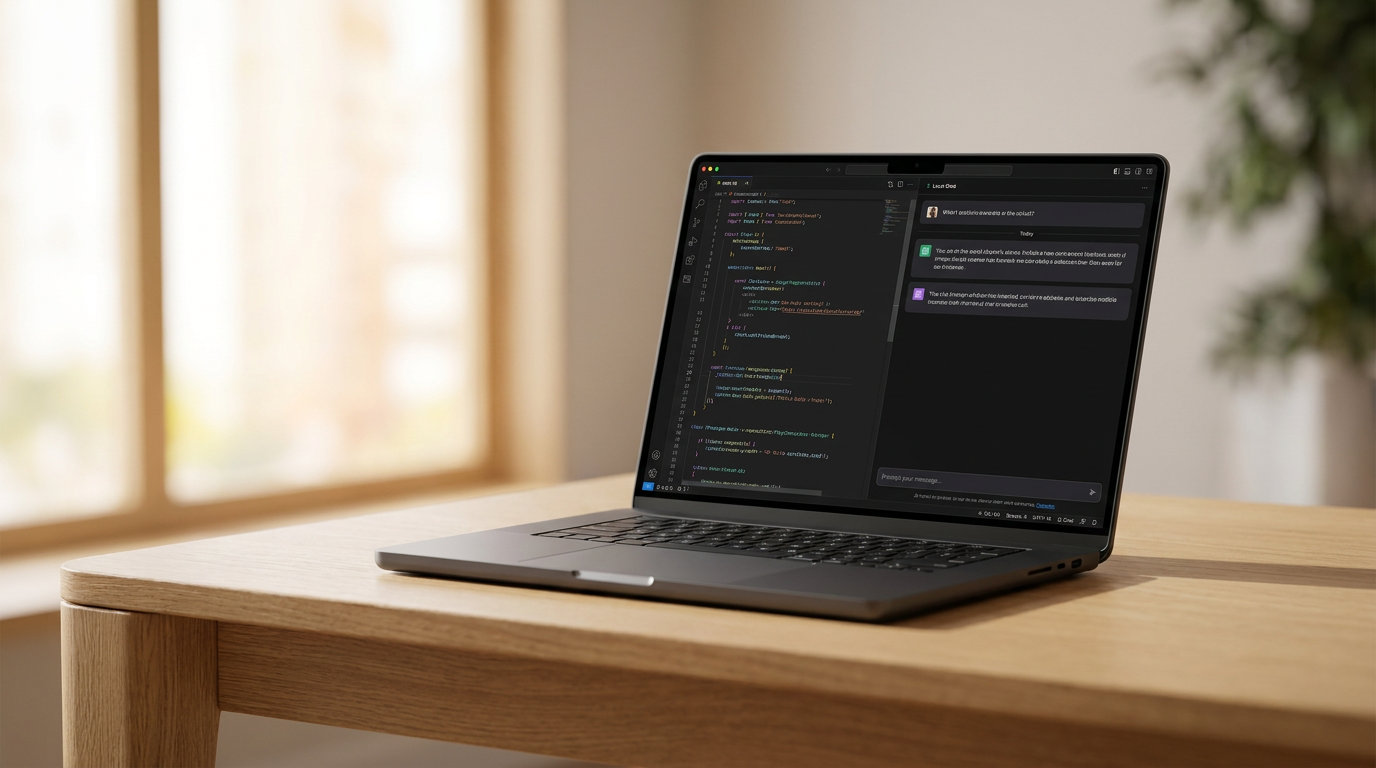
Advances in software and specialized hardware have made it possible to run powerful artificial intelligence models entirely offline in 2026. This shift toward local AI offers users unprecedented privacy, zero subscription costs, and full control over their data.
By Factlen Editorial Team
- Privacy Advocates
- Prioritize data sovereignty, GDPR compliance, and offline access.
- Hardware Manufacturers
- Focus on driving PC upgrades through NPU advancements and TOPS metrics.
- Open-Source Developers
- Value transparency, decentralized innovation, and accessible local tooling.
- Enterprise IT
- Balance the cost-efficiency of local inference against the performance of cloud APIs.
What's not represented
- · Cloud API Providers
Why this matters
Running AI locally means your private data—from financial documents to personal code—never leaves your computer, eliminating the privacy risks of cloud-based services. It also frees users from monthly subscription fees while ensuring access to powerful tools even without an internet connection.
Key points
- Local AI allows users to run large language models entirely offline, ensuring absolute data privacy.
- Software tools like Ollama and LM Studio have simplified the installation process, replacing complex code with user-friendly interfaces.
- The hardware industry has introduced Neural Processing Units (NPUs) to efficiently handle AI workloads on consumer laptops.
- Running models locally eliminates monthly subscription fees and allows for 24/7 usage without API costs.
- While highly capable, local models still lag slightly behind the most advanced cloud-based systems on complex reasoning tasks.
For the first few years of the generative artificial intelligence boom, accessing a large language model meant sending your data to a remote server farm owned by a major technology corporation. The immense computational power required to generate text, write code, or analyze documents restricted the technology to massive, cloud-connected data centers. But by mid-2026, a quiet revolution has decentralized the landscape. Millions of users are now running highly capable AI models entirely on their own hardware, severing the cord to the cloud and bringing the intelligence directly to their desktops.[8]
This shift—commonly known as local AI or on-device inference—is fundamentally transforming how individuals and businesses interact with machine learning. Instead of paying monthly subscription fees to cloud providers or worrying about the privacy implications of transmitting sensitive data over the internet, users can download models and run them entirely offline. It represents a profound democratization of computing power, placing the capabilities of a 2024-era data center directly onto a 2026 laptop. For developers, researchers, and privacy-conscious consumers, local AI has evolved from a niche hobbyist pursuit into a reliable, production-ready infrastructure.[1][7]
The engine driving this movement is a combination of highly optimized software and specialized silicon. On the software side, applications like Ollama and LM Studio have eliminated the steep technical barriers that once defined local machine learning. What used to require complex Python environments, dependency management, and command-line troubleshooting is now a seamless, one-click installation process. These tools provide graphical interfaces that look and feel like standard desktop applications, allowing users to browse, download, and interact with various models as easily as installing a new web browser.[7]
These applications operate by utilizing "open-weight" models—AI systems where the underlying neural network architecture and trained parameters are made publicly accessible by their creators. Meta's Llama 3 series, Alibaba's Qwen 2.5, and Mistral's latest releases currently dominate this open ecosystem. Users simply select a model from a dropdown menu, wait for the download to finish, and can immediately begin chatting, coding, or analyzing documents without an active internet connection. The open nature of these weights allows the global developer community to constantly refine and optimize the models for consumer hardware.[1][7]

However, running a neural network with billions of parameters requires immense computational muscle. This intense demand has forced the hardware industry to pivot aggressively, giving rise to the modern "AI PC." Traditional computers rely on Central Processing Units (CPUs) for general tasks and Graphics Processing Units (GPUs) for rendering images and video. In 2026, a third dedicated processor has become standard across the industry: the Neural Processing Unit, or NPU, designed specifically to accelerate the complex mathematics required by artificial intelligence without compromising system stability.[2][3]
NPUs are purpose-built to handle the specific matrix math operations required by AI inference with extreme efficiency. They process these workloads far more effectively than traditional CPUs, allowing thin-and-light laptops to run AI tasks without instantly draining their batteries or overheating. Microsoft has set the baseline for its premium "Copilot+ PC" certification at 40 TOPS—Trillions of Operations Per Second—a standardized metric that measures how quickly an NPU can execute artificial intelligence workloads. This 40 TOPS threshold has become the defining benchmark for a capable modern machine.[2][3]
Chipmakers have aggressively scaled their hardware architectures to meet and exceed this threshold. AMD's Ryzen AI 9000 series and its newly announced Ryzen AI Max PRO 400 processors deliver up to 50 TOPS of dedicated NPU performance, specifically targeting developers building local agentic workflows. Intel's Core Ultra series and Qualcomm's Snapdragon X Elite offer comparable on-device acceleration. Meanwhile, Apple's M-series chips, with their unified memory architecture, remain highly popular for local AI, allowing the GPU and NPU to share massive pools of high-speed RAM without transferring data back and forth.[4]
Chipmakers have aggressively scaled their hardware architectures to meet and exceed this threshold.
Memory, in fact, is the primary bottleneck for local AI deployment. Large language models are massive files that must be loaded entirely into active memory to function. To fit them onto consumer hardware, developers use a mathematical technique called "quantization," which compresses the model's precision—for example, rounding 16-bit numbers down to 4-bit numbers—with only a minor, often imperceptible loss in output accuracy. Even with heavy quantization, running a robust 8-billion parameter model typically requires a minimum of 16GB of system RAM, while larger 70-billion parameter models demand 64GB or more.[1][2]

For users who can meet these stringent hardware requirements, the benefits of local AI are profound, starting with absolute data privacy. When a model runs locally, the prompts, financial documents, and proprietary code snippets fed into it never leave the physical machine. This "privacy by design" architecture is a massive draw for European companies navigating strict GDPR regulations, as well as healthcare providers, legal professionals, and financial analysts handling highly sensitive client data that legally cannot be transmitted to third-party cloud servers.[6]
Ethereum co-founder Vitalik Buterin recently detailed his own "self-sovereign" AI setup, arguing that privacy, security, and offline access should be non-negotiable baselines for modern personal computing. By sandboxing AI processes locally, users eliminate the risk of remote data harvesting, hidden telemetry, or sudden, unannounced changes to a cloud provider's terms of service. For privacy advocates, local AI is the only way to ensure that an intelligent assistant is truly working for the user, rather than acting as a data-collection terminal for a massive technology corporation.[5]
Cost efficiency is another major factor driving adoption. While the upfront investment in an AI PC or a high-end discrete GPU—such as an NVIDIA RTX 4070 or 4090—is significant, the ongoing usage is entirely free. Developers building complex agentic workflows—systems where AI models autonomously write code, search local files, or process thousands of documents in the background—can run inference 24 hours a day, 7 days a week, without racking up the massive, unpredictable API billing charges associated with commercial cloud providers.[1][7]
However, local AI is not without its significant trade-offs. The most glaring limitation is the performance gap on highly complex, multi-step reasoning tasks. As of mid-2026, the best open-weight models running on consumer hardware still lag roughly 10 to 20 percent behind frontier cloud models like OpenAI's GPT-5.5 or Anthropic's Claude 4.6 on advanced academic and coding benchmarks. For the most difficult logic puzzles or intricate programming challenges, the massive compute scale of a data center still reigns supreme.[1]

Furthermore, local models are inherently static entities by default. A model downloaded in January only knows the state of the world up to its specific training cutoff date. Unlike cloud-connected APIs that can seamlessly browse the live web to fetch real-time stock prices, weather updates, or breaking news, a local model requires additional, often complex software frameworks—such as Retrieval-Augmented Generation (RAG)—to access external information. Without these specific integrations, a local model cannot tell you what happened in the world yesterday, limiting its utility for highly current events.[1][5]
Inference speed can also be a frustrating limiting factor for power users. While premium cloud APIs can stream text at blistering speeds of 80 to 150 tokens per second, a heavy local model running on a mid-range laptop might only generate 15 to 30 tokens per second. For casual chatting, this pace is perfectly acceptable, but for processing massive 128,000-token context windows—equivalent to analyzing a short book or a massive codebase—local hardware can take several minutes to generate a final response.[1]
Despite these hardware and software constraints, the trajectory of local AI is unmistakably upward. The ecosystem is rapidly maturing, with tools converging to offer both user-friendly graphical interfaces for beginners and robust API endpoints for advanced developers. Software platforms now allow users to seamlessly swap models in the background, A/B test different neural network architectures, and integrate local AI directly into their daily desktop workflows. The friction of running powerful AI at home has largely been engineered away, making it accessible to non-technical users.[7]

Ultimately, the rise of on-device AI in 2026 represents a healthy, necessary rebalancing of the broader technology ecosystem. Cloud models will undoubtedly continue to push the absolute frontier of machine intelligence, serving as the heavy artillery for complex, enterprise-scale problems and massive data processing. But for everyday tasks, privacy-sensitive workflows, and personal productivity, the power has definitively shifted back to the user's desk, proving that the future of artificial intelligence doesn't have to live exclusively in the cloud. This decentralization ensures that as AI becomes more integrated into daily life, users retain fundamental control over their digital environments.[8]
How we got here
Early 2023
The release of LLaMA by Meta sparks the open-weight movement, allowing researchers to run large models locally for the first time.
Late 2023
Tools like Ollama and LM Studio launch, replacing complex command-line setups with user-friendly graphical interfaces.
Mid 2024
Microsoft introduces the Copilot+ PC standard, mandating a minimum of 40 TOPS for Neural Processing Units (NPUs).
Early 2026
Advanced open-weight models like Llama 3.3 and Qwen 2.5 are released, closing the performance gap with proprietary cloud APIs.
June 2026
AMD and Intel announce next-generation processors capable of running 200-billion parameter models entirely on consumer hardware.
Viewpoints in depth
Privacy & Sovereignty Advocates
Users and organizations prioritizing absolute control over their data.
For privacy advocates, local AI is a fundamental necessity rather than a mere convenience. They argue that sending personal documents, proprietary code, or sensitive client data to third-party cloud providers creates unacceptable security vulnerabilities and compliance risks. By keeping all inference on-device, this camp ensures that data never traverses the internet, protecting users from remote data harvesting, hidden telemetry, and sudden changes in corporate privacy policies.
Hardware Manufacturers
Chipmakers and PC vendors driving the adoption of specialized AI silicon.
The hardware industry views local AI as the catalyst for the next massive upgrade cycle in consumer computing. By heavily marketing the Neural Processing Unit (NPU) and establishing metrics like the 40 TOPS Copilot+ requirement, manufacturers are pushing consumers and enterprises to replace older machines. Their focus is on optimizing silicon to run larger models more efficiently, extending battery life, and proving that on-device processing can handle workloads previously reserved for data centers.
Open-Source Developers
The community building and refining open-weight models and local tooling.
Open-source developers champion local AI as a bulwark against the monopolization of machine learning by a few massive tech conglomerates. They focus on transparency, building tools like Ollama and LM Studio to lower the barrier to entry for everyday users. This community actively collaborates to quantize massive models so they fit on consumer hardware, arguing that decentralized, open-weight AI fosters faster innovation and prevents corporate gatekeeping.
What we don't know
- Whether open-weight models will ever fully close the reasoning gap with frontier cloud APIs, given the massive compute advantages of data centers.
- How quickly software developers will optimize local models to run efficiently on older, non-NPU hardware.
- Whether future regulatory frameworks will attempt to restrict the distribution of powerful open-weight models to consumers.
Key terms
- NPU (Neural Processing Unit)
- A specialized computer chip designed specifically to accelerate the complex mathematical operations required by artificial intelligence.
- Quantization
- A compression technique that reduces the memory footprint of an AI model by lowering the mathematical precision of its parameters, allowing it to run on standard computers.
- TOPS (Trillions of Operations Per Second)
- A standardized metric used to measure the processing speed and performance of an NPU when handling artificial intelligence workloads.
- Open-weight model
- An artificial intelligence system where the underlying trained parameters are made publicly available, allowing anyone to download and run the model locally.
- VRAM (Video RAM)
- The dedicated memory found on graphics cards, which is crucial for loading and running large AI models efficiently.
Frequently asked
Do I need an internet connection to use local AI?
No. Once you have downloaded the model and the necessary software, local AI runs entirely offline, ensuring complete privacy and accessibility.
Can my current laptop run local AI models?
It depends on your hardware. While basic models can run on older machines, a smooth experience typically requires at least 16GB of RAM and a modern processor or dedicated graphics card.
Is local AI as smart as ChatGPT?
Not quite. While local models are highly capable for everyday tasks, the best cloud-based models still hold a 10 to 20 percent performance advantage on highly complex reasoning and coding challenges.
Are local AI tools free to use?
Yes. The software platforms like Ollama and LM Studio, as well as the open-weight models themselves, are generally free to download and use without subscription fees.
Sources
Source coverage
8 outlets
4 viewpoints surfaced







[1]MindStudioEnterprise IT
Local AI vs Cloud AI in 2026: When to Run Models on Your Own Hardware
Read on MindStudio →[2]Newegg InsiderHardware Manufacturers
AI PC Buying Guide: What to Look for in 2026
Read on Newegg Insider →[3]HP Tech TakesHardware Manufacturers
What Is An AI PC Everything You Need To Know in 2026
Read on HP Tech Takes →[4]AMDHardware Manufacturers
AMD Powers Next-Generation Agent Computers with New Ryzen AI Halo Developer Platform
Read on AMD →[5]Vitalik Buterin's BlogPrivacy Advocates
My self-sovereign / local / private / secure LLM setup, April 2026
Read on Vitalik Buterin's Blog →[6]DEV CommunityPrivacy Advocates
Running AI Locally in 2026: A GDPR-Compliant Guide
Read on DEV Community →[7]MediumOpen-Source Developers
LM Studio vs Ollama? Run AI models, locally and privately
Read on Medium →[8]Factlen Editorial TeamEnterprise IT
Synthesis by Factlen editorial team
Read on Factlen Editorial Team →

Every angle. Every day.
Get ai stories with full source coverage and perspective breakdowns delivered to your inbox.