
How Local AI and Small Language Models Democratized Inference in 2026
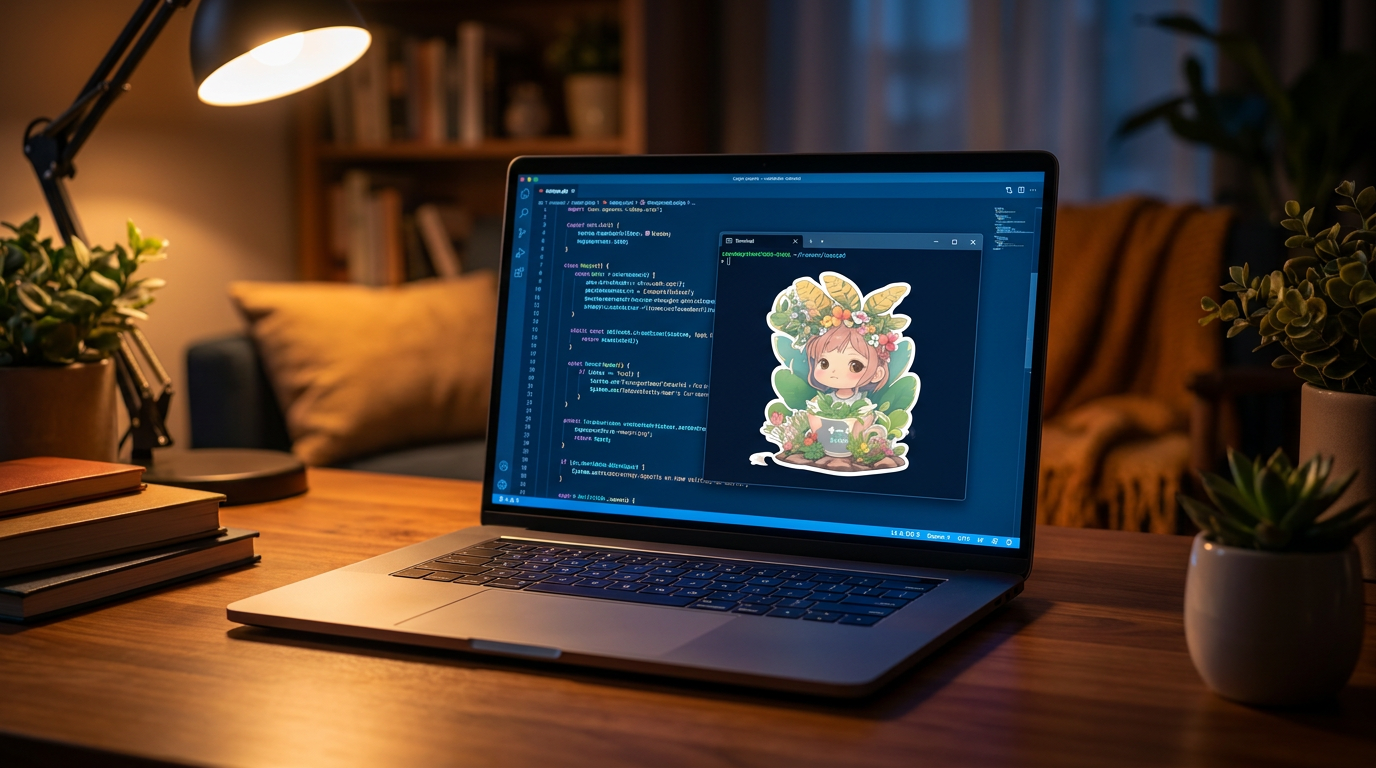
Advances in model quantization and highly efficient small language models have made it possible to run powerful AI locally on consumer laptops, shifting the paradigm from expensive cloud APIs to private, on-device inference.
By Factlen Editorial Team
- Local AI Advocates
- Argue that absolute data privacy, zero marginal cost, and censorship-free customization make local inference the superior choice for most developers and enterprises.
- Cloud-First Proponents
- Maintain that the massive parameter counts and superior reasoning capabilities of frontier cloud models justify the API costs and privacy trade-offs for complex tasks.
- Hardware Optimizers
- Focus on the technical mechanics of squeezing maximum performance out of consumer silicon through quantization frameworks and unified memory.
What's not represented
- · Hardware manufacturers designing next-generation consumer chips
- · Regulated enterprise IT departments managing local deployments
Why this matters
Running AI locally means your private data never leaves your device and you pay zero subscription fees, fundamentally shifting AI from a rented corporate service to a personal, owned utility.
Key points
- Small Language Models (SLMs) like Llama 3.3 and Qwen3 now offer production-grade reasoning on consumer hardware.
- Quantization compresses model weights from 16-bit to 4-bit, reducing memory requirements by over 70%.
- Formats like GGUF and MLX allow these compressed models to run efficiently across various operating systems and chips.
- Local inference guarantees absolute data privacy, as prompts and sensitive information never leave the user's device.
- While local models save on API costs, they still lag behind massive cloud models in complex, multi-step reasoning.
The artificial intelligence boom of the early 2020s was defined by massive, cloud-bound behemoths. Models like GPT-4 required vast server farms to train and equally massive infrastructure to run. For the average user, AI was a rented service, accessed through a web browser and metered by the token. The sheer computational weight of these systems made it seem inevitable that the future of intelligence would be centralized in a handful of corporate data centers.[6]
But by mid-2026, a quiet counter-revolution has matured. The center of gravity in the open-source AI community has shifted from the cloud to the desktop. Today, developers, researchers, and privacy-conscious users are routinely running highly capable AI models entirely locally on consumer hardware—MacBooks, gaming PCs, and even high-end smartphones. What was once a niche hobby for hardware enthusiasts has become a standard production option.[1][6]
This shift from experimental toy to daily driver is driven by two parallel breakthroughs: the rapid improvement of Small Language Models (SLMs) and the perfection of a mathematical compression technique known as quantization. Together, they have democratized inference, allowing anyone to run state-of-the-art AI without paying a monthly subscription or sacrificing their data privacy.[4][6]

The first piece of the puzzle is the models themselves. While the industry initially obsessed over parameter counts—the number of internal connections a model uses to process information—researchers discovered that smaller, highly optimized models could punch far above their weight. By training smaller networks on exceptionally high-quality data for longer periods, developers created models that are both compact and highly intelligent.[4]
In 2026, the open-weight ecosystem is dominated by these highly efficient SLMs. Meta's Llama 3.3 and 4 families, Alibaba's Qwen3, and Google's Gemma 4 series offer models in the 3-billion to 32-billion parameter range. These models are specifically trained to excel at reasoning, coding, and instruction-following without requiring the hundreds of billions of parameters that define frontier cloud models.[1][4]
However, even a "small" 8-billion parameter model natively requires about 16 gigabytes of Video RAM (VRAM) just to load its weights in standard 16-bit floating-point precision. For most consumer laptops, which typically feature 8GB to 16GB of unified memory, this was a hard physical bottleneck that prevented local execution.[2][5]
Enter quantization, the mechanism that makes local AI possible. Quantization is essentially a form of extreme data compression for neural networks. It reduces the precision of the model's weights from 16-bit floating-point numbers to lower-bit representations, most commonly 4-bit integers. This process fundamentally alters the math required to store and run the model.[2][3]
Think of quantization like compressing a massive, uncompressed TIFF image into a high-quality JPEG. You lose a microscopic amount of mathematical precision, but you reduce the file size by 70% to 75%. A model that once required 16GB of memory can suddenly fit comfortably into 4GB or 5GB, allowing it to run smoothly on a standard off-the-shelf laptop with minimal loss in reasoning capability.[2]

To standardize this compressed future, the open-source community rallied around specific file formats. The most prominent is GGUF (GPT-Generated Unified Format), created by the team behind the wildly popular llama.cpp project. GGUF acts as a universal container, packing the quantized model weights, metadata, and tokenizer into a single, easily shareable binary file.[2][3]
To standardize this compressed future, the open-source community rallied around specific file formats.
GGUF is designed for maximum portability. It allows a quantized model to run efficiently on almost any hardware, dynamically offloading calculations to the CPU or GPU depending on what the host machine has available. This cross-platform flexibility means a model downloaded on a Windows gaming rig will run just as easily on a Linux server.[2][3]
For users in the Apple ecosystem, a parallel framework called MLX has emerged as the gold standard. Developed specifically for Apple Silicon, MLX treats the Mac's unified memory architecture as a primary design constraint. While GGUF is built for broad compatibility, MLX is built for raw speed on M-series chips, often delivering significantly higher generation throughput by dispatching operations directly through Apple's Metal Performance Shaders.[3]

The software required to run these models has also undergone a massive usability upgrade. Just a few years ago, running a local model required navigating complex Python environments and command-line dependencies. Today, tools like Ollama and LM Studio offer one-click installations. Users simply download the app, select a model from a dropdown menu, and start chatting in a familiar interface.[1][5]
The motivations for moving AI workloads from the cloud to the local machine are powerful. The most immediate benefit is absolute data privacy. When a model runs locally, the prompts, proprietary code, and sensitive documents never leave the device. For regulated industries, healthcare professionals, and enterprise R&D departments, this air-gapped security is non-negotiable.[1][5]
Cost is the second major driver. Cloud API providers charge per token, meaning that as an application scales or a user relies more heavily on AI, the monthly bill scales linearly. Local inference flips this economic model. After the initial hardware investment, the marginal cost of generating a token drops to zero. For heavy users, a high-end local setup pays for itself in a matter of months.[1]
Local models also offer zero network latency and complete offline capability. Because there is no round-trip to a remote server, the "time to first token" is nearly instantaneous. Developers can work on airplanes, in remote locations, or during internet outages without losing access to their AI assistants. Furthermore, local models are immune to the sudden API deprecations or service outages that occasionally plague cloud providers.[1][6]
Despite these massive leaps, local AI is not without its trade-offs and uncertainties. The most significant limitation is the absolute quality ceiling. While an 8-billion parameter local model is astonishingly capable for daily tasks, it still lags behind massive frontier models like GPT-5.5 or Claude 4.6 when it comes to complex, multi-step reasoning or highly obscure knowledge retrieval.[5]

Hardware also remains a hard limit for the most ambitious local projects. While 4-bit quantization works wonders, running a massive 70-billion parameter model—which rivals the best cloud models in reasoning capability—still requires 40GB to 48GB of RAM. This pushes users toward expensive, specialized setups like dual RTX 4090 GPUs or high-end Mac Studios, blurring the line between "consumer hardware" and enterprise workstations.[1][5]
Furthermore, local models lack the built-in web access and real-time data retrieval that users have come to expect from commercial chatbots. Unless a developer explicitly wires the local model into a search API using an agentic framework, the model's knowledge is frozen at its training cutoff date, making it unsuitable for queries about current events.[5]
Nevertheless, the trajectory is clear. The gap between what can be run in a massive data center and what can be run on a backpack laptop is shrinking rapidly. As hardware manufacturers optimize their chips specifically for local inference and open-weight models continue to become more efficient, the default assumption is shifting.[1][6]
In 2026, the cloud is no longer the only place where artificial intelligence lives. By combining small, highly trained models with aggressive quantization and user-friendly software, the open-source community has successfully decentralized AI, turning it from a rented corporate service into a personal, owned utility.[6]
How we got here
Early 2023
The release of the original LLaMA model sparks the open-source AI movement, leading to the creation of the llama.cpp project.
Late 2023
The GGUF format is introduced, standardizing how quantized models are packaged and shared across different hardware platforms.
Mid 2024
Apple releases the MLX framework, dramatically improving the speed of local inference on M-series MacBooks.
2025–2026
Highly capable Small Language Models (SLMs) like Llama 3.3, Qwen3, and Gemma 4 are released, making local AI a viable production alternative to cloud APIs.
Viewpoints in depth
Privacy-Conscious Enterprises
Organizations that prioritize data security view local AI as the only viable path forward.
For industries bound by strict compliance regulations—such as healthcare, finance, and defense—sending proprietary data to a third-party cloud provider is often a non-starter. These organizations view the rise of capable local models as a critical unlock. By running quantized models on internal, air-gapped hardware, they can leverage the productivity benefits of generative AI without exposing sensitive intellectual property or violating customer privacy agreements. For this camp, the slight drop in reasoning capability compared to frontier cloud models is a necessary and acceptable trade-off for absolute security.
Open-Source Developers
Builders who value customization and cost-efficiency champion the local AI ecosystem.
Independent developers and startup founders are drawn to local inference primarily for its economic and creative freedom. Relying on cloud APIs introduces variable costs that scale punishingly as an application grows in popularity. By shifting inference to local hardware, developers lock in their costs and achieve a $0 marginal cost per token. Furthermore, local models can be fine-tuned, uncensored, and customized at the foundational level—capabilities that are strictly locked down by commercial API providers. This camp sees local AI as the ultimate democratization of technology.
Cloud API Providers
Commercial AI labs argue that the most complex tasks will always require massive data center compute.
While acknowledging the utility of local models for basic tasks, proponents of cloud-first AI emphasize the hard physical limits of consumer hardware. They argue that the most transformative AI applications—such as autonomous coding agents and deep scientific reasoning—require models with hundreds of billions of parameters that simply cannot be quantized down to fit on a laptop. From this perspective, local AI is a useful auxiliary tool, but the true frontier of artificial intelligence will remain securely housed in massive, multi-million-dollar server clusters.
What we don't know
- Whether future quantization techniques (like 1-bit or 2-bit) will allow massive 70B+ models to run on standard 16GB laptops without severe degradation.
- How quickly consumer hardware manufacturers will increase baseline unified memory to accommodate larger local models.
- If open-source SLMs will eventually match the multi-step reasoning capabilities of today's largest closed-source cloud models.
Key terms
- Quantization
- A compression technique that reduces the precision of an AI model's weights (e.g., from 16-bit to 4-bit), drastically shrinking its file size and memory requirements with minimal loss in quality.
- GGUF
- GPT-Generated Unified Format, a highly portable file format that packages a quantized model and its metadata into a single file, allowing it to run on almost any CPU or GPU.
- MLX
- A machine learning framework developed by Apple specifically optimized to run AI models at maximum speed on Apple Silicon's unified memory architecture.
- VRAM
- Video RAM, the dedicated memory on a graphics card. AI models require significant VRAM to load their weights for fast inference.
- Inference
- The process of running a trained AI model to generate text, code, or predictions based on a user's prompt.
Frequently asked
What is a Small Language Model (SLM)?
An SLM is an AI model typically ranging from 1 billion to 32 billion parameters. They are designed to be highly efficient and capable of running on consumer hardware, unlike massive cloud models that require hundreds of billions of parameters.
How much RAM do I need to run a local AI?
Thanks to 4-bit quantization, a highly capable 7-billion or 8-billion parameter model can run comfortably on a laptop with 8GB to 16GB of RAM. Larger 70-billion parameter models require 40GB or more.
Is running AI locally completely free?
After the initial cost of purchasing the hardware (like a laptop or GPU), the marginal cost of generating text is zero. There are no monthly API subscription fees.
Can local AI access the internet?
By default, local models do not have web access and rely entirely on their internal training data. However, developers can connect them to search APIs using agentic frameworks if real-time data is needed.
Sources
Source coverage
6 outlets
3 viewpoints surfaced






[1]PromptZoneLocal AI Advocates
Local LLMs in 2026 are not a hobby anymore
Read on PromptZone →[2]Llama.cpp OfficialLocal AI Advocates
Llama.cpp – Run LLM Inference in C/C++
Read on Llama.cpp Official →[3]Contra CollectiveHardware Optimizers
GGUF vs MLX: The 2026 Guide to Local Mac Inference
Read on Contra Collective →[4]Aussie AILocal AI Advocates
Small Language Models: The Rise of On-Device AI
Read on Aussie AI →[5]Prompt QuorumCloud-First Proponents
Local LLM vs Cloud API: When to Use Each (2026 Trade-offs)
Read on Prompt Quorum →[6]Factlen Editorial Team
Synthesis by Factlen editorial team
Read on Factlen Editorial Team →


Every angle. Every day.
Get ai stories with full source coverage and perspective breakdowns delivered to your inbox.