
Sweeping Federal Student Loan Changes Take Effect July 1, Capping Borrowing and Ending SAVE Plan
Starting July 1, 2026, major federal student loan reforms will impose strict new borrowing caps for graduate students and parents, while replacing existing income-driven repayment options with a new 30-year plan.
By Factlen Editorial Team
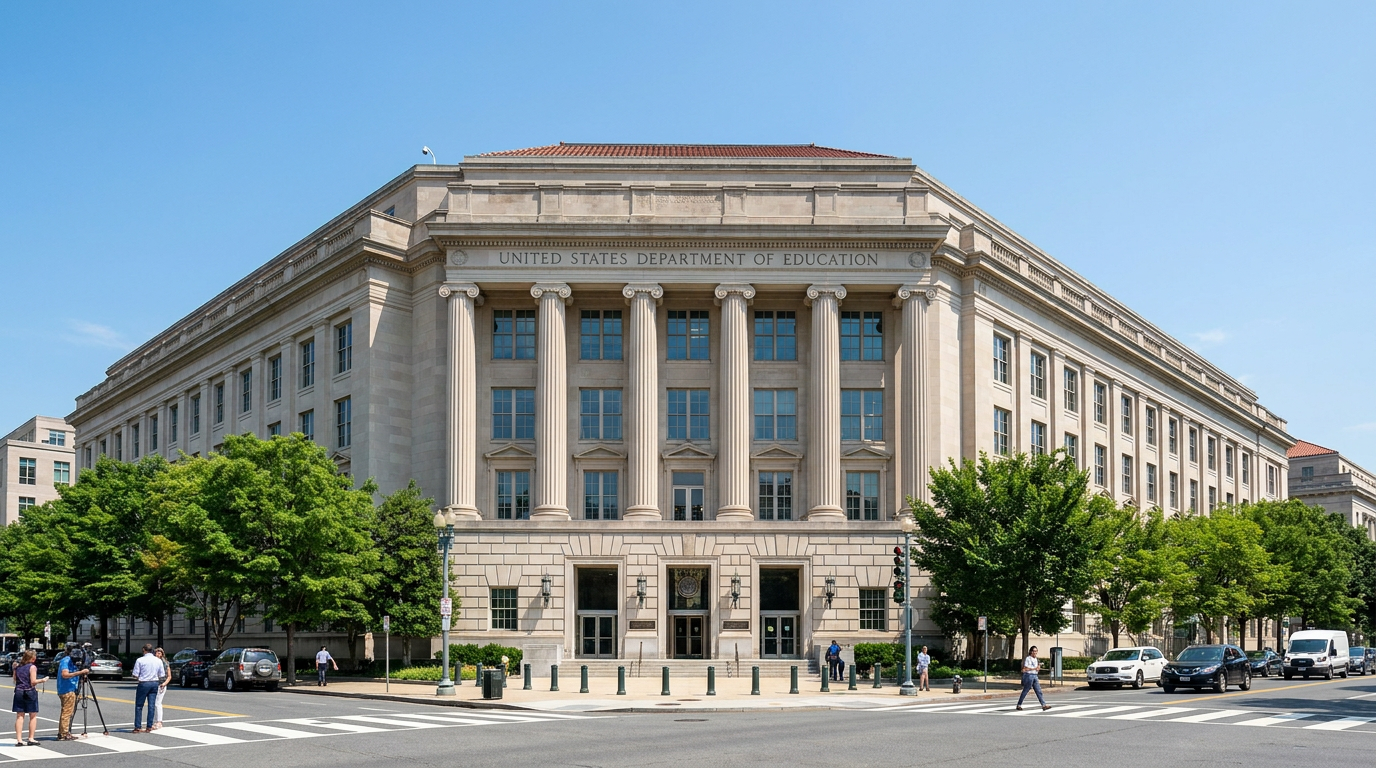
- Student Advocates & Borrowers
- Warn that the new caps and the 30-year forgiveness timeline will make higher education inaccessible for low- and middle-income families.
- Fiscal Hawks & Policymakers
- Argue that unlimited federal lending allowed universities to endlessly raise tuition with zero accountability, and that caps protect taxpayers.
- Higher Education Institutions
- Express deep concern over immediate enrollment drops and are scrambling to find alternative funding sources to keep current students enrolled.
What's not represented
- · High school seniors deciding whether to attend college
- · Private student loan lenders
Why this matters
These changes will drastically alter how millions of Americans finance higher education, potentially pricing some families out of expensive programs while forcing current borrowers to navigate new, less generous repayment plans.
Key points
- The Grad PLUS loan program is eliminated for new borrowers starting July 1, 2026.
- Graduate students face a new annual borrowing cap of $20,500, while professional degrees are capped at $50,000.
- Parent PLUS loans are now capped at $20,000 per year, limiting how much families can borrow for undergraduate education.
- The SAVE repayment plan is ending, replaced by the Repayment Assistance Plan (RAP), which requires 30 years of payments for forgiveness.
- New earnings rules may cut off federal aid to programs whose graduates earn less than the average pay for people without that level of education.
The landscape of American higher education financing is about to undergo its most drastic transformation in decades. Starting July 1, 2026, sweeping federal student loan reforms will take effect, curbing access to billions of dollars in federal aid and reconfiguring how borrowers repay their debt.[2][3]
The changes stem from the One Big Beautiful Bill Act (OBBBA), signed into law in 2025. The legislation aims to simplify a notoriously complex system while holding colleges accountable for taxpayer money.[2][5]
For millions of current and future students, the most immediate shock will be the imposition of strict new borrowing limits. The Grad PLUS program, which previously allowed graduate students to borrow up to the full cost of attendance, will be eliminated for new borrowers.[2][6]
Instead, graduate students will face an annual borrowing cap of $20,500, with a lifetime limit of $100,000. Students pursuing specific "professional" degrees—such as medical, dental, and law degrees—will have a higher annual cap of $50,000 and a lifetime limit of $200,000.[2][6][7]

The distinction between "graduate" and "professional" degrees has sparked intense controversy. Nursing advocacy groups have warned that excluding advanced nursing degrees from the higher professional limits will exacerbate a severe national primary care shortage by making advanced training unaffordable.[2]
Undergraduate student loan limits remain largely unchanged, but their parents are facing a severe contraction in available credit. The Parent PLUS program, long used by families to cover the gap between financial aid and the total cost of attendance, will now be capped at $20,000 per year, or $65,000 total per student.[2][7]
With the average net cost of attendance at private nonprofit institutions hovering around $37,000 a year, financial aid administrators warn that the new Parent PLUS caps will leave many families short of the money needed to complete a degree. Universities are currently scrambling to fundraise or create institutional loan programs to bridge the gap.[2]
Universities are currently scrambling to fundraise or create institutional loan programs to bridge the gap.
Beyond borrowing limits, the mechanics of loan repayment are also being entirely overhauled. The Saving on a Valuable Education (SAVE) plan is officially ending, forcing millions of borrowers to transition to new frameworks.[3][8]
In its place, the Department of Education is rolling out the Repayment Assistance Plan (RAP) and a new Tiered Standard Repayment Plan. Borrowers currently enrolled in SAVE will receive notifications starting July 1, giving them 90 days to select a new plan before being automatically enrolled in a standard plan.[5][8]
Under RAP, monthly payments are calculated as a percentage of a borrower's adjusted gross income, starting at a $10 minimum and rising to 10% for higher-income earners. Unlike previous income-driven plans that offered forgiveness after 10 to 20 years, RAP requires 30 years of qualifying payments before any remaining balance is canceled.[2][8]

Proponents of the legislation argue these reforms are a necessary corrective to a system that incentivized colleges to endlessly raise tuition while shifting the risk to taxpayers. By capping loans, they argue, universities will be forced to lower costs and target subsidies to the right individuals.[4]
Furthermore, the Department of Education is implementing new "earnings rules" that could cut off federal student aid entirely for programs whose graduates earn meager salaries. To maintain access to federal loans, graduates of a specific program must earn at least as much as the average pay for people without that level of education.[4]
Critics describe the potential impact of these earnings rules as catastrophic for trade schools, religious colleges, and programs in the arts. Government estimates suggest that nearly 90% of students in master's programs for religion and religious studies could lose access to federal loans under the new metrics.[4]
Current students who borrowed before July 1, 2026, may be "grandfathered" in under the old limits for up to three additional years to complete their current degree, provided they remain continuously enrolled. However, financial aid offices are urging students to verify their specific eligibility immediately.[6][7]

Borrowers who need to consolidate loans—particularly those holding Parent PLUS loans who want to access income-driven repayment options—face a critical deadline of June 30, 2026. Any consolidation processed after that date will subject the borrower to the new, stricter RAP rules.[1]
In the midst of these changes, the Department of Education is also processing final discharges for borrowers covered by the Sweet v. McMahon settlement. The final group of approximately 30,000 post-class applicants is expected to receive notices confirming their eligibility for full settlement relief by June 15.[1]
How we got here
July 2025
President Trump signs the One Big Beautiful Bill Act (OBBBA), setting the stage for major student loan reforms.
March 2026
A federal appeals court officially finalizes the termination of the Biden-era SAVE repayment plan.
June 15, 2026
Key notice date for borrowers receiving automatic loan discharges under the Sweet v. McMahon settlement.
June 30, 2026
Deadline for borrowers to consolidate existing loans before the new, stricter repayment rules take effect.
July 1, 2026
The new borrowing caps and the Repayment Assistance Plan (RAP) officially go into effect for all new federal student loans.
Viewpoints in depth
Fiscal Hawks & Policymakers
Argue that unlimited federal lending allowed universities to endlessly raise tuition with zero accountability, and that caps protect taxpayers.
Proponents of the new borrowing limits argue that the previous system, which allowed students and parents to borrow up to the full cost of attendance, created a perverse incentive for universities to continuously hike tuition. By imposing strict caps and tying federal aid to post-graduation earnings, they believe the government is finally forcing higher education institutions to lower their costs and prove their return on investment. They argue that taxpayers should not be on the hook for subsidizing degrees that do not lead to gainful employment.
Student Advocates & Borrowers
Warn that the new caps and the 30-year forgiveness timeline will make higher education inaccessible for low- and middle-income families.
Advocates for borrowers warn that the new policies will have a devastating impact on social mobility. They argue that capping Parent PLUS loans at $20,000 will effectively price low-income families out of private and out-of-state public universities. Furthermore, they contend that the new Repayment Assistance Plan (RAP), which stretches the timeline for loan forgiveness to 30 years, will trap a generation of borrowers in lifelong debt. They are particularly concerned that the caps will exacerbate shortages in vital but lower-paying fields like nursing, social work, and education.
Higher Education Institutions
Express deep concern over immediate enrollment drops and are scrambling to find alternative funding sources to keep current students enrolled.
Colleges and universities are bracing for a significant financial shock as the new limits take effect. Financial aid administrators fear that many prospective students will simply forgo higher education or drop out if they cannot secure enough funding to cover the gap between the new federal caps and the actual cost of attendance. Institutions are currently exploring emergency measures, such as ramping up fundraising for institutional scholarships and partnering with private lenders, to prevent a massive drop in enrollment for the upcoming academic year.
What we don't know
- How many universities will successfully create their own institutional loan programs to bridge the funding gap.
- Whether the new earnings rules will survive inevitable legal challenges from trade schools and religious colleges.
- The exact number of current students who will be forced to drop out due to the new Parent PLUS loan caps.
Key terms
- One Big Beautiful Bill Act (OBBBA)
- A 2025 federal law that overhauled the tax code and mandated sweeping changes to federal student aid, including new borrowing caps and repayment plans.
- Repayment Assistance Plan (RAP)
- The new income-driven repayment plan replacing older options like SAVE, capping payments at up to 10% of discretionary income and requiring 30 years of payments for forgiveness.
- Parent PLUS Loan
- A federal student loan available to the parents of dependent undergraduate students to help pay for college expenses not covered by other financial aid.
- Grad PLUS Loan
- A federal loan program for graduate and professional students that previously allowed borrowing up to the full cost of attendance, which is being eliminated on July 1, 2026.
Frequently asked
Will current students be affected by the new loan limits?
Students who borrowed federal loans for their current academic program before July 1, 2026, may be "grandfathered" in under the old limits for up to three years to finish their degree.
What happens to borrowers currently on the SAVE repayment plan?
The SAVE plan is being eliminated. Borrowers will receive a 90-day notice starting July 1 to choose a new plan, such as the Repayment Assistance Plan (RAP), or be automatically placed on a standard plan.
Can parents still borrow the full cost of tuition?
No. Starting July 1, Parent PLUS loans are capped at $20,000 per year, with a lifetime maximum of $65,000 per student.
Sources
Source coverage
8 outlets
3 viewpoints surfaced








[1]ForbesHigher Education Institutions
3 Big Dates For Student Loans Are In Just Weeks As Reforms Take Effect
Read on Forbes →[2]The Washington PostStudent Advocates & Borrowers
How student loans and financial aid are changing in 2026
Read on The Washington Post →[3]NPRStudent Advocates & Borrowers
July 1 Brings Big Student Loan Changes. Here's What You Need to Know
Read on NPR →[4]American Action ForumFiscal Hawks & Policymakers
Student Loans (Again)
Read on American Action Forum →[5]Federal RegisterFiscal Hawks & Policymakers
Reimagining and Improving Student Education
Read on Federal Register →[6]NASFAAHigher Education Institutions
Big Changes to Federal Student Loans
Read on NASFAA →[7]Columbia UniversityHigher Education Institutions
Changes to 2026-2027 Federal Student Loans
Read on Columbia University →[8]NYC Department of Consumer and Worker ProtectionStudent Advocates & Borrowers
Key Changes in Federal Student Loan Repayment: Coming July 2026
Read on NYC Department of Consumer and Worker Protection →

More in news politics
See all 6 stories →US-Iran Deal
US and Iran Reach Framework Peace Deal, Reopening Strait of Hormuz
0 sources

Federal AI
Federal Government AI Deployments Double to Over 3,600 Amid Transparency Concerns
0 sources
Strait of Hormuz
US and Iran Reach Framework Peace Deal to End 15-Week War
0 sources

Strait of Hormuz
US and Iran Reach Framework Peace Deal to End 15-Week War and Reopen Strait of Hormuz
0 sources

Every angle. Every day.
Get news politics stories with full source coverage and perspective breakdowns delivered to your inbox.