
The Green Collar Boom: How Vocational Trades Are Powering the Clean Energy Transition
As electric vehicle adoption and wind energy deployment accelerate, a severe shortage of specialized technicians is reshaping vocational education. Technical schools are rapidly pivoting to skills-based training to fill high-paying, high-demand roles in the clean energy sector.
By Factlen Editorial Team
- Labor & Economic Analysts
- Focusing on the shift from traditional degrees to skills-based hiring.
- Clean Energy Planners
- Prioritizing rapid workforce deployment to prevent climate bottlenecks.
- Automotive Repair Sector
- Highlighting the safety risks and logistical hurdles of the EV transition.
What's not represented
- · Traditional Auto Mechanics
- · Rural Community Colleges
Why this matters
The transition to clean energy is creating a massive wave of high-paying, accessible jobs that do not require a four-year college degree. However, if the vocational training infrastructure cannot scale fast enough to produce certified technicians, consumers will face skyrocketing repair costs for electric vehicles and severe delays in renewable energy deployment.
Key points
- Wind turbine technician is projected to be one of the fastest-growing jobs in the U.S., with a 49.9% growth rate by 2034.
- The median salary for wind technicians exceeds $62,000, offering a lucrative career path without a four-year college degree.
- A severe shortage of certified electric vehicle mechanics is threatening to cause service delays and increased repair costs globally.
- Vocational schools and community colleges are rapidly launching specialized clean energy programs to bridge the skills gap.
- Employers are increasingly adopting 'skills-based hiring,' prioritizing hands-on competencies and safety certifications over traditional educational credentials.
The global transition to clean energy has hit an unexpected bottleneck. It is not a lack of capital, nor a shortage of advanced technology or political ambition. Instead, the limiting factor is human capital: the skilled hands required to install solar panels, maintain offshore wind turbines, and repair high-voltage electric vehicles.
As governments and corporations pour billions into decarbonization, a new class of "green collar" workers is emerging. This workforce is bypassing traditional four-year university degrees in favor of targeted vocational training, apprenticeships, and specialized industry certifications.
The demand for these roles is staggering. According to the Bureau of Labor Statistics, employment for wind turbine service technicians is projected to grow by nearly 50 percent between 2024 and 2034, making it one of the fastest-growing occupations in the United States.[1]
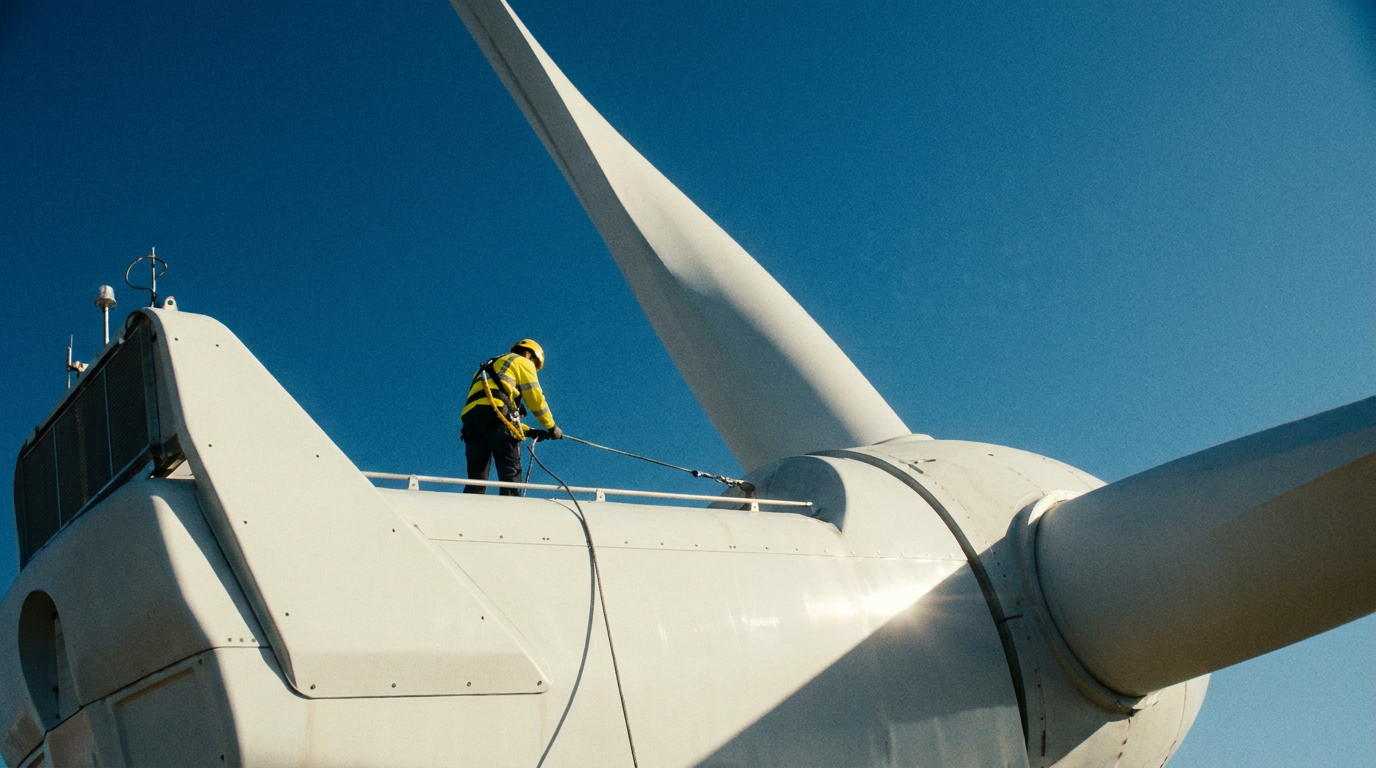
This explosive growth is driven by the sheer physical reality of renewable energy. Every new wind farm requires technicians to scale 300-foot towers, perform complex mechanical diagnostics inside the nacelle, and ensure the massive turbines operate efficiently year-round in harsh weather conditions.

The compensation reflects the urgency of the demand. The median annual wage for wind turbine technicians was $62,580 in 2024, with the top ten percent of earners bringing in over $88,000. For workers without a college degree, these roles offer a significant salary premium over traditional blue-collar jobs.[1]
The U.S. Department of Energy has highlighted this workforce gap, noting that while the industry is expanding rapidly, employers are struggling to find qualified applicants. In response, vocational schools and community colleges are racing to adapt their curricula to meet the moment.[2]
For example, the Nova Scotia Community College in Canada is launching a dedicated wind turbine technician program in 2026. The initiative is specifically designed to meet the province's goal of generating 50 percent of its electricity from wind by 2030, a target that would be impossible without a localized, highly skilled workforce.[4]
For example, the Nova Scotia Community College in Canada is launching a dedicated wind turbine technician program in 2026.
While the wind sector faces a shortage of technicians to build the future, the automotive industry faces a crisis in maintaining the present. Electric vehicles are selling at record rates globally, but the mechanics required to fix them are virtually nonexistent in many regions.

The Institute of the Motor Industry has warned that 2026 marks a critical crossroads for the EV skills gap. The organization predicts a shortfall of 35,700 qualified EV technicians in the UK alone by 2030, risking both consumer safety and the government's broader green ambitions.[5]
The situation is equally dire in Australia, where industry analysts report a current shortage of up to 30,000 EV mechanics. Without a massive influx of trained professionals, EV owners could face service wait times of up to two months and significantly higher repair costs due to a lack of market competition.[3]
The challenge lies in the fundamental difference between internal combustion engines and electric drivetrains. Traditional mechanics are trained to handle oil, exhaust systems, and mechanical transmissions. EVs require expertise in high-voltage safety protocols, battery management systems, and software-driven diagnostics.

To bridge this divide, technical institutes are rolling out specialized EV certification programs. These courses teach students how to safely de-energize a vehicle, diagnose battery cell degradation, and replace complex electronic components without risking electrocution.
Beyond specific technical skills, the green collar boom is accelerating a broader shift in how companies hire. The Brookings Institution notes that "skills-based hiring"—recruiting workers based on their demonstrated competencies rather than their formal educational pedigree—is becoming increasingly vital in the clean energy sector.[6]
This approach reduces barriers to entry and opens doors for non-traditional candidates. Veterans, in particular, are highly sought after for wind and solar roles because their military experience aligns perfectly with the strict safety procedures, lockout/tagout protocols, and high-stakes environments required in renewable energy maintenance.[7]
By focusing on skills rather than degrees, the clean energy transition is inadvertently democratizing access to high-paying technical careers. It represents a rare alignment of environmental necessity and economic opportunity.

However, scaling this vocational infrastructure remains a formidable challenge. Advanced training requires expensive equipment, such as high-voltage EV simulators and functional turbine nacelles, which many underfunded community colleges struggle to afford.
If the training bottleneck can be resolved, the green collar workforce will not only power the clean energy transition but also revitalize the vocational education sector, proving that the jobs of the future do not all require a desk and a laptop.[7]
How we got here
2021
The Institute of the Motor Industry warns of a looming EV skills gap as electric vehicle sales begin to accelerate globally.
2024
The Bureau of Labor Statistics projects wind turbine technicians to be one of the fastest-growing occupations in the U.S. over the next decade.
January 2025
Australia reports a critical shortage of up to 30,000 EV mechanics, threatening to delay service times and increase repair costs.
March 2025
Nova Scotia Community College announces a new wind turbine technician program to meet the region's 2030 clean energy targets.
2026
Industry analysts mark this year as the critical crossroads where the EV mechanic skills gap begins to materially impact consumers.
Viewpoints in depth
Labor & Economic Analysts
Focusing on the shift from traditional degrees to skills-based hiring.
Economists and labor analysts view the clean energy transition as a massive opportunity for the working class. They argue that the rigid requirement for four-year degrees has historically locked talented individuals out of lucrative careers. By shifting to skills-based hiring, employers can tap into a broader talent pool, including veterans whose military experience with strict safety protocols translates perfectly to wind turbine maintenance. This camp emphasizes that the 'green collar' boom is not just an environmental win, but an engine for upward economic mobility.
Clean Energy Planners
Prioritizing rapid workforce deployment to prevent climate bottlenecks.
For infrastructure planners and energy departments, the skills gap is fundamentally a climate challenge. They warn that every delayed solar installation or wind farm commissioning means more reliance on fossil fuels. This perspective advocates for massive federal and state investments in vocational training, arguing that the pace of the energy transition is now entirely dependent on workforce readiness rather than technology costs or policy ambition.
Automotive Repair Sector
Highlighting the safety risks and logistical hurdles of the EV transition.
The automotive repair industry is sounding the alarm over the severe lack of high-voltage training among existing mechanics. Industry bodies stress that servicing an EV is fundamentally different from changing the oil in a combustion engine; it requires navigating lethal voltages and complex software systems. This camp argues that without standardized, mandatory EV certifications and significant investment in upskilling the current workforce, consumers will face skyrocketing repair costs, month-long wait times, and severe safety hazards in independent garages.
What we don't know
- Whether the supply of certified EV mechanics will scale fast enough to prevent a spike in consumer repair costs by 2030.
- How quickly independent, rural auto shops can afford the expensive diagnostic equipment required to service modern electric vehicles.
- If federal and state funding for vocational clean-energy programs will be sustained long enough to meet the 2035 climate targets.
Key terms
- Green Collar Jobs
- Employment in environmental sectors, particularly in renewable energy, energy efficiency, and clean technology.
- Skills-Based Hiring
- A recruitment strategy that prioritizes a candidate's practical abilities and competencies over formal educational degrees.
- High-Voltage Certification
- Specialized safety and technical training required for mechanics to legally and safely repair electric vehicle drivetrains.
- Nacelle
- The housing at the top of a wind turbine tower that contains the generator, gearbox, and drivetrain.
Frequently asked
Do I need a four-year degree to work in clean energy?
No. Many of the fastest-growing roles, such as wind turbine technicians and EV mechanics, require vocational certificates, apprenticeships, or specialized two-year degrees rather than a traditional university education.
Why is there a shortage of EV mechanics?
Electric vehicles require fundamentally different knowledge than gas-powered cars, including high-voltage safety protocols and software diagnostics. The existing mechanic workforce is largely untrained in these specific areas.
How much do wind turbine technicians make?
According to the Bureau of Labor Statistics, the median annual salary for a wind turbine technician was $62,580 in 2024, with top earners making over $88,000.
Sources
Source coverage
7 outlets
3 viewpoints surfaced







[1]Bureau of Labor StatisticsLabor & Economic Analysts
Employment of wind turbine service technicians expected to increase 49.9 percent by 2034
Read on Bureau of Labor Statistics →[2]Department of EnergyClean Energy Planners
Education, Training, and Workforce Development
Read on Department of Energy →[3]DriveAutomotive Repair Sector
'Doctors of the auto industry': How one occupation could make or break EV success in Australia
Read on Drive →[4]CBC NewsClean Energy Planners
NSCC to launch wind turbine technician program in 2026
Read on CBC News →[5]Institute of the Motor IndustryAutomotive Repair Sector
2026 marks cross-roads for EV skills gap
Read on Institute of the Motor Industry →[6]Brookings InstitutionLabor & Economic Analysts
Exploring and expanding skills development across the built environment
Read on Brookings Institution →[7]Factlen Editorial TeamLabor & Economic Analysts
Synthesis by Factlen editorial team
Read on Factlen Editorial Team →

Every angle. Every day.
Get education stories with full source coverage and perspective breakdowns delivered to your inbox.