
Do At-Home Red Light Therapy Masks Actually Work? The Clinical Evidence, Decoded
At-home LED masks promise to reduce wrinkles and clear acne, but their lower power density means results require months of strict daily consistency.
By Factlen Editorial Team
- Medical & Scientific Consensus
- Medical professionals view LED masks as a valid but modest adjunct therapy.
- Consumer Tech Reviewers
- Product testers focus on usability, comfort, and the reality of daily compliance.
What's not represented
- · Aesthetic Laser Technicians
- · Mask Manufacturers
Why this matters
With premium LED masks costing upwards of $400, understanding the gap between clinical photobiology and at-home consumer devices prevents expensive disappointments and helps buyers set realistic expectations for their skin health.
Key points
- Red light therapy relies on photobiomodulation, using specific wavelengths to boost cellular energy and stimulate collagen production.
- Clinical evidence strongly supports the use of combined red and blue light for treating mild to moderate acne.
- At-home LED masks deliver significantly less power than in-office clinical devices, meaning they require strict daily use to achieve results.
- Visible improvements in fine lines and skin texture are modest and typically take 12 to 16 weeks to materialize.
- Flexible silicone masks have become the industry standard because they sit closer to the skin, maximizing light absorption.
In 2026, it is nearly impossible to scroll through a social media feed or visit a high-end beauty retailer without encountering someone wearing what looks like a glowing, futuristic welding mask. At-home light-emitting diode (LED) face masks have transitioned from niche dermatologist-office treatments to mainstream consumer electronics, promising to cure everything from stubborn acne to deep-set wrinkles. With premium models from brands like Omnilux, CurrentBody, and Dr. Dennis Gross routinely costing between $300 and $500, consumers are left wondering if they are purchasing a genuine medical breakthrough or an expensive placebo. The aggressive marketing claims often blur the line between rigorous clinical science and cosmetic hype, making it difficult for the average buyer to separate fact from fiction.[4][5][6]
To understand whether these glowing masks actually work, it is necessary to look past the marketing and examine the underlying biological mechanism: photobiomodulation. Unlike ultraviolet light, which damages cellular DNA and causes premature aging, or laser resurfacing, which intentionally creates micro-injuries to force the skin to heal, LED therapy is entirely non-invasive. It relies on the principle that specific wavelengths of light can be absorbed by chromophores within the skin, altering intrinsic cellular activity without causing thermal damage. This is not a new concept in medicine; dermatologists and oncologists have utilized targeted light therapies for decades to treat precancerous lesions and accelerate acute wound healing.[1][3]
The primary engine driving the benefits of red light therapy lies deep within the skin's cells, specifically within the mitochondria. When skin is exposed to red light—typically calibrated between 630 and 660 nanometers—and near-infrared light (760 to 1200 nanometers), the photons penetrate the tissue and are absorbed by an enzyme called cytochrome c oxidase. This absorption event triggers a cascade of biological reactions, most notably a significant increase in the production of adenosine triphosphate (ATP). ATP serves as the primary energy currency for cells. By boosting ATP levels, red light therapy essentially gives sluggish, aging skin cells the energy they need to function optimally, accelerating repair processes and stimulating the synthesis of new structural proteins.[3][4]

The most common claim made by LED mask manufacturers is that their devices can reverse the visible signs of aging, specifically fine lines and loss of elasticity. When evaluating this claim against the clinical evidence, the verdict is generally positive, though heavily caveated. Systematic reviews of randomized controlled trials confirm that consistent exposure to red and near-infrared light does indeed stimulate fibroblasts—the cells responsible for producing collagen and elastin. Over time, this increased collagen production helps to rebuild the skin's underlying structural matrix, leading to measurable improvements in skin density and a reduction in the depth of periorbital wrinkles, commonly known as crow's feet.[2][3]
However, dermatologists are quick to emphasize that the keyword in all of these clinical findings is "modest." Red light therapy is not a facelift, nor is it a substitute for gold-standard topical treatments like prescription retinoids or daily broad-spectrum sunscreen. The changes induced by photobiomodulation are gradual and subtle. Patients in clinical trials typically do not begin to see statistically significant improvements in skin texture or firmness until after 12 to 16 weeks of consistent, nearly daily use. For consumers expecting the dramatic, overnight results often simulated in social media filters, the reality of red light therapy's slow-and-steady biological timeline can be a source of frustration.[1][2][7]
Where the clinical evidence for LED therapy is arguably the strongest is in the treatment of mild to moderate acne vulgaris. This application typically relies on a combination of red light and blue light, which operates at a shorter wavelength (around 415 nanometers). Blue light does not penetrate as deeply as red light, but it is highly effective at targeting the sebaceous glands and neutralizing Cutibacterium acnes, the primary bacteria responsible for inflammatory breakouts. By creating a toxic environment for these bacteria, blue light acts as a powerful antimicrobial agent without the drying and irritating side effects commonly associated with topical treatments like benzoyl peroxide.[3][5]
Where the clinical evidence for LED therapy is arguably the strongest is in the treatment of mild to moderate acne vulgaris.
While the blue light handles the bacterial component of acne, the red light works synergistically to address the aftermath: inflammation and hyperpigmentation. Red light's ability to modulate the immune response helps to rapidly calm the angry, red lesions associated with active breakouts. Furthermore, by accelerating the skin's natural wound-healing processes, red light therapy has been shown to significantly reduce the duration of post-inflammatory erythema—the stubborn red or brown marks that linger long after a pimple has flattened. This dual-action approach makes combination LED masks a highly compelling, science-backed tool for acne management.[2][4]
The most significant point of confusion in the consumer market revolves around the difference between the LED panels used in a dermatologist's office and the flexible masks sold for home use. The critical metric here is power density, or irradiance, which is measured in milliwatts per square centimeter (mW/cm²). Clinical-grade LED devices are highly powerful, typically delivering between 100 and 200 mW/cm² of light energy. In contrast, to meet safety regulations for unsupervised home use, consumer masks are significantly detuned, generally outputting a power density of just 10 to 50 mW/cm².[1][7]

This massive discrepancy in power density directly impacts treatment protocols and efficacy. In physics, the total dose of light energy delivered to the skin (measured in joules) is a function of both power and time. Because at-home masks are so much weaker, a user must wear the device for significantly longer periods—and much more frequently—to achieve a cumulative energy dose that even approaches what a single 10-minute session under a clinical panel can provide. This is why dermatologists stress that at-home LED therapy requires a high degree of user compliance; missing days or cutting sessions short will result in a sub-therapeutic dose that yields zero visible changes.[1][4][7]
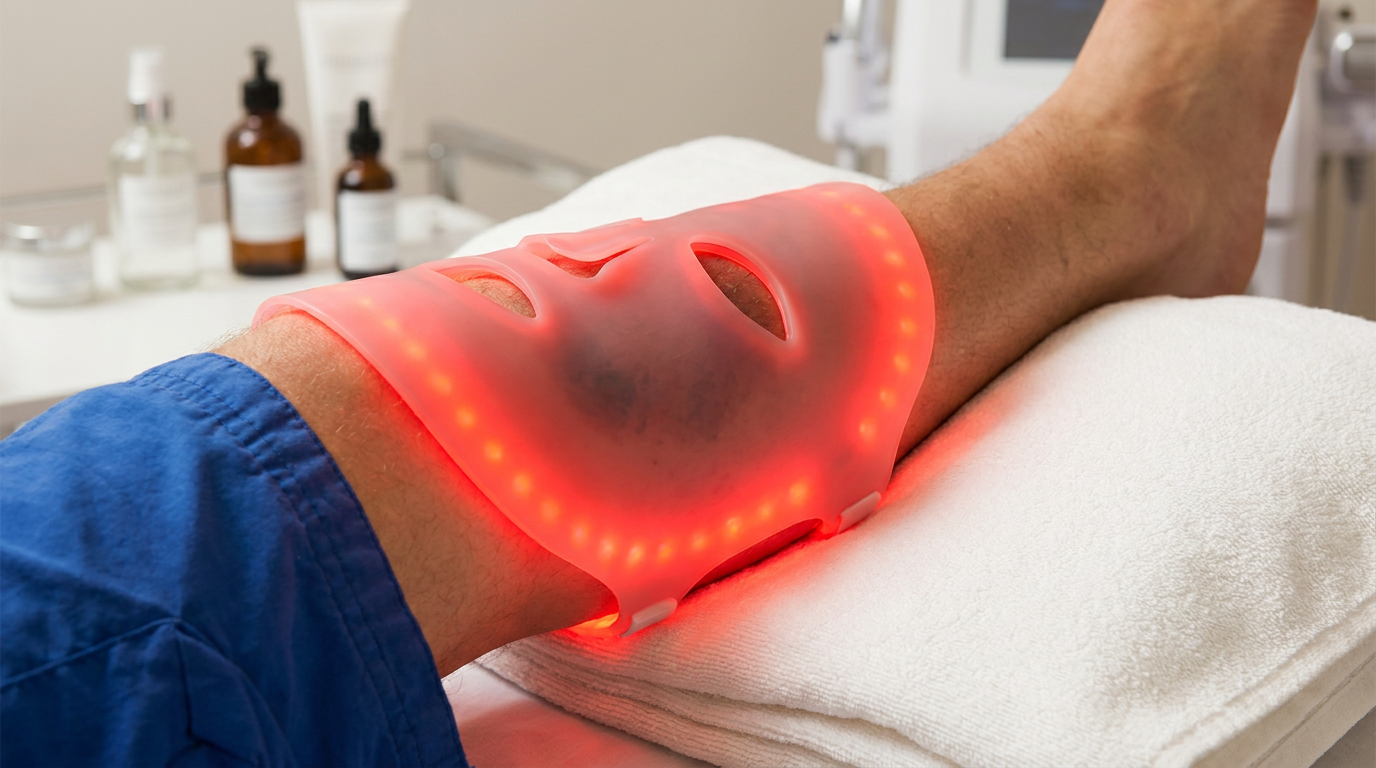
The hardware landscape for at-home masks has evolved rapidly to address some of these efficiency challenges. Early iterations of consumer LED masks were constructed from rigid, hard plastics that sat several inches away from the face. Because light energy dissipates exponentially as it travels through space—a principle known as the inverse-square law—much of the therapeutic power was lost before it ever reached the skin. In 2026, the industry standard has shifted almost entirely to flexible, medical-grade silicone masks. Devices from market leaders like Omnilux and CurrentBody are designed to strap tightly to the contours of the face, ensuring the diodes sit mere millimeters from the epidermis to maximize light absorption.[4][6]
Regarding safety, dermatological consensus holds that at-home LED masks are overwhelmingly safe for the general population, provided they are cleared by regulatory bodies like the FDA or Health Canada. Because the devices do not emit ultraviolet radiation, there is no risk of sunburn or DNA damage. However, safety is not absolute. The most pressing concern among medical professionals is ocular health. While red light is generally safe for the eyes, the intense brightness of the diodes can cause strain, and the long-term effects of daily, close-proximity exposure remain understudied. Users are strongly advised to utilize the blackout goggles that accompany reputable devices.[1][2]

Additionally, while red light is anti-inflammatory for most, it can occasionally trigger adverse reactions in individuals with specific photosensitive conditions. Patients with melasma—a complex pigmentation disorder often exacerbated by heat and visible light—must proceed with extreme caution, as the near-infrared wavelengths in some masks can inadvertently stimulate melanocytes and darken existing patches. Similarly, individuals taking photosensitizing medications, such as certain antibiotics or oral isotretinoin, should consult their prescribing physician before introducing an LED mask into their routine to avoid unexpected blistering or severe irritation.[1][7]
Ultimately, the decision to invest in an at-home red light therapy mask comes down to a realistic assessment of one's own habits and expectations. The scientific literature clearly validates photobiomodulation as a legitimate mechanism for improving cellular function, boosting collagen, and controlling acne bacteria. These devices are not snake oil; they are grounded in decades of established photobiology. However, they are also not magic wands. They demand a level of daily consistency that many consumers struggle to maintain over the long haul.[4][5][7]

For the disciplined skincare enthusiast who is willing to commit to a 10-minute daily session for a minimum of three months, a high-quality, flexible silicone LED mask represents a sound, evidence-based investment in long-term skin health. It serves as an excellent adjunct therapy that enhances the efficacy of a well-rounded topical routine. But for those seeking rapid, dramatic transformations, or those who know they will relegate the device to a bathroom drawer after a few weeks of use, the hundreds of dollars required for entry would be far better spent on proven clinical treatments or a lifetime supply of high-quality sunscreen.[2][4][6]
Viewpoints in depth
Dermatological Consensus
Medical professionals view LED masks as a valid but modest adjunct therapy.
Board-certified dermatologists generally agree that the science of photobiomodulation is sound, and that red light therapy can stimulate collagen while blue light kills acne bacteria. However, they consistently warn patients to temper their expectations. Because at-home devices are legally capped at much lower power densities than in-office lasers and clinical LED panels, the results are subtle and take months to materialize. Dermatologists view these masks as a helpful supplement to a core routine of sunscreen and retinoids, rather than a replacement for them.
Consumer Tech Reviewers
Product testers focus on usability, comfort, and the reality of daily compliance.
For beauty editors and consumer tech reviewers, the primary debate isn't whether the science works, but whether the hardware is actually usable. Reviewers heavily penalize rigid, heavy masks that are uncomfortable to wear or require the user to remain plugged into a wall. They advocate for flexible, battery-operated silicone models that allow users to walk around and multitask, arguing that the 'best' mask is simply the one a consumer will actually tolerate wearing for 10 minutes every single day.
Skincare Minimalists
Skeptics argue the high cost and time commitment outweigh the subtle benefits.
A vocal contingent of skincare minimalists and financial skeptics argue that the $300 to $500 price tag of premium LED masks is unjustified given the modest clinical outcomes. This camp points out that a lifetime supply of high-SPF sunscreen and prescription-strength tretinoin will yield far more dramatic anti-aging results for a fraction of the cost. They view the LED mask trend as an unnecessary complication to skincare routines, driven more by aesthetic social media marketing than by absolute consumer necessity.
What we don't know
- The long-term ocular effects of daily, close-proximity exposure to bright LED arrays remain understudied.
- The exact 'Goldilocks' window of optimal power density and treatment duration for at-home use is still debated among researchers.
- It is unclear how effectively at-home masks perform on severe, cystic acne compared to prescription oral medications.
Key terms
- Photobiomodulation
- The use of specific wavelengths of light to stimulate cellular function and promote healing without causing thermal damage.
- Adenosine Triphosphate (ATP)
- The primary molecule that stores and transfers energy within cells, essential for cellular repair and collagen production.
- Fibroblasts
- Cells within the skin's connective tissue that are responsible for producing collagen and elastin.
- Power Density (Irradiance)
- The amount of light energy delivered to a specific area of skin per second, typically measured in milliwatts per square centimeter (mW/cm²).
- Erythema
- Redness of the skin caused by increased blood flow, often occurring after an inflammatory acne breakout.
Frequently asked
Do I need to wear eye protection with a red light mask?
Yes. While red light is generally safe, the intense brightness of the LEDs can cause ocular strain. Dermatologists strongly recommend using the blackout goggles provided with the device.
Can I use an LED mask if I have active acne?
Yes, particularly if the mask includes blue light. Blue light kills acne-causing bacteria, while red light helps reduce the associated inflammation and redness.
How long does it take to see results from an at-home mask?
Clinical studies indicate that while some acne reduction may be visible in 4 weeks, significant anti-aging results—like improved collagen density and reduced fine lines—typically require 12 to 16 weeks of consistent daily use.
Can I use a red light mask alongside retinol or chemical exfoliants?
Generally, yes, but caution is advised. Because both retinol and red light therapy stimulate cellular turnover, introducing both simultaneously can cause irritation. It is best to apply active ingredients after the light therapy session, not before.
Sources
Source coverage
7 outlets
2 viewpoints surfaced







[1]Stanford MedicineMedical & Scientific Consensus
Decoding the science of red light therapy
Read on Stanford Medicine →[2]Harvard Health PublishingMedical & Scientific Consensus
LED lights: Are they a cure for your skin woes?
Read on Harvard Health Publishing →[3]National Institutes of Health (NIH)Medical & Scientific Consensus
Light-emitting diodes in dermatology: A systematic review of randomized controlled trials
Read on National Institutes of Health (NIH) →[4]The IndependentConsumer Tech Reviewers
Do LED face masks actually work? A doctor explains the science
Read on The Independent →[5]Global NewsConsumer Tech Reviewers
Do LED face masks actually work? What to know before you buy
Read on Global News →[6]Forbes VettedConsumer Tech Reviewers
Best Red Light Therapy Masks 2026
Read on Forbes Vetted →[7]Factlen Editorial TeamMedical & Scientific Consensus
Synthesis by Factlen editorial team
Read on Factlen Editorial Team →
Every angle. Every day.
Get shopping stories with full source coverage and perspective breakdowns delivered to your inbox.