
FIFA to Open New U-15 Global Tournament with Symbolic Israel-Palestine Match
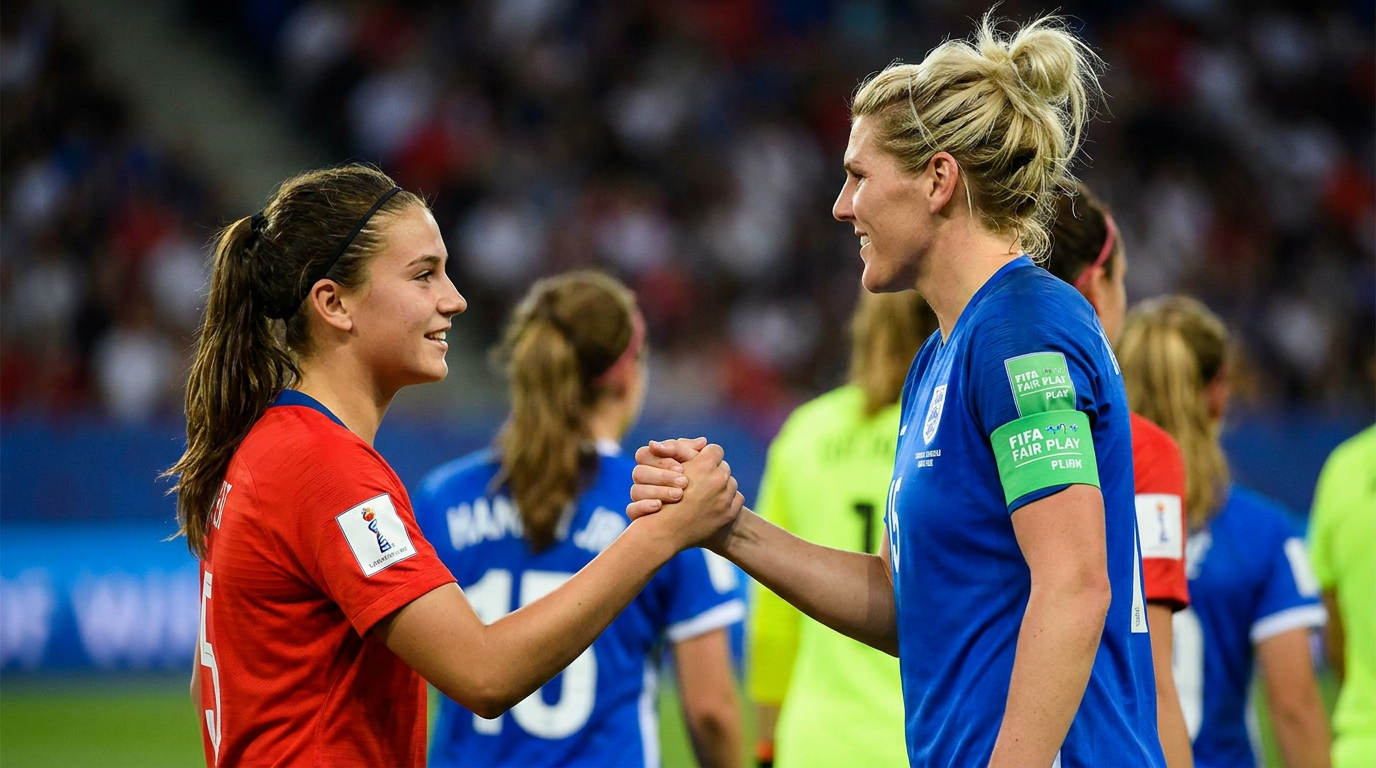
FIFA is organizing a highly symbolic under-15 match between Israel and Palestine to open a new 211-nation youth tournament in the United States this September. The initiative marks a major push into sports diplomacy, aiming to use football to foster connection and dialogue among the next generation.
By Factlen Editorial Team
- Sports Diplomats
- Argue that football possesses unique soft power to foster dialogue and humanize opponents where traditional politics fail.
- Palestinian Advocates
- Welcome the global platform for their youth but caution against using the match to obscure ongoing structural inequalities and territorial disputes in regional football.
- Israeli Representatives
- Emphasize the value of person-to-person youth engagement in a neutral setting to build long-term foundations for coexistence.
What's not represented
- · The teenage players themselves, whose voices are often overshadowed by adult political narratives.
- · Grassroots coaches working in conflict zones who manage the daily realities of youth development.
Why this matters
This initiative tests whether global sports can succeed where traditional politics have failed, using the universal language of football to foster dialogue between the next generation of Israelis and Palestinians. If successful, it could establish a new blueprint for using youth athletics to bridge deeply entrenched geopolitical divides.
Key points
- FIFA is launching a new global under-15 tournament in the United States this September.
- The opening match will feature the youth national teams of Israel and Palestine.
- The tournament is open to all 211 FIFA member associations, focusing entirely on youth development.
- The initiative is part of FIFA's expanding 'Football for Peace' sports diplomacy portfolio.
- Organizers hope the neutral U.S. setting will allow the teenagers to build personal connections away from regional tensions.
FIFA is finalizing plans to host a highly symbolic under-15 match between Israel and Palestine, which will serve as the opening fixture for a new global youth tournament in the United States this September. The initiative marks a bold step into international diplomacy for the sport's governing body, placing teenagers at the center of a high-profile effort to bridge one of the world's most entrenched divides. By focusing on the next generation of athletes, organizers hope to demonstrate that the football pitch can remain a sanctuary for dialogue and mutual respect, even when traditional political channels have completely broken down.[1][2]
While the September event is not officially designated as an Under-15 World Cup, it represents a massive logistical and diplomatic undertaking. The competition will be open to all 211 FIFA member associations, explicitly including nations that currently face bans at the senior international level, such as Russia. This inclusive framework is designed to separate youth development from the geopolitical actions of national governments. By bringing together thousands of young players from every corner of the globe, the tournament aims to foster cross-cultural exchange and build personal relationships long before these athletes reach the highly politicized senior ranks.[1][3]
FIFA President Gianni Infantino has personally championed the Israel-Palestine opening fixture, framing it as a cornerstone of the organization's expanding "Football for Peace" portfolio. Infantino has increasingly argued that global football possesses a unique soft power capable of humanizing opponents and fostering unity in ways that traditional statecraft cannot. The governing body hopes that broadcasting a competitive but respectful match between Israeli and Palestinian teenagers will send a powerful visual message to a global audience, proving that coexistence is possible on a level playing field governed by universal rules.[1][7]

This youth tournament aligns with a broader strategic pivot for FIFA toward formal sports diplomacy and measurable social impact. Late last year, the organization announced the creation of an annual FIFA Peace Prize to recognize individuals and programs leveraging football for unity. By institutionalizing these efforts, FIFA is signaling a clear desire to insert the sport into the moral and diplomatic discourses traditionally reserved for bodies like the United Nations and the Nobel Committee. The under-15 tournament serves as the first major operational test of this new diplomatic doctrine on a global stage.[6][7]
This youth tournament aligns with a broader strategic pivot for FIFA toward formal sports diplomacy and measurable social impact.
Hosting the tournament in the United States adds another layer of geopolitical significance to the event. As a primary co-host of the upcoming 2026 senior Men's World Cup, the U.S. provides a high-profile, highly secure, and neutral environment for the youth teams to interact away from the immediate pressures and daily realities of the Middle East. American diplomatic officials are reportedly working closely with tournament organizers to facilitate visas and ensure that the young athletes are shielded from political demonstrations, allowing them to focus entirely on the sporting and cultural experience.[2][5]
For the Israeli youth squad, the match offers a rare and valuable opportunity for person-to-person engagement with their Palestinian counterparts. Proponents of the fixture within the Israeli sports community argue that building these connections at the under-15 level—years before these athletes enter adulthood and potential mandatory military service—is crucial for laying the groundwork for future coexistence. By sharing a hotel, training facilities, and a pitch, the young players can interact as peers and athletes first, breaking down the monolithic narratives that often dominate their respective domestic environments.[5]

On the Palestinian side, the match provides a prominent global stage for a youth development program that frequently struggles with severe infrastructure deficits, funding shortages, and complex travel restrictions. The opportunity to compete in the United States against a diverse array of global teams is a significant milestone for the young athletes. However, some regional advocates remain cautious, warning that a single symbolic 90-minute game must not be used as "greenwashing" to obscure the complex, ongoing disputes regarding territorial integrity, freedom of movement, and access to sporting facilities that Palestinian athletes face daily.[4]
Historically, FIFA has attempted to maintain strict political neutrality, often intervening in geopolitical matters only when the immediate administration of the sport is threatened. Yet, the organization has faced mounting pressure from human rights groups, civil society organizations, and UN experts to take definitive stances on the Israeli-Palestinian conflict. By proactively organizing this youth initiative, FIFA is attempting a delicate balancing act—acknowledging the reality of the conflict while using its platform to highlight a positive, forward-looking narrative centered entirely on the potential of the next generation.[1][4]
If successful, the Israel-Palestine opener could become a permanent blueprint for future FIFA youth events, utilizing the under-15 demographic as a primary testing ground for sports diplomacy. Organizers are already exploring ways to pair the tournament with educational workshops, joint training sessions, and cultural excursions designed to maximize off-pitch interaction between historically opposed nations. As the world looks toward the massive spectacle of the 2026 World Cup, this September tournament may ultimately prove that football's greatest power lies not in its multi-billion-dollar mega-events, but in its ability to bring teenagers together in pursuit of a common goal.[3][6]
How we got here
1914
The famous Christmas Truce football match between opposing WWI soldiers inspires future sports diplomacy.
2005
FIFA officially integrates social development and peace-building into its corporate responsibility mandate.
Dec 2025
FIFA announces the inaugural Peace Prize, signaling a formal pivot toward global soft-power diplomacy.
Jun 2026
Plans leak for a symbolic Israel-Palestine U-15 match to open a new global youth tournament.
Sept 2026
The new 211-nation U-15 tournament is scheduled to kick off in the United States.
Viewpoints in depth
Sports Diplomats' View
Belief in football's unique soft power to bridge divides.
Advocates for sports diplomacy argue that football provides a unique, universal language that can bypass entrenched political rhetoric. By placing Israeli and Palestinian teenagers on the same pitch under the same rules, the sport humanizes the 'other' in a highly visible way. Proponents point to historical precedents, such as the Olympic truces or ping-pong diplomacy, suggesting that these youth-level interactions can slowly alter public perception and build a foundation of mutual respect that traditional statecraft has struggled to achieve.
Palestinian Advocates' View
Cautious optimism tempered by concerns over structural inequalities.
While welcoming the opportunity for Palestinian youth to showcase their talent on a global stage, regional advocates stress that a single match cannot erase systemic issues. They point to ongoing challenges such as severe restrictions on the movement of athletes, lack of funding for grassroots infrastructure, and the destruction of sporting facilities. For these advocates, true sports diplomacy must be accompanied by tangible improvements in the daily realities of Palestinian athletes, ensuring the match is a catalyst for change rather than a mere public relations exercise.
Israeli Representatives' View
Focus on the long-term benefits of person-to-person youth engagement.
Israeli sports officials emphasize the critical importance of reaching athletes while they are young, before societal divisions become fully entrenched. They argue that the under-15 demographic is the perfect age for this initiative, as the players are old enough to understand the significance of the moment but young enough to remain open to forming genuine friendships. By sharing training camps and competing in a neutral U.S. setting, the initiative aims to create a cohort of young ambassadors who can carry the experience of coexistence back to their home communities.
What we don't know
- It remains unclear exactly which venues in the United States will host the opening match and subsequent tournament games.
- We do not yet know how the respective national federations will select the players for these highly scrutinized youth squads.
- It is uncertain whether the tournament will secure broadcasting rights to stream the youth matches globally.
Key terms
- Sports Diplomacy
- The use of sports to influence diplomatic, social, and political relations, often by fostering people-to-people connections across divided societies.
- Soft Power
- The ability to influence the behavior or thinking of others through appeal and attraction—such as culture or sports—rather than coercion or financial payment.
- FIFA Member Association
- A national football governing body recognized by FIFA, granting it the right to participate in official international competitions.
Frequently asked
Is this an official Under-15 World Cup?
No. While it is a massive global tournament open to all 211 FIFA member associations, it is not officially branded as a World Cup, focusing instead on youth development and cultural exchange.
Why is the tournament being held in the United States?
The U.S. provides a highly secure, neutral environment for the teams. It also serves as a logistical test run ahead of the 2026 senior Men's World Cup, which the U.S. is co-hosting.
Will banned nations like Russia participate?
Yes. Because the tournament is focused on youth development rather than senior-level national representation, FIFA has opened the invitation to all member associations, including those currently facing senior-level bans.
Sources
Source coverage
7 outlets
3 viewpoints surfaced







[1]The GuardianSports Diplomats
Fifa plans symbolic Israel v Palestine fixture as opening game of new under-15s tournament
Read on The Guardian →[2]ESPNIsraeli Representatives
FIFA to launch new U-15 tournament in US with historic Israel-Palestine opener
Read on ESPN →[3]BBC SportSports Diplomats
Infantino pushes 'football for peace' with symbolic U-15 fixture
Read on BBC Sport →[4]Al JazeeraPalestinian Advocates
FIFA proposes Palestine-Israel youth match amid ongoing tensions
Read on Al Jazeera →[5]The Jerusalem PostIsraeli Representatives
Israeli and Palestinian U-15 teams to meet in US for FIFA peace initiative
Read on The Jerusalem Post →[6]African Leadership MagazineSports Diplomats
The Global Implications: Football's Expanding Role in Diplomacy
Read on African Leadership Magazine →[7]FIFASports Diplomats
FIFA President Gianni Infantino announces global youth initiative for peace
Read on FIFA →
More in sports
See all 6 stories →NBA Finals
New York Knicks Win 2026 NBA Championship, Ending 53-Year Title Drought
0 sources
Avalanche Tech
How AI and Machine Learning Are Revolutionizing Avalanche Prediction
0 sources

Youth Football
FIFA Proposes Symbolic Israel-Palestine Match to Open New Under-15 Global Tournament
0 sources
Endurance Physiology
The Science of the 'Norwegian Method': How Double Threshold Training is Rewriting Endurance Physiology
0 sources

Every angle. Every day.
Get sports stories with full source coverage and perspective breakdowns delivered to your inbox.