
How Assumable Mortgages Work: The 3 Percent Loophole Unlocking the 2026 Housing Market
As mortgage rates hover near 7 percent, homebuyers are increasingly taking over sellers' sub-4 percent government-backed loans. Here is how the assumable mortgage process works, the math behind the 'equity gap,' and why federal regulators are considering expanding the program.
By Factlen Editorial Team
- Real Estate Professionals
- Agents and brokers view assumability as a vital tool to unlock inventory and help buyers afford homes.
- Homebuyers and Sellers
- Consumers view assumable loans as a financial lifeline to escape the 7 percent rate environment.
- Mortgage Servicers and Investors
- The financial sector is cautious about the operational friction and the impact on secondary market yields.
What's not represented
- · First-Time Homebuyers Priced Out by Equity Gaps
- · Title Companies Managing Complex Assumptions
Why this matters
Assuming a seller's low-rate mortgage can save you tens of thousands of dollars in interest and drastically lower your monthly payment. Understanding how to navigate the required cash down payments and servicer paperwork is becoming a critical skill for navigating today's expensive housing market.
Key points
- An assumable mortgage allows a buyer to take over a seller's exact interest rate, loan balance, and repayment schedule.
- Government-backed loans (FHA, VA, USDA) are inherently assumable, while most conventional loans currently block the practice via due-on-sale clauses.
- Buyers must cover the 'equity gap'—the difference between the home's purchase price and the remaining loan balance—with cash or a second mortgage.
- The assumption process requires a formal application and underwriting approval from the seller's current mortgage servicer.
The U.S. housing market in 2026 remains caught in a stubborn standoff. With average mortgage rates hovering near 7 percent, millions of homeowners are experiencing the "lock-in effect"—unwilling to sell their properties and surrender the sub-4 percent interest rates they secured during the 2020 and 2021 refinancing boom. This dynamic has severely constrained housing inventory and priced out a generation of first-time buyers. But a decades-old, previously obscure financing mechanism is rapidly moving from the fringes of real estate into the mainstream: the assumable mortgage.[1]
An assumable mortgage allows a qualified homebuyer to step directly into the seller's shoes, taking over their existing loan balance, repayment schedule, and—most importantly—their original interest rate. Instead of applying for a brand-new mortgage at current market pricing, the buyer inherits the exact terms the seller locked in years ago.[4]
The financial math driving this trend is staggering. A buyer assuming a 3 percent interest rate in a 6.5 percent market can save hundreds of dollars on their monthly payment, translating to tens of thousands of dollars in interest savings over the life of the loan. Recognizing this immense value, buyers are actively hunting for these properties, driving a 127 percent jump in Federal Housing Administration (FHA) loan assumptions between 2021 and 2024, according to Fast Company.[2]
However, there is a significant catch: not all mortgages can be assumed. The vast majority of conventional home loans—those backed by Fannie Mae and Freddie Mac—contain a strict "due-on-sale" clause. This legal provision requires the seller to pay off the remaining mortgage balance in full the moment the property changes hands, effectively blocking the loan from being transferred to a new owner.[4][6]

The mortgages that are inherently assumable are those backed by government agencies, specifically FHA, Department of Veterans Affairs (VA), and U.S. Department of Agriculture (USDA) loans. Together, these make up approximately 23 percent of the nearly 52 million outstanding residential mortgages in the United States.[1][4]
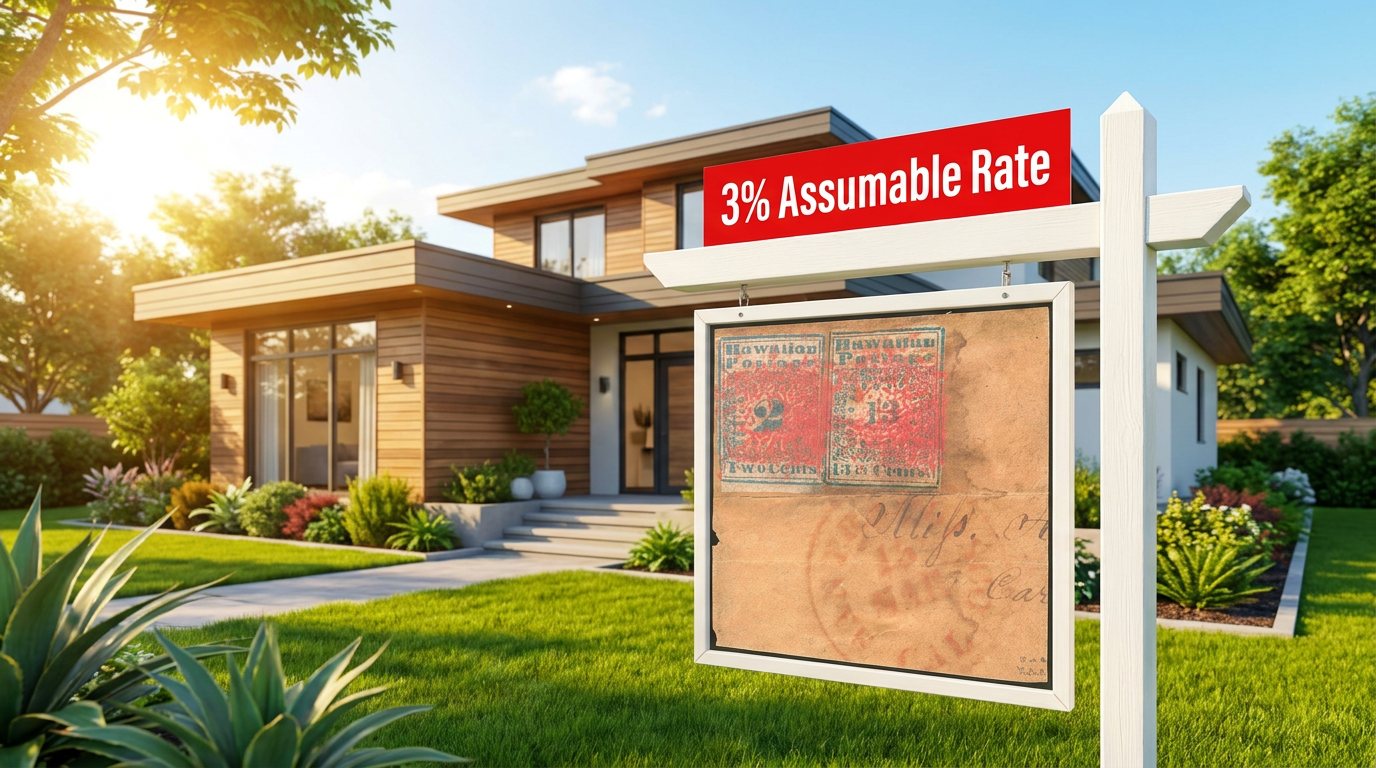
For sellers holding one of these government-backed loans, advertising a 3 percent assumable rate has become a golden ticket. It serves as a powerful marketing tool that attracts a wider pool of highly motivated buyers, often allowing the seller to justify a higher asking price and sell the home more quickly than comparable properties with conventional financing.[6]
Yet, for buyers, the biggest hurdle to executing an assumption is bridging what the industry calls the "equity gap." When a buyer assumes a mortgage, they only take over the remaining balance of the loan, not the current market value of the home. Because home prices have surged over the last decade, most sellers have accumulated significant equity that must be paid out at closing.[4]
If a home is selling for $500,000 and the assumable mortgage balance is only $300,000, the buyer is responsible for the $200,000 difference. This equity gap must be covered either with a massive cash down payment or by securing a second mortgage at current, higher market rates. This steep upfront capital requirement often makes assumable mortgages inaccessible to first-time buyers with limited savings, reserving the strategy for buyers who have cash on hand from a previous home sale.[4][6]

If a home is selling for $500,000 and the assumable mortgage balance is only $300,000, the buyer is responsible for the $200,000 difference.
Furthermore, assuming a mortgage is not a simple handshake agreement. The buyer cannot bypass the bank. To properly assume the loan, the buyer must submit a formal application to the seller's current mortgage servicer and undergo a rigorous underwriting process.[4]
The servicer evaluates the buyer just as they would for a brand-new loan, scrutinizing their credit score, debt-to-income ratio, employment history, and asset verification. This process is notoriously slow, as servicers often lack the streamlined infrastructure for assumptions that they have built for new loan originations.[1][6]
For the seller, the most critical step in this administrative maze is securing a formal "release of liability," legally known as novation. If the lender does not explicitly release the seller from the contract, the seller remains secondarily liable for the debt. In a simple assumption without novation, a default by the new buyer could devastate the original seller's credit score.[4][6]
VA loans introduce an additional layer of complexity. While a non-veteran civilian can legally assume a VA loan, doing so keeps the original veteran seller's VA housing entitlement tied to the property. Until the loan is paid off, that seller may have diminished or zero entitlement to use toward purchasing their next home with a zero-down VA loan. To free up the entitlement, the buyer must be an eligible veteran willing to substitute their own entitlement for the seller's.[4]

Despite these friction points, the sheer demand for affordable financing has caught the attention of federal regulators. The Federal Housing Finance Agency (FHFA), under Director Bill Pulte, has signaled that it is exploring ways to expand assumable and portable loan structures to the conventional mortgage market.[5]
A portable mortgage—a concept popular in Canada but largely unused in the U.S.—would allow a homeowner to take their existing low-rate mortgage with them when they move to a new property, directly attacking the lock-in effect. Expanding assumability to Fannie Mae and Freddie Mac loans would similarly open the floodgates, allowing millions more buyers to inherit low rates.[5]
The California Association of Realtors (C.A.R.) recently issued a strong endorsement of the FHFA's proposal. The organization argued that broadening assumability to 30-year fixed-rate conventional mortgages would "play a key role in unlocking housing opportunities," promoting market mobility and easing the intense financial pressure on prospective buyers.[3]
However, capital markets experts urge caution. The U.S. mortgage system relies heavily on bundling 30-year fixed-rate loans into mortgage-backed securities sold to global investors. Allowing these loans to be assumed or ported indefinitely introduces structural uncertainty regarding loan duration and yields, which could disrupt the secondary market and ultimately drive up costs for future borrowers.[1]

Industry analysts at HousingWire note that rather than reinventing the conventional market, the most practical immediate solution is to improve the execution of the government-backed assumable loans that already exist. The primary barrier is not availability, but rather a lack of consumer education and severe processing bottlenecks at the servicer level.[1]
Recognizing this inefficiency, a new wave of real estate startups has emerged to bridge the gap. These companies specialize in identifying properties with assumable loans, matching them with cash-ready buyers, and aggressively managing the servicer paperwork to ensure the deal actually crosses the finish line.[1][2]
Ultimately, while assumable mortgages are not a universal silver bullet for the nation's housing affordability crisis, they represent one of the most powerful financial levers available in the 2026 market. For buyers with the cash to cover the equity gap and the patience to navigate the bureaucracy, stepping into a 3 percent time machine is a rare and life-changing real estate victory.[1][4][6]
How we got here
2020–2021
Mortgage interest rates drop to historic lows, allowing millions of homeowners to lock in 30-year fixed rates below 4 percent.
2023–2024
As market rates surge past 7 percent, the 'lock-in effect' paralyzes housing inventory, prompting a 127 percent spike in FHA loan assumptions.
Late 2025
The Federal Housing Finance Agency (FHFA) signals it is evaluating the possibility of allowing assumable and portable structures for conventional Fannie Mae and Freddie Mac loans.
June 2026
Real estate organizations like the California Association of Realtors formally back the expansion of assumable mortgages to ease the ongoing affordability crisis.
Viewpoints in depth
Real Estate Professionals
Agents and brokers view assumability as a vital tool to unlock inventory and help buyers afford homes.
Organizations like the California Association of Realtors argue that expanding assumable mortgages to the conventional market would drastically improve market mobility. For agents on the ground, an assumable low-rate loan is the ultimate listing advantage, allowing them to attract a flood of buyers and secure higher sale prices even in a high-rate environment.
Homebuyers and Sellers
Consumers view assumable loans as a financial lifeline to escape the 7 percent rate environment.
For sellers, offering a 3 percent rate is a way to stand out in a sluggish market without slashing their asking price. For buyers, the prospect of saving hundreds of dollars a month makes the grueling servicer paperwork and the massive cash requirements of the 'equity gap' entirely worth the effort. It is one of the few remaining paths to affordable homeownership for the middle class.
Mortgage Servicers and Investors
The financial sector is cautious about the operational friction and the impact on secondary market yields.
Servicers point out that processing an assumption is labor-intensive and yields very little profit compared to originating a new loan, leading to severe processing bottlenecks. Meanwhile, capital markets experts warn that if conventional loans become universally assumable or portable, it introduces structural uncertainty into mortgage-backed securities, potentially disrupting the liquidity that keeps the U.S. housing market functioning.
What we don't know
- Whether the Federal Housing Finance Agency will actually approve the expansion of assumability to conventional Fannie Mae and Freddie Mac loans.
- How secondary market investors will price mortgage-backed securities if loan durations become unpredictable due to widespread portability.
Key terms
- Assumable Mortgage
- A home loan that allows a buyer to take over the seller's exact interest rate, repayment schedule, and remaining balance instead of getting a new loan.
- Equity Gap
- The financial difference between the agreed-upon purchase price of a home and the remaining balance of the assumable mortgage, which the buyer must cover in cash or via a second loan.
- Due-on-Sale Clause
- A standard provision in most conventional mortgages requiring the borrower to pay off the loan in full the moment the property is sold, preventing the loan from being assumed.
- Novation
- The legal process where a lender formally releases the original borrower (the seller) from all liability for the mortgage, transferring full responsibility to the new buyer.
- Lock-In Effect
- A market dynamic where homeowners refuse to sell their properties because doing so would mean giving up their current low mortgage interest rate for a much higher current market rate.
Frequently asked
Can I assume a conventional mortgage?
Generally, no. Most conventional mortgages backed by Fannie Mae and Freddie Mac contain a 'due-on-sale' clause that requires the loan to be paid off when the home is sold. However, federal regulators are currently exploring ways to expand assumability to these loans in the future.
Do I need a down payment to assume a mortgage?
Yes, and it is often much larger than a standard down payment. You must pay the seller for the equity they have built up in the home, which is the difference between the home's current purchase price and the remaining mortgage balance.
Do I have to be a veteran to assume a VA loan?
No, non-veterans can legally assume a VA loan if they meet the lender's financial qualifications. However, doing so keeps the original veteran seller's VA housing entitlement tied up until the loan is paid off, which makes many veteran sellers hesitant to allow non-veteran assumptions.
Does the seller remain responsible for the loan?
Not if the assumption is processed correctly. The seller must obtain a formal 'release of liability' (novation) from the lender. Without this release, the seller would remain secondarily liable if the new buyer defaults.
Sources
Source coverage
6 outlets
3 viewpoints surfaced






[1]HousingWireMortgage Servicers and Investors
Are 50-year mortgages, portable mortgages and assumable loans the future of U.S. housing?
Read on HousingWire →[2]Fast CompanyReal Estate Professionals
FHA loan assumptions jump 127% as buyers seek relief
Read on Fast Company →[3]California Association of RealtorsReal Estate Professionals
C.A.R. backs expansion of assumable mortgages to boost housing affordability and inventory
Read on California Association of Realtors →[4]U.S. BankHomebuyers and Sellers
What is an assumable mortgage?
Read on U.S. Bank →[5]Federal Housing Finance AgencyMortgage Servicers and Investors
Assumable and Portable Loan Options on the Table at Fannie & Freddie
Read on Federal Housing Finance Agency →[6]Rocket MortgageHomebuyers and Sellers
What is an assumable mortgage and how does it work?
Read on Rocket Mortgage →

Every angle. Every day.
Get real estate stories with full source coverage and perspective breakdowns delivered to your inbox.