
Office-to-Residential Conversions Hit Record Highs as Cities Reimagine Empty Downtowns
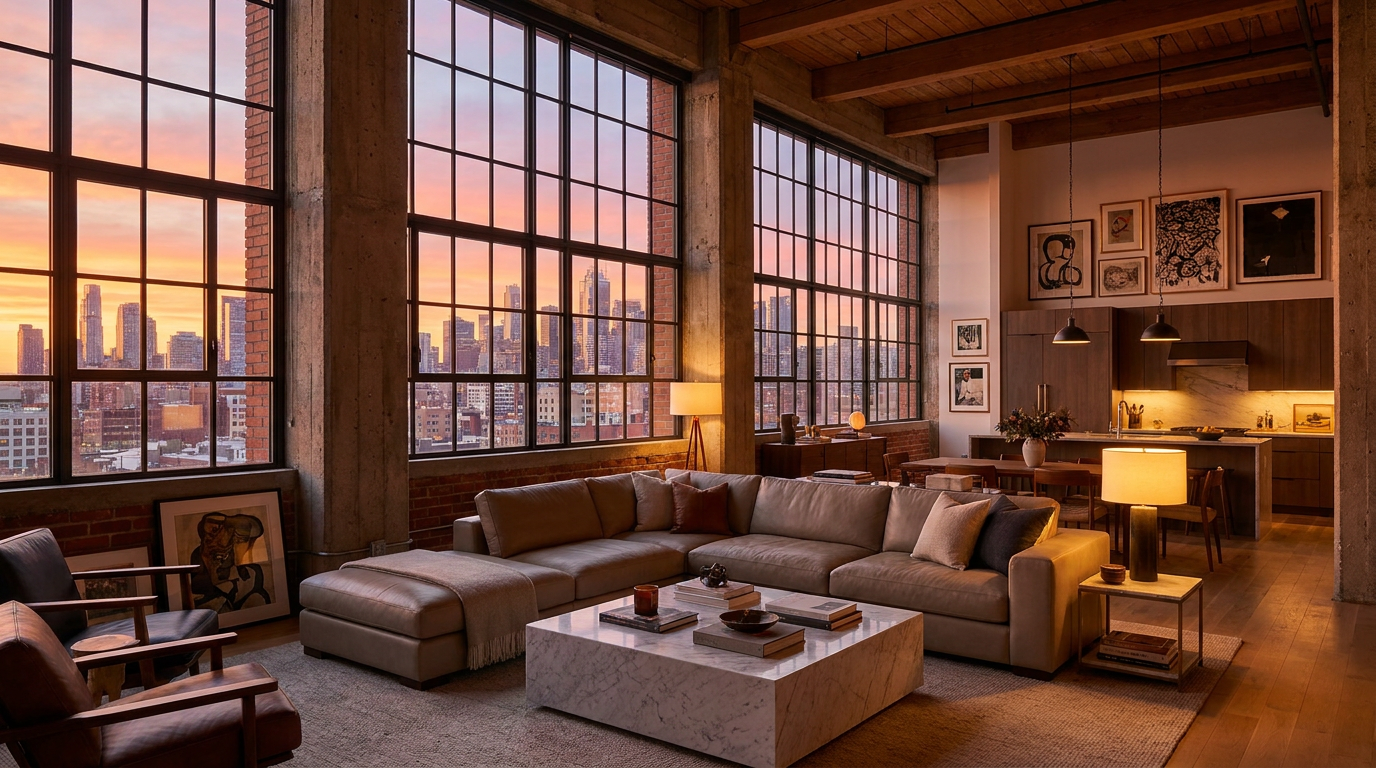
Driven by high office vacancies and a severe housing shortage, developers are converting a record 90,300 commercial spaces into apartments in 2026. The booming adaptive reuse trend is being accelerated by looming loan maturities and aggressive new city tax incentives.
By Factlen Editorial Team
- Commercial Developers
- Focus on the financial mechanics, viewing conversions as a lifeline for distressed assets that require tax incentives to offset high infrastructure costs.
- Urban Planners
- View conversions as a vital civic tool to revitalize empty downtowns and create vibrant 24-hour mixed-use neighborhoods.
- Housing Equity Advocates
- Support the addition of housing supply but caution that high conversion costs naturally lead to luxury pricing without strict government subsidies.
What's not represented
- · Construction Labor Unions
- · Existing Commercial Tenants
Why this matters
This trend offers a dual solution to two of the decade's biggest urban crises: the hollowing out of downtown business districts and the severe shortage of housing. For residents, it means new housing supply in highly walkable areas, while for cities, it promises to transform 9-to-5 commuter zones into vibrant 24-hour neighborhoods.
Key points
- Developers have a record 90,300 office-to-residential units planned or under construction in 2026.
- Office buildings now account for 47 percent of all adaptive reuse projects in the United States.
- Roughly one-third of U.S. office loans are maturing by 2027, pressuring owners to repurpose vacant properties.
- Conversions cost between $200 and $500 per square foot but are 15 to 30 percent cheaper than new construction.
- Cities like New York, Boston, and Chicago are offering massive tax abatements to make the expensive plumbing and HVAC overhauls financially viable.
The post-pandemic landscape left a permanent mark on American downtowns: millions of square feet of empty office space. At the same time, the nation faces a crippling housing shortage, with estimates suggesting a deficit of millions of homes. The solution seems obvious: turn empty cubicles into apartments. But what was once a niche architectural experiment has, in 2026, evolved into a booming, record-breaking sector of commercial real estate.
According to a spring 2026 report by RentCafe, the pipeline for office-to-residential conversions has shattered previous records. Developers currently have roughly 90,300 converted apartments planned or under construction nationwide. This represents a 28 percent jump from 2025 and is four times the volume seen just four years ago.[1][2]
Office buildings now account for 47 percent of all adaptive reuse projects in the United States, comfortably outpacing hotels, schools, and industrial spaces. The momentum is driven by a convergence of financial pressure and civic necessity. The national office vacancy rate hovers near 20 percent, with some older Class B and C buildings sitting half-empty as corporate tenants flock to newer, amenity-rich towers.[1][2]
Crucially, a ticking clock is forcing the hands of property owners. Approximately one-third of all U.S. office loans are scheduled to mature by 2027. Faced with the prospect of refinancing underperforming, vacant assets at higher interest rates, many landlords are choosing to pivot to residential use rather than default on their properties.[1][2]

However, converting a commercial tower into a livable community is far more complex than simply erecting drywall. Industry experts emphasize that a property's "building bones" ultimately dictate a project's viability. The most significant physical hurdle is the floorplate depth.[4][5]
Modern office buildings were designed with massive, deep floorplates to maximize interior desk space. But residential units require natural light and operable windows for every bedroom. As a result, older buildings with narrower footprints, or those shaped like an "H" or a "U," are often the best candidates for conversion.[4]
Developers must also undertake massive infrastructure overhauls. Office buildings typically feature centralized bathrooms and HVAC systems. Converting them requires coring through thick concrete floors to install hundreds of new plumbing lines, individual climate control systems, and upgraded electrical grids for residential kitchens.[4][5]
Developers must also undertake massive infrastructure overhauls.
These structural realities mean that conversions are a capital-intensive endeavor. Costs typically range from $200 to $400 per square foot, and can easily exceed $500 in dense urban cores where logistics are complicated. Despite the high price tag, adaptive reuse remains highly attractive to developers.[5]

Capitalizing on an existing building shell is generally 15 to 30 percent cheaper than ground-up construction, and units can often be delivered to the market significantly faster. Furthermore, the environmental benefits are substantial. Redeveloping an existing structure saves massive amounts of embodied carbon compared to demolition and new construction.[5]
To bridge the financial gap and incentivize developers, local and state governments have aggressively rolled out support programs in 2025 and 2026. New York City, which leads the nation with over 16,000 units in its conversion pipeline, introduced the 467-m tax exemption. The policy offers a 90 percent property tax abatement for projects that dedicate at least 25 percent of their units to affordable housing.[2][6][7]
Other major metros are following suit with their own bespoke incentives. Boston implemented a 29-year, 75 percent tax abatement for downtown conversions, while Los Angeles modernized its Adaptive Reuse Ordinance to streamline zoning approvals for buildings over 15 years old. Chicago has allocated hundreds of millions in Tax Increment Financing to revitalize its historic LaSalle Street corridor.[6]

The results of these policies are now highly visible in skylines across the country. In lower Manhattan, the landmark 25 Water Street project is transforming a former 1960s office tower into 1,320 luxury and affordable apartments, marking one of the largest conversions in U.S. history.[3][5]
In Cincinnati, the former Macy's headquarters recently reopened as a 341-unit luxury tower, while smaller markets are seeing suburban office parks transformed into boutique lofts with ground-floor retail. These projects often feature unique amenities, leveraging the massive lobbies and rooftop spaces inherent to commercial towers.[3][7]
Yet, experts caution that adaptive reuse is not a universal panacea for the real estate market. Studies indicate that only 15 to 25 percent of existing office buildings possess the specific structural and geographic characteristics necessary for a profitable residential conversion.[4]

There are also ongoing debates regarding affordability. Because conversion costs are so high, developers naturally gravitate toward luxury pricing to ensure a return on investment. This makes government subsidies and tax abatements absolutely essential for including lower-income units in these newly formed communities.[6][7]
Despite these constraints, the trajectory of the commercial real estate market is clear. As cities seek to reimagine their downtowns from 9-to-5 commuter hubs into vibrant, 24-hour mixed-use neighborhoods, the office-to-residential pipeline will remain a critical tool. By turning obsolete commercial liabilities into desperately needed homes, the industry is executing one of the most significant urban transformations of the decade.[4][5]
How we got here
2020–2022
The shift to remote work empties downtown office buildings, sparking initial discussions about adaptive reuse.
2023
Office vacancies reach historic highs, prompting cities to begin studying zoning reforms to allow residential conversions.
2024–2025
Major municipalities, including New York and Los Angeles, pass aggressive tax abatements and streamlined zoning ordinances to incentivize developers.
Early 2026
The conversion pipeline hits a record 90,300 units nationwide, driven by looming commercial loan maturities and government subsidies.
Viewpoints in depth
Commercial Developers & Investors
Focus on the financial mechanics and the rescue of distressed assets.
For property owners, adaptive reuse is increasingly seen as a necessary lifeline. With roughly a third of commercial office loans maturing by 2027, landlords face the grim prospect of refinancing empty buildings at higher interest rates. Developers argue that while conversions are cheaper than ground-up construction, the massive costs of coring concrete for new plumbing and HVAC systems make these projects financially precarious. They maintain that without aggressive municipal tax abatements and streamlined zoning approvals, the math simply does not work for the vast majority of buildings.
Urban Planners & Municipalities
Focus on civic revitalization and saving downtown ecosystems.
City officials and urban planners view the conversion trend as the ultimate solution to the "doom loop" of empty downtowns. With fewer commuters coming into business districts, street-level retail and local tax bases have suffered immensely. Planners argue that transforming 9-to-5 commuter zones into vibrant, 24-hour mixed-use neighborhoods will not only solve the housing shortage but also create more resilient, pedestrian-friendly cities that are less vulnerable to future economic shocks.
Housing Equity Advocates
Focus on ensuring new housing supply benefits all income brackets.
While affordable housing advocates welcome the addition of new units to the market, they caution against viewing adaptive reuse as a pure public good. They point out that the sheer expense of converting a commercial tower naturally incentivizes developers to charge luxury rents to recoup their investments. Advocates argue that public subsidies and tax breaks must be strictly tied to mandatory affordable housing quotas—such as New York's requirement that 25 percent of units be set aside—to prevent the gentrification and exclusion of lower-income residents from newly revitalized downtowns.
What we don't know
- Whether the pace of conversions will slow down once the most structurally suitable 'low-hanging fruit' buildings are completed.
- How the influx of new residential units will impact long-term property tax revenues for cities previously reliant on commercial valuations.
- The exact percentage of these new units that will remain affordable for middle- and lower-income renters over the next decade.
Key terms
- Adaptive Reuse
- The process of repurposing an existing building for a use other than its original intended purpose, such as turning a commercial office into residential apartments.
- Floorplate
- The total leasable square footage of a single floor in a commercial building. Deep floorplates are a major hurdle for residential conversions due to a lack of natural light in the center.
- Class B and C Offices
- Older, less modern commercial buildings that lack the premium amenities of newer "Class A" spaces. These are currently facing the highest vacancy rates and are prime targets for conversion.
- Tax Increment Financing (TIF)
- A public financing method used as a subsidy for redevelopment and community-improvement projects, often utilized by cities to fund expensive office conversions.
- Embodied Carbon
- The total greenhouse gas emissions generated during the manufacturing, transportation, and construction of building materials. Conversions save significant embodied carbon by reusing existing structures.
Frequently asked
Why can't all empty office buildings become apartments?
Only about 15 to 25 percent of office buildings are suitable for conversion. Many modern offices have massive, deep floorplates that make it impossible to provide natural light and windows for every bedroom, which is a legal requirement for residential units.
Is it cheaper to convert an office or build from scratch?
Conversions are generally 15 to 30 percent cheaper than ground-up construction because the building's foundation and exterior shell already exist. However, costs can still reach $200 to $500 per square foot due to the need for extensive plumbing and HVAC overhauls.
How are cities encouraging developers to make these conversions?
Municipalities are offering massive financial incentives to bridge the cost gap. Cities like New York and Boston provide decades-long property tax abatements, while Los Angeles has streamlined zoning approvals to fast-track projects.
Do these projects help with the affordable housing crisis?
They add much-needed overall housing supply, but because conversion costs are high, developers often charge luxury rents to make a profit. To create affordable units, cities typically require developers to set aside a percentage of apartments for lower-income residents in exchange for tax breaks.
Sources
Source coverage
7 outlets
3 viewpoints surfaced







[1]National Mortgage ProfessionalCommercial Developers
Office Conversions Set Another Record
Read on National Mortgage Professional →[2]Electrical Contractor MagazineCommercial Developers
U.S. office-to-housing conversions again broke records year
Read on Electrical Contractor Magazine →[3]Multi-Housing NewsHousing Equity Advocates
Are Office-to-Residential Conversions Taking Flight?
Read on Multi-Housing News →[4]J.P. MorganUrban Planners
A versatile strategy for creating housing
Read on J.P. Morgan →[5]CBREUrban Planners
This Is How We Do It: The playbook for office-to-residential conversions
Read on CBRE →[6]Commercial SearchCommercial Developers
City Programs for Office-to-Residential Conversion
Read on Commercial Search →[7]RTLHousing Equity Advocates
Tight housing market boosts New York office conversions
Read on RTL →
Every angle. Every day.
Get real estate stories with full source coverage and perspective breakdowns delivered to your inbox.