
The 2026 E-Bike Buying Guide: How to Choose the Right Electric Bicycle
As electric bicycles become essential transportation tools, understanding motor types, battery capacity, and legal classes is crucial for making the right purchase.
By Factlen Editorial Team
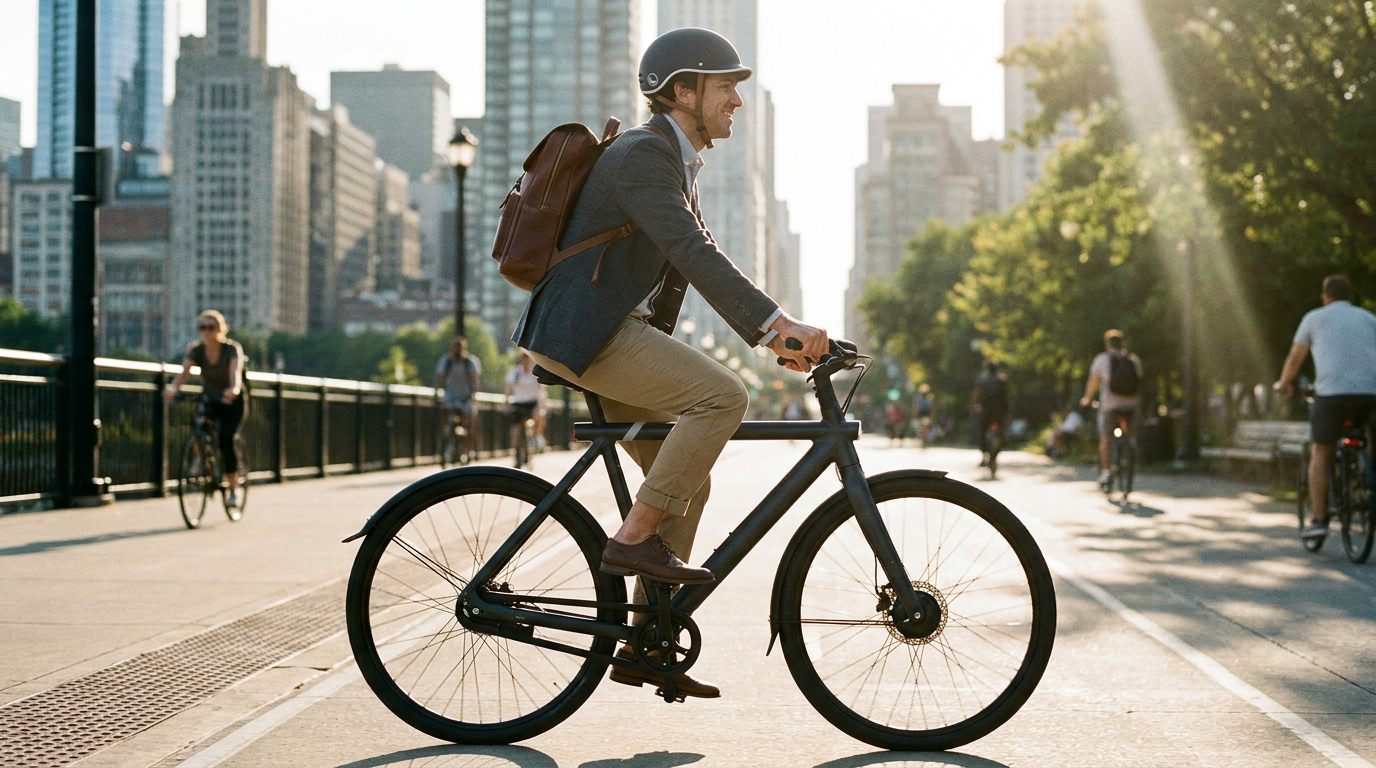
- Urban Commuters
- Prioritize reliability, low maintenance, and sweat-free arrivals, often favoring Class 2 hub-motor bikes.
- Performance & Trail Riders
- Focus on natural ride feel, weight distribution, and hill-climbing efficiency, heavily favoring Class 1 mid-drive bikes.
- Safety Regulators
- Advocate for strict adherence to UL 2849 battery certifications and clear class labeling to prevent conflicts on multi-use paths.
- Budget-Conscious Buyers
- Focus on upfront cost and affordable components, leaning toward entry-level hub motors.
What's not represented
- · Traditional Cyclists
- · Local Bike Shop Mechanics
Why this matters
Choosing the right e-bike can transform your daily commute, save thousands in transportation costs, and improve your physical health. Understanding the technical specifications ensures you invest in a machine that safely fits your local terrain and legal requirements.
Key points
- Mid-drive motors utilize the bike's gears and are best for hills, while hub motors are cost-effective and ideal for flat commutes.
- E-bike classes dictate speed and throttle use: Class 1 (pedal-assist, 20 mph), Class 2 (throttle, 20 mph), and Class 3 (pedal-assist, 28 mph).
- Torque (Nm) is a better indicator of hill-climbing ability and acceleration than raw wattage.
- Battery capacity should be measured in Watt-hours (Wh), with 500 Wh recommended for long-range riding.
- UL 2849 safety certification and hydraulic disc brakes are now essential standards for modern e-bikes.
The micro-mobility market has reached a state of maturity in 2026, transforming electric bicycles from niche novelties into essential transportation tools. For consumers, the decision is no longer whether to buy an e-bike, but how to navigate a sea of technical specifications without overspending or buying the wrong machine. Modern e-bikes are highly specialized, meaning a model designed for flat urban commutes will perform very differently than one built for steep off-road trails. Making an informed purchase requires looking past marketing hype and understanding the core engineering choices that dictate how a bike rides, climbs, and complies with local laws.[1][8]
The most foundational decision a buyer must make is motor placement, which generally comes down to two options: a hub motor or a mid-drive motor. Hub motors are built directly into the center of either the front or rear wheel. Because they operate independently of the bicycle's chain and gears, they offer a straightforward, low-maintenance design. If the chain snaps on a hub-motor bike equipped with a throttle, the rider can still rely on electric power to get home. This simplicity makes hub motors highly cost-effective and a staple of budget-friendly and entry-level commuter bikes.[3][5]
Mid-drive motors, by contrast, are mounted centrally at the bike's bottom bracket, directly between the pedals. Instead of spinning the wheel, a mid-drive motor powers the bike's chain, allowing the electric assist to utilize the bicycle's existing gear system. This mechanical advantage is transformative on varied terrain. When a rider shifts into a lower gear to climb a steep hill, the motor also benefits from that lower gear, allowing it to spin at an efficient RPM without bogging down or overheating. For riders tackling significant elevation changes or hauling heavy cargo, mid-drive systems are widely considered superior.[3][5]
The choice of motor also dictates the overall ride feel. Because a mid-drive motor applies power through the pedals, the assistance feels like a natural extension of the rider's own effort—essentially making the cyclist feel like they have bionic legs. Hub motors, however, apply torque directly to the wheel. This can create a sensation of being pushed from behind or pulled from the front, which some riders find less intuitive, though it requires less physical exertion.[3][5]

Beyond motor placement, buyers must decode the metrics of power: watts and torque. Many consumers mistakenly fixate on wattage, assuming a 750-watt motor is universally better than a 250-watt motor. While watts measure raw electrical consumption, torque—measured in Newton-meters (Nm)—is the actual rotational force that moves the bike forward. In the e-bike world, wattage is what you pay for, but torque is what you feel when the light turns green.[2]
Understanding torque requirements can save buyers from costly mistakes. A motor producing 30 to 40 Nm of torque is perfectly adequate for flat urban commutes and casual boardwalk cruising. However, if a rider plans to haul groceries, pull a child trailer, or conquer steep inclines, they should look for a motor delivering at least 60 Nm. For heavy-duty fat-tire bikes or serious mountain biking, 80 Nm or more is the gold standard, ensuring the bike will not stall when the road tilts upward.[2]
Understanding torque requirements can save buyers from costly mistakes.
Range anxiety is another common concern, which is resolved by looking at the battery's watt-hours (Wh) rather than its voltage. Watt-hours represent the total energy capacity of the battery—the size of the "gas tank." A higher Wh number directly translates to longer rides between charges. For a reliable long-range commuter, industry experts recommend a capacity of at least 500 Wh. However, actual range will always fluctuate based on the rider's weight, the level of pedal assistance selected, tire pressure, and the local topography.[1][7]

Even with the perfect motor and battery, an e-bike is only useful if it is legal to ride in your area. In the United States, regulations are built around a three-class system that dictates where a bike can go and how fast it can travel. Class 1 e-bikes are pedal-assist only, meaning the motor provides no power unless the rider is actively pedaling, and the assistance cuts off entirely at 20 miles per hour. Because they behave most like traditional bicycles, Class 1 models enjoy the widest access to bike lanes, multi-use paths, and state parks.[4][6]
Class 2 e-bikes share the 20 mph speed limit but introduce a crucial piece of hardware: a throttle. This allows the rider to cruise without pedaling at all, making Class 2 models incredibly popular for utility riding, commuting in work clothes without sweating, and providing mobility for riders with physical limitations. However, because they can be propelled entirely by the motor, Class 2 bikes are sometimes restricted from natural surface trails and dedicated mountain bike parks.[4][6]
For those who need to cover long distances quickly, Class 3 e-bikes offer pedal assistance up to a brisk 28 miles per hour. These speed pedelecs are the ultimate car-replacement tools for urban commuters, allowing riders to keep pace with city traffic. Because of their higher speeds, Class 3 bikes face the strictest regulations; they are often banned from shared pedestrian paths, and many jurisdictions require riders to wear helmets and be at least 16 years old.[4][6]

As the market has expanded, safety standards have tightened significantly. In 2026, one of the most critical buying questions is whether an e-bike's electrical system is UL 2849 certified. This rigorous testing standard ensures the battery, motor, and charger are protected against electrical and fire hazards. In regions like California and the European Union, such certifications are increasingly becoming mandatory for retail sale, making uncertified budget bikes a risky investment.[1]
Finally, the increased weight and speed of electric bicycles demand robust stopping power. A 60-pound e-bike traveling at 20 mph cannot rely on the basic rim brakes of the past. Hydraulic disc brakes have become a non-negotiable safety standard for quality builds. Unlike mechanical disc brakes, which use a steel cable that can stretch and degrade, hydraulic systems use fluid to deliver immediate, reliable stopping power in all weather conditions, ensuring riders can safely control their momentum.[2][7]

Ultimately, the best e-bike is the one tailored to a rider's specific daily routine. A heavy-duty, high-torque mid-drive might be an engineering marvel, but it is overkill for a flat, two-mile neighborhood commute. Buyers are encouraged to prioritize test rides, paying close attention to how the bike handles at slow speeds, how natural the motor assistance feels, and whether the frame geometry offers a comfortable, upright posture for everyday use.[1][5][8]
How we got here
Early 2010s
E-bikes begin gaining mainstream traction, primarily using heavy lead-acid batteries and basic hub motors.
2015
The US introduces the 3-Class system to standardize e-bike regulations across states.
2020-2022
The pandemic triggers a massive boom in e-bike sales for outdoor recreation and commuting.
2024
Major cities and states begin mandating UL safety certifications in response to lithium-ion battery fires.
2026
The market matures with highly specialized models, making hydraulic brakes and high-capacity batteries standard features.
Viewpoints in depth
Urban Commuters
Prioritize reliability, low maintenance, and sweat-free arrivals.
For riders replacing a car with an e-bike, practicality trumps high-end performance. Urban commuters generally favor Class 2 hub-motor bikes because the inclusion of a throttle allows them to get to work without sweating. Furthermore, hub motors put less strain on the bicycle's chain and gears, resulting in lower maintenance costs and fewer trips to the bike shop over the lifespan of the vehicle.
Performance & Trail Riders
Focus on natural ride feel, weight distribution, and hill-climbing efficiency.
Enthusiasts and mountain bikers look at e-bikes as an extension of traditional cycling rather than a moped replacement. They heavily favor Class 1 mid-drive bikes because the motor's central placement keeps the bike's center of gravity low and balanced. By leveraging the bike's mechanical gears, mid-drive motors provide the high torque necessary to conquer steep, technical off-road climbs without overheating.
Safety Regulators
Advocate for strict adherence to battery certifications and clear class labeling.
As e-bikes have proliferated, safety officials have focused on mitigating risks associated with high speeds and lithium-ion batteries. Regulators emphasize the absolute necessity of UL 2849 certification to prevent battery fires, a standard that is increasingly becoming law. They also push for clear, permanent labeling of e-bike classes on the frame to help law enforcement and park rangers manage conflicts on shared pedestrian paths.
What we don't know
- How local municipalities will adapt trail access rules as high-speed Class 3 e-bikes become more common.
- Whether solid-state batteries will replace current lithium-ion technology in the near future, potentially reducing weight and fire risks further.
- How the used e-bike market will standardize battery health testing for second-hand buyers.
Key terms
- Mid-Drive Motor
- An electric motor positioned at the bike's pedals that powers the drivetrain directly, utilizing the bike's gears.
- Hub Motor
- An electric motor housed inside the center of the front or rear wheel, operating independently of the bike's chain.
- Watt-hours (Wh)
- A measure of battery capacity indicating how much energy the battery can store, which directly translates to riding range.
- Torque (Nm)
- The rotational force produced by the motor, determining how well the bike accelerates and climbs hills.
- Pedal-Assist (PAS)
- A system where the electric motor only provides power when the rider is actively pedaling.
- UL 2849
- A safety certification standard for e-bike electrical systems designed to prevent battery fires.
Frequently asked
What is the difference between Class 1 and Class 2 e-bikes?
Class 1 is pedal-assist only, meaning the motor only helps when you pedal. Class 2 includes a throttle, allowing the bike to move without pedaling. Both are limited to a top assisted speed of 20 mph.
Do I need a license to ride an e-bike?
In most US states, as long as the e-bike falls into Class 1, 2, or 3 and has a motor under 750 watts, it is treated like a bicycle and requires no license, registration, or insurance.
Which motor type is better for climbing hills?
Mid-drive motors are significantly better for hills because they power the bike's chain, allowing the motor to leverage the bicycle's mechanical gears for maximum efficiency.
What does UL 2849 certified mean?
It is a rigorous safety standard for an e-bike's electrical system and battery, ensuring it has been tested against fire and electrical hazards.
Sources
Source coverage
8 outlets
4 viewpoints surfaced






[1]Electric Bike AdvisorBudget-Conscious Buyers
The Beginner's E-Bike Buying Guide (2026 Edition)
Read on Electric Bike Advisor →[2]Seemoon EbikeBudget-Conscious Buyers
2026 E-Bike Buying Guide: Torque vs Watts
Read on Seemoon Ebike →[3]Where The Road ForksPerformance & Trail Riders
Mid-Drive vs Hub Motor E-Bikes: Pros and Cons
Read on Where The Road Forks →[4]The Cyclist ChoiceSafety Regulators
Electric Bike Classes Explained (Class 1, 2 & 3 Guide for 2026)
Read on The Cyclist Choice →[5]Bike EVPerformance & Trail Riders
Mid-Drive vs Hub Motor E-Bikes: Real-World Comparison (2026 Guide)
Read on Bike EV →[6]Victrip EbikeSafety Regulators
Street Legal Electric Bikes: Rules, Laws, and Requirements Explained
Read on Victrip Ebike →[7]JoybuyUrban Commuters
2026 City E-Bike Buying Guide: Key Technical Criteria
Read on Joybuy →[8]Factlen Editorial TeamUrban Commuters
Synthesis by Factlen editorial team
Read on Factlen Editorial Team →

Every angle. Every day.
Get shopping stories with full source coverage and perspective breakdowns delivered to your inbox.