
The Rise of 'Underconsumption Core': How Social Media is Finally Embracing Normal Life
A viral movement is rejecting the exhausting cycle of influencer hauls and fast fashion, celebrating the quiet reality of using what you already own.
By Factlen Editorial Team
- Digital Minimalists
- Advocating for reduced waste, using things until they break, and normalizing average living.
- Sustainability Advocates
- Seeing the trend as a vital step toward ethical consumption and a blow to fast fashion.
- Trend Skeptics
- Warning that the trend risks repackaging financial hardship into a fleeting digital aesthetic.
- Industry Analysts
- Viewing the movement as a broader shift toward authentic, slow content that will force brands to pivot.
What's not represented
- · Fast Fashion Retailers
- · Low-Income Consumers
Why this matters
For years, social media algorithms have fueled financial anxiety by normalizing extreme consumption and rapid trend cycles. This shift offers a psychological and financial reprieve, proving that digital connection no longer requires a constant stream of new purchases.
Key points
- The 'underconsumption core' trend celebrates using everyday items until they are worn out or empty.
- It serves as a direct rejection of the influencer 'haul' culture and fast-fashion microtrends.
- The movement is driven by a combination of cost-of-living pressures and environmental awareness.
- Critics warn the trend risks repackaging genuine financial hardship into a quirky digital aesthetic.
- Industry analysts believe the shift toward authenticity will force brands to rethink rapid trend cycles.
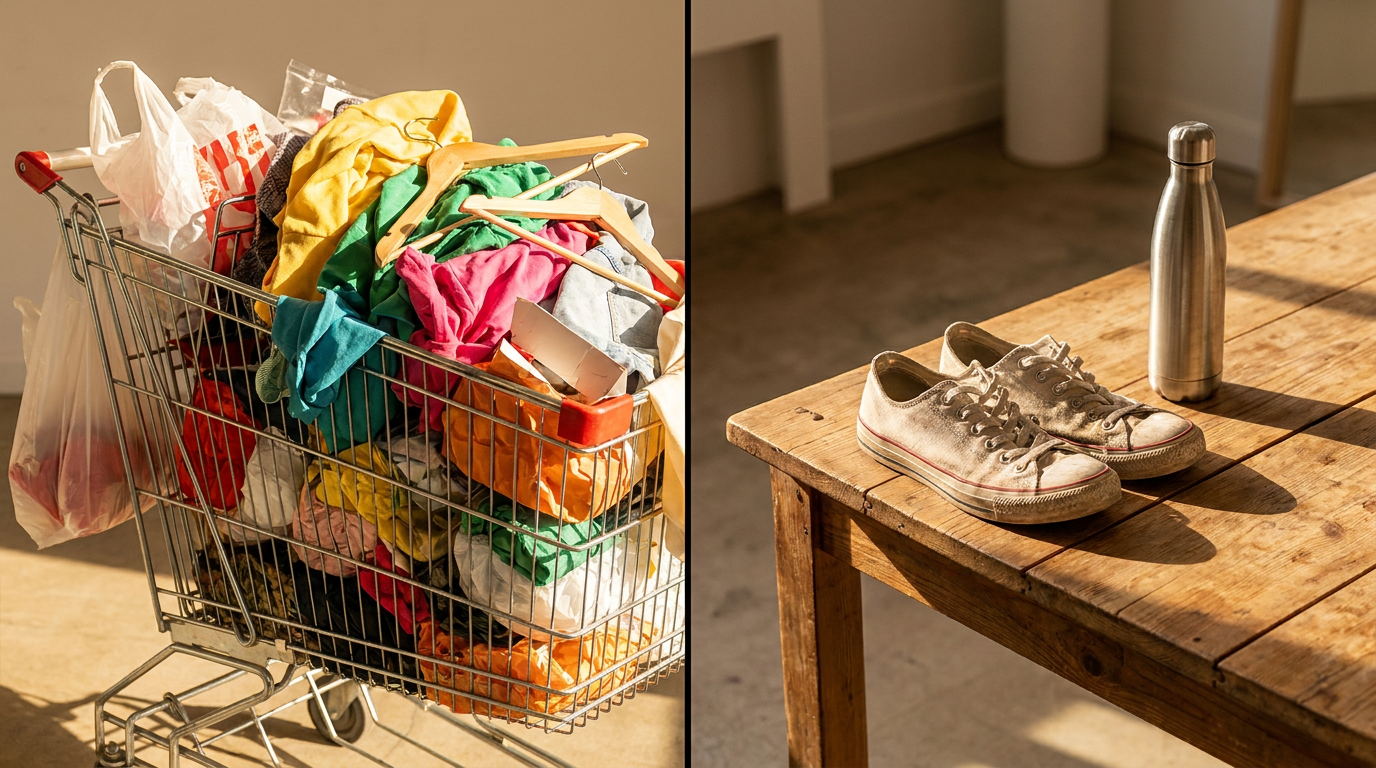
A smartphone screen displays a video of a single, well-loved makeup bag. The creator pulls out a crusty bronzer compact, a half-empty tube of generic moisturizer, and a pair of beat-up gym sneakers they have worn for three years. There are no affiliate links, no unboxing knives, and no pristine aesthetic backgrounds.[2][5]
This is "underconsumption core," a viral movement that has quietly taken over social media feeds. Instead of showcasing what they have just bought, users are proudly displaying what they refuse to replace.[1][4]
The trend represents a massive pivot in digital culture. For the better part of a decade, the internet's visual language was defined by excess. Algorithms rewarded massive fast-fashion hauls, hyper-organized refrigerators filled with freshly restocked plastic containers, and exhausting 15-step skincare routines.[3][4]
Underconsumption core flips that script entirely. It is a celebration of the mundane, the worn-out, and the strictly necessary. Creators are racking up millions of views simply by demonstrating how they squeeze the last drop out of a lotion bottle or mend a torn jacket.[1][2]

The appeal is deeply rooted in the current economic climate. Rising consumer debt, housing pressures, and a persistent cost-of-living crisis have made the endless pursuit of micro-trends financially unviable for the average young person.[3]
But beyond pure economics, the trend offers profound psychological relief. The pressure to maintain a hyper-curated, constantly updated lifestyle has left many users feeling inadequate. Seeing normal, imperfect homes and modest belongings acts as a digital exhale—a reminder that average living is actually the norm.[2][5]
"Underconsumption videos are snippets of normal life," notes cultural commentary site Zee Feed. They strip away the performative aspiration that has long dominated platforms like Instagram and TikTok, replacing it with a refreshing dose of reality.[5]
The movement is a natural evolution of the "de-influencing" trend that emerged in late 2023. While de-influencing saw creators tell their audiences which viral products were not worth the money, they often followed up with an alternative product recommendation.[2][3]
The movement is a natural evolution of the "de-influencing" trend that emerged in late 2023.
Underconsumption core takes a harder line: it simply says, "You do not need this. No, really, you don't." It removes the transaction entirely from the creator-viewer relationship.[2]

Environmental advocates have largely welcomed the shift. High-profile exposés of fast-fashion giants and the staggering ecological cost of over-consumerism have made younger demographics highly sensitive to waste.[1]
By normalizing the act of wearing clothes until they are threadbare and using up every drop of a product, the trend inadvertently promotes zero-waste principles without the intimidating, perfectionist branding of traditional eco-movements.[1][3]
However, the trend is not without its critics. Some environmentalists warn that individual underconsumption, while positive, is like putting a band-aid on a bullet hole when compared to the systemic pollution generated by global corporations.[3]
Others point out a more uncomfortable dynamic: the risk of repackaging poverty or working-class realities into a quirky digital aesthetic. When middle-class creators perform "underconsumption" for views, it can sometimes feel like a trivialization of the genuine financial hardship faced by those who have no choice but to underconsume.[1][3]
Despite these critiques, the broader shift toward authenticity is undeniable. Industry data indicates that audiences are actively turning away from polished, hyper-edited content in favor of human-led storytelling and genuine connection.[6]

This pivot is forcing brands to rethink their strategies. Fast-fashion retailers that rely on rapid trend cycles may face significant headwinds, while companies that emphasize durability, timelessness, and ethical supply chains are perfectly positioned to capture this new consumer mindset.[1]
Interestingly, participating in underconsumption does not necessarily mean abandoning luxury. A popular sub-trend, "luxury minimalism," involves investing in a few high-quality, expensive items with the express purpose of maintaining them for a lifetime.[2]
Ultimately, underconsumption core aligns with the broader "cozy web" movement—a collective desire for slower, more intentional digital spaces that prioritize long-term value over fleeting viral sensations.[6]
How we got here
2020–2022
The peak of 'haul culture,' driven by pandemic boredom and the rise of ultra-fast fashion brands.
Late 2023
The 'de-influencing' trend emerges, with creators actively telling audiences which viral products to avoid.
Early 2024
The Stanley Cup craze highlights the peak absurdity of overconsumption, sparking early backlash.
Mid 2024–2026
'Underconsumption core' goes viral, shifting the focus entirely away from purchasing new items.
Viewpoints in depth
Digital Minimalists
Advocating for reduced waste and normalizing average living.
For digital minimalists, the trend is a long-overdue exhale. They argue that the internet has spent years gaslighting users into believing that everyone else is constantly upgrading their wardrobes, homes, and skincare routines. By showcasing crusty makeup compacts and beat-up shoes, this camp seeks to dismantle the performative aspiration of social media, proving that contentment comes from utilizing what you already own rather than chasing the next microtrend.
Sustainability Advocates
Viewing the trend as a vital step toward ethical consumption.
Environmentalists see underconsumption core as a Trojan horse for zero-waste principles. While traditional sustainability messaging can sometimes feel intimidating or expensive—often requiring the purchase of specialized 'eco-friendly' products—this trend makes environmentalism accessible by simply demanding inaction. Advocates hope that as consumers embrace longevity over novelty, the financial model of fast-fashion giants will be forced to adapt to a more circular economy.
Trend Skeptics
Warning that the trend risks repackaging financial hardship into an aesthetic.
Critics offer a necessary reality check, pointing out the inherent privilege in choosing to 'underconsume' for an online audience. They argue that for millions of working-class people, using products until they are empty and wearing shoes until they fall apart is not a quirky aesthetic—it is a financial necessity. Skeptics worry that once the algorithm tires of minimalistic authenticity, middle-class creators will simply pivot back to overconsumption, leaving the systemic issues of wealth inequality and corporate pollution unaddressed.
What we don't know
- Whether the trend will permanently alter consumer spending habits or simply fade as the next aesthetic takes over.
- How fast-fashion giants and major retailers will adapt their marketing strategies to a user base that actively resists buying new products.
- If algorithms will continue to reward 'slow content' once the novelty of the underconsumption aesthetic wears off.
Key terms
- Underconsumption Core
- A social media trend celebrating the use of everyday items until they are empty or worn out, rejecting the pressure to constantly buy new products.
- De-influencing
- A precursor trend where creators actively discouraged their followers from buying overhyped or unnecessary viral products.
- Fast Fashion
- Inexpensive clothing produced rapidly by mass-market retailers in response to the latest trends, often associated with environmental damage.
- Microtrend
- A fashion or lifestyle trend that rises to popularity incredibly quickly on social media but falls out of favor just as fast.
- Luxury Minimalism
- A sub-trend focused on investing in a small number of high-quality, expensive items intended to last a lifetime.
Frequently asked
Is underconsumption core the same as minimalism?
While similar, minimalism often focuses on a specific, clean aesthetic and decluttering. Underconsumption core is more about the practical reality of using everyday, often mismatched or worn items until they are depleted.
Why did this trend become so popular?
It emerged as a counter-reaction to the exhausting cycle of influencer 'hauls' and microtrends, fueled by widespread cost-of-living pressures and growing environmental awareness.
Does this mean people are no longer buying luxury goods?
Not necessarily. A sub-trend called 'luxury minimalism' has emerged, where consumers invest in a few high-quality items with the intention of using them for a lifetime rather than constantly buying cheap replacements.
Will this trend actually hurt fast-fashion brands?
Industry analysts suggest that if the shift toward durability and authenticity is permanent, brands reliant on rapid trend cycles and overconsumption will face significant headwinds.
Sources
Source coverage
6 outlets
4 viewpoints surfaced






[1]The IndependentTrend Skeptics
Underconsumption-core: The new TikTok trend encouraging us to buy less
Read on The Independent →[2]Elle AustraliaDigital Minimalists
What Is Underconsumption Core?
Read on Elle Australia →[3]Fashion JournalTrend Skeptics
Why 'underconsumption core' is the latest trend taking over TikTok
Read on Fashion Journal →[4]Country and Town HouseSustainability Advocates
What Is Underconsumption Core? The TikTok Trend Explained
Read on Country and Town House →[5]Zee FeedDigital Minimalists
Underconsumption Core: This Trend Is Not About The Economy
Read on Zee Feed →[6]Sprout SocialIndustry Analysts
Social media trends for 2026 and beyond
Read on Sprout Social →

Every angle. Every day.
Get meta stories with full source coverage and perspective breakdowns delivered to your inbox.