
The Music Industry's Toxic Vinyl Problem Finally Has a Scalable Solution
A new recyclable PET-based record format is rapidly scaling in the US, cutting manufacturing emissions by 85% and offering a sustainable alternative to traditional PVC vinyl.

In short
- Vinyl records are traditionally made from toxic, petroleum-based PVC.
- A new format called EcoRecord uses recyclable PET plastic instead.
- The manufacturing process cuts carbon emissions by up to 85%.
Vinyl records have staged one of the most improbable comebacks in the history of consumer technology, consistently outselling CDs for the past several years. Yet, this nostalgic resurgence harbors a dark environmental secret. Traditional records are pressed from polyvinyl chloride (PVC), a highly toxic, petroleum-based plastic that environmental groups have long classified as one of the most damaging consumer materials on the planet.[3]
The sheer scale of the vinyl revival has forced the music industry to confront the ecological cost of its favorite physical format. According to the industry-backed Murmur Report, a single conventional PVC record generates approximately 0.93 kilograms of carbon dioxide during its lifecycle. When multiplied by the tens of millions of records sold annually, the carbon footprint becomes impossible for climate-conscious artists and labels to ignore.[2][3]
A scalable solution has finally arrived. Sonopress, a global media manufacturing giant, has partnered with the sustainable chemical company Indorama Ventures to commercialize the "EcoRecord." This new format completely abandons toxic PVC in favor of recyclable polyethylene terephthalate (PET), marking a fundamental shift in how physical music is produced.[1]
PET is the exact same plastic used to manufacture standard water bottles. Unlike PVC, which is notoriously difficult to break down and often ends up in landfills, PET plugs directly into existing, highly efficient global recycling streams. This means that at the end of its life, an EcoRecord can theoretically be melted down and repurposed rather than sitting in a dump for centuries.[1]
The environmental benefits extend far beyond the material itself. The traditional method of pressing vinyl is an archaic, energy-intensive process that relies on massive amounts of natural gas to generate the steam required to heat and mold the PVC pucks. This century-old technique is inherently inefficient and heavily reliant on fossil fuels.[3]
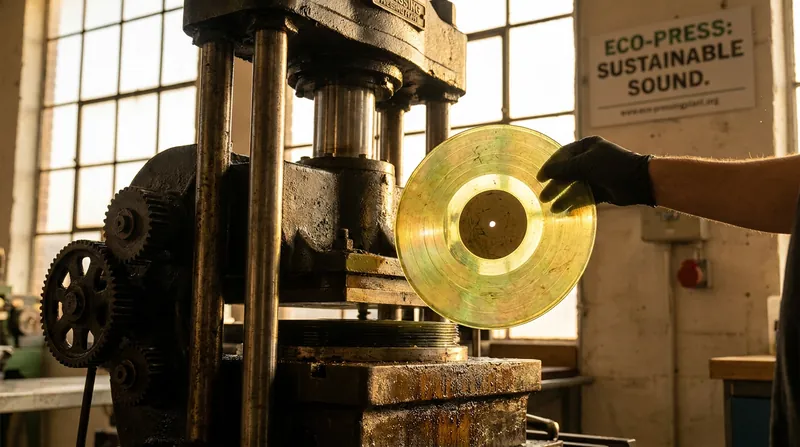
To process the new PET material, Sonopress engineered a completely different manufacturing approach. The company utilizes advanced injection molding machines capable of delivering contact pressures up to 300 tons. This modern technique completely eliminates the need for natural gas and steam, cutting the manufacturing process's carbon dioxide emissions by up to 85 percent.[1][2]
While the EcoRecord format initially debuted in Europe, it has now officially scaled up in the United States. Sonopress recently brought its first dedicated American production line online, housed in a state-of-the-art facility in Charlotte, North Carolina. This localized production is a crucial step in reducing the emissions associated with shipping heavy boxes of records across the Atlantic.[1][2]
The Charlotte facility boasts an initial manufacturing capacity of one million units per year. Industry executives view this as just the beginning, with Sonopress indicating that the factory is designed to scale up capacity quickly and flexibly as North American demand for sustainable physical media continues to surge.[2]
For decades, alternative vinyl materials have struggled to gain traction because they failed the ultimate test: audiophile approval. Collectors are notoriously uncompromising when it comes to acoustic warmth and dynamic range. However, the specialty PET resin supplied by Indorama Ventures was engineered specifically for high-fidelity audio playback, matching the sonic properties of standard 140-gram vinyl.
The format has already been battle-tested by some of the biggest names in music. Major artists including Coldplay, Ed Sheeran, and Liam Gallagher have released albums on EcoRecord over the past year. The seamless adoption by these chart-topping acts has proven to skeptical independent labels that the format is ready for mainstream commercialization.[1][2]
This manufacturing breakthrough arrives at a moment of intense introspection for the music business. In April 2026, the Music Sustainability Alliance hosted its third annual summit in Los Angeles, bringing together venue operators, tour managers, and label executives. A recurring theme at the summit was the desperate need to decarbonize the industry's supply chains without alienating fans.
Fortunately, fan demand is actually driving the transition rather than resisting it. Recent market research indicates that 69 percent of vinyl buyers would purchase more records if they knew the products were sustainably manufactured, suggesting that eco-friendly formats could actually expand the market rather than cannibalize it.[1]
The financial incentives for record labels are equally compelling. The same survey found that 77 percent of consumers expressed a willingness to pay a premium for eco-conscious formats. This data proves that investing in sustainable supply chains is no longer just a public relations exercise; it is a viable, profitable business strategy.[1]
To accelerate industry-wide adoption, Sonopress launched the ecorecord.org platform in early 2026. The site serves as a centralized, open-source database where artists and labels can access transparent lifecycle analyses, carbon footprint data, and technical specifications, demystifying the transition away from PVC.[2][3]
While legacy steam presses and standard PVC records will likely linger in the global supply chain for years to come, the successful American scale-up of PET vinyl represents a point of no return. The music industry's most beloved physical format has finally proven that it can survive the 21st century without poisoning the planet.[3]
Key terms
- Polyvinyl Chloride (PVC)
- A highly durable but environmentally toxic plastic traditionally used to make vinyl records.
- Polyethylene Terephthalate (PET)
- A widely used, fully recyclable plastic that is now being adapted as a sustainable alternative for record pressing.
- Injection Molding
- A manufacturing process that injects molten material into a mold, used for EcoRecords to eliminate the energy-intensive steam heating required by traditional vinyl presses.
- Product Carbon Footprint
- The total amount of greenhouse gases generated by a product throughout its lifecycle, from raw material extraction to final disposal.
Frequently asked
What is an EcoRecord made of?
It is made of polyethylene terephthalate (PET), the same recyclable plastic used in water bottles, rather than the toxic polyvinyl chloride (PVC) used in standard records.
Does PET vinyl sound worse than traditional vinyl?
No. The specialty PET resin was engineered for high-fidelity audio, and early releases by major artists have matched the acoustic performance of standard 140g PVC records.
Can I recycle an EcoRecord?
Yes. Because it is made from standard PET, it can theoretically be recycled into new products at the end of its life, unlike PVC records which are notoriously difficult to recycle.
Where are these sustainable records being made?
While initially launched in Europe, Sonopress recently opened a dedicated EcoRecord production facility in Charlotte, North Carolina, capable of pressing one million units annually.
Viewpoints in depth
Sustainable Manufacturers
Argue that the music industry must adopt circular economy principles by replacing toxic PVC with recyclable PET.
Manufacturing giants and chemical suppliers emphasize that the transition is not just about the material, but the entire production process. By switching to PET injection molding, they eliminate the archaic, energy-intensive steam heating required by legacy vinyl presses. This dual approach—better materials and better machinery—allows them to cut manufacturing emissions by up to 85 percent while plugging physical media directly into existing global recycling streams.
Music Industry Advocates
Focus on the cultural power of music to drive climate action and normalize eco-conscious behavior.
Industry coalitions like the Music Sustainability Alliance view physical media as a highly visible touchpoint between artists and fans. They argue that when massive, chart-topping artists release their albums on sustainable formats, it sends a powerful message that decarbonization is achievable without sacrificing art. These advocates are pushing for industry-wide transparency, urging labels to adopt standardized carbon footprint reporting for all physical releases.
Audiophiles & Collectors
Prioritize sound quality and longevity above all else, insisting that sustainable alternatives must match traditional PVC.
While increasingly aware of vinyl's environmental toll, the audiophile community remains fiercely protective of acoustic performance. They are quick to dismiss any eco-friendly alternative that introduces surface noise, warping, or a compressed dynamic range. However, as blind listening tests increasingly show that high-quality PET resin can match the warmth and fidelity of standard 140-gram vinyl, this historically skeptical camp is beginning to embrace the transition.
- Sustainable Manufacturers
- Argue that the music industry must adopt circular economy principles by replacing toxic PVC with recyclable PET and modernizing energy-intensive pressing plants.
- Music Industry Advocates
- Focus on the cultural power of music to drive climate action, believing that when massive artists adopt sustainable formats, it normalizes eco-conscious behavior.
- Audiophiles & Collectors
- Prioritize sound quality and longevity above all else, insisting that any sustainable alternative must match the acoustic warmth and dynamic range of traditional 140g PVC.
Perspectives this story doesn't cover
- Independent Record Stores
- Legacy Pressing Plant Operators
Sources
Source coverage
3 outlets
3 viewpoints surfaced



- [1]PlasticsTodaySustainable Manufacturers
EcoRecord Brings Recyclable PET Vinyl to America
Read on PlasticsToday → - [2]BertelsmannSustainable Manufacturers
Sonopress Launches EcoRecord Production In The United States
Read on Bertelsmann → - [3]Factlen Editorial TeamMusic Industry Advocates
Synthesis by Factlen editorial team
Read on Factlen Editorial Team →

More in Entertainment
See all →Streaming Economics
New Streaming Service 'Tapedeck' Launches Penny-Per-Play Model to Challenge Industry Payouts
3 sources

AI Music Rights
Music Industry Draws Hard Line on AI as Creators Demand Consent and Labels Acquire Tracking Tech
6 sources

Eco-Vinyl
The Music Industry's Green Revolution: Bioplastic Vinyl Reaches Mass Production
6 sources
Sustainable Audio
The Music Industry's 'Green Vinyl' Breakthrough: Sugarcane Records Lead a Sustainable Shift
3 sources
Comments
Every angle. Every day.
Get Entertainment stories with full source coverage and perspective breakdowns, free every day.