
Smart Home Hubs in 2026: Local Processing vs. Cloud Ecosystems
As smart homes mature, homeowners face a critical choice between the privacy and speed of local edge processing and the plug-and-play convenience of cloud-based ecosystems.
By Factlen Editorial Team
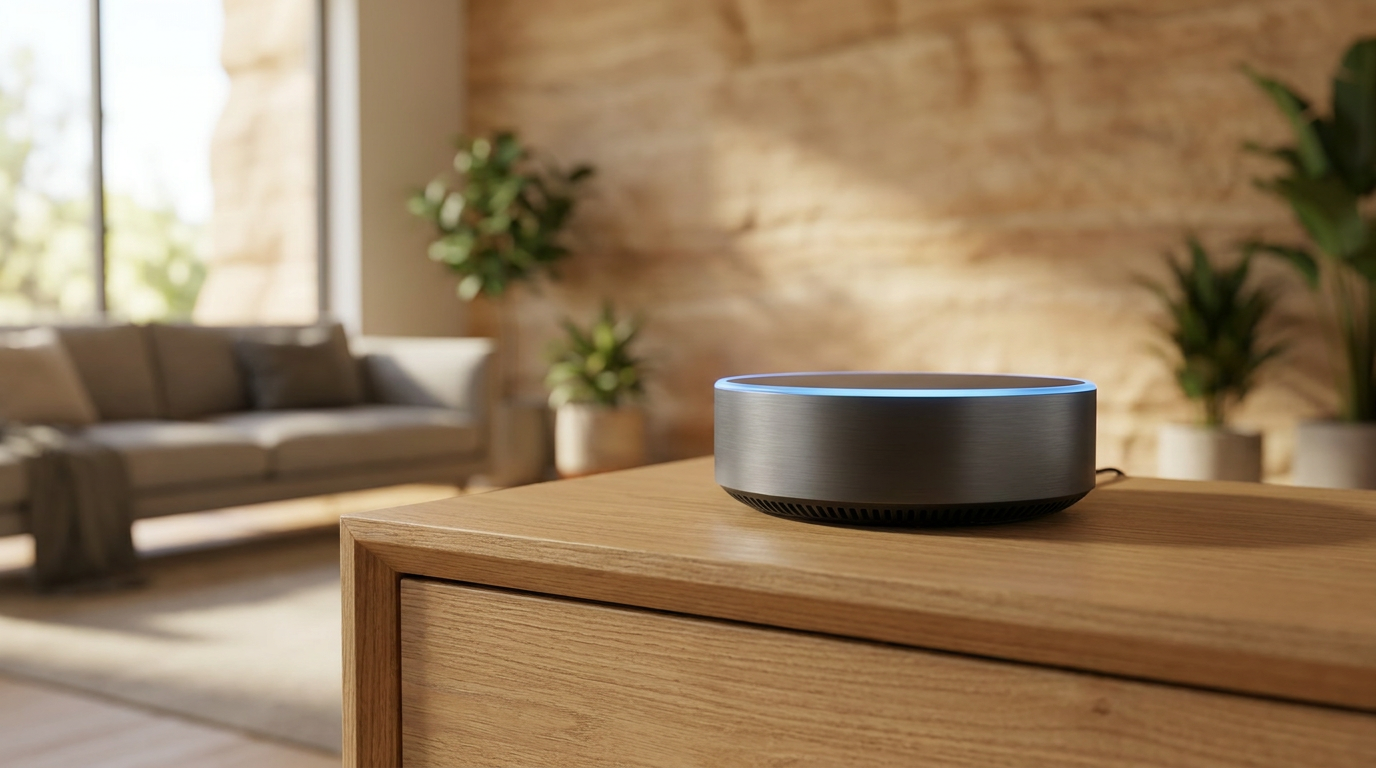
- Local Control Advocates
- Prioritize data privacy, offline reliability, and instantaneous response times.
- Cloud Ecosystem Users
- Value effortless setup, broad compatibility, and seamless voice integration.
- Hybrid Pragmatists
- Leverage the Matter standard to combine local speed with cloud convenience.
What's not represented
- · Internet Service Providers
- · Smart Home Installers
Why this matters
Choosing the right smart home architecture determines whether your house functions during an internet outage, how quickly your lights respond, and who has access to your daily routine data.
Key points
- The smart home industry in 2026 is divided between cloud-based ecosystems and local edge processing.
- Local hubs process commands in under 50 milliseconds and keep all data private within the home network.
- Cloud platforms offer unmatched plug-and-play convenience and seamless voice assistant integration.
- The Matter 1.5 standard enables hybrid setups, allowing users to combine local speed with cloud accessibility.
- Local setups require higher upfront hardware costs, while cloud systems increasingly rely on subscription fees.
The smart home landscape in 2026 has reached a pivotal junction, shifting away from the assumption that every lightbulb and sensor must connect to a distant server. After years of relying on cloud-dependent infrastructure, a growing segment of homeowners is embracing the "local revolution," fundamentally changing how domestic technology operates. The core decision for anyone building or upgrading a smart home today comes down to a choice of architecture: edge processing versus cloud processing. This divide dictates not just how devices communicate, but who owns the data, how fast the system reacts, and what happens when the internet connection drops.[2][3]
The two contenders represent entirely different philosophies of home automation. Cloud-based ecosystems, championed by Amazon Alexa, Google Home, and Samsung SmartThings, rely on remote data centers to process commands and orchestrate routines. In contrast, local-first hubs like the Home Assistant Green and the Hubitat Elevation C-8 Pro act as edge processors, handling every automation directly on the physical hardware sitting in the living room. As the industry matures, understanding the precise trade-offs between these two approaches is essential for building a reliable, future-proof home.[1][4]
For the local processing approach, the primary argument for adoption centers on absolute privacy and offline reliability. By keeping device data, voice commands, and usage patterns strictly within the home network, edge processors eliminate the need to share daily routines with major technology companies. Furthermore, because the system does not require a continuous internet connection to function, critical automations like security lighting, leak detection, and climate control continue to operate flawlessly during widespread network outages or localized service disruptions.[2][8]
The evidence supporting the performance of local systems is striking, particularly regarding latency. Because data does not travel to a remote server for a "cloud handshake," local-first smart homes react in under 50 milliseconds, with some hubs achieving 10 to 20-millisecond response times. When a user walks into a room, motion sensors trigger the lights instantly, making the technology feel like a natural extension of the house rather than a digital request waiting for approval. In reliability tests, local hubs have demonstrated zero automation failures during extended internet outage simulations.[1][3][4]

Against local processing, the main friction point remains the steeper learning curve and a higher barrier to entry. While the software interfaces have improved significantly by 2026, configuring a truly local system requires more technical patience than the plug-and-play experience offered by mainstream consumer brands. Users must actively manage their network, carefully select compatible Zigbee or Z-Wave radios, and occasionally troubleshoot open-source integrations when third-party manufacturers update their application programming interfaces.[1][8]
The evidence of this friction is reflected in both setup time and initial hardware costs. Premium local hubs require an upfront investment ranging from $150 to $220 for the base hardware alone, not including the specialized sensors required to build out the network. Furthermore, while a basic cloud system can be commissioned in under thirty minutes using a smartphone app, configuring advanced local automations and custom dashboards on platforms like Home Assistant can take hours of dedicated setup time.[1][4]
The evidence of this friction is reflected in both setup time and initial hardware costs.
For cloud-based ecosystems, the argument for adoption is built entirely around unmatched convenience, seamless voice integration, and effortless scalability. Platforms like Alexa and Google Home are designed to be the ultimate Swiss army knives of the smart home, offering broad compatibility with thousands of third-party devices right out of the box. They require virtually no networking knowledge to operate, making smart home technology accessible to the average consumer who simply wants to automate their morning coffee routine or turn off the lights from bed.[4][7]
The evidence for cloud convenience is demonstrated by its massive market penetration and frictionless remote access. Cloud systems excel at out-of-the-box connectivity, allowing users to check live camera feeds, unlock doors for guests, or adjust thermostats from anywhere in the world without configuring secure network tunnels or dynamic IP addresses. Additionally, the vast computing power of remote servers enables advanced artificial intelligence features, such as natural language processing for voice commands, that local hubs struggle to replicate natively.[4][7]

Against cloud ecosystems, the primary vulnerability is their absolute dependence on external servers and the hidden costs of subscription models. When a home's internet connection drops, or a cloud provider experiences a server outage, the smart home effectively breaks, leaving users unable to control basic functions. Furthermore, homeowners are increasingly frustrated by the trend of manufacturers discontinuing cloud support for older devices, turning expensive hardware into unusable electronic waste overnight.[2][8]
The evidence of these drawbacks is quantified by the noticeable latency in daily use and the shifting economics of cloud platforms. Cloud-processed commands typically experience delays of 300 milliseconds to several seconds, especially during peak internet usage hours, creating a noticeable lag between a command and the physical action. Additionally, many cloud-dependent security cameras and automation services now require ongoing monthly subscription fees to access features that were previously included, significantly increasing the long-term cost of ownership.[3][4]
The great equalizer in the 2026 landscape is the widespread adoption of the Matter 1.5 standard and Thread networking protocols. This universal connectivity standard is actively blurring the lines between the two philosophies, allowing devices to communicate locally across different brands without relying on proprietary cloud bridges. Thread provides a low-power, self-healing mesh network that connects battery-powered sensors directly to each other, drastically improving the reliability of both local and cloud-based setups.[3][6]
Evidence of Matter's impact is highly visible in the rise of hybrid smart home architectures. Users no longer have to choose strictly between local speed and cloud convenience. A homeowner can now run a local hub like the Aqara M3 or Home Assistant to handle lightning-fast, private automations, while simultaneously using Matter's "Multi-Admin" feature to securely expose specific lights and thermostats to Alexa or Google Home for casual voice control. This hybrid approach delivers the sub-200-millisecond response times of edge computing alongside the convenience of mainstream voice assistants.[5][6][7]

Ultimately, a local-first architecture fits well when absolute privacy is paramount, internet reliability is inconsistent, or the user demands instantaneous response times for complex, multi-device automations. It is the definitive choice for power users, privacy advocates, and anyone who wants to permanently own their infrastructure rather than rent it. By keeping data within the home's four walls, local processing ensures that the smart home serves the resident first, without acting as a data-gathering node for external corporations.[2][3][8][9]
Conversely, a cloud-first ecosystem fits well when the user prioritizes effortless setup, relies heavily on natural language voice commands, and wants seamless out-of-the-box remote access without technical tinkering. It remains the best entry point for casual users who simply want their lights to turn on at sunset and are comfortable trading a fraction of a second in response time—and some data privacy—for an experience that just works. For these users, the convenience of a centrally managed, plug-and-play ecosystem outweighs the benefits of localized control.[1][4][9]
How we got here
2014
Samsung acquires SmartThings, popularizing the cloud-hybrid smart home model for mainstream consumers.
2022
The Connectivity Standards Alliance releases the first version of the Matter protocol to unify smart home ecosystems.
2024
Major outages in cloud services spark increased consumer interest in local-first automation and privacy.
Late 2025
Matter 1.5 is finalized, adding robust local support for cameras, energy management, and complex sensors.
2026
Edge processing hubs become mainstream, offering sub-50ms response times and complete offline reliability.
Viewpoints in depth
Local Control Advocates
Prioritize data privacy, offline reliability, and instantaneous response times.
This camp argues that a smart home should not rely on external servers to function. They point to the frequent discontinuation of cloud services and internet outages as proof that renting infrastructure is a flawed model. For them, the upfront cost and learning curve of edge processors are small prices to pay for absolute ownership of their data and sub-50ms automation speeds.
Cloud Ecosystem Users
Value effortless setup, broad compatibility, and seamless voice integration.
This perspective emphasizes that technology should be accessible to everyone, not just network engineers. They argue that the plug-and-play nature of cloud platforms like Alexa and Google Home is what allowed the smart home industry to scale. For these users, the convenience of out-of-the-box remote access and advanced AI voice processing far outweighs the occasional latency or internet dependency.
Hybrid Pragmatists
Leverage the Matter standard to combine local speed with cloud convenience.
Rather than choosing a side, this camp uses the Matter protocol to build best-of-both-worlds systems. They utilize local hubs to ensure critical automations run instantly and privately, while selectively bridging non-sensitive devices to cloud platforms for voice control. They view the local-versus-cloud debate as outdated, arguing that modern smart homes should dynamically route commands based on the task's security and speed requirements.
What we don't know
- Whether major cloud providers will eventually adopt full local processing for their legacy devices.
- How upcoming iterations of the Matter standard will handle complex, multi-condition automations across different brands.
Key terms
- Edge Processing
- Data processing that occurs directly on the local device or hub, rather than being sent to a remote server.
- Thread
- A low-power, wireless mesh networking protocol designed specifically for smart home devices to communicate reliably without a central router.
- Matter 1.5
- A universal connectivity standard that allows smart home devices from different brands to work together seamlessly over a local network.
- Cloud Handshake
- The process where a smart device sends a command to a remote server, waits for processing, and receives the instruction back to execute an action.
Frequently asked
Can I use Alexa with a local smart home hub?
Yes. Through hybrid setups and the Matter standard, you can process automations locally while still exposing specific devices to Alexa or Google Home for voice control.
What happens to a cloud smart home when the internet goes down?
Cloud-dependent devices lose their ability to process commands, meaning automations will fail and app controls will stop working until the connection is restored.
Is Matter 1.5 a cloud or local protocol?
Matter is designed for local control. It allows devices to communicate directly over your home network via Wi-Fi or Thread, without requiring a round-trip to a cloud server.
Do local smart homes require a monthly subscription?
Generally, no. While some platforms offer optional subscriptions for easy remote access, the core local processing and automation features are completely free.
Sources
Source coverage
9 outlets
3 viewpoints surfaced






[1]Smart Home ExplorerHybrid Pragmatists
Best Smart Home Automation Hubs 2026: Matter & Thread Ranked
Read on Smart Home Explorer →[2]Tech By DevanshLocal Control Advocates
Cloud Free Smart Home: Local Automation in 2026
Read on Tech By Devansh →[3]Specs FinderLocal Control Advocates
Local-First Smart Homes: The Ultimate 2026 Privacy Flex
Read on Specs Finder →[4]Home Automation Smart HomeCloud Ecosystem Users
Local vs Cloud Smart Home Systems: Which Should You Choose?
Read on Home Automation Smart Home →[5]The GadgeteerHybrid Pragmatists
State of the Smart Home Hub in 2026
Read on The Gadgeteer →[6]Your Matter HomeHybrid Pragmatists
What Is Matter and Why Does It Matter for Your Smart Home?
Read on Your Matter Home →[7]How-To GeekCloud Ecosystem Users
Get More From Alexa and Google Home with Home Assistant
Read on How-To Geek →[8]Byte of GeekLocal Control Advocates
10 Reasons to Switch to Home Assistant in 2026
Read on Byte of Geek →[9]Factlen Editorial TeamHybrid Pragmatists
Synthesis by Factlen editorial team
Read on Factlen Editorial Team →

Every angle. Every day.
Get shopping stories with full source coverage and perspective breakdowns delivered to your inbox.