
The Evidence Behind Consumer Sleep Trackers: Do They Actually Work?
Wearable sleep trackers are highly accurate at measuring total sleep time, but clinical trials show their sleep-stage data remains flawed and can paradoxically trigger sleep anxiety.
By Factlen Editorial Team
- Clinical Sleep Specialists
- Medical professionals emphasize the diagnostic limitations of wearables and the risks of data-induced anxiety.
- Tech Industry & Reviewers
- Tech companies focus on continuous algorithmic improvements and the value of longitudinal health tracking.
- Independent Researchers
- Academic scientists focus on the exact statistical variance between consumer devices and clinical standards.
What's not represented
- · Individuals with chronic insomnia whose sleep is misclassified by trackers
- · Regulatory bodies evaluating software-as-a-medical-device (SaMD)
Why this matters
Millions of consumers base their daily routines, health anxiety, and purchasing decisions on wearable 'sleep scores.' Understanding where these devices are clinically accurate—and where they are merely guessing—empowers users to make better health decisions without falling into data-driven anxiety.
Key points
- Consumer sleep trackers are highly accurate at distinguishing sleep from wakefulness and measuring total sleep time.
- Devices struggle significantly with four-stage sleep classification, often underestimating or misclassifying deep and REM sleep.
- Trackers frequently misclassify 'quiet wakefulness' as sleep, which can skew data for individuals with insomnia.
- An obsession with perfect sleep scores has led to a rise in 'orthosomnia,' a condition where tracking anxiety worsens actual sleep.
- Despite staging flaws, the longitudinal data from wearables is proving clinically valuable, leading to FDA clearances for features like sleep apnea detection.
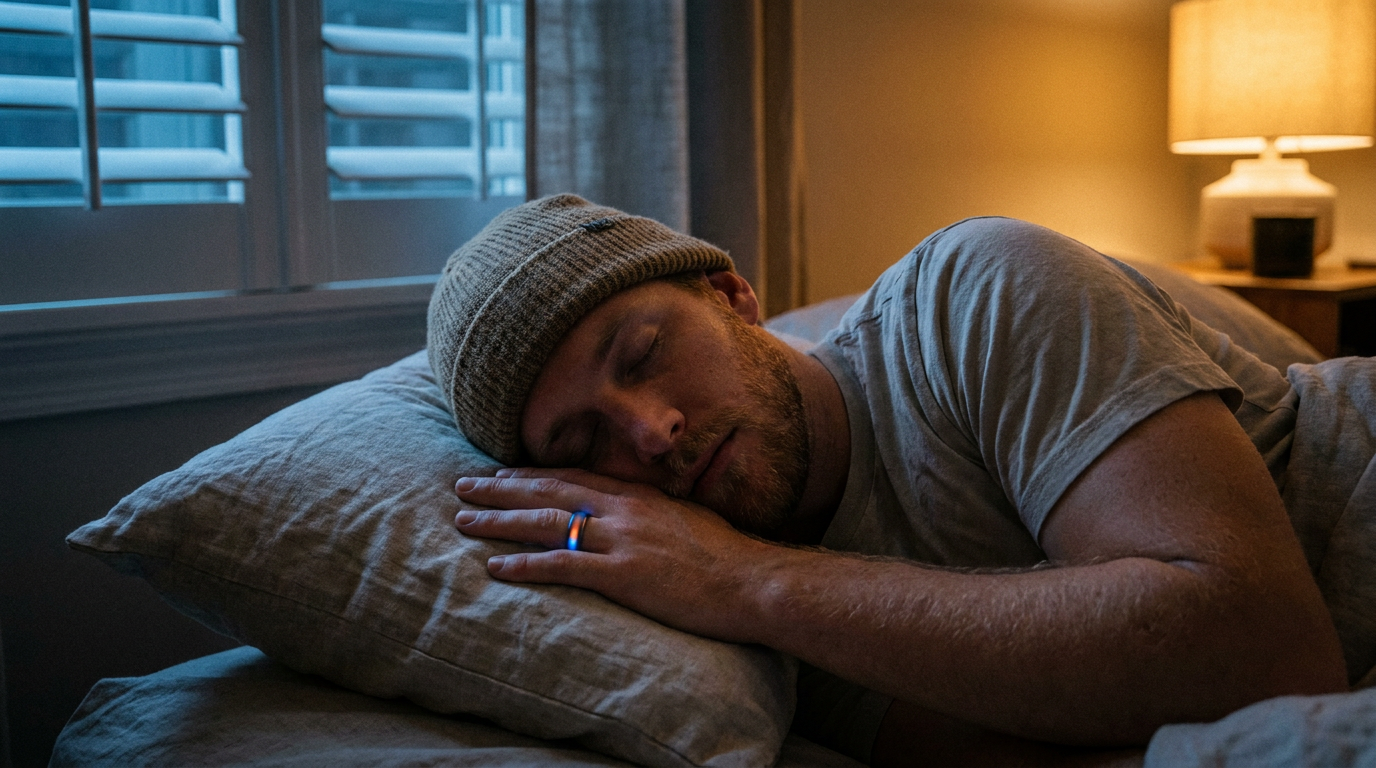
Millions of consumers now wear smart rings and watches to bed, relying on devices from Oura, Apple, and Fitbit to optimize their rest. These consumer sleep trackers promise to demystify the night, offering morning "sleep scores" that dictate how users approach their day.[6][8]
To determine if these devices actually work, clinical researchers evaluate wearables against polysomnography (PSG)—the medical gold standard that uses electroencephalography (EEG) to measure brain waves, alongside eye movement and muscle activity. The resulting evidence reveals a stark divide between what trackers measure well and where their algorithms fall short.[2][6][8]
The strongest evidence supports the ability of consumer wearables to measure total sleep time. These devices are highly reliable at determining whether a user is asleep or awake. A 2025 meta-analysis evaluating the Oura Ring against PSG found no statistically significant difference in total sleep time, with the device deviating from the clinical standard by an average of just three minutes.[1]
Devices from Apple and Fitbit show similarly robust performance, consistently achieving over 90% sensitivity in detecting sleep. Because these devices rely on accelerometry to track movement and photoplethysmography to track heart rate, the physiological shift from wakefulness to baseline sleep is easily captured.[2][3][5][8]
However, the evidence weakens considerably regarding sleep staging. Wearable marketing heavily emphasizes the ability to divide rest into light, deep, and REM sleep. Because consumer devices cannot measure brain waves, their staging data involves significant algorithmic guesswork.[5][7]

In a 2024 independent study conducted at Brigham and Women's Hospital, the Oura Ring Gen 3 demonstrated the highest accuracy among consumer devices, achieving roughly 76% to 80% sensitivity for deep and REM sleep.[2][7]
Other popular devices struggled further in the same clinical trial. The Apple Watch Series 8 demonstrated only a 50.5% sensitivity for deep sleep, frequently misclassifying it as light or core sleep, while the Fitbit Sense 2 achieved about 62% sensitivity. Researchers advise treating nightly deep sleep percentages with substantial skepticism.[2][6]
Other popular devices struggled further in the same clinical trial.
A universal limitation across all consumer wearables is a lack of specificity when a user is awake but lying perfectly still—a state known as "quiet wakefulness."[3][5]
For individuals suffering from insomnia, this creates a frustrating data loop. A user may lie awake in bed for an hour, but because their heart rate is low and they are not moving, the tracker records the period as "light sleep." This leads to morning sleep scores that contradict the user's lived experience and complicates clinical assessments.[5][8]

The perfectionist quest for a flawless sleep score has birthed a new psychological phenomenon known as "orthosomnia." Coined by researchers in 2017, the term describes an unhealthy preoccupation with sleep tracker data that actively harms a patient's rest.[4]
Sleep medicine specialists report a growing influx of patients seeking treatment for self-diagnosed sleep disorders based entirely on their wearable metrics. In many cases, the anxiety of trying to achieve optimal tracker data increases physiological arousal, making it harder to fall asleep and actively worsening the user's insomnia.[4][5][7]
Despite their limitations in staging and the risks of orthosomnia, the longitudinal data provided by wearables is bridging the gap between consumer tech and clinical medicine. While a traditional PSG only captures a single, often uncomfortable night in a laboratory, wearables capture months of baseline behavioral patterns.[5][8]

This continuous monitoring recently achieved regulatory validation. In 2024, the Apple Watch received FDA clearance for detecting breathing disturbances associated with moderate to severe sleep apnea, marking a significant shift from wellness gadget to medical screening tool.[3][5]
The consensus among sleep researchers is that consumer trackers are excellent behavioral tools but poor diagnostic instruments. Users are advised to focus on multi-week trends—such as consistent bedtimes and total duration—rather than obsessing over a single night's REM percentage, prioritizing how they actually feel in the morning over the score on their screen.[5][6][7][8]
How we got here
2012
Fitbit introduces basic sleep tracking to consumer wearables, launching the quantified-sleep era.
2017
Researchers coin the term 'orthosomnia' to describe a rising trend of sleep-tracker anxiety.
2023
Oura rolls out its Sleep Staging Algorithm 2.0, significantly improving deep sleep detection against clinical baselines.
2024
Apple Watch receives FDA clearance for sleep apnea breathing disturbance detection, bridging wellness and clinical utility.
2025
Independent meta-analyses confirm wearables match clinical standards for total sleep time but still lag in accurate staging.
Viewpoints in depth
Clinical Sleep Specialists
Medical professionals emphasize the diagnostic limitations of wearables and the risks of data-induced anxiety.
Clinicians warn that consumer trackers cannot replace polysomnography because they lack EEG brain-wave monitoring. They frequently see patients suffering from 'orthosomnia'—where the stress of achieving a high sleep score actively disrupts the patient's ability to rest. While specialists value the long-term behavioral data wearables provide, they urge patients not to treat algorithmic sleep-stage percentages as medical facts.
Tech Industry & Manufacturers
Tech companies focus on continuous algorithmic improvements and the value of longitudinal health tracking.
Companies like Apple, Oura, and Google (Fitbit) argue that while a single night's staging might have a margin of error, the true value lies in months of continuous baseline data—something a one-night clinical sleep study cannot provide. They point to massive proprietary datasets and recent FDA clearances for features like sleep apnea detection as proof that consumer devices are successfully bridging the gap between wellness and clinical utility.
Independent Researchers
Academic scientists focus on the exact statistical variance between consumer devices and clinical standards.
Independent validation studies highlight a mixed reality: wearables are exceptionally good at measuring total sleep time but struggle significantly with four-stage classification. Researchers note that algorithms are inherently conservative, often defaulting to 'light sleep' when unsure, which skews data for users with fragmented sleep. They advocate for greater algorithmic transparency from tech companies so the medical community can better interpret the data.
What we don't know
- How accurate consumer sleep trackers are for older adults or individuals with severe chronic illnesses, as most validation studies use young, healthy participants.
- Whether the proprietary, closed-source algorithms used by Apple and Oura will ever be fully transparent to independent medical researchers.
- The exact prevalence of orthosomnia in the general population, as current data relies heavily on clinical case studies.
Key terms
- Polysomnography (PSG)
- The clinical gold standard for sleep studies, which uses sensors to measure brain waves, blood oxygen, heart rate, and breathing.
- Electroencephalography (EEG)
- A method of recording electrical activity in the brain, essential for accurately identifying true sleep stages.
- Photoplethysmography (PPG)
- An optical sensor technology used in smartwatches and rings to measure heart rate and blood flow variations.
- Orthosomnia
- An anxiety-driven preoccupation with achieving perfect sleep data on consumer tracking devices.
- Sleep Architecture
- The cyclical pattern of sleep as it shifts between light, deep, and REM stages throughout the night.
Frequently asked
Do consumer sleep trackers accurately measure deep sleep?
Evidence shows they are only moderately accurate at sleep staging. Devices like the Apple Watch and Fitbit often underestimate deep sleep, achieving only 50% to 62% sensitivity compared to clinical brain-wave monitoring.
What is orthosomnia?
Orthosomnia is an unhealthy obsession with achieving perfect sleep metrics on a wearable tracker. This anxiety can paradoxically make it harder to fall asleep, worsening actual insomnia.
Can an Apple Watch or Oura Ring diagnose sleep apnea?
While the Apple Watch received FDA clearance in 2024 to detect breathing disturbances associated with sleep apnea, consumer wearables cannot officially diagnose the condition. A clinical polysomnography (PSG) is still required.
Why does my tracker say I was asleep when I was awake?
Trackers rely on movement and heart rate. If you lie perfectly still in bed while awake—a state known as "quiet wakefulness"—the device's algorithm will often misclassify that time as light sleep.
Sources
Source coverage
8 outlets
3 viewpoints surfaced








[1]National Institutes of HealthIndependent Researchers
Meta‐Analysis of Oura Ring Versus Polysomnography
Read on National Institutes of Health →[2]PubMedIndependent Researchers
Accuracy of Consumer Sleep Trackers Compared to Polysomnography
Read on PubMed →[3]AppleTech Industry & Reviewers
Apple Watch Sleep Staging Validation
Read on Apple →[4]Sleep FoundationClinical Sleep Specialists
Sleep Trackers and Orthosomnia
Read on Sleep Foundation →[5]CHEST PhysicianClinical Sleep Specialists
Using consumer sleep trackers in clinical practice
Read on CHEST Physician →[6]The Curated WeeklyIndependent Researchers
How accurate are consumer sleep trackers, really?
Read on The Curated Weekly →[7]WareableTech Industry & Reviewers
Oura wins sleep accuracy study – and why that doesn't really matter
Read on Wareable →[8]Live Work SleepIndependent Researchers
Consumer Sleep Trackers: Accuracy and Limitations
Read on Live Work Sleep →
Every angle. Every day.
Get shopping stories with full source coverage and perspective breakdowns delivered to your inbox.